





























Diseases and parasitic pests of the Tulip tree
How to identify, treat and prevent diseases and pests of the tulip tree (Liriodendron tulipifera)
Contents
Remarkable, the Virginian tulip tree certainly is—on several counts. And in several respects.
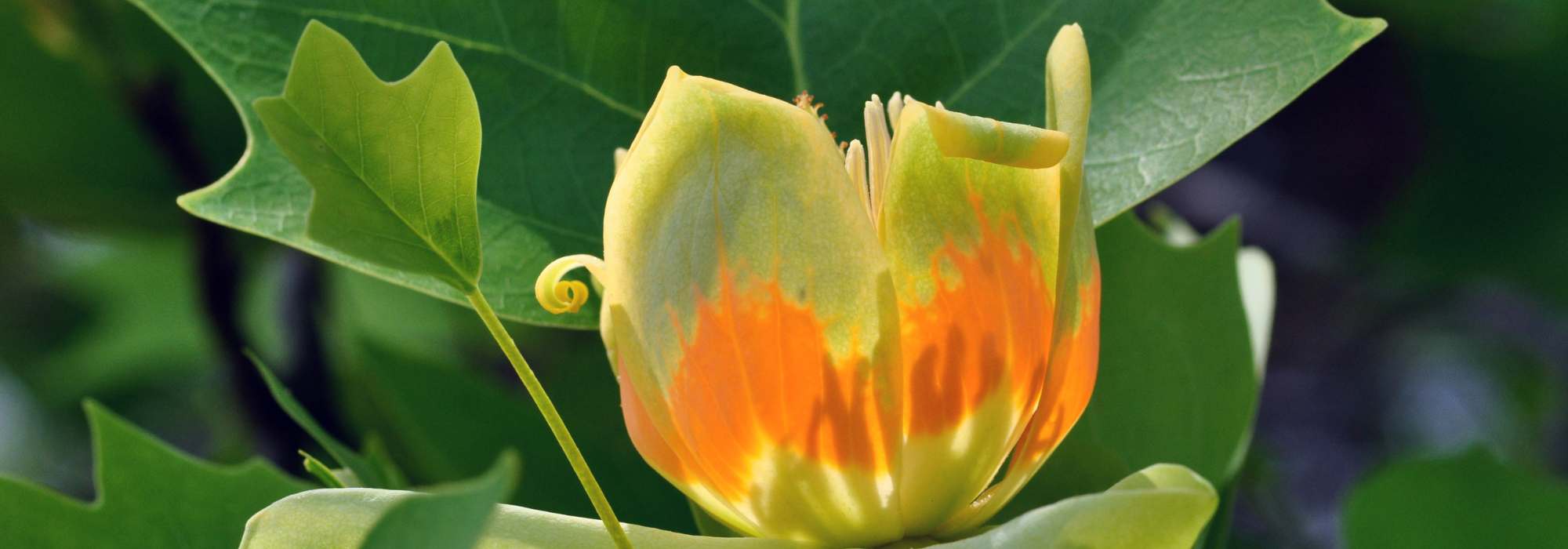
Indeed, the Virginian tulip tree (Liriodendron tulipifera) is a stately tree with a very long longevity. But it is above all its flowering and its foliage that give it all its charm. Indeed, the tulip tree offers deciduous foliage, particularly broad, divided into four pointed lobes, in a green that can range from soft to vivid. In autumn, these leaves take on a pretty yellow colour maculated with orange, flamboyant. As for its flowering, it is both splendid and unusual. From May to July, at the tips of the branches, solitary flowers bloom that resemble tulips. With a waxy texture, these flowers form green corollas tinged with orange at the base. Very melliferous, they invite insects to visit their nectar. They also tantalise our noses with a delicate lemon-scented fragrance. However, it takes at least about ten years before the first flowers appear.
To develop in the best conditions, the Virginian tulip tree requires deep soil due to its taproot, rich and light, cool to moist, but perfectly drained. Particularly hardy, the Virginian tulip tree is not prone to diseases and pest attacks. Nevertheless, if the cultural conditions for its proper growth are not respected, it may show some weaknesses.
Let’s explore together the diseases and parasites that can affect the Liriodendron tulipifera, and above all the solutions to treat naturally and/or prevent these problems.
→ For more information: Virginian tulip tree, liriodendron: planting and care.

Verticilliosis or Verticillium wilt
Verticillium wilt is a cryptogamic disease caused by various fungi of the genus Verticillium. It is a fungus that typically lives in soil and thrives when moisture coincides with a temperature between 16 and 27 °C. It therefore thrives in heavy, poorly-drained soils. Concretely, this fungus enters the tree through its root system and attacks the sap-conducting vessels that transport sap, which it obstructs. The tree is then deprived of water and minerals.
This fungus wreaks havoc on certain garden vegetables (tomatoes, aubergines, peppers, melons…), on fruit trees (notably olive trees and apricot trees), on some ornamental plants (asters, delphiniums, oxeye daisies, peonies…) and on trees such as the Virginia tulip tree (Japanese maple, beech, elm…)
Symptoms
Early symptoms commonly appear in midsummer. As the sap-conducting channels become blocked, some shoots or branches show signs of desiccation. Rapidly, the branches wilt and may take on a brown, slightly reddish colour; the foliage browns and curls like guttering. To confirm the diagnosis, cut a desiccated branch: dark stripes rather dark brown are visible beneath the bark in the sapwood.
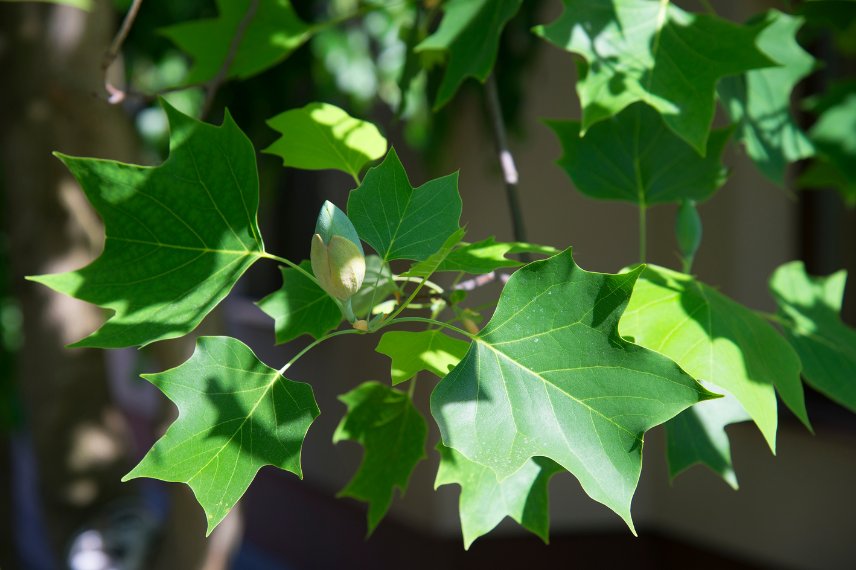
Verticillium wilt mainly affects the twigs and foliage of the Virginia tulip tree
Prevention
To prevent Verticillium wilt, prevention is key.
- Provide a well-drained soil for your tree from planting. The Liriodendron tulipifera likes cool, moist soils, but drainage must be ensured, especially in winter. Therefore, when planting, it is essential to place at the bottom of the hole a good layer of gravel or very coarse sand.
- Water regularly to keep the soil moist, but preferably a deep soak once a week rather than daily small amounts.
- Do not over-work the soil around the tree to avoid spreading the disease.
- During pruning, which, as a reminder, should be exceptional for broken or poorly placed branches, ensure not to injure the bark. Likewise, take care not to damage the roots, for example with mechanical equipment.
- Apply Bordeaux mixture sprays to the collar and trunk bark in autumn, or a decoction based on nettle liquid fertiliser or horsetail. These sprays should be renewed.
- Manually remove weeds that could grow beneath the tree, such as goosefoot, sow-thistle, amaranth…
Treatment
There is no curative treatment for Verticillium wilt. To combat it, remove the affected branches by cutting them with sterilised tools.
For more information, feel free to read Eva’s article: Verticillium wilt: control and treatments.
Read also
Diseases and Pests of MagnoliaAnthracnose
Anthracnose is a fungal disease caused by different types of fungi, depending on the species affected. As with many other fungal diseases, it is triggered by excessive humidity and cool weather, especially in spring or autumn, or during the summer months after heavy storms.
The American tulip tree may be somewhat susceptible to this disease, as may the Judas tree, willow, dogwood and maples.
Symptoms
Brown or purple spots appear on the leaves.
Sometimes grey-brown necroses along the veins or small cankers appear. Often, affected leaves yellow and drop prematurely.
Prevention
Generally, not much is required to prevent anthracnose. A few simple preventive measures can be implemented:
- Collect fallen leaves at the base of the American tulip tree and burn them. If that’s not possible, take them to the local recycling centre.
- Avoid pruning during periods of high humidity.
- Regular fortnightly sprays of horsetail decoction on the tree’s above-ground parts.
Treatment
The only available treatment is a copper-based spray, such as Bordeaux mixture. Find all our tips for using it in the article: Bordeaux mixture and other copper-based treatments in the garden.
For more information, read Eva’s article on anthracnose.
Aphids
Aphids can also attack the Virginia tulip tree’s foliage. It is even a particular aphid named Illirioa liriodendri, of North American origin and arrived in France in 1998. This aphid develops especially on the Virginia tulip tree, but also on the Magnolia grandiflora. It is a pale green to yellow aphid, oval in shape, with long brown antennae and two fine cornicles on the back. It is also characterised by a substantial production of honeydew, the source of sooty mould development.
Symptoms
Hard to miss an invasion of these aphids, which live in colonies on the undersides of the leaves. They are mainly present from June to October. Then, when winter arrives, eggs are laid in the crevices of the bark, not far from the buds. Reproduction is essentially parthenogenetic.
If the colonies are large, the foliage may yellow and drop prematurely. Under the tree, the soil is sticky.
Prevention
Some predators such as theladybirds or thegreen lacewings can quite rapidly regulate aphid populations.
Treatment
- Powerful jet of water sprays can eradicate aphid colonies.
- A mixture based onblack soap can be effective, especially if the honeydew smothers the foliage. Simply dissolve 15 to 30 g of black soap in one litre of water.
- Subscribe!
- Contents
Comments