





























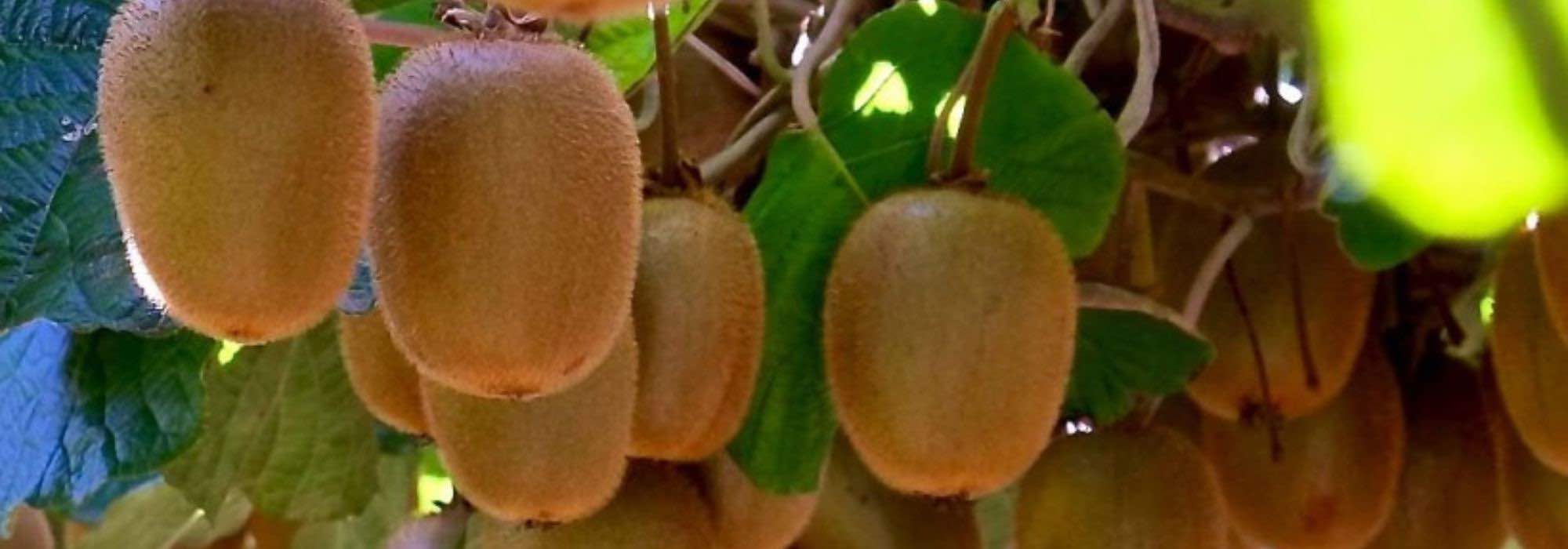
Diseases and pests of kiwi
Identify, treat, prevent
Contents
Kiwi or Actinidia is a fruit plant, a vigorous climbing liana, native to China. It is and fibre. It can reach a height of 4 to 6 metres, or even more under favourable conditions. Kiwi is a plant suited to temperate climates. It prefers areas with warm, sunny summers and cool winters, but without severe frosts. Kiwis are sensitive to frost, especially when young, so it is best to protect them from extreme temperatures. Kiwi thrives in fertile, well-drained, slightly acidic soil.
Overall, kiwi is quite resilient and rarely sick. However, like any fruit crop, it can be subject to various diseases and parasites that can affect its growth and production. Here are our tips for identifying them, treating them naturally, and some prevention tricks.

Kiwi bacteriosis
One of the common diseases of kiwi is kiwi bacteriosis, caused by the bacterium Pseudomonas syringae pv. actinidiae. It is mainly observed in large-scale productions. Symptoms include necrotic lesions on the leaves, appearing as variably shaped spots surrounded by a yellow halo. On the branches and trunk, cankers are observed with the exudation of a whitish to brownish gum-like substance.
If your kiwi is affected, it is recommended initially to cut and remove the infected parts of the plant. There is no curative treatment for this disease. Preventively, you can use copper-based products, such as Bordeaux mixture, which has antifungal and antibacterial properties. Apply these products after pruning. The use of these products can also help control the spread of the bacterium. However, do not overuse Bordeaux mixture! An excess of copper is harmful to soil life.
To prevent bacteriosis, it is important to maintain good hygiene by disinfecting pruning tools. Humidity is a factor in spread, prune during dry periods. Wounds caused by pruning are entry points for the bacterium. Make clean and tidy cuts. Additionally, always with the aim of avoiding humidity: ensure good soil drainage to prevent overly wet soil. Do not wet the foliage when watering, favouring watering at the base of the plant.
It is worth noting that horsetail decoctions, which strengthen the plant, are beneficial.
→ See Virginie’s article on horsetail decoction.
Chlorosis
Chlorosis manifests as a discoloration of the leaves, which turn yellow. It occurs when the soil is too chalky for the plant, and is therefore particularly noticeable on plants that prefer slightly acidic soils, such as kiwi. Chalk inhibits nutrient absorption. It is generally caused by a deficiency in iron, magnesium, or manganese (in which case the leaf discoloration is different).
To treat chlorosis, it is recommended to apply fertilisers containing the necessary nutrients or anti-chlorosis products. For example, a fertiliser rich in iron can be applied to correct the iron deficiency. It is also important to maintain an adequate soil pH, as excessive acidity or alkalinity can affect nutrient absorption.
To prevent chlorosis, it is advisable to know the soil pH, possibly by conducting soil analyses (with a small pH test) and to plant accordingly. It is also important to provide the necessary nutrients in a balanced manner.
→ To learn more about soil pH, read: Soil pH: what is it?
→ Read Virginie’s article on iron chlorosis.
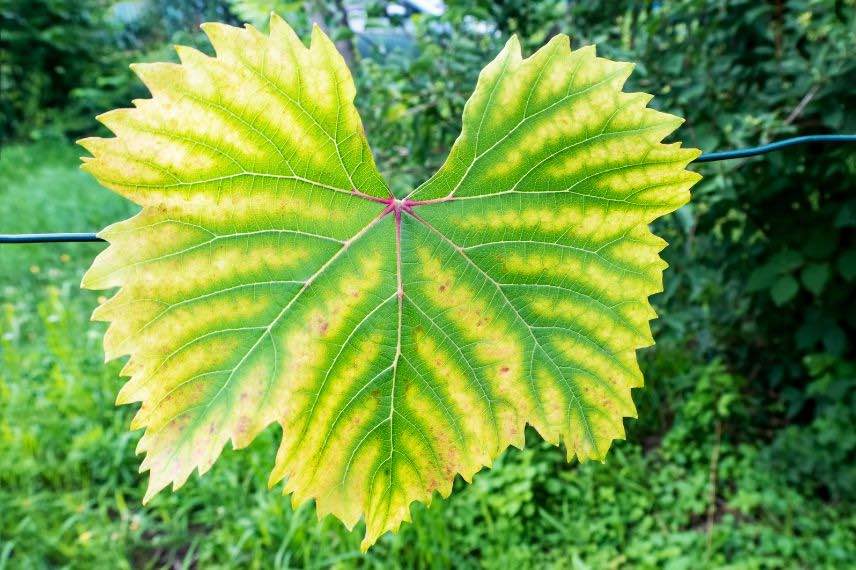
A nutrient-deficient leaf prone to chlorosis
Botrytis
Botrytis or Botrytis cinerea, also known as grey mould, is a fungus that can affect the flowers, leaves, and fruits of the kiwi. It causes the appearance of brown spots, followed by a grey mould. Subsequently, the affected parts rot. The fruits quickly become unfit for consumption, overtaken by this soft rot. Very humid conditions promote the emergence of this fungus, particularly at average temperatures above 20°C. It most commonly develops in spring and autumn.
There is no treatment for Botrytis. Remove the infected parts of the plant and destroy them. Thoroughly disinfect pruning or storage equipment.
Adopt prophylactic measures for prevention. Good air circulation and reduced humidity can help prevent infections. Aerate the foliage by possibly removing some leaves. Water preferably in the morning, as the plant may not dry before the evening cools down. Ensure a good nutritional balance for the plants. Be cautious of both excesses and deficiencies of nitrogen. Water at the base without splashing the foliage. Treat preventively with nettle manure or a horsetail decoction.
→ Read Eva’s article on Botrytis.
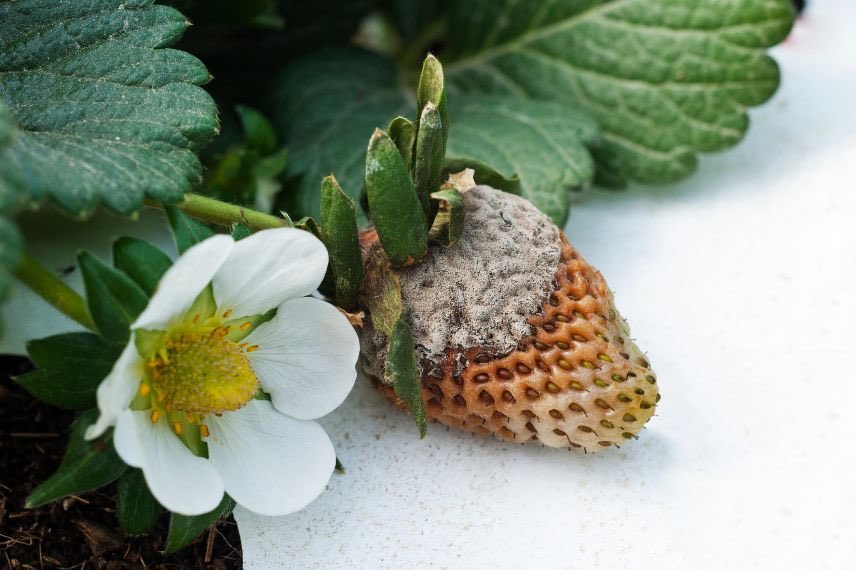
Botrytis on a strawberry
Red spider mites
Red spider mites are small parasitic pests that feed on the sap of plants, causing yellowing of the leaves and the formation of fine webs on the undersides of the leaves. Microscopic in size, they are difficult to observe. However, the intricate webbing is easily spotted, with the bristles becoming even more visible if the plant is wet. Leaves become covered in white or yellow spots and dry out. Unlike previous diseases, this parasite thrives in warm and dry conditions, most often on plants grown in greenhouses or indoors.
To treat red spider mite infestations, it is recommended to spray the plants with a strong jet of water to physically remove them. Introducing natural predators, such as predatory mites like Phytoseiulus persimilis, can also be effective in controlling red spider mite populations.
→ Read François’s article for more treatment solutions for red spider mites.
In terms of prevention, during periods of excessive dryness, regularly mist the foliage in the evening. Be cautious of excess nitrogen from fertilisers. If possible, feed your plant with compost. Mulch the soil. Once again, nettle manure and horsetail decoction are your allies.
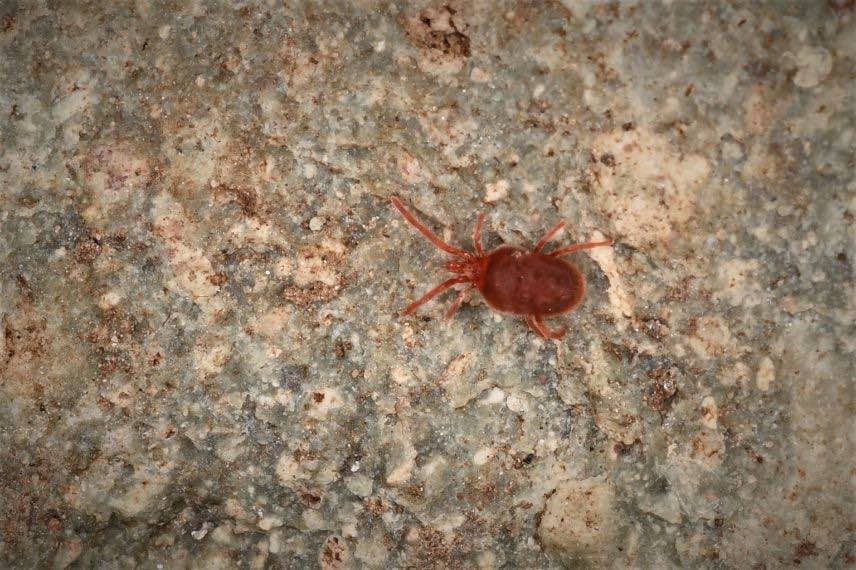
Microscopic, red spider mites are not visible to the naked eye
Scale insects
Mealybugs are parasitic insects that feed on the sap of plants. They can appear in various forms, including mealybugs and scale insects. Mealybugs resemble small white cottony masses, while scale insects have a shield-shaped protective covering on their backs. They are often found on the stems, leaves, and fruits of kiwi. The most common in gardens are mealybugs.
To treat mealybug infestations naturally, you can use solutions made from insecticidal soap or 90° alcohol. Remove the mealybugs with a cotton swab soaked in alcohol. Prepare a solution using black soap. Apply the solution directly onto the mealybugs using a sprayer. Ensure that all parts of the infested plant are thoroughly covered. Repeat the treatment every 1 to 2 weeks until the mealybugs are eliminated.
→ Read Virginie’s article for treatment solutions for mealybugs.
Regularly inspect your kiwi plants for early signs of infestation, such as white or sticky spots on the leaves. In cases of severe infestation, it may be necessary to remove the severely affected parts of the plant to prevent spread.
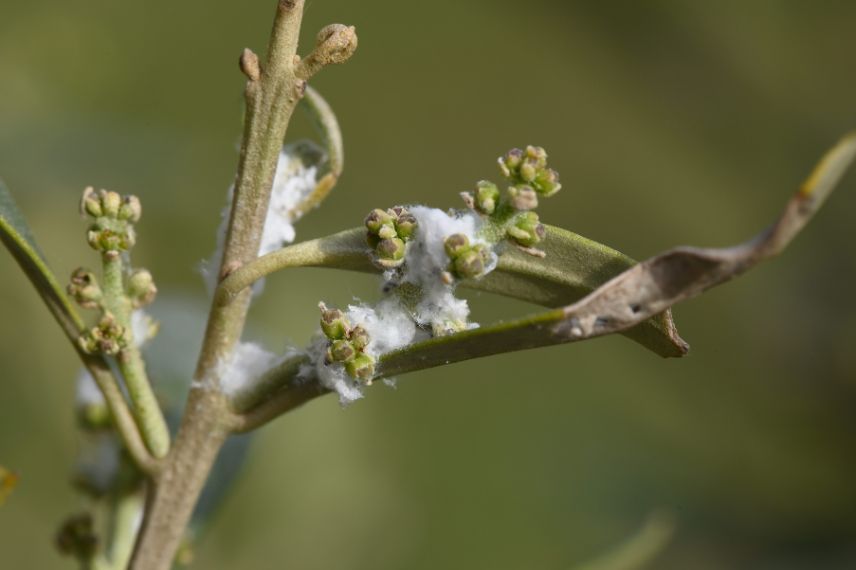
Mealybugs form white cottony clusters
- Subscribe!
- Contents
Comments