





























Diseases and Pests of the Horse Chestnut
Identify, treat, and prevent diseases and pests of the horse chestnut.
Contents
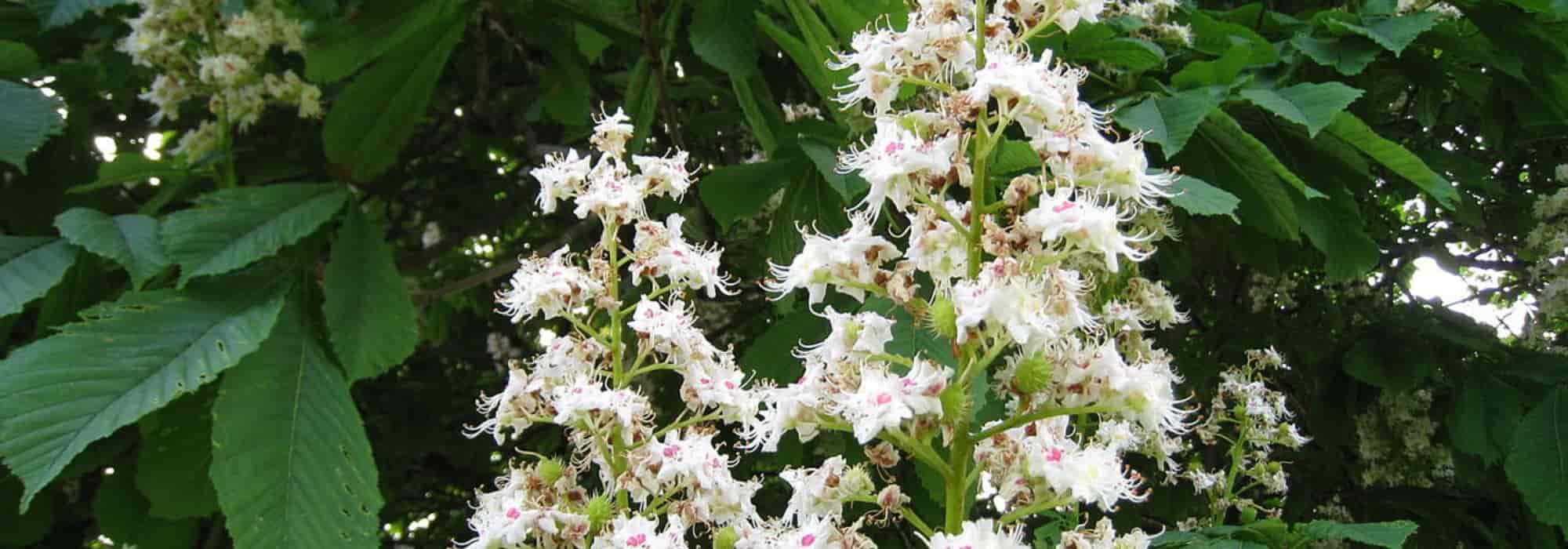
In terms of horse chestnut (Aesculus), it is essential to distinguish between the well-known (and widespread in our parks and gardens) Indian horse chestnut (Aesculus hippocastanum), which often has an imposing size, and the more modestly sized horse chestnuts such as the bottlebrush buckeye (Aesculus parviflora), the dwarf horse chestnut (Aesculus mutabilis), or the ornamental horse chestnuts (Aesculus neglecta and Aesculus pavia)). Although they display very different silhouettes and spans, all these horse chestnuts charm with their deciduous foliage, adorned with vibrant colours in autumn, or their highly fragrant and melliferous flowering. Not to mention their fruiting.
While the more modest varieties are relatively resistant to diseases and pests, the Indian horse chestnut proves to be more sensitive and delicate. Several specific diseases can affect its foliage or trunk, while some pests enjoy making it their home. All our tips for identifying, preventing, and treating horse chestnut diseases.

Bacterial canker of the horse chestnut
Bacterial canker of the horse chestnut is a disease that has emerged relatively recently in Northern Europe, causing significant damage everywhere. Indeed, this disease, caused by the bacterium Pseudomonas syringae pv aesculi, leads to the death of horse chestnuts, which are the most affected.
The most visible symptoms of the disease on horse chestnuts are concentrated on the trunk and branches. There are oozing lesions from which a rusty, sometimes almost black, sticky liquid flows, dotting the base of the trunk or up to a height of one metre. In dry weather, this liquid solidifies and forms a thick, brittle crust. A few months later, the bark may crack around the wound.
At the same time, bud burst may be delayed, as well as the growth of the tree. The leaves also dry out, along with the bark and flowers. The bark peels off in patches, and necrosis forms beneath the outer bark.
The disease primarily affects trees stressed by various factors: air pollution, water stress, tree injuries, loss of biodiversity, destruction of ecosystems, de-icing salt…
Treatment
As of current research, no treatment is effective, as the bacterium is deeply embedded in the tree’s tissues.
Prevention
- Avoid transporting dead leaves, logs, or branches of horse chestnut to limit spread
- Compost leaves and branches from an infected horse chestnut under 10 cm of soil or destroy them by fire
- Carefully disinfect all pruning tools that may have come into contact with the tree
- Fell affected specimens if they are in close contact with other horse chestnuts, dead trees, or hazardous trees
- Destroy infected young trees
- Avoid inappropriate pruning
The red spot disease or "black rot" of the horse chestnut
This fungal disease is caused by the fungus Guignardia bidwellii, which primarily affects the horse chestnut and vine. It has only aesthetic consequences for the tree, as its existence is not threatened. However, it makes the tree weaker and less resilient.
This fungus hibernates in the dead leaves left on the ground or in the cankers of the bark. From mid-March until July, the spores are dispersed by the wind, thus contaminating other trees. Rainy springs promote the appearance of the disease characterised by red spots.
The disease is indeed detected by the presence of irregular red spots with a yellowish edge on the foliage. The spots first appear on the edges of the leaves. After a while, the leaves undergo necrosis and fall off.
Treatment
- Remove affected leaves and burn them.
Prevention
- Carefully collect dead leaves in autumn, as well as the chestnuts, and burn them.
- Thoroughly disinfect all tools that have come into contact with the tree.
- Carry out preventive sprays of Bordeaux mixture at the end of winter and in spring.
Discover other Aesculus - Horse Chestnut
View all →
Available in 3 sizes
Available in 1 sizes
Available in 1 sizes
Available in 1 sizes
Available in 1 sizes
Available in 1 sizes
Available in 1 sizes
Available in 1 sizes
Available in 1 sizes
Available in 1 sizes
Foliar spot disease or brown spot disease
Leaf spot disease, also known as brown spot disease, is a fungal disease caused by the fungus Phyllosticta paviae (syn. Guignardia aesculi). It affects various species of horse chestnuts and develops when spring and summer are humid. As with red spot disease, the damage is primarily aesthetic. However, significant defoliation weakens the trees.
Again, the fungus overwinters in fallen leaves on the soil. The spores released in spring primarily attack the young leaves of horse chestnuts.
The disease is detected by the appearance of small yellowish spots on the young leaves in spring. In summer, the spots enlarge and turn brown-orange, as if the leaves have been scorched. Small black dots may be visible on the underside of the leaves. In cases of severe attack, the leaves fall prematurely.
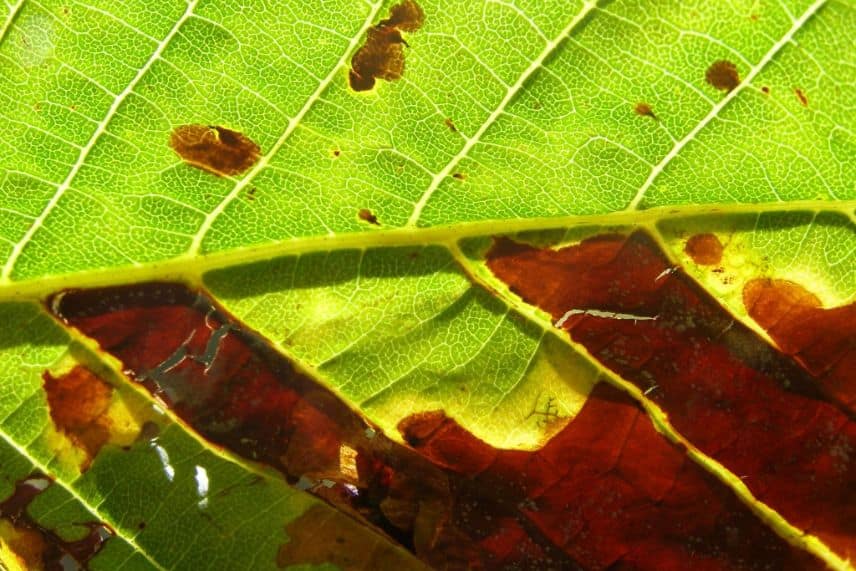
Tristam Brelstaff ©
Treatment
- No treatment is available.
Prevention
- Water the trees only during dry periods
- Avoid over-fertilising
- Collect and dispose of fallen leaves
Coral disease
Easily recognisable, coral disease is a fungal disease caused by Nectria cinnabarina, a fungus that can also affect fruit trees or ornamental trees such as magnolias, maples, lindens, or albizias.
This disease manifests as small coral-coloured pustules that appear on the bark of the horse chestnut tree. As they develop, the pustules darken to become almost rust or brown. Gradually, the affected areas dry out and die, and the bark cracks.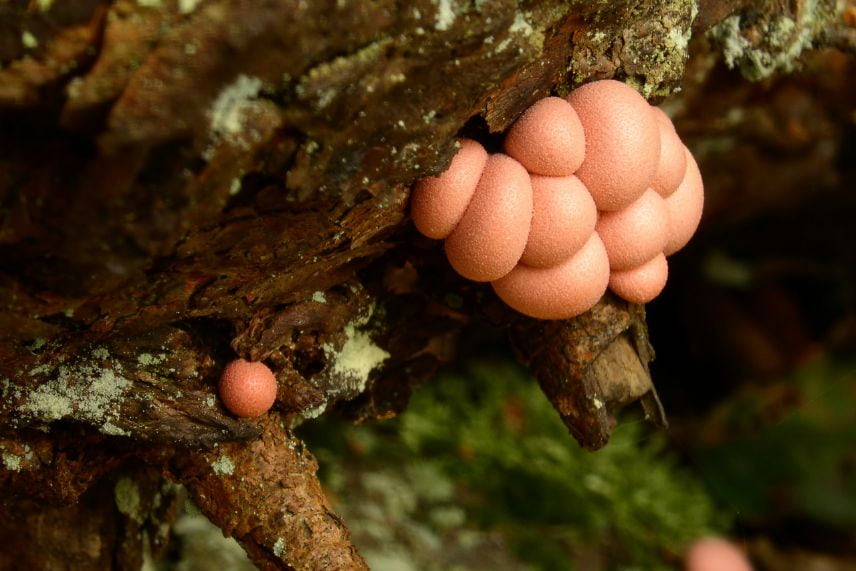
Treatment
- Cut and burn the affected branches
- Spray with Bordeaux mixture
Prevention
- Thoroughly disinfect tools used on the tree
- When pruning the horse chestnut, apply a healing paste to the wounds
- Prune dead or damaged branches
- Regularly add compost or manure to strengthen the tree’s resistance
- Carefully collect dead branches
To learn more: How to prevent coral disease
The horse chestnut leaf miner
The horse chestnut leaf miner is not a disease, but an insect. More specifically, it is a lepidopteran, the Cameraria ohridella, whose caterpillar burrows into the leaves, feeding on the foliar tissues.
This small butterfly, measuring 3 mm, has wings striped in brown and white, emerges in spring, specifically at the beginning of May. After mating (which occurs on the trunks of horse chestnut trees!), the females lay their eggs on the leaves. The hatching larvae immediately enter the leaves to feed and pupate.
Three generations of leaf miners can emerge in a single year: mid-June, early August, and early October. The last generation, resistant to cold, overwinters well hidden in the fallen leaves.
In practical terms, the leaf miner can be identified by the brown to reddish spots on the leaves, which eventually fall off in July. The damage stops there. 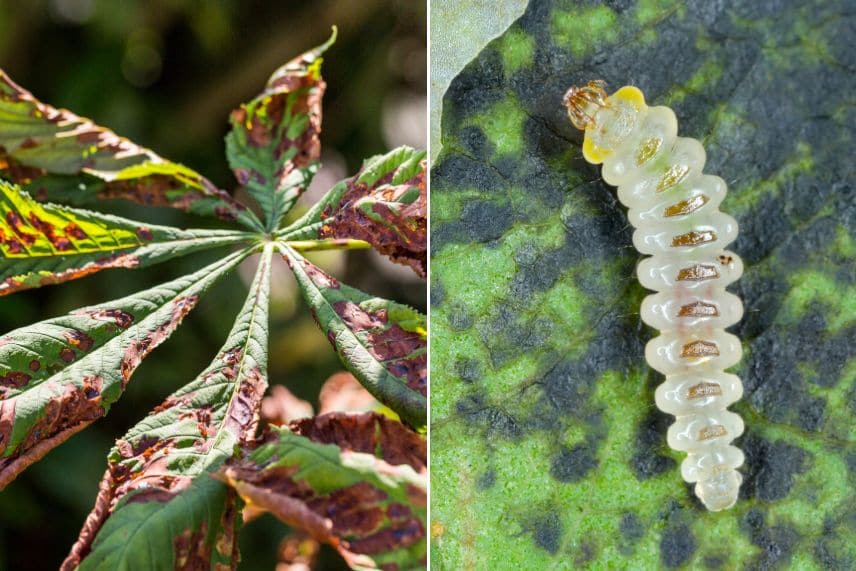
Treatment
- No treatment available
Prevention
- Attract predators such as great tits, earwigs, and spiders by installing bird feeders, nesting boxes, and insect hotels.
- Let your chickens roam at the base of the horse chestnut tree at the end of summer.
- Set up pheromone traps specifically designed for horse chestnut leaf miners that attract and trap males from March to October.
- Carefully collect fallen leaves in autumn and compost them.
The Horse Chestnut Leaf Miner
The Zeuzera pyrina is a moth, also known as the Leopard Moth. Certainly, as this night butterfly sports, unlike its relatives, a white outfit with white spots. Measuring 6 mm in length, this butterfly flies from June to September. After mating, females lay eggs from June to August in the crevices of tree bark. Two to three weeks after laying, the caterpillars hatch. They first attack the foliage, petioles, and veins, before burrowing into the bark of young shoots. This wood-boring insect feeds on living wood and tunnels into the trunk or a branch. The tree becomes weakened to the point of dying. 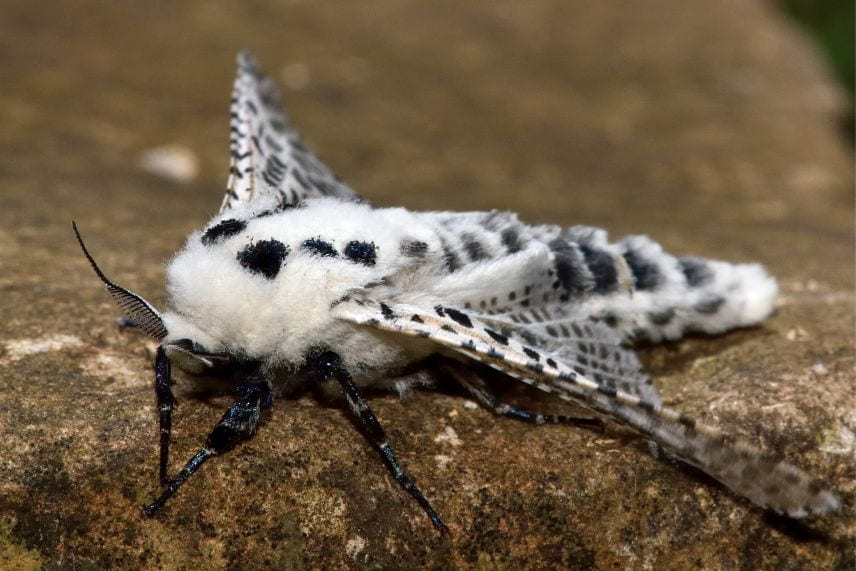
Generally, one notices that a tree is infested by clumps of sawdust and reddish-brown droppings that accumulate on the ground. But the damage is already quite advanced…
Treatment
The only way to combat this is to insert a wire into the hole left by the caterpillar to retrieve it. Then seal the holes with a healing paste.
Prevention
It is difficult to prevent an attack by the Zeuzera. In summer, monitoring the leaves can sometimes help to spot it. Setting up a pheromone trap can also prove effective.
Other pests...
Other insects can attack horse chestnuts, such as mealybugs and chafers, which target the foliage. Here are some resources for you to discover:
- Subscribe!
- Contents
Comments