





























Elderberry: the most beautiful varieties
Discover highly ornamental varieties of elderberry.
Contents
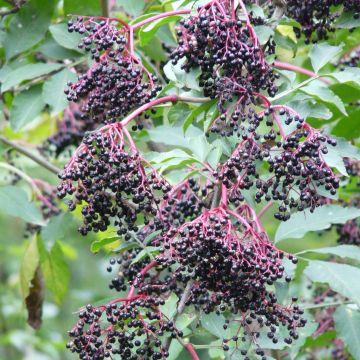
The elder is a low-maintenance bush that is not fussy about soil type. It enjoys full sun or partial shade. Two species are primarily represented: Sambucus nigra, the black elder, and Sambucus racemosa, the red elder. It is not the latter that we will discuss here. Let’s focus solely on the varieties of black elder. Black elder because it bears black berries, famous and sought after for numerous recipes, including elderflower syrup, a delightful treat known for its floral and tangy flavour. However, this is not our topic here. The varieties presented in this article are noted for their numerous and significant ornamental qualities. Although their fruits are edible when cooked, we prefer specific cultivars that are productive in fleshy, sweet fruits for culinary use.
Many beautiful varieties have emerged in recent years, featuring variegated, black, or golden leaves, with varying degrees of dissection. Discover here the black elders with stunning foliage and lovely flowering, with either blurred or graphic silhouettes.

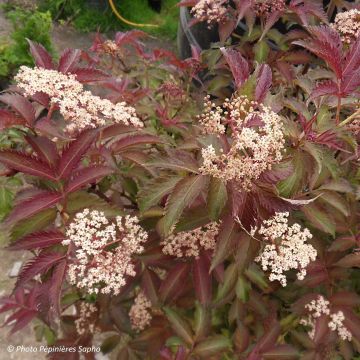
Sambucus nigra 'Serenade'
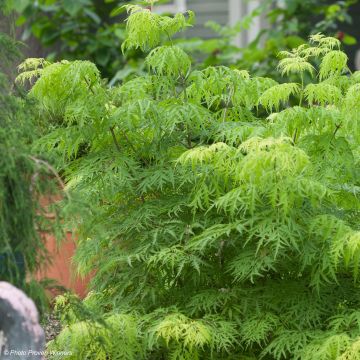
The Sambucus nigra ‘Serenade’ has four main advantages: finely dissected ornamental foliage that changes colour, a flowering beautifully highlighted by the colour of its leaves, and a ramified habit for a compact bush. Its deciduous foliage emerges early in spring, starting as a purple-brown shade, it then evolves into a bronze-yellow colour before turning light green in summer. In autumn, to finish its cycle beautifully before its leaves fall, they take on a lovely purple hue. The flowering, in soft umbels of creamy white, occurs between May and June, when the bush has bronze foliage for a delightful duo. Finally, its dark purple-black elderberries appear at the end of summer. This elder reaches a height of 2 m at ripeness with an equivalent width and displays a compact, ramified habit.
Like all elderberries, it is not very demanding. Plant it in a sunny location alongside pink or cream flowering roses that complement its bronze colours. For a gentle combination, also try the rose ‘Mokarosa’. Golden yellow or chocolate foliage also pairs beautifully with it.
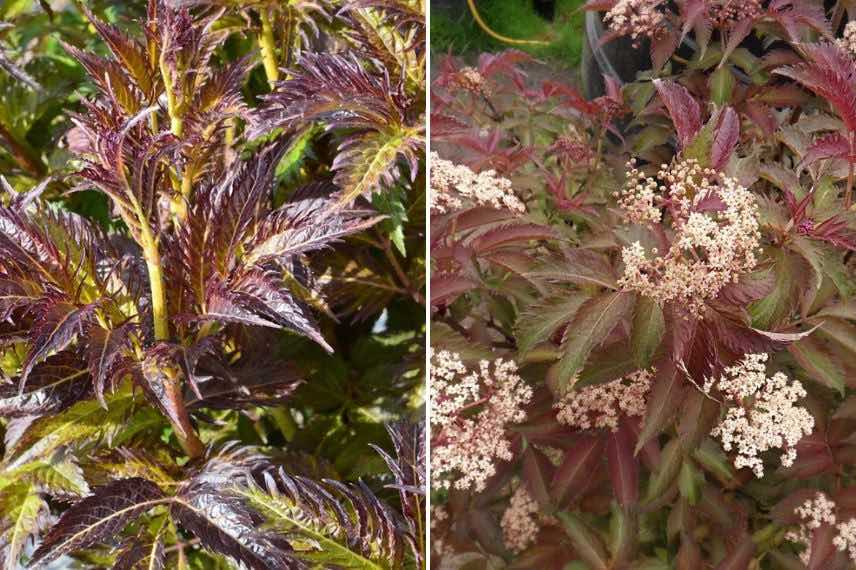
Sambucus nigra ‘Serenade’
Read also
Elder: planting, growing, pruningSambucus nigra 'Black Lace'
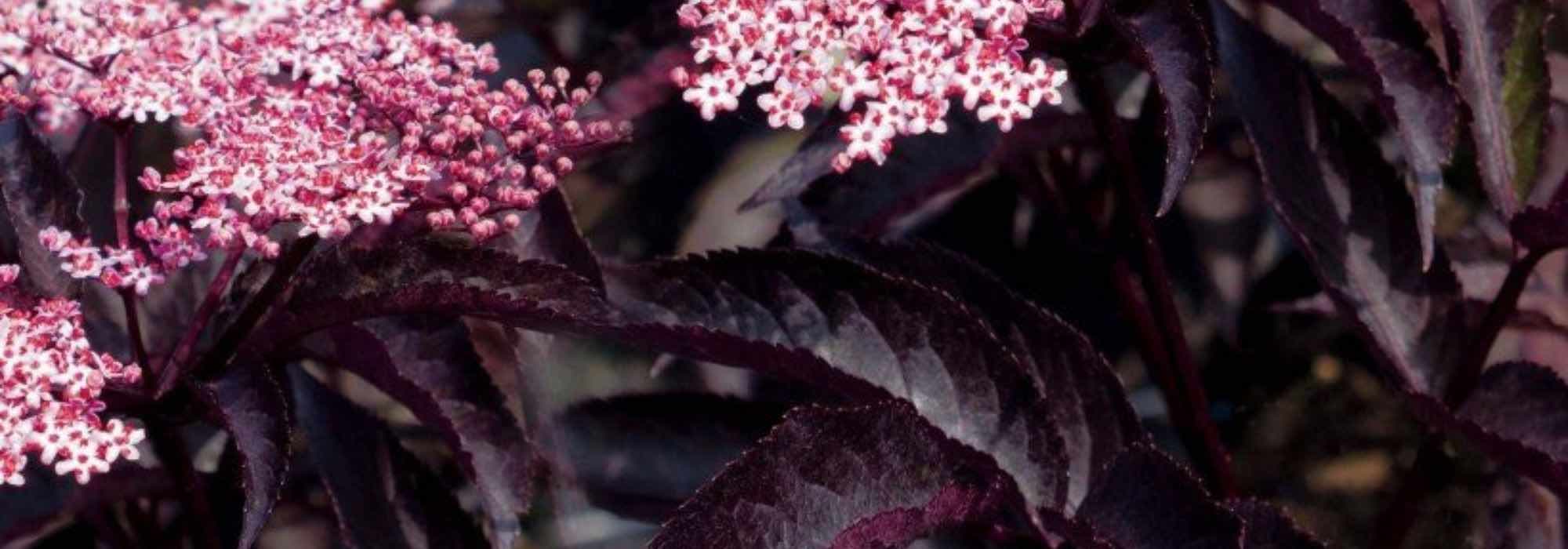
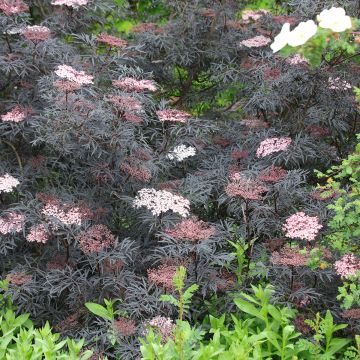
Let’s not delay in presenting a variety with black foliage that elderberries have specialised in over recent years. The Sambucus nigra ‘Black Lace’ is one of them, featuring the most laciniate foliage that evokes Japanese Maples. The elderberries with very dark foliage appear black when viewed from a distance of a few metres. Up close, the purplish, brown, and sometimes dark green hues of their leaves can be distinguished, but they are generally almost black. This variety bears finely dissected, glossy leaflets, resulting in an elegant appearance. It reaches a height of 2.5 m at maturity with a spread of 3 m, exhibiting a bushy and spreading habit. Its pale pink to cream flowering in umbels in early summer complements its dark foliage beautifully. This is followed by a fruiting of red then black berries.
Plant this variety in isolation in front of a large shrub border for a contrasting effect. This elderberry lends itself to many other uses: place it in an exotic setting or at the back of a colourful border to play once again on contrasts, this time with colourful perennials or shrubs. Replace a Japanese Maple with this elderberry when the growing conditions are not suitable for the maple, such as overly sunny situations, insufficient shelter, or overly calcareous soil.
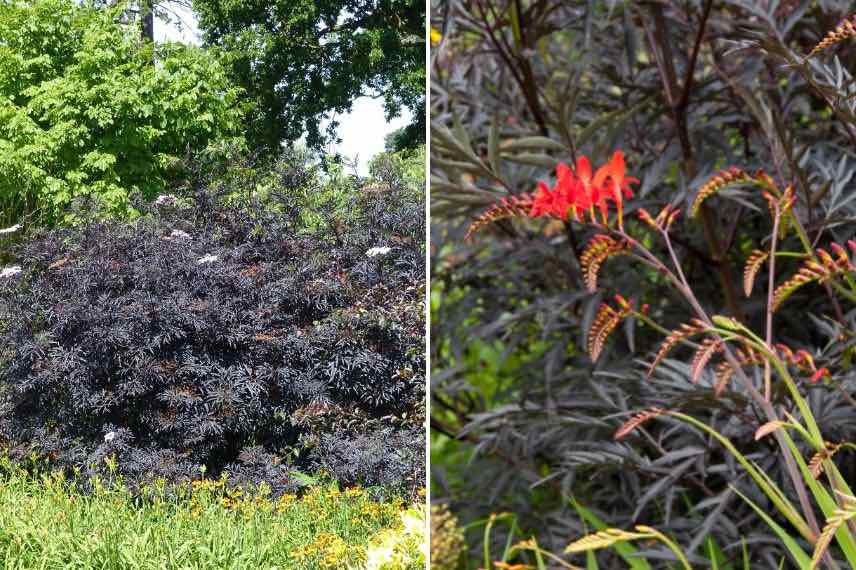
The Sambucus nigra ‘Black Lace’ seen from afar and then up close with a crocosmia
Discover other Sambucus - Elder tree
View all →
Available in 1 sizes
Available in 2 sizes
Available in 4 sizes
Available in 1 sizes
Available in 1 sizes
Available in 1 sizes
Available in 3 sizes
Available in 1 sizes
Available in 1 sizes
Available in 2 sizes
Sambucus nigra 'Pulverulenta'
This very beautiful black elder is adorned with variegated foliage that has a stunning effect: rather than being marginate, it is splashed, resulting in a speckled appearance like paint splatters. The Sambucus nigra ‘Pulverulenta’ features light green and pure white, giving it a sometimes silvery sheen. Refined, it blooms with frothy white umbels measuring 10 to 20 cm in diameter, and the fruiting of black berries suits it well. It reaches 3 m in all directions at maturity, with a growth rate slower than that of most elders. It displays a rounded, ramified, and dense habit. Its very bright foliage consists of leaves divided into numerous dentate leaflets.
This variety needs to be planted in partial shade to avoid damaging its foliage. You can grow it in a large pot on the terrace as well as in a hedge, at the back of a border behind tall perennials. Like a point of light, it draws attention. In cool soil, it can be accompanied by lysimachias and ferns. In a border or a hedge of shrubs, consider, for example, Mock Oranges and Viburnums.
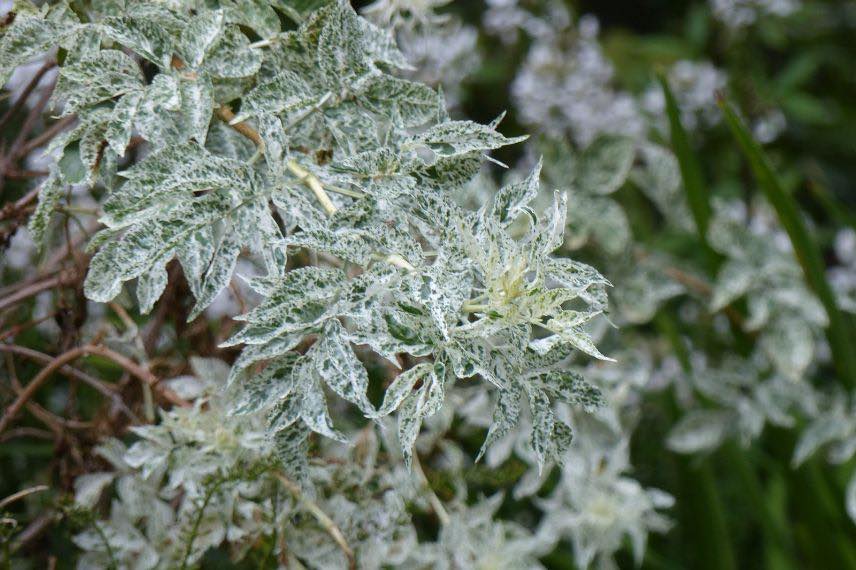
Sambucus nigra ‘Pulverulenta’
Read also
Sambucus nigra 'Black Tower'Sambucus nigra 'Black Tower'
Another remarkable variety with almost black foliage, the Sambucus nigra ‘Black Tower’ develops a fastigiate habit that gives it an undeniable advantage, both visually and sometimes for practical reasons. Fast-growing, it reaches 2 m in height and 1 m in width after 4 years of cultivation. In adulthood, it measures up to 4 m in height and 2 m in width. It is therefore a truly narrow and slender bush, with beautiful lanceolate and dentate leaves, glossy, almost black, with purplish or dark green accents on some leaves depending on the season, giving it subtle reflections. It flowers in early summer with umbels that contrast sharply with its foliage, initially dark pink, then transitioning from light pink to white.
Its colour and narrow habit clearly make it suitable for contemporary gardens, where it impresses with its tall, upright stature and its beautifully dark foliage. Numerous contrasts and very graphic results can be achieved with white, pink, or red flowers. Grey or golden foliage also stands out strongly in front of it. It is, of course, also at home in other garden settings, composing a lovely border in a rustic atmosphere with pink flowers and grasses, for example. It enhances everything and adds depth without taking up much space.
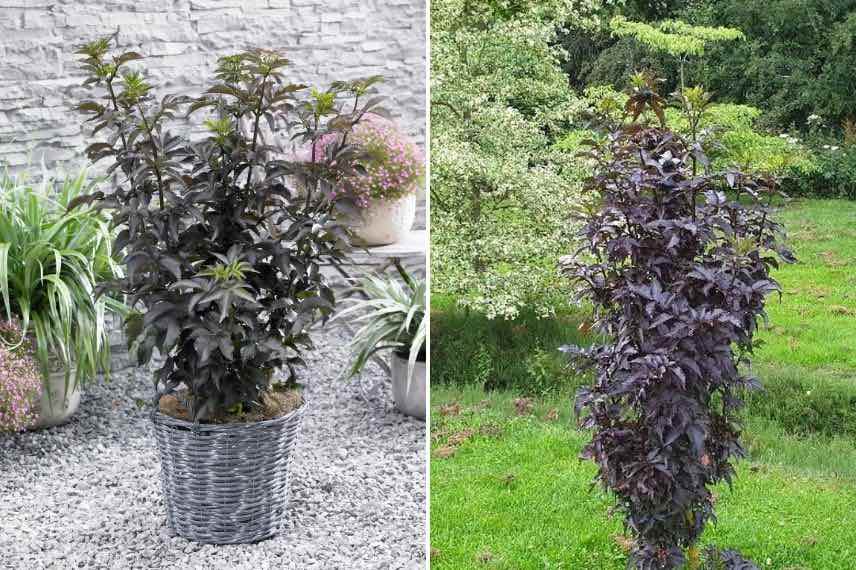
Sambucus nigra ‘Black Tower’
Sambucus nigra 'Linearis'
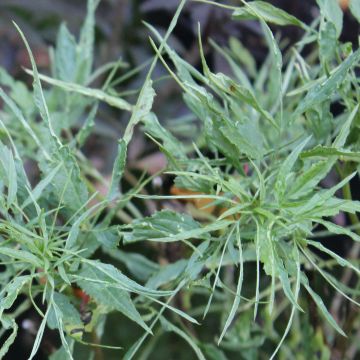
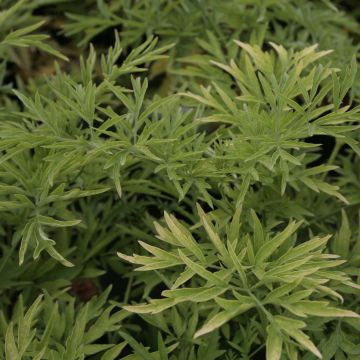
The Sambucus nigra ‘Linearis’ is a variety with astonishing and unique foliage. It features leaves so finely cut that they appear frayed. Its very thin leaflets are twisted and almost reduced to the veins, although some are broader. They have a matte appearance and a light green, slightly greyish colour. The overall habit of the bush is spreading and rounded. It reaches less than 2 m in all directions at maturity, after about 7 years of cultivation. Its early summer flowering is white, followed by the famous black berries.
It is elegant and forms a light, compact bush. Position it where it can be seen and appreciated, as otherwise it will become discreet. Plant it in a pot or under a window, in a pathway, or at the front of a shrub border.
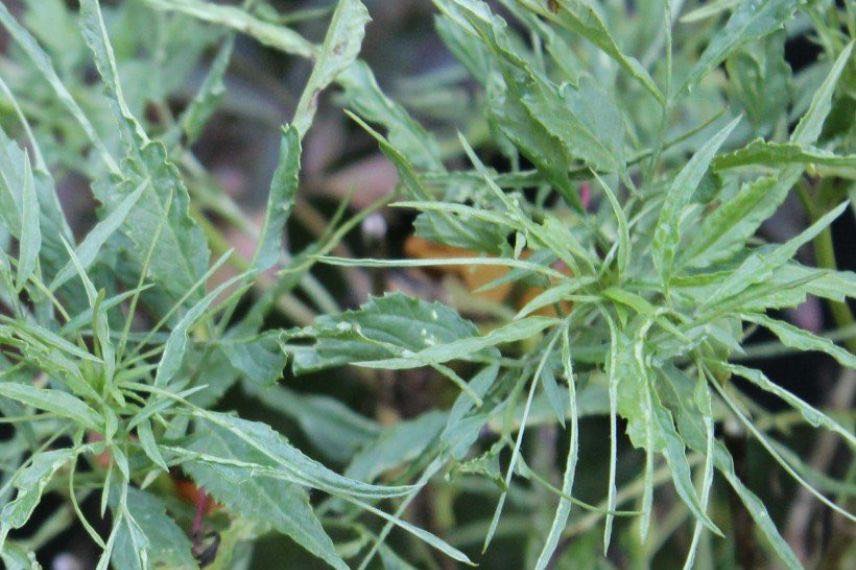
Sambucus nigra ‘Linearis’
Sambucus nigra 'Aurea'
The Sambucus nigra ‘Aurea’ graces us with beautiful golden foliage. Its leaves are composed of 5 to 7 ovate, pointed, and dentate leaflets, ranging from chartreuse green to golden yellow. Its flowers appear in May or June in creamy white false umbels, and its fruits are initially red, turning to blackish-purple, borne on bright red pedicels. The bark of the bush is light green, then grey, cracked, and fissured. This elder can reach up to 4 m in height with an equivalent width, forming a large rounded bush.
Its beautiful luminous foliage is almost fluorescent under certain exposures. Use it to bring light to your free hedges and shrub borders or to create a contrasting effect with your plants. As seen in these photos where the Sambucus nigra ‘Aurea’ is in the background of a Sanguisorba in purple and then of an Echinacea purpurea.
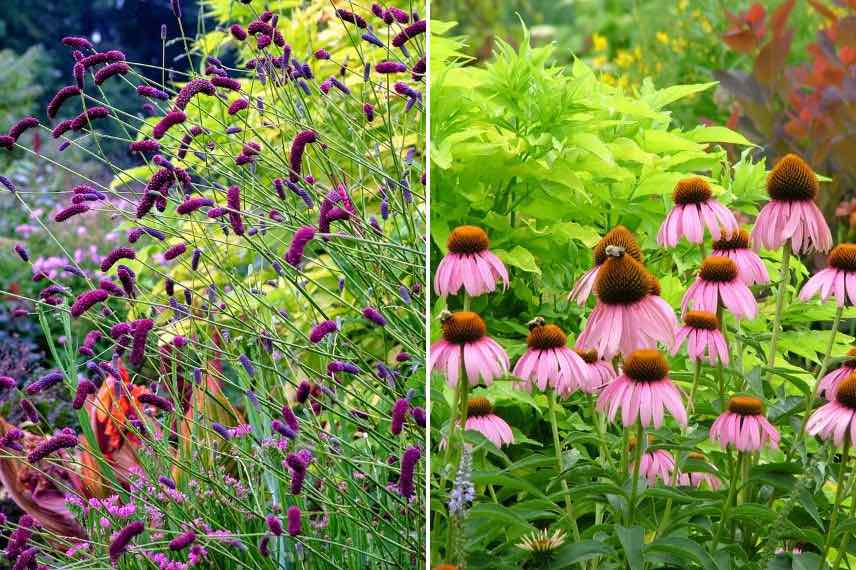
Sambucus nigra ‘Aurea’, Sanguisorba, Echinacea purpurea
Sambucus nigra 'Golden Tower'
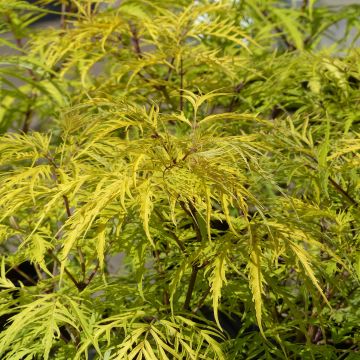
Another variety with golden foliage, the Sambucus nigra ‘Golden Tower’ has laciniate leaves, more finely cut than the ‘Aurea’ variety. With a feathery appearance, this foliage is unique, displaying a bright golden green under the sun. Its leaves are cut into numerous very thin, elongated leaflets with curled edges, ranging in colour from golden yellow to acid green. It is also a bush with a very narrow, fastigiate habit, with flexible branches, reaching a height of 3 m and a spread of 1 m when mature. It also flowers in white umbels.
Its elegance is matched only by its luminosity. You can plant it in a pot, at the front of a shrub border. Pair it with dark-foliaged shrubs like Physocarpus and Berberis, on a carpet of purple heucheras, for example. In autumn, it beautifully complements shrubs whose foliage ignites or softens during this season.
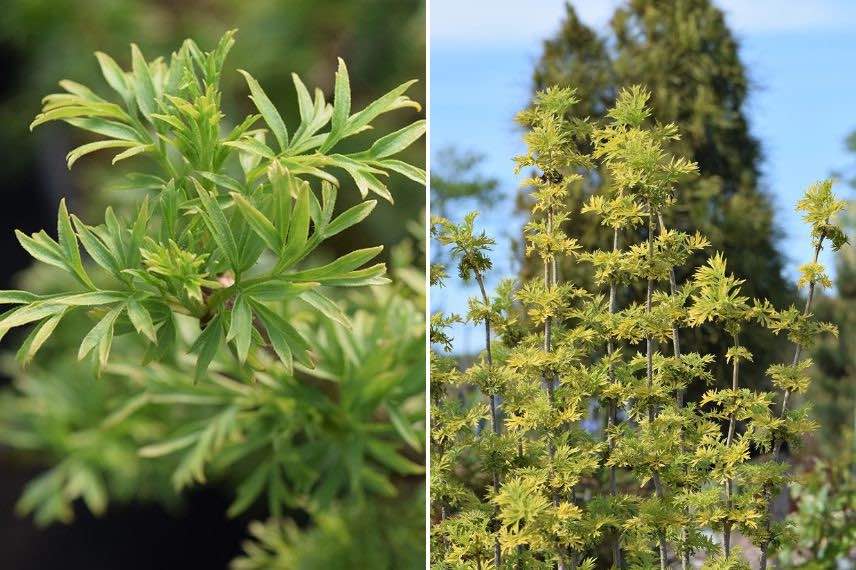
Sambucus nigra ‘Golden Tower’
- Subscribe!
- Contents
Comments