





























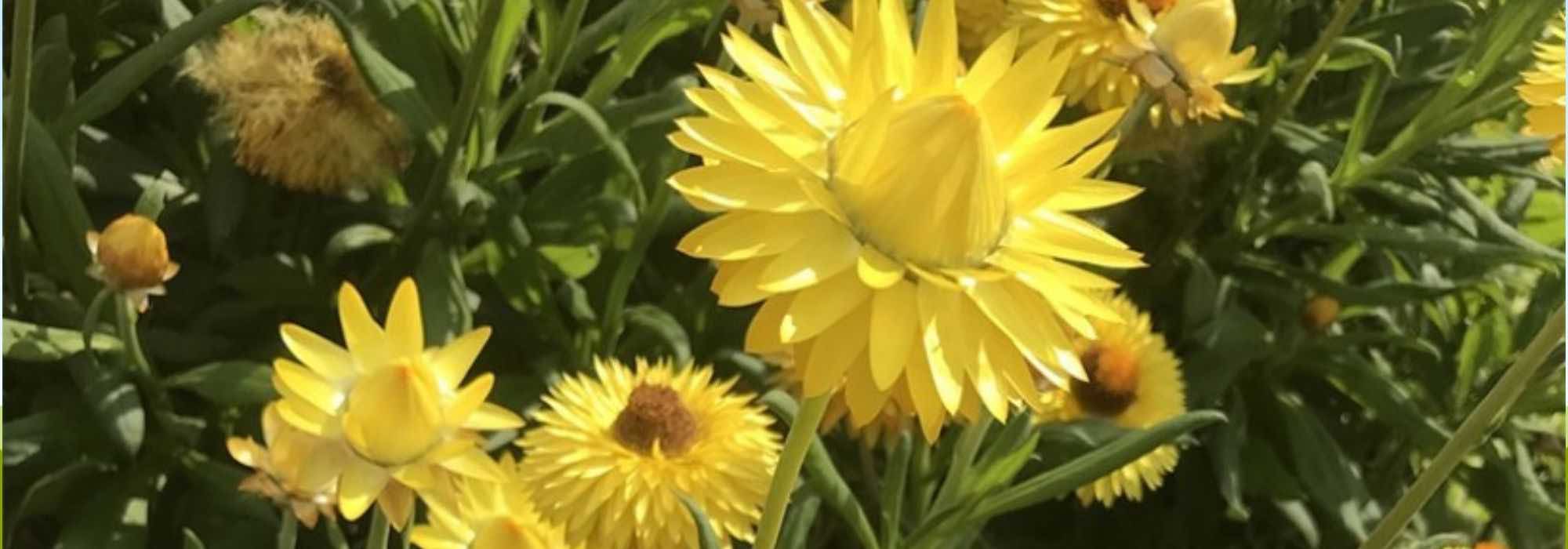
Enhance your garden with annuals for easy-to-grow cut flower arrangements
Must-have flowers for creating fresh or dried cut flower arrangements
Contents
What could be more rewarding than enjoying cut flower arrangements made from freshly picked flowers from the garden! Simple to grow, floriferous, colourful and varied : the annuals have all the attributes to enable the creation of beautiful cut flower arrangements, dried or fresh, from spring to autumn. Most will self-seed naturally, without human intervention, which means they faithfully return each year. Finally, they are generally inexpensive to buy, allowing you to create cut flower arrangements at low cost.
Here is our selection of five annuals, as easy to grow as they are perfect for your cut flower arrangements of all styles.

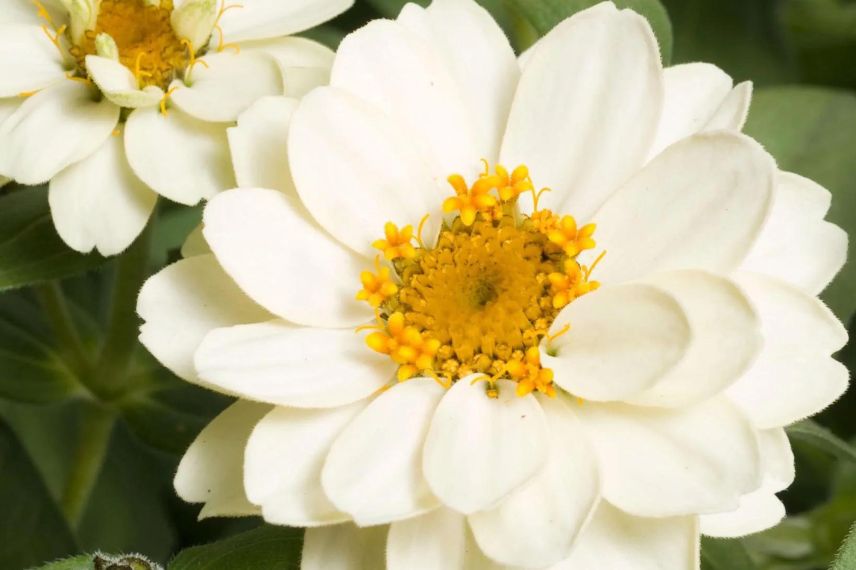
Zinnias
Zinnias are among plants that offer a host of qualities. Their generous and long-lasting flowering takes place from late spring until the first frosts. They display a beautiful diversity that will suit all tastes, whether in the garden or for cut flower arrangements. These annuals come in a wide range of colours, from the softest to the brightest. Their pom-pom flowers can have a natural look, or, at times, a more sophisticated appearance.
Among the many remarkable varieties, for example:
- the Zinnia ‘Zahara Double White’, with large white flowers about 5 cm across;
- the Zinnia elegans ‘Queen Red Lime’, with its remarkable colour that shifts from pink to lilac, then to chartreuse green;
- the Zinnia marylandica ‘Profusion Hot Cherry’, which produces pom-pom flowers in an intense cherry pink.
Zinnias are easy-care annuals that require little maintenance; they are therefore very easy to grow in the garden. Give them a sunny position, in any soil type as long as it is well-drained (light) and remains cool (moist but not overly damp). Cultivate this cut-flower annual in borders, flower beds or pots. It will also suit the vegetable garden well.
To showcase these extravagant flowers in a bouquet, opt for companions that add lightness, such as gypsophila or the Limonium platyphyllum.
To learn more about their culture: Zinnia: sowing, planting, care
Cosmos
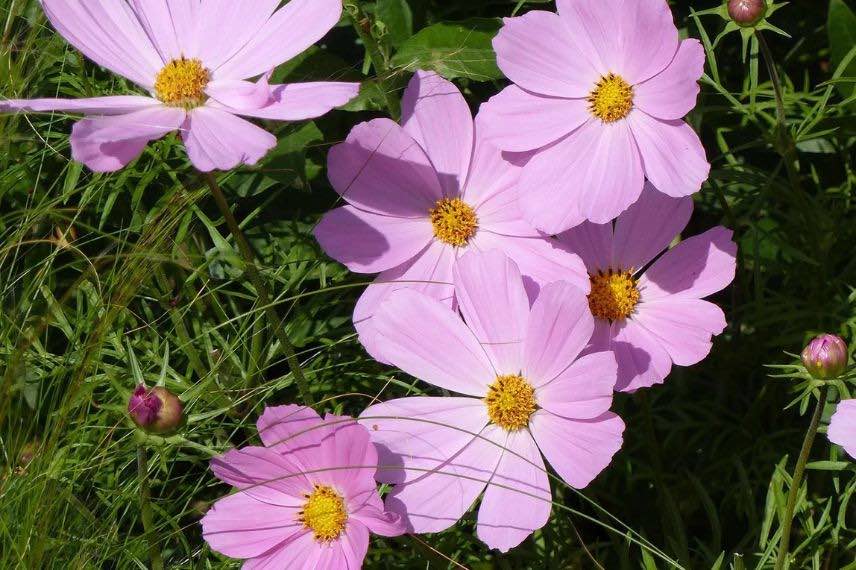
Cosmos are charming annuals with a very natural growth habit, flowering almost continuously for many months. Flowers can bloom one after another, without a break from late spring through to the first frosts. These daisy-like cousins produce flowers in single or double heads, offering a generous palette of colours, sizes and even scents.
Choose from:
- the astonishing Cosmos atrosanguineus ‘Chocamocha’, with velvety chocolate-brown flowers and a luscious chocolate fragrance;
- the Cosmos bipinnatus ‘Sonata Pink Blush’, with delicate pale pink blooms speckled with purple;
- the Cosmos bipinnatus ‘Double Click’, with double varieties forming real little floral pom-poms;
- the Cosmos sulphureus ‘Mandarin’, with a beautiful bright orange bloom.
In cultivation, these almost foolproof plants will thrive in all soil types, even poor and dry ones. Plant them in a sunny position.
Graceful and colourful, they are perfect cut flowers for creating beautiful cottage-garden bouquets, for example alongside Sweet William.
For more on their cultivation: Cosmos: sowing and planting
Damascene nigella
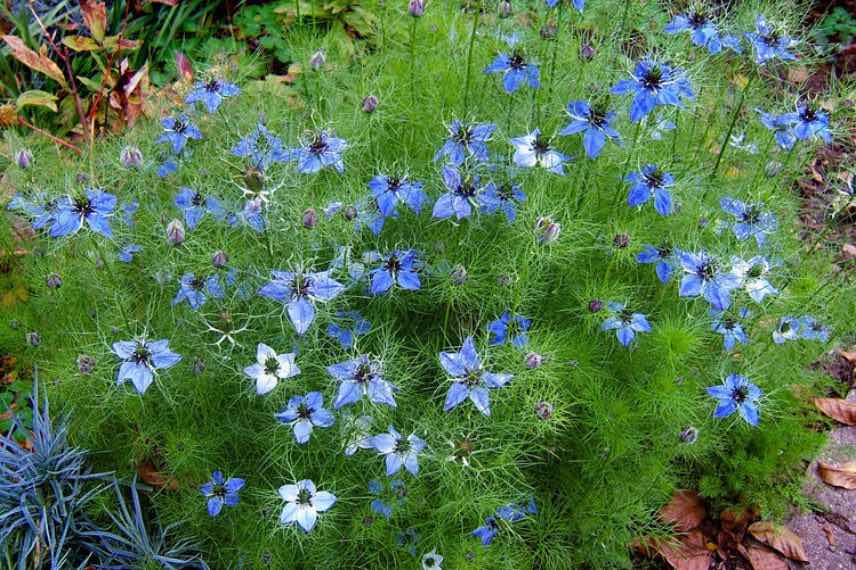
Everything is beautiful withDamask nigella! Their flowering, their finely divided foliage, but also their decorative seed capsules (fruits) are perfect for creating fresh or dried bouquets.
These annuals produce pretty blue star-shaped flowers during the summer, from June to August. They can be dark as in Nigella damascena Nigella damascena ‘Oxford Blue’, which features an intense midnight blue, or offer a true range of blues, as with ‘Moody Blues’. But some lesser-known varieties may reward us with white flowering (‘Miss Jekyll Blanche’) or even pink (‘Persian Rose’).
The foliage is also ornamental: it is deeply divided and very fine, giving it a particularly airy and graceful look.
Plant your Damask nigella in full sun, in all types of light soils, even poor ones. These annuals self-seed very easily year after year.
In a bouquet, blue-flowered Damask nigella will pair beautifully with yellow-flowering plants of a complementary colour.
For more about their cultivation: Damask Nigella: sowing, cultivation and care
The sunflower
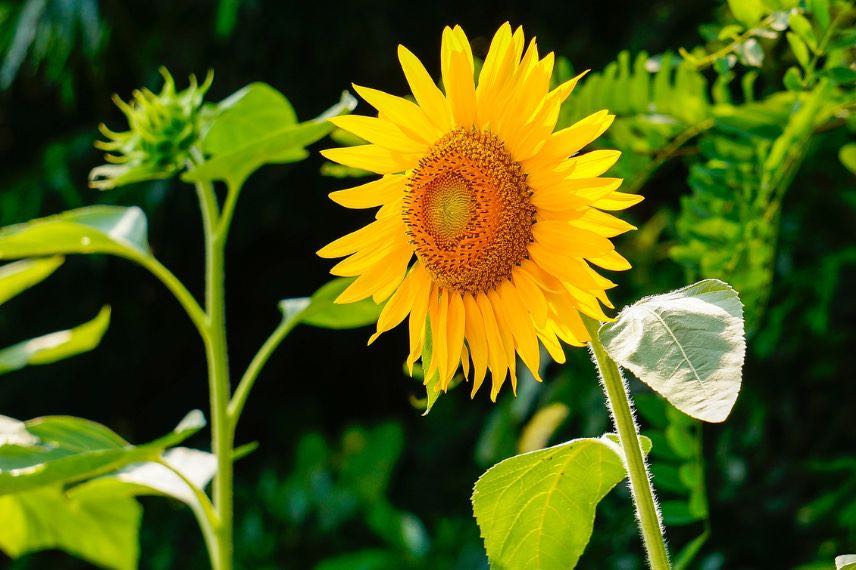
True garden sunflowers, the sunflowers bring as much joy to gardeners as to bees and other pollinators. They provide almost continuous display from July to October. Their large, daisy-like flowers can be single or double. The Helianthus annuus ‘Uniflorus Giganteus’ will reward you, for example, with giant flowers of around 30 cm in diameter, borne on sturdy stems reaching 2.5 m in height. You can also opt for varieties that are more original, such as ‘Orange Sun’ with its double flowers resembling large pom-poms. For its part, ‘Solar Eclipse’ produces magnificent two-coloured flowers, blending yellow and fiery red.
Plant sunflowers in full sun, in soil fairly rich in organic matter and remaining moist during growth (which never fully dries out).
Sunflower blooms last a long time in vases, which is why they are excellent choices for cut flower arrangements. The bluish-green foliage of an Eucalyptus will perfectly enhance the sunny colour of these flowers.
For more on its cultivation: Sunflower: sowing, planting, care
Bracted immortelles
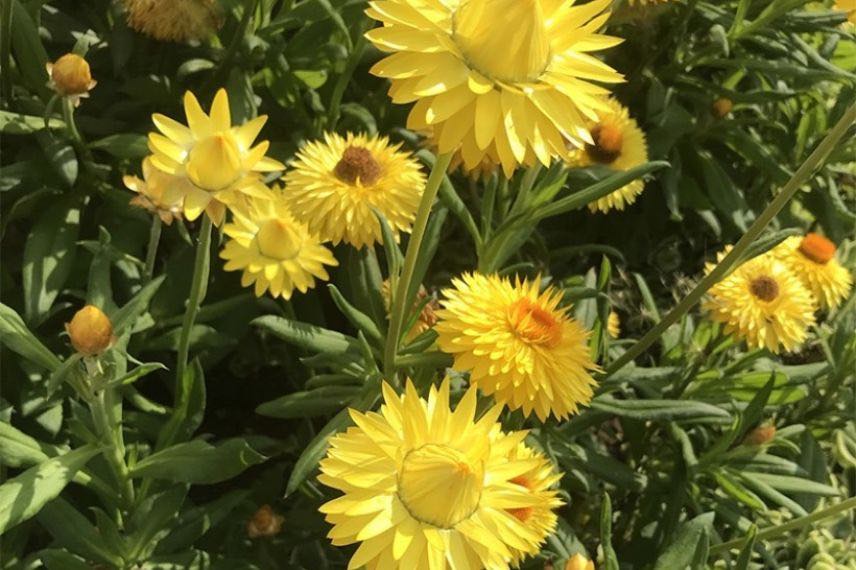
The bracted immortelles have inherited this poetic name due to their very long lifespan. Indeed, these flowers never truly wither, which makes them perfect annuals for making fresh or dried bouquets.
Their flowers are particularly striking, with a scaly appearance and always very colourful. They bloom from June until the first frosts.
Grow bracted immortelles in full sun, in moist, well-drained soil, but rather rich in organic matter to encourage flowering.
In dried bouquets, they pair wonderfully with ornamental grasses bearing ornamental spikelets, such as the charming common lovegrass (Briza media) or hare’s-tail grasses (Lagurus ovatus).
For more on their cultivation: Helichrysum, curry plant, immortelles: sow, plant, and care
Many more annuals for cut flower arrangements
This list is not exhaustive, as there are, of course, many other annuals ideal for creating bouquets of all styles. For example, as well as calendulas, foxtail amaranth, sweet peas, annual salvias or annual Rudbeckias.
- Subscribe!
- Contents
Comments