





























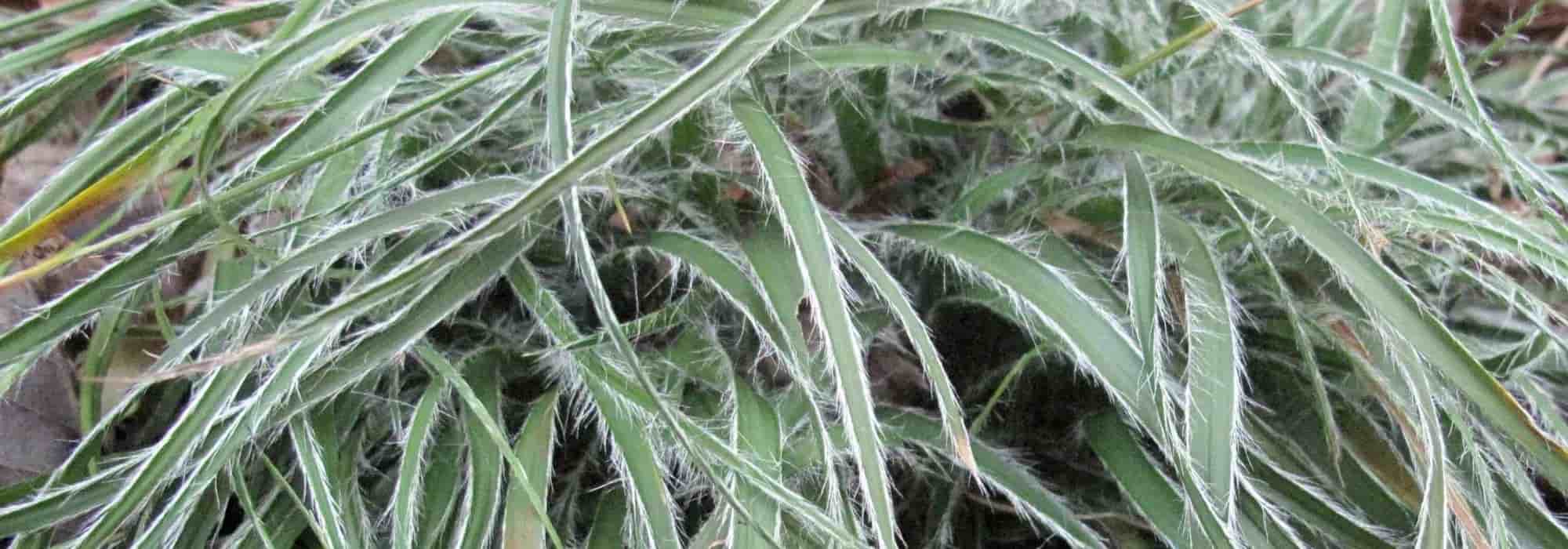
Groundcover grasses: for an attractive, low-maintenance garden
Their advantages, our planting tips and our selection
Contents
Unlike tall ornamental grasses, groundcover grasses grow in low-growing clumps or spread to form a dense carpet. Their foliage, evergreen in some varieties, can be green, blue, variegated or golden, depending on the variety. They are also distinguished by their functional role: cover the soil while adding a decorative touch. They can even be used in areas that are difficult to landscape, such as slopes, or to fill the gaps between shrubs and perennials.
Discover everything you need to know about these groundcover grasses, along with our growing tips and a selection tailored to your needs.

Advantages of groundcover grasses
Are you after a low-maintenance garden, not requiring too much upkeep and more resilient to climatic variations? Groundcover grasses could win you over! Here are some of their main advantages:
- These plants form a dense carpet that limits the appearance of unwanted weeds. Once well established, they require little watering and only minimal maintenance.
- They help retain moisture and improve soil structure, particularly in areas exposed to wind or rain. On slopes or along a bank, they help limit soil erosion thanks to their root system.
- Their foliage offers a palette of colours and textures to visually enrich the garden, whether in borders, in flower beds or in woodland settings.
- There are various varieties, suited to sun, shade, dry or damp soils, which allow use in almost any garden configuration.
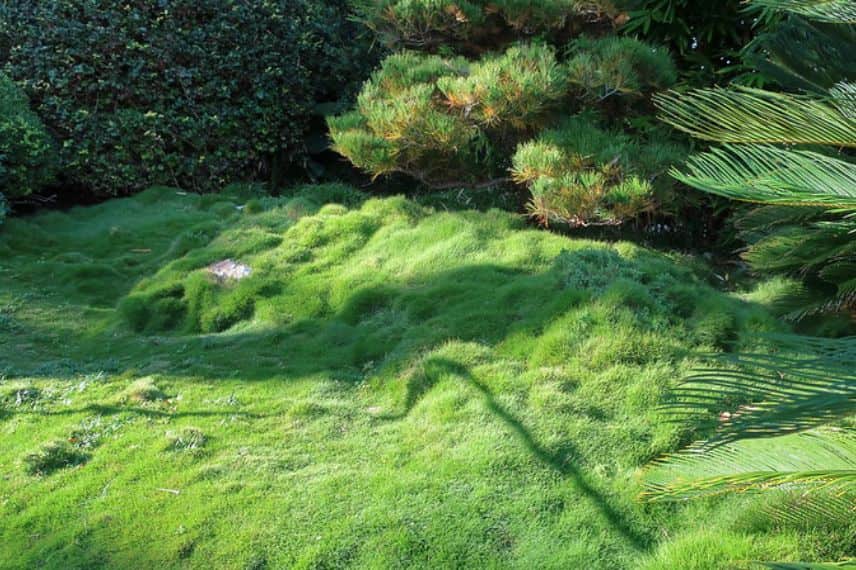
The Zoysia tenuifolia resembles tufted, knobbly grasses
How to choose a groundcover grass that is suitable for your garden?
To choose the ideal groundcover grass, you need to consider the characteristics of your garden. Here are a few criteria to guide you:
- Soil type: Sandy, clay, calcareous or loamy? Is it dry or consistently damp? Each plant appreciates one to several soil types, and some grasses, such as the Carex morrowii ‘Ice Dance’, are fairly undemanding. To learn more about your soil, read our article “Determine the texture of your soil: clayey, sandy, loamy“.
- Exposure: Some grasses prefer full sun, while others thrive better in shade or partial shade.
- Use : Would you like groundcover for a large area? For a border? A bed? Under woodland trees or on a bank? Here too, some species adapt better than others.
- Growth rate : If you’re after rapid cover, opt for species such as the Carex. And if you prefer plants that establish slowly, how about an Ophiopogon?
On our site, you will find these details in the descriptive table for each plant. Feel free to browse our range of low-growing grasses.
Our selection of groundcover grasses
Ground-cover grass varieties are numerous, and while the choice is often a matter of taste (after considering the criteria above), here is a small selection of interesting varieties:
For sunny, dry areas
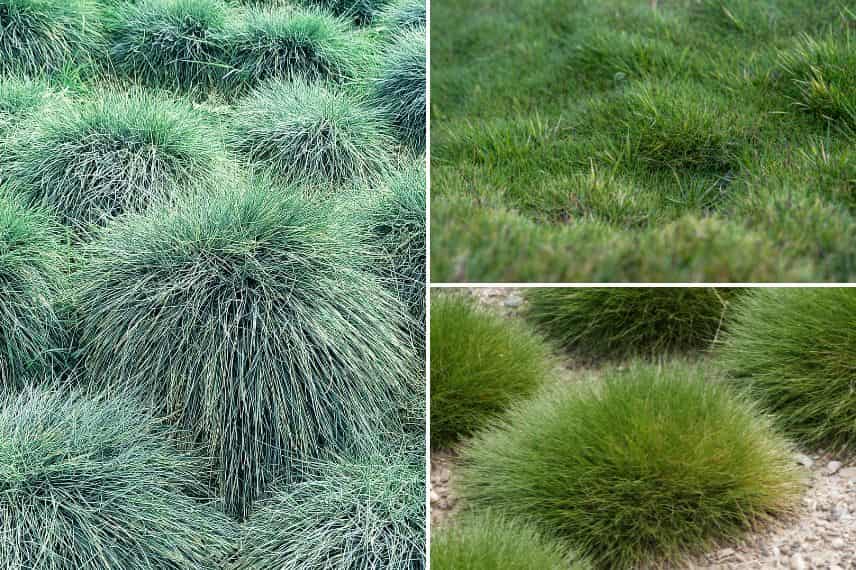
- Blue fescue ‘Elijah Blue’ (Festuca glauca ‘Elijah Blue’)
This compact fescue tolerates poor soils, endures drought and proves quite hardy (down to -18 °C). With its evergreen, blue-silver foliage, it forms a small bristly tuft that adds a contemporary touch and colour to arid or rocky gardens. - Mascarene lawn grass (Zoysia tenuifolia)
This fine-leaved grass slowly spreads to form a dense, evergreen carpet that resembles a textured lawn, but requires far less maintenance. It can even replace turf in gardens where the latter struggles to establish. Perfectly suited to dry, well-drained soils, it tolerates hot summer heat, full sun and partial shade, while remaining elegant. - Gautier’s fescue (Festuca gautieri)
Gautier’s fescue is an excellent alternative for covering rocky areas or dry soils. With its bright green foliage and low, dense tufts, it offers a practical and decorative solution for borders and slopes exposed to full sun.
For shaded and cool areas
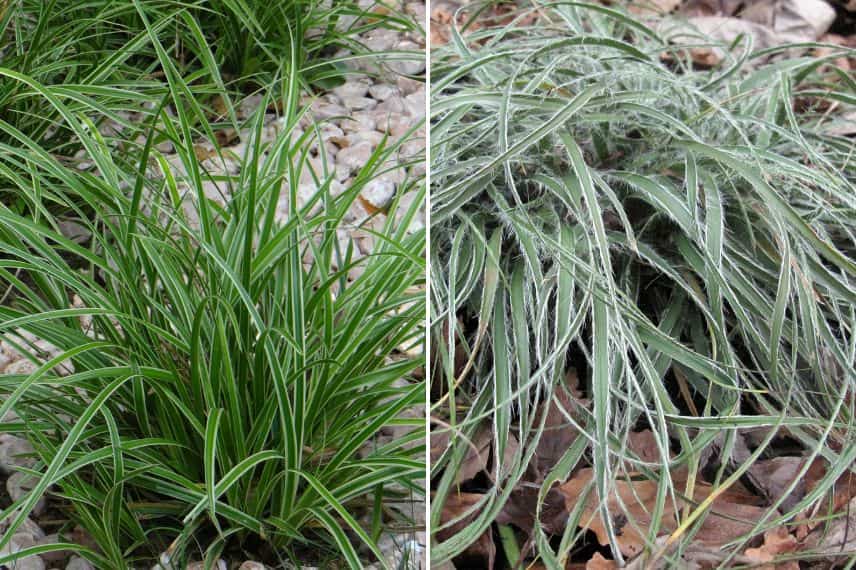
- Japanese sedge ‘Ice Dance’ (Carex morrowii ‘Ice Dance’)
With its green-and-white variegated foliage, this sedge brightens shaded corners of the garden. Evergreen, it forms a dense, resilient carpet, ideal for woodland areas or shaded borders. It thrives in both rich and slightly damp soils, and its bright appearance lights up spaces often overlooked. - White woodrush (Luzula nivea)
The white woodrush is a ground-cover grass valued for its fine foliage, edged with white hairs and accompanied by delicate white inflorescences, reminiscent of snowflakes, in early summer. It spreads readily in shade or partial shade.
For damp or poorly drained areas
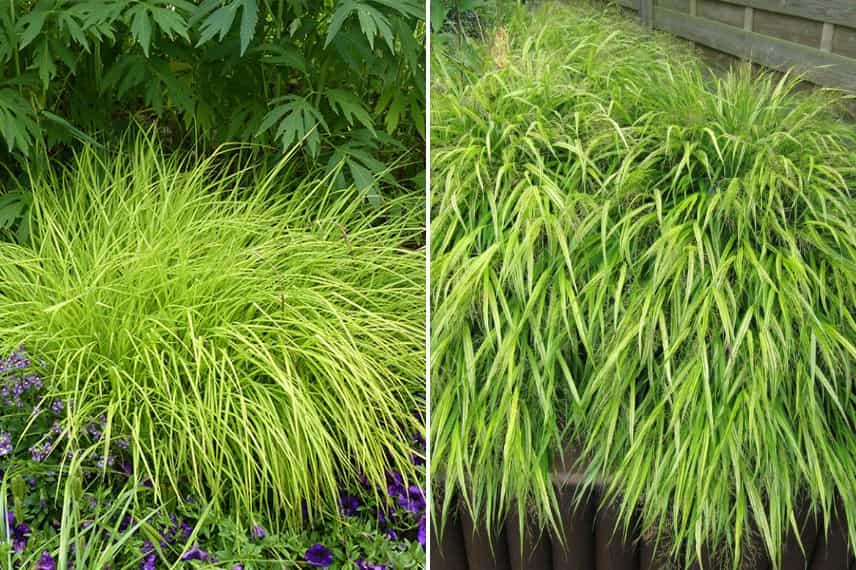
- Golden sedge ‘Aurea’ (Carex elata ‘Aurea’)
This grass stands out with its bright yellow foliage edged in green, catching the eye. It thrives in damp soils, including by pond margins or poorly drained areas. Hardy and even tolerates being submerged under 10 cm of water. - Hakonechloa macra ‘Aureola’
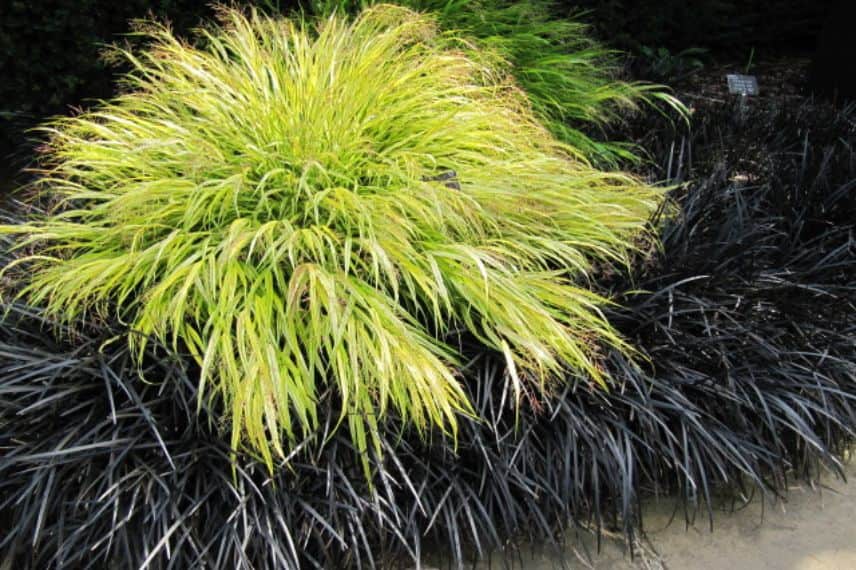
This elegant, pliant grass is perfect for contemporary or Japanese-style gardens, in semi-shaded to shaded areas. Its golden foliage, slightly striped with green, drapes gracefully in cascading form, adding a unique texture to the garden. It is ideal for slopes, path edges or damp planting borders.
How to properly install and maintain your groundcover grasses?
Soil preparation
- Before planting, start by carefully weeding the area to remove any competition from weeds.
- Then, loosen the soil to a depth of about 20 cm using a spade.
- If your soil is very heavy (clay) or poor, incorporate some compost to improve its structure and fertility. Take the opportunity to improve drainage to prevent waterlogging by incorporating gravel, pozzolana or coarse sand.
Spacing between plants
To achieve dense, even coverage, you should adhere to proper spacing when planting. Plant the grasses at regular intervals, following the recommendations specific to each variety (usually between 30 and 50 cm apart, depending on the variety).
Planting
- Before planting, soak the pots in a bucket of water for 10–15 minutes to thoroughly hydrate the roots.
- Dig planting holes about twice the size of the root balls.
- Place each root ball in the centre of the hole, adjusting the depth so that the surface of the root ball is level with the soil. Then backfill the hole with the excavated soil (or a mix of soil, compost and potting compost), gently firming around the plant to avoid air pockets.
- Once planting is complete, water well to help the roots to embed in the soil.
Watering
During the first weeks after planting, water regularly, especially in dry weather, keeping the soil moist but not waterlogged. Once the grasses are well established, they often become quite drought-tolerant and require little water, particularly varieties suited to dry soils. Nevertheless, stay vigilant during prolonged dry spells.
Year-round maintenance
Ground-cover grasses are renowned for their low maintenance, but a little care is needed to keep them looking their best:
- At the end of winter, remove dead, yellowing or damaged leaves to make way for fresh new foliage. Some varieties, particularly deciduous ones, may also benefit from pruning a few centimetres above the soil to allow new spring growth.
- Fertilising: While not demanding, a light application of compost or organic fertiliser in spring can help stimulate growth, especially in poor soils.
- Managing expansion: Some varieties can become invasive over time. If necessary, divide clumps every 2–3 years to control their spread and rejuvenate them.
Prevention of adventive weeds
During the establishment phase, regularly monitor for unwanted herbs, which may still emerge in uncovered areas. Once the grasses have formed a dense carpet, they will naturally limit their appearance.
- Subscribe!
- Contents
Comments