





























Growing a Calycanthus in a pot
To enjoy its fragrance and unique flowers on the terrace and balcony.
Contents
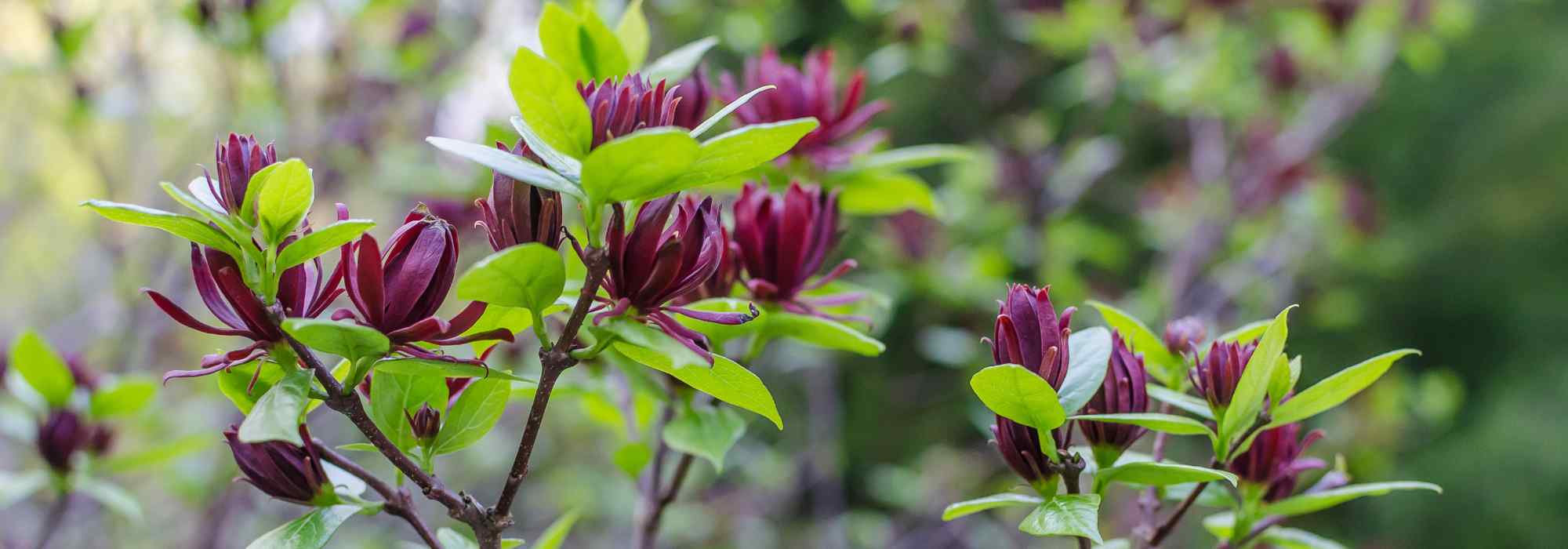
The Calycanthus or Anemone Tree is a bush with a very original flowering resembling small water lilies that exude a sweet strawberry scent. This summer flowering blooms on lush, deciduous green foliage that sometimes takes on beautiful autumn colours. Very hardy down to -20°C, easy to grow, it only requires sunlight to thrive and a substrate that is sufficiently rich, cool, and well-draining. Compact in habit, the calycanthus will not exceed 2 m in height at ripeness and can be used in pots to brighten up the terrace or balcony in summer.
Discover all our tips for growing this fragrant and floriferous bush in pots!

Which variety to choose for pot cultivation?
Calycanthus are moderate-sized bushes reaching a maximum height of 2 metres and nearly the same in spread at maturity. All varieties of the sweetshrub can therefore be suitable for pot cultivation. However, you may want to consider the more compact varieties, which do not exceed 1.70 m in height at ripeness, such as:
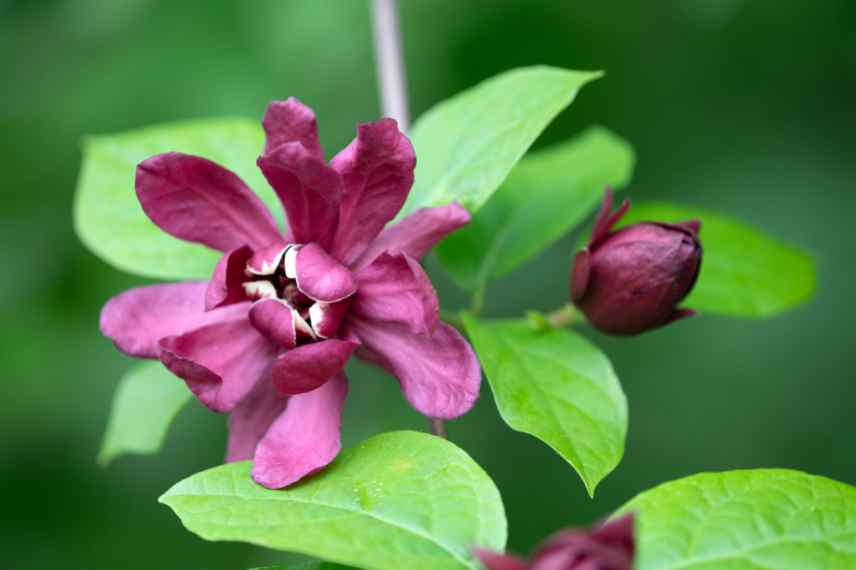
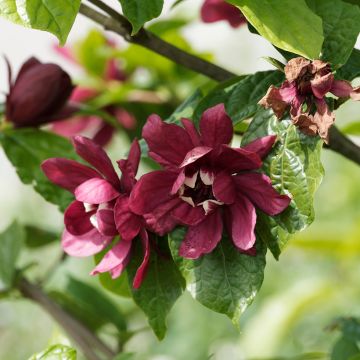
- The Calycanthus ‘Aphrodite’, which will not exceed 1.70 m in height and 1.50 m in spread and offers purple-magenta flowers edged in white throughout the summer.
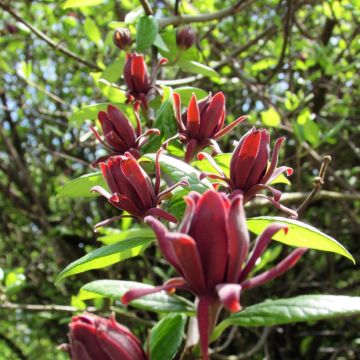
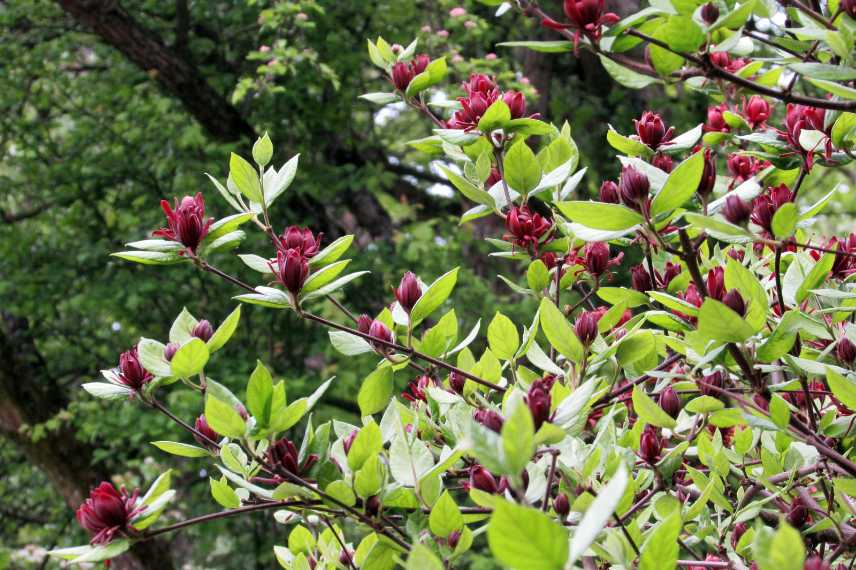
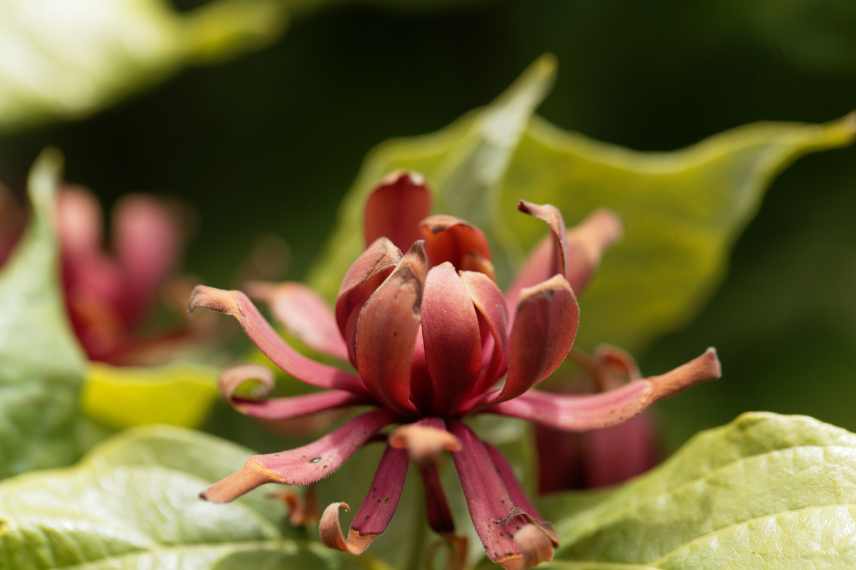
- The Calycanthus (x) raulstonii ‘Hartlage Wine’, which forms a bush with a maximum diameter of 2 m covered in red-purple water lily flowers.
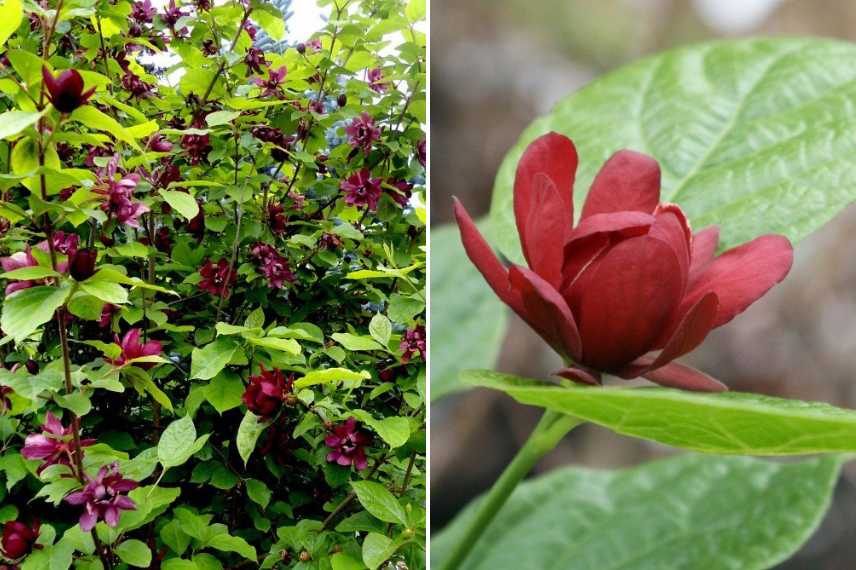
Calycanthus raulstonii ‘Aphrodite’ and Calycanthus raulstonii ‘Hartlage Wine’
What type of pot?
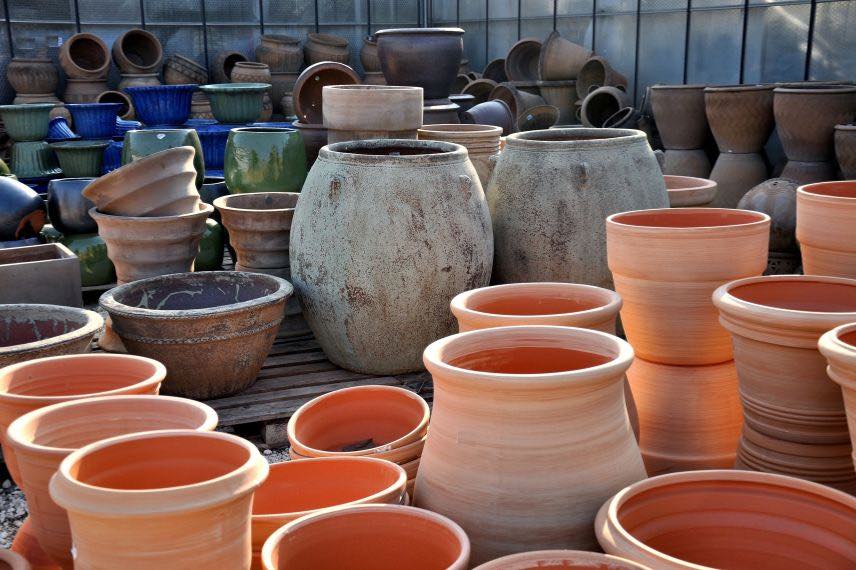
Choose a pot 2 to 3 times larger than the size of the root ball, with a diameter of at least 50 cm. The container must have drainage holes at the bottom to allow watering or rainwater to escape, as this bush does not like stagnant moisture at the roots. In terms of material, you can opt for a plastic pot, which is lighter, more manageable, and economical, or for a terracotta pot, knowing that the latter, while allowing better aeration at the roots and good moisture drainage, will require more frequent watering.
Discover other Calycanthus
View all →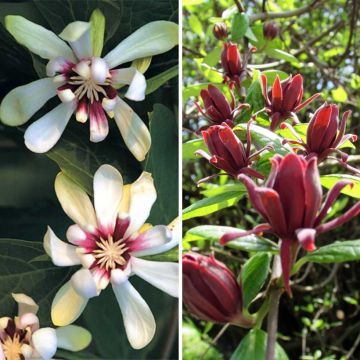
Available in 0 sizes
Available in 1 sizes
Available in 2 sizes
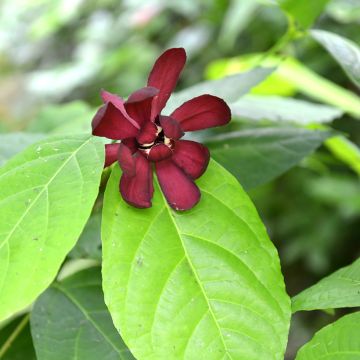
Available in 2 sizes
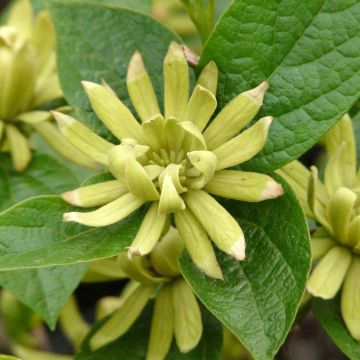
Available in 1 sizes
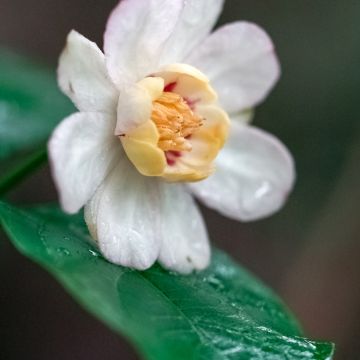
Available in 1 sizes
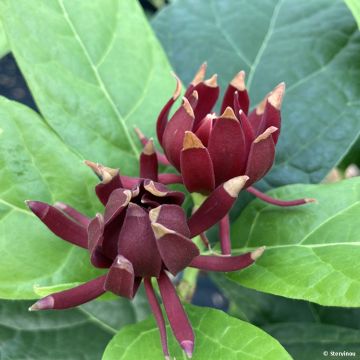
Available in 1 sizes
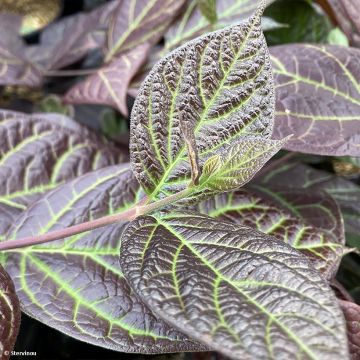
Available in 1 sizes
Which substrate to choose?
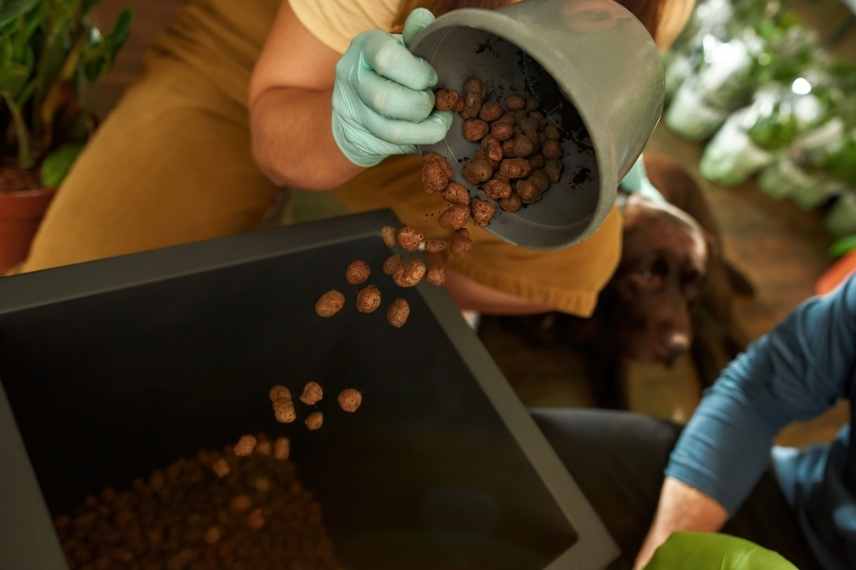
Calycanthus requires a well-drained substrate to prevent root rot. It appreciates a soil that is sufficiently rich, not too calcareous, and remains cool in summer. A slightly acidic substrate like heather soil will also suit it. To improve drainage, spread a layer of gravel or clay balls at the bottom of the pot. You can plant it in bush compost or create a balanced mix of garden soil, well-decomposed compost, a bit of heather soil, and coarse sand to facilitate drainage.
→ To learn everything about substrates, check out our article: «Balcony, terrace and small gardens: composts and fertilisers perfect for small spaces – The latest innovations»
Read also
Potted plants: how to grow and care?When and how to plant a calycanthus in a pot?
The best time to plant a calycanthus in a pot is in spring, in March-April, when the risk of frost has passed.
Required materials:
- Some clay balls or pumice
- A bucket
- An appropriate container
- A watering can
Steps for planting
- Start by soaking the root ball in a bucket of water until no more air bubbles appear
- Place a layer of clay balls, pumice, or gravel at the bottom of the pot (about 20% of the pot’s volume)
- Fill with some substrate up to halfway in the pot
- Position the bush in the centre of the pot, so that the top of the root ball is 2 to 3 cm below the rim of the pot
- Fill the pot with the remaining mix
- Lightly compact
- Water
- Spread an organic mulch to prevent the soil from drying out too quickly
What exposure for a calycanthus in a pot?
Calycanthus needs warmth and brightness to bloom well. Place the pot in non-burning sunlight, or at most in partial shade, on a balcony or terrace, and well protected from strong, cold winds. In warm regions, it can tolerate being planted under light shade.
How to care for a calycanthus in a pot?
Watering and Fertilising
The calycanthus prefers the substrate to remain moist during summer. In pots, it will require more frequent watering, as the substrate dries out faster than in the ground. In summer, water once or twice a week, during the flowering period and as soon as the soil is dry. Be vigilant during heatwaves. Do not leave a saucer under the pot; ensure that moisture does not stagnate around the roots. To maintain freshness at the base during the warm season, we recommend spreading a mulch around your bush. In winter, reduce watering to once every two weeks in the absence of rain.
The Calycanthus is a heavy feeder that will appreciate annual applications of organic fertiliser (well-matured compost) each spring to promote growth and flowering.
Pruning
Pruning is not obligatory; however, it helps to rebalance the shape, encourages branching, and keeps it floriferous. You can intervene at the end of winter, in March-April, to restore a harmonious shape or maintain a compact habit for your bush. Carry out light pruning.
- Remove faded flowers as they occur during summer to stimulate further flowering.
- Using a clean pruning shear, remove branches that clutter the centre of the branches.
- If necessary, every 3-4 years, shorten by ¼ the length of dead, thin, or tangled shoots and remove the oldest branches at the base.
Wintering
Very hardy, down to -20 °C, the Calycanthus withstands cold well. In pots, it can spend winter outdoors and does not need to be wintered. However, the roots of potted plants are more exposed to the cold than those in the ground. If you live in an area with harsh winters, you may safely mulch the stump with a thick organic mulch. Protection with cardboard or bubble wrap around the pot will also be useful to insulate the roots from severe frosts.
Repotting
Your calycanthus can be repotted every 2 to 3 years at the end of winter to refresh its substrate and provide new nutrients, as the soil in pots depletes more quickly. Take the opportunity to give it a larger pot, as its growth is rapid. In other years, simply carry out a top dressing, which involves renewing the exhausted substrate with a few centimetres of fresh, nutrient-rich compost.
For further reading
- Discover our varieties of Calycanthus
- To learn everything about this unique bush, read our complete guide
- Subscribe!
- Contents
Comments