





























Growing Lantana in pots
An avalanche of multicoloured flowers right through to the frosts!
Contents
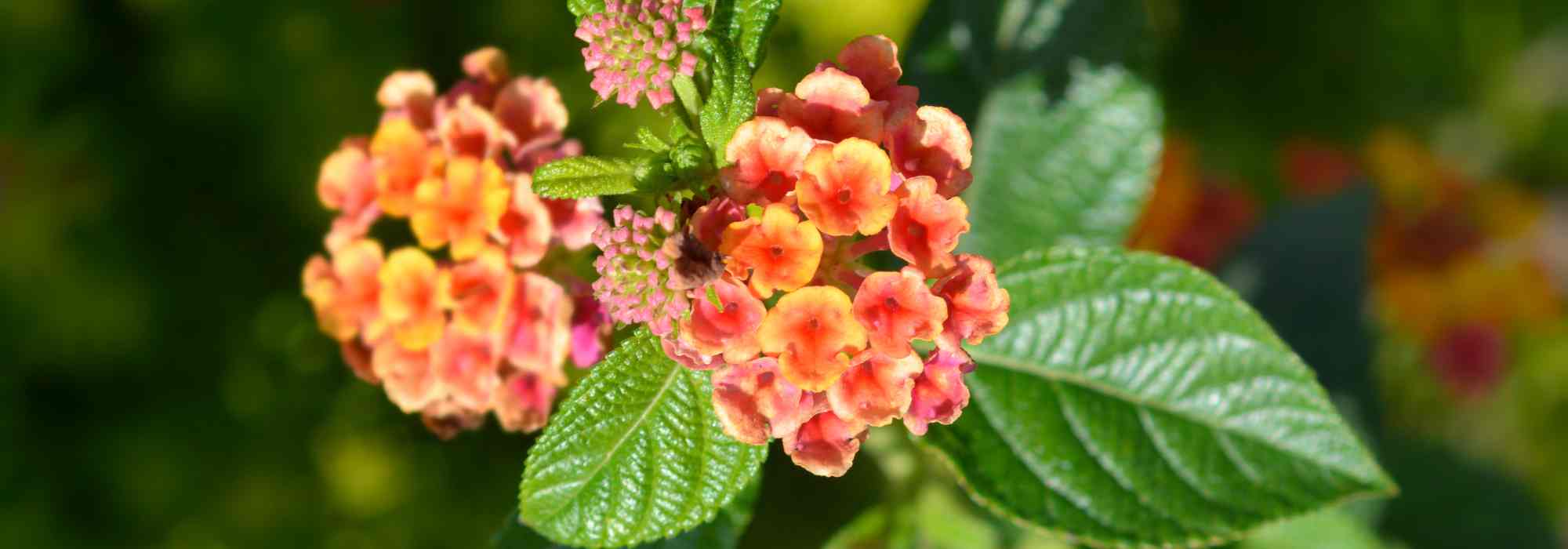
The lantana is a charming plant that flowers for a long period in summer until the first frosts, with shimmering and varied colours, ranging from yellow and orange to pink, a real kaleidoscope! It also comes in mauve, purple and red flowering. It is generally grown as an annual plant in most regions, as it cannot withstand sub-zero temperatures for several days. Thus, planting it in a pot is a good way to brighten our terraces or window boxes, so that it can overwinter during the coldest months.
Discover how to successfully pot it up to have it radiate across your terraces and balconies for many months.
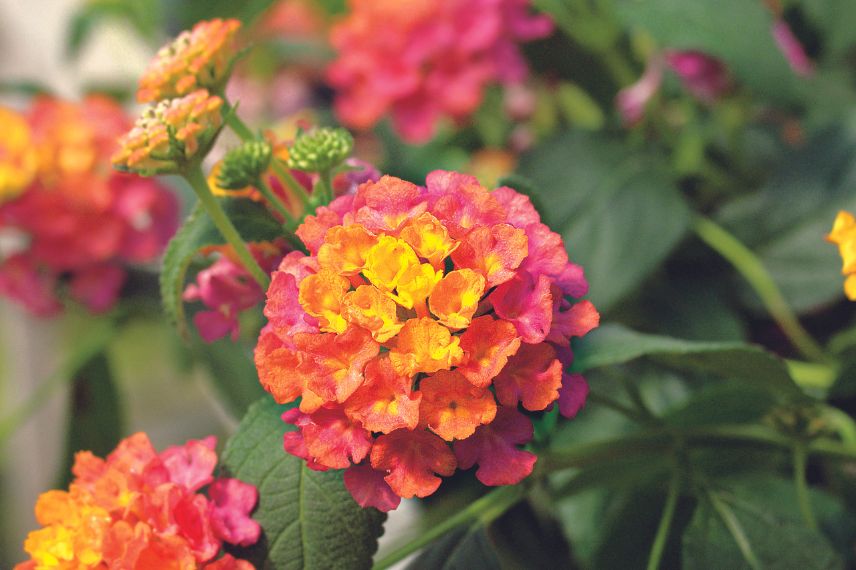
Lantana camara ‘Tutti Frutti’

Which Lantana varieties to grow in pots?
Lantanas come in a variety of forms, shrubby or creeping. Compact varieties are perfect for window boxes and balcony planters, while trailing lantanas with flexible stems (Lantana sellowiana) are ideal for hanging baskets or tripod pots. Shrubby types can be grown in pots, provided you choose a larger container.
Among the varieties of interest for pot culture are: Lantana camara ‘Repens’ and those from the Carpet series such as ‘Yellow Carpet’. The Lantana sellowiana is also called Lantana montevidensis (trailing) and its cultivars, such as the Lantana montevidensis ‘Mauve’.
If you want to keep your lantana for as long as possible, try Lantana ‘Miss Huff’, a recent American release, listed as hardy to -15°C. The lantanas from the Sunshine series (‘Chapel Hill Yellow’, ‘Chapel Hill Gold’ and ‘Sunny Side Up’) are also among the hardiest lantanas when grown in well-drained soil.
Read also
Lantana: planting and careWhen and where should you plant a lantana in a pot?
For these South American plants, spring planting is essential, it’s during this season that you’ll find them in garden centres and specialist retailers. Plant them in May to see them bloom uninterrupted until the first frosts. If you have a greenhouse, force them from March to see them bloom a little earlier.
Lantanas need sun, so they should be placed in a south- or west-facing exposure to ensure they receive enough warmth. Full sun suits them, and partial shade too, as long as they get at least 5–6 hours of sunshine per day. They tolerate drought well in the ground, however in pots you’ll need to keep an eye on watering (see below).
The trailing varieties look wonderful trailing over a low wall, a staircase, a railing or a window ledge.
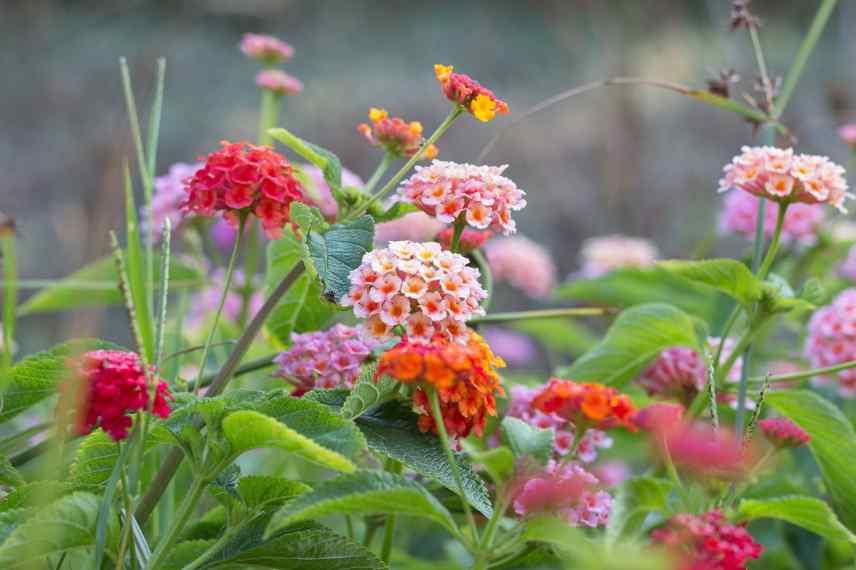
Lantanas require sun above all, with partial shade in the southernmost regions of the country.
Pot type and size
For this plant that prefers well-drained soil, make sure you plant it in a container with a drainage hole. Avoid drip trays as much as possible, and remember to fill the bottom of the pot with a few centimetres of clay pebbles, small gravel, crushed brick… anything that will ensure the best possible drainage.
The pot size will vary depending on whether you plant a compact Lantana or a shrub-form Lantana. Allow a diameter of at least 20–30 cm for pots or troughs, and a small trough or large planter for Lantana grown on a stem or shrub form.
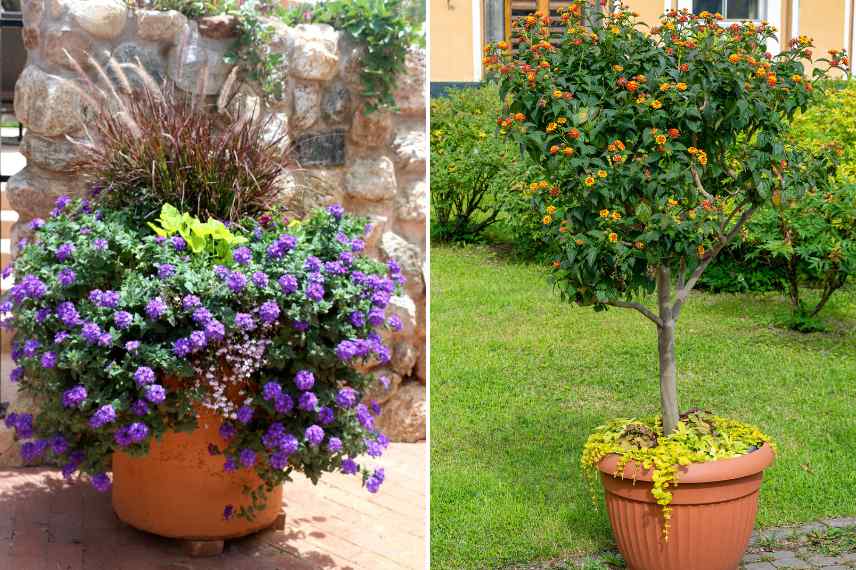
Lantanas violine in a large pot (© Chic Bee) and Lantana camara trained on a stem.
Read also
How to take a cutting from a lantana?What substrate?
This is a crucial element that will make all the difference to the abundance of its flowering, because Lantana is a heavy feeder! For planting, prepare a mix in equal parts of nutrient-rich potting compost, garden soil and well-rotted compost. If you have neither garden soil nor compost on hand, a geranium potting compost will be well suited to replace the organic amendment, possibly supplemented with a few handfuls of sand.
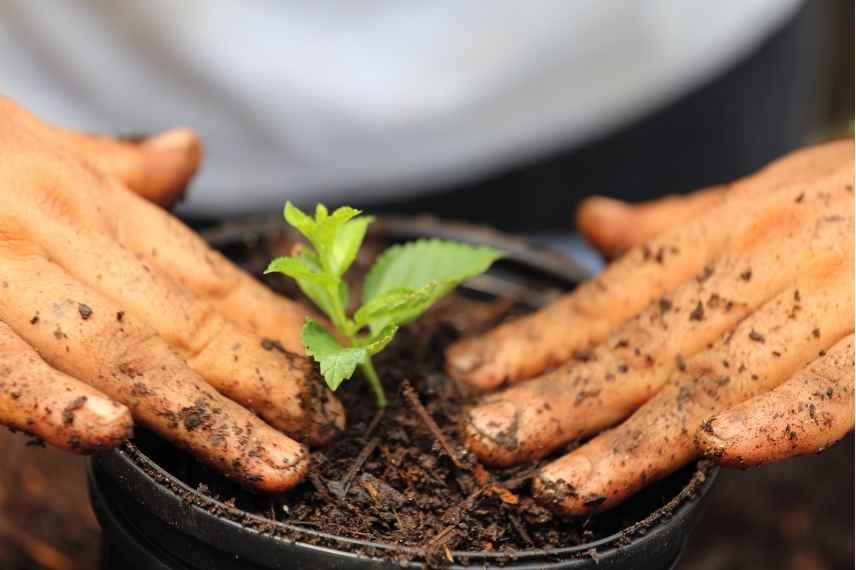
How to grow Lantana in a pot?
- In a pot, container or window box at least 30 cm across, spread a good layer of drainage (clay pebbles, gravel, etc.).
- Prepare your potting mix as above.
- Plant your lantanas, spacing them 15 cm apart if you are planting several, or mixing with other annuals or perennials.
- Water thoroughly, then regularly during the flowering season.
Care and maintenance of a potted Lantana
The cultivation of lantana in pots is easy if you meet its sun exposure and rich soil needs. It mainly requires constant care regarding watering. If you keep them in a greenhouse, take your pots outside in May or June, and bring them back before the first autumn frosts, around October or November depending on your region.
Watering
In pots, a plant always needs more regular watering than in the ground. Even though lantanas tolerate drought well, when grown in pots they will need regular watering, namely two to three times per week, between May and October. In winter, however, keep the soil just barely moist.
Pruning
Start by pinching back the stems in spring to thicken the plant (this means a short pruning that will produce denser branching, as with a Chelsea chop). We recommend removing faded blooms to encourage the appearance of new floral buds throughout the season. The lantana also tolerates pruning well if you need to curb its generous growth in midsummer. You can also prune it back in late winter to restart growth; it will rebound as soon as the first warmth arrives: prune back at least to two-thirds of the plant.
Fertilising
As with many potted plants, a feed is recommended: from June to September, apply liquid fertiliser every fortnight. Stop completely during the winter months.
Overwintering
Lantanas can overwinter only in the regions of the Atlantic coast and around the Mediterranean, where they flower almost continuously. When planted in pots, mulching is always welcome. Elsewhere, you will need to store it away as winter approaches, from late October or in November in the milder regions, as the plant dies below -4°C. You will place your potted plant or planter in a bright, frost-free room, and reduce the watering to keep the substrate slightly moist.
→ For more information in our care sheet: Lantana: how to overwinter it?.
- Subscribe!
- Contents
Comments