





























Heavy Rainfall: Our Tips to Protect Your Garden
What precautions should be taken?
Contents
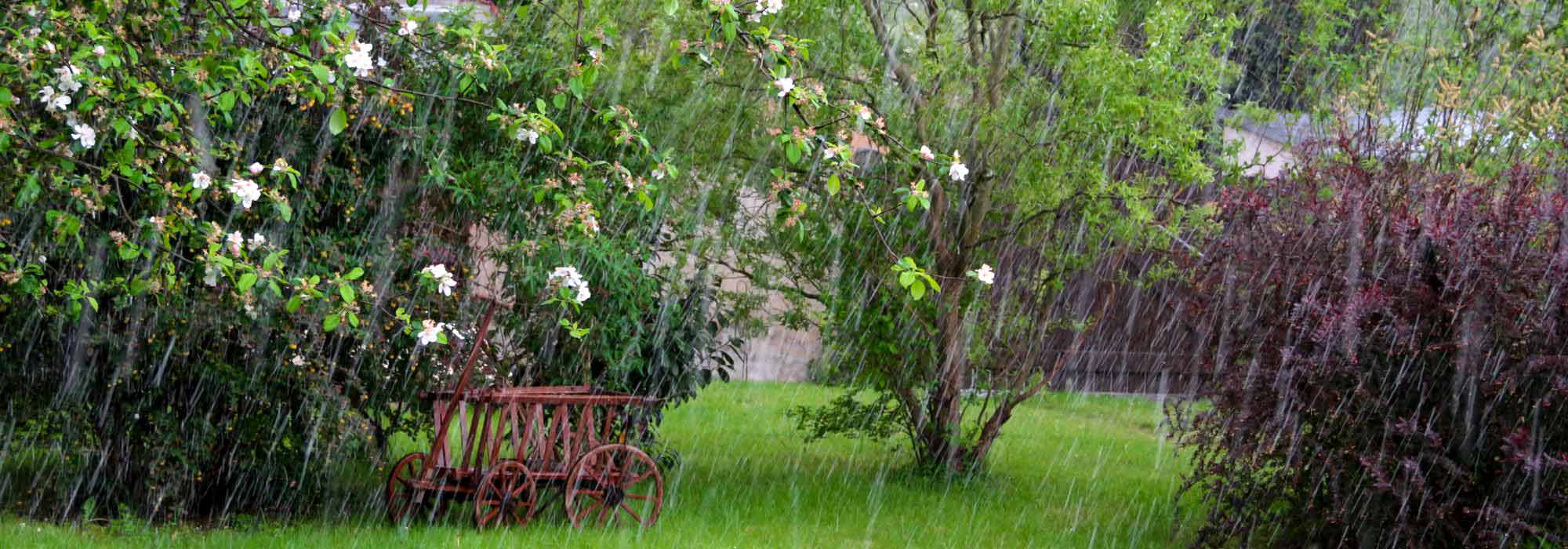
Weather alert: heavy rain, hail or storms! We rush to take shelter in our cosy nest, but what about the garden? How to protect sowings, perennials, annuals in pots and the vegetable garden from torrential downpours, especially when huge hailstones are threatening them?
Quickly, here’s a rundown of the precautions to take if heavy rainfall is expected: the garden will be well protected, and you can breathe easy!
Creating effective makeshift shelters for your plants and vegetable garden
In the vegetable garden, your sowings are starting to show their leaves, while in the flower beds, the perennials with tender foliage are quite vulnerable. Before the bad weather arrives, protect the most fragile by placing crates over them. Whether made of wood, polystyrene, or plastic, it doesn’t matter. The idea is to provide them with a temporary roof. As rain and gusts of wind often go hand in hand, weigh down these protections with heavy stones to prevent them from blowing away and causing more damage. Salad cloches are also available and can be used to shelter your crops and sowings.
Taller perennials can be supported with stakes, sturdy branches, or small battens fixed around their clump. Tie these stakes together with strong strings that will keep the plants in place and prevent them from flopping over and breaking. Steel planting circles will serve the same purpose by preventing them from sagging.
Canal tiles gathered in pairs with ties can also provide effective protection. Push their base a few centimetres into the soil to ensure they stay firmly in place.
A protection made with market gardening film is also effective; this film has a dual function: it mechanically protects your crops and, when left in place, accelerates their growth due to its greenhouse effect. Similarly, growth sheaths, which come in the form of a long tube of non-woven fabric that can be cut to size, can be a lifesaver in bad weather. Place them over tomato plants, as well as other freshly planted vegetables or perennials to protect them effectively.
Finally, there are anti-hail nets to place over orchard trees. This type of net, made from polyethylene, can also be used to protect the vegetable garden and other fragile plants.
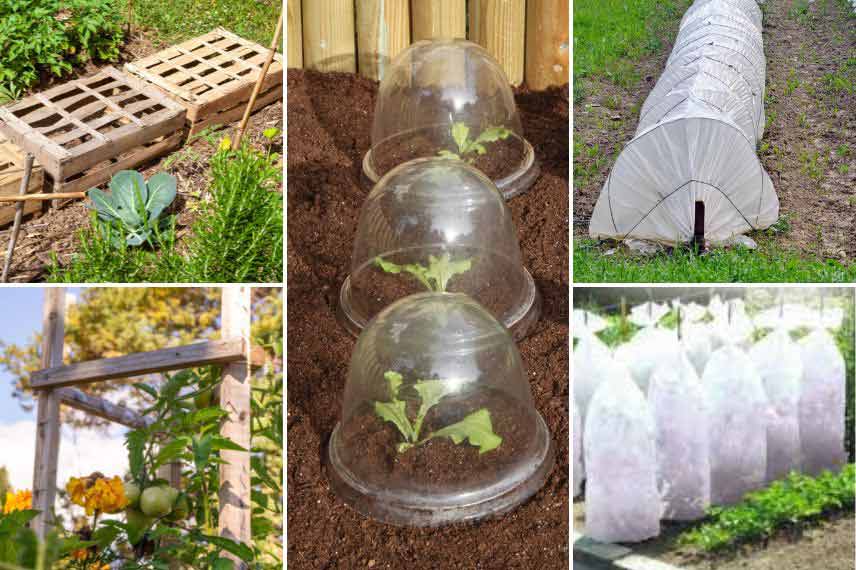
Crates, market gardening cloches, tunnels, and sheaths in fabric are easy to set up and will effectively protect your plants in the garden and vegetable garden.
Protective measures for pots, planters, and potted plants
In case of bad weather and forecasted strong winds, gather all your pots, planters, and hanging baskets on the ground against a sheltered wall or under a canopy. They will be less exposed to the wind and will be protected.
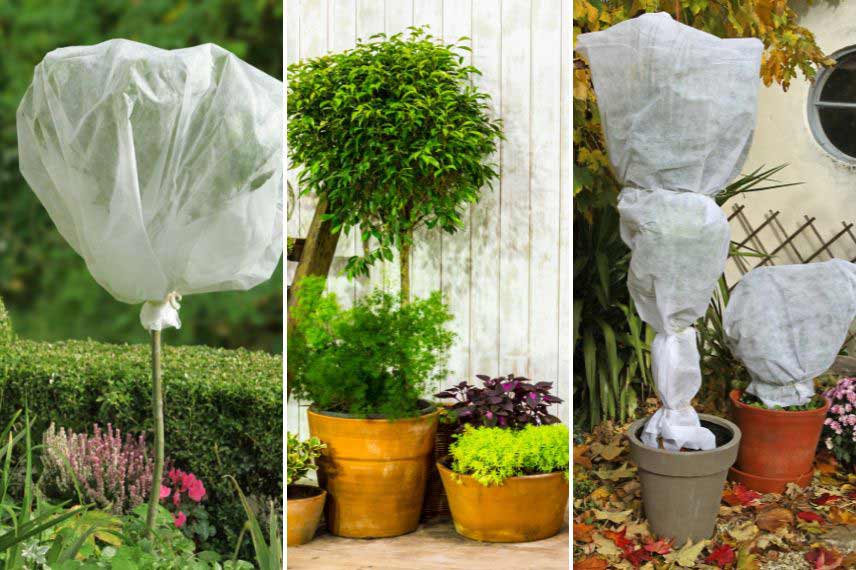
If hail is expected, bring fragile potted plants and bushes indoors to a non-heated space, or wrap them in a fleece.
Remember to check the fixings of climbing plants on trellises.
The most valuable and tallest plants (citrus trees, etc.) can be sheltered under fleece covers. Some come with Velcro fastenings or with zips, making them easy to put on and take off later. If you don’t have these covers and are into recycling, old net curtains secured firmly with clips or string will do the job perfectly.
Protect the soil too!
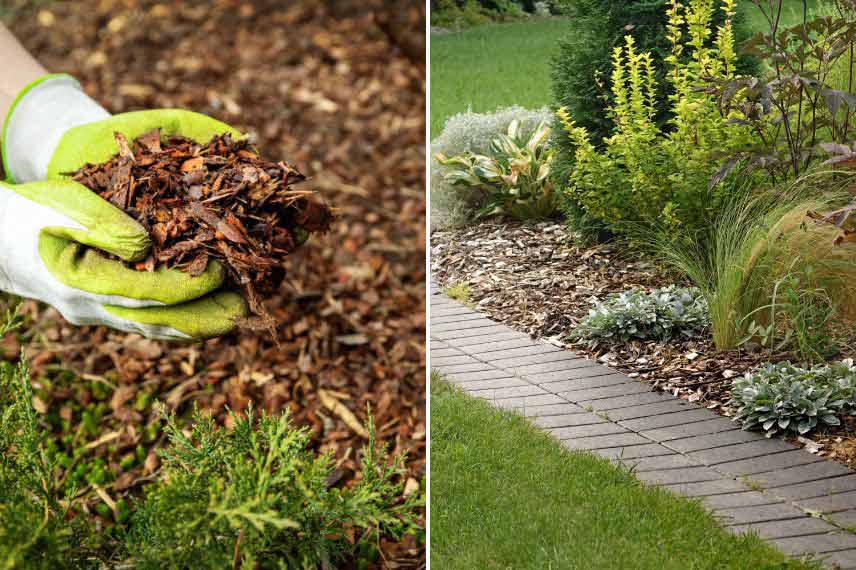
One might not think about it, but the soil also suffers from the effects of heavy rainfall: bare ground can become gullied and eroded by water that arrives in large quantities in a short time. This is detrimental to soil life, to your plants, and mud can flow everywhere if your garden has slopes. To remedy this: spread a protective mulch made of dead leaves, shredded straw, RCW, lin or hemp flakes, which can be held in place by branches if necessary. In beds located near the terrace or against a wall, this will also prevent splashes and stains on your surfaces.
Mineral mulch, made of gravel, pumice, or pebbles can also provide good protection.
→ Mulching: Why? How? Find all our tips and navigate through the different types of mulch.
Consider staking
In the garden, newly planted bushes and trees must be properly staked to remain secure against the wind and the rain that will saturate the soil. Fix them to sturdy stakes, tall enough and well-placed with specific tree ties that will not harm your plants.
Also stake vegetable plants that need support, such as tomatoes, young plants of aubergines, peppers, etc.
→ Discover the right techniques to straighten a tree after a storm
Regularly prune trees
Regular pruning of trees helps to remove dead wood, broken or diseased branches. This task is aesthetic, but it also helps to prevent the falling of branches, sometimes very large, which can be dangerous for you, your home, or your terrace if they are nearby, as well as for the plants located underneath.
Bad weather will inevitably cause these branches to fall, so it’s better to be safe than sorry! Find our valuable tips on how to prune a tree while respecting the plant.
After the bad weather
After the bad weather (storm, hail, gusts of wind) the battered plants need a little boost to recover:
- Trees may sometimes have broken branches. If they are of large diameter, saw them off and make a clean cut to ensure a neat finish. Then, apply a healing paste to prevent the development of diseases and pests.
- Garden plants, bushes or perennials, may also have suffered. Prune stems, broken branches, and lacerated leaves to restore a nice shape to your plants and help them recover in good conditions.
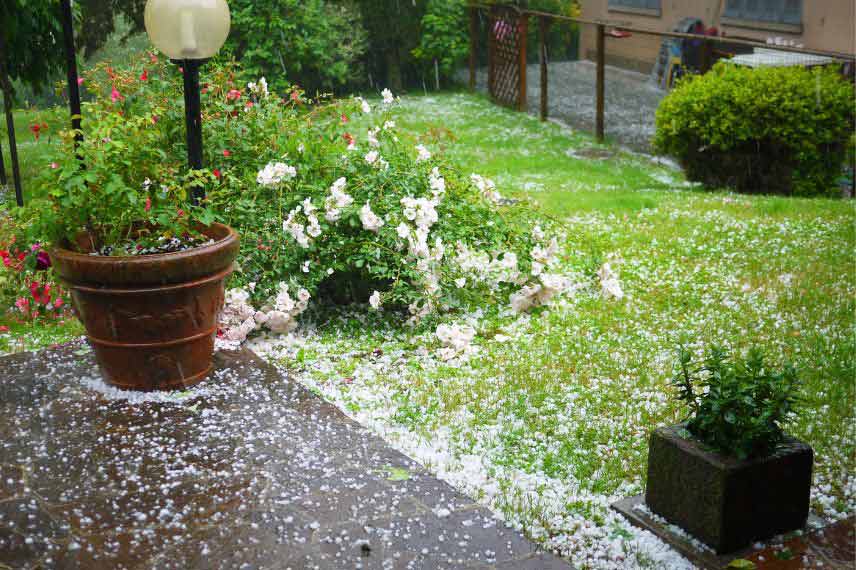
→ Follow our advice to find out what to do in the garden after a hailstorm

- Subscribe!
- Contents

Comments