





























How to create a refreshing oasis in the garden or on the terrace?
Our tips to create a cool and refreshing corner
Contents
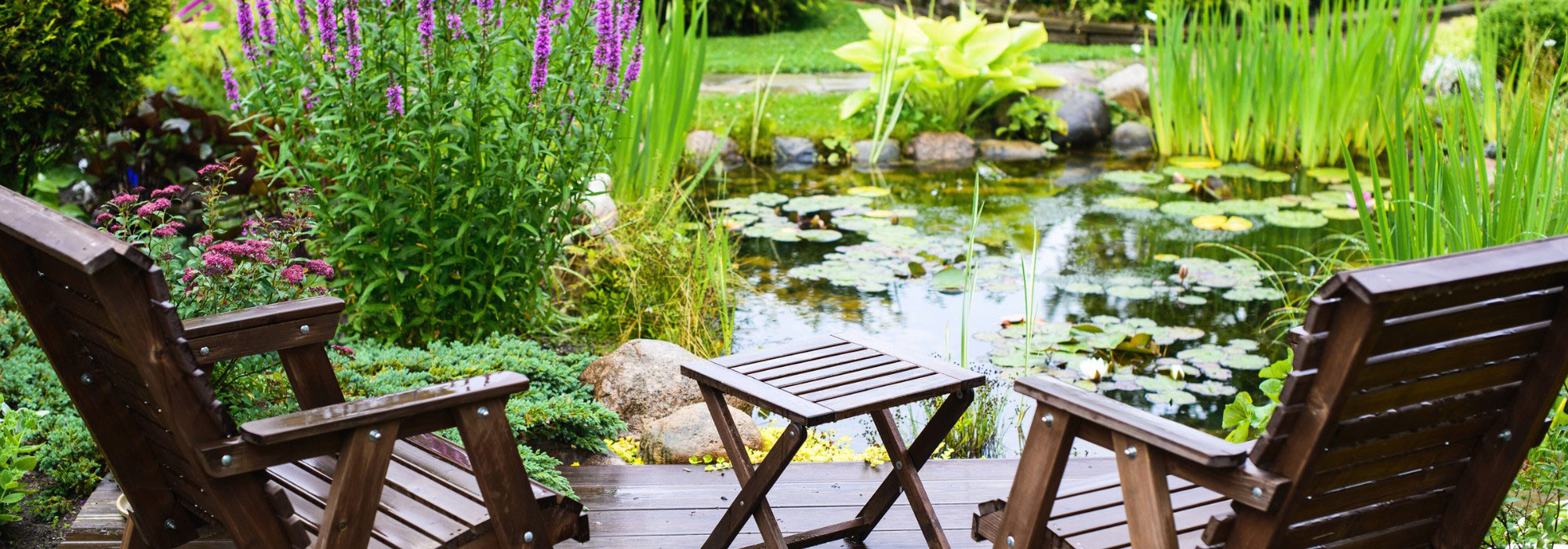
2023, the hottest year on record! When water becomes scarce and the mercury rises, paradoxical needs emerge. One of the strongest garden trends for 2024 is water. In a context of drought and recurring heatwaves, water reassures and soothes. Its presence becomes vital in our outdoor spaces. Thus, the idea arises to shape a refreshing bubble where one can shelter and recharge when the sun is at its zenith. There is lush vegetation, a profusion of perennials with their feet in water or that seem to spill out of ponds. Ponds, fountains, cascades, a reclaimed upcycled bathtub or a simple tub on a terrace, whatever the size of your outdoor space, you can create a water feature there. Pleasure of contemplation, a dip, or a welcoming refuge for insects, birds or thirsty amphibians, a few cubic centimetres are enough to make a difference for biodiversity and to add a touch of extra freshness. Here are our tips for designing a truly cool, long-lasting cooling spot in the garden or on a terrace!

Why a breath of fresh air in the garden?
Creating a bubble of freshness in a part of the garden is to enjoy a cool corner where you can relax, recharge, and temporarily escape the heat. The vegetation there is ever-present, teeming; it isolates us from the heat like prying eyes. The generous foliage provides the shade and the necessary coolness. Aesthetically pleasing and adding welcome extra coolness, a water feature in this green cocoon instantly invites relaxation and contemplation. Together with the presence of water, the plants help create an enveloping and relaxing atmosphere. Water brings movement by allowing the ceaseless waltz of the clouds to be reflected and the swaying of surrounding plants, and also provides a refugium for biodiversity. It’s also an excellent spot for observing nature! A single water point becomes a true haven of life for the wildlife that frequents its surroundings; birds, insects (dragonflies), pollarded trees, or other amphibians come to drink there, feed there or reproduce there.
Water: an essential element
This type of landscape design is characterised by pervasive vegetation, as well as by the presence of water in its most diverse and inventive forms, from the natural pool for the luckiest to a small water feature. The soft lapping of the water helps cope with hot weather! This is very much this year’s trend: No matter the space and the container, even the smallest urban terrace demands its water feature! Sometimes you don’t need much, and depending on the space available and your desires, you can imagine a small, refreshing corner to suit. It isn’t necessarily necessary to have a large garden or to embark on major works. To enjoy water and aquatic plants, many containers can act as mini-ponds: wash-tubs or zinc tubs, stone troughs, half-barrels in wood, simple pails, a large zinc tub converted into a minimalist fountain, an old bath, help to create a small water garden and are enough to give the aquatic note to this space. They will readily welcome aquatic plants or even, why not, a few goldfish. Here are a few tips to observe:
- These containers, whether wood, resin or metal, regardless of material, must have a minimum depth of 40 cm to accommodate a wide range of plants.
- Place them in partial shade to prevent too much evaporation from heat and to encourage the development of flora and fauna that need a healthy dose of light, but not too much.
- Avoid placing them under a tree to prevent them turning into baskets of fallen leaves.
- Choose your plants according to the size of the container chosen.
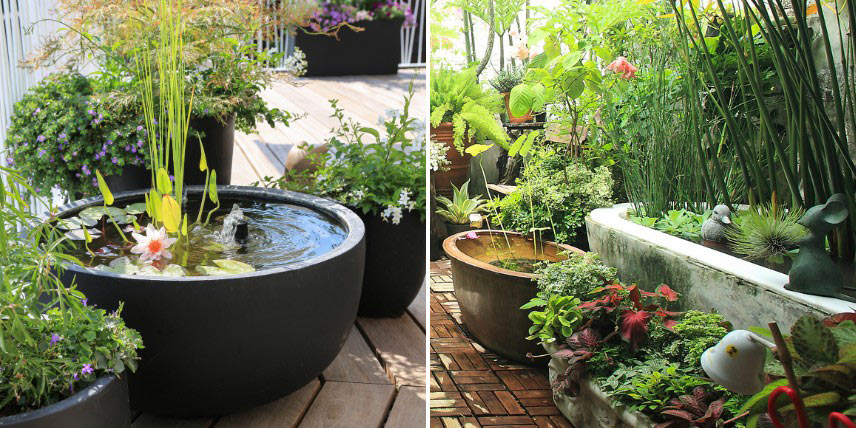
Different types of containers can serve as mini-ponds on a terrace or in a small garden
Which garden?
This oasis of freshness fits perfectly in naturalist, English, Japanese, exotic, and even contemporary-style gardens, or in a small zen corner on a terrace or balcony. If it is often envisaged within a large garden, it can easily also fit into small urban spaces, for example. The key is to create a soothing aquatic and plant haven, in harmony with the rest of the garden or home.
- In English gardens, are generally characterised by their romantic and lush appearance, with water features appearing as small ponds, streams winding between flower beds, or natural cascades.
- In natural or wild gardens: a pond will attract many animal and plant species in this type of garden, where biodiversity and natural ecosystems are prioritised.
- In contemporary gardens: with a modern and minimalist design, a well-conceived water feature can add a touch of elegance and freshness.
- In Spanish gardens: water is also one of the defining elements of this type of garden. It symbolises life, in the form of ponds, fountains and channels.
- In shady gardens: a water feature is essential, surrounded by plants suited to low-light conditions.
- On a terrace or balcony: watertight containers (jars, basins, troughs, etc.) transformed into mini ponds allow you to create an oasis of freshness, while promoting biodiversity, even in urban environments. Find Olivier’s tips for creating a small water garden for the terrace or balcony.

Water is an essential element in Zen or Japanese gardens
Plant palette
The chosen planting will contribute to a dynamic, ultra-fresh composition. The luxuriant foliage and melliferous blooms will be the keystone of this “so fresh” bubble. The layout of shaded zones, created with oversized leaves or climbing plants, is also important for shaping this refreshing corner in the height of summer. The plant palette will consist of water-loving plants or those thriving in rich, damp substrates, hardy and low-maintenance. Most grow in shade or partial shade, in sun that is not scorching, in a damp woodland atmosphere or near a pond. The climate of your garden will influence your selection. Check the hardiness of the plants under consideration, and pot up the most tender ones to overwinter them indoors, out of frost. Don’t hesitate to plant densely and mulch well to minimise watering. The plants will be chosen from:
- Climbing plants that tolerate cool, moist soils: hop ‘Pure’, Akebia, nasturtiums, Schizophragma fauriei which climb quickly on walls, trellises and pergolas to form a plant canopy or shade screen. These vigorous climbers prove highly effective for composing a green room and keeping us cool and sheltered from the heat. They flower abundantly while limiting sun glare and heat buildup. Also go for honeysuckles, clematis and rambling roses.
- Plants for cool, moist soils: Gunnera manicata, Tetrapanax, Osmunda regalis (Royal Ferns), Hosta sieboldiana, Filipendula palmata, Astilbe ‘Chocolate Shogun’, Primula florindae (Tibet primrose), Aquilegia vulgaris or common columbine, Petasites japonicus, Colocasia (elephant ears), and ferns or the Trachycarpus, a palm perfect for damp environments.
- Plants for damp soils: Aquatic plants: they are very ornamental, often oxygenating and purifying; they float on the water surface, emerge or are fully submerged. They are planted at depths of 40–60 cm (up to 1 m), even in a tub: water lilies Nymphaea (Nymphaea ‘Alba Delicata’, Nymphaea ‘Barbara Davies’, ‘Boat’, ‘Carolina Sunset’, Nymphaea colorata ‘Cape Blue Waterlily’…), and lotus Nelumbo nucifera (‘Chawan Basu’, ‘Les Enfants Rouges’, ‘Moling Qiuse’, ‘Double Bonheur’).
- Some exuberant flowering choices such as Cannas or Strelitzia reginae, to create very exotic jungle-like displays. Both are fairly easy to grow provided they do not lack water in summer.
→ More ideas for choosing your aquatic plants in our advice sheet: Pond: 10 aquatic plants submerged or floating.
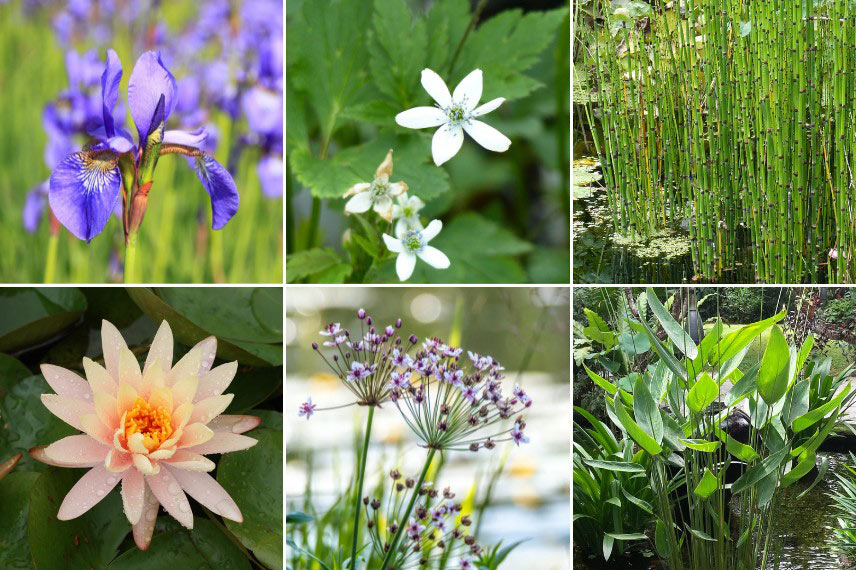
Iris sibirica ‘Blue King’, Anemone rivularis, Equisetum hyemale, Nymphaea ‘Aurora’, Butomus umbellatus, Thalia dealbata (photo: Lip Kee)
At ease in its own little bubble.
To enhance the calming atmosphere of your bubble, you can:
- Define the relaxation area by installing decorative elements such as plant pots, window boxes or living screens. You can also create a comfortable surface using groundcover plants that thrive in cool conditions such as Sagina, wooden paving slabs or gravel.
- Choose cushions, throws and accessories in harmonious, soothing colours, such as blue, green or white, to create a fresh and relaxing atmosphere. Blue features prominently in garden trends and will bring a fresh, serene vibe.
- Install garden furniture (sun loungers, deckchairs, hammocks, etc.) so you can lounge there.
- Incorporate natural materials such as wood, stone, rattan or bamboo into your décor. They will add a touch of authenticity and pair perfectly with the plants.
- Arrange shaded and light areas using shade sails, arches and pergolas draped with climbing plants. This will add relief and depth to this special space.
- Use ambient lighting: string lights, lanterns or candles to create a warm and intimate atmosphere once night falls.
- Add wind chimes to strengthen the soundscape.
- Personalise with decorative items: add statues, pots, mirrors or other decorative objects that reflect your style and personal taste.
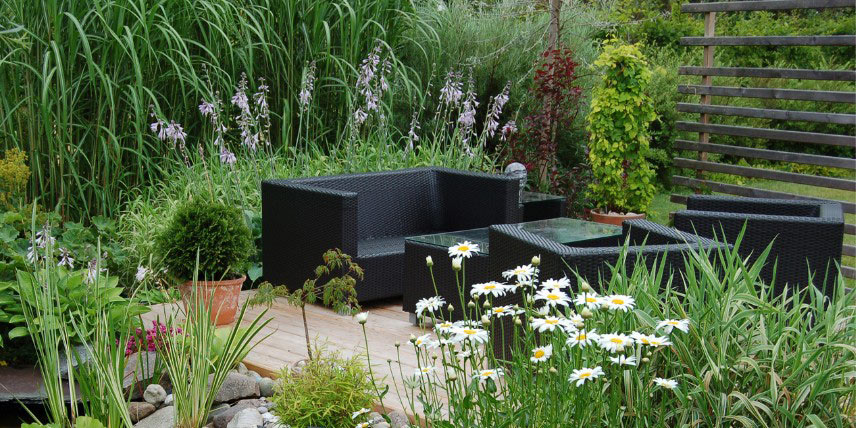
Don’t hesitate to include a garden lounge in your refreshing haven
- Subscribe!
- Contents
Comments