





























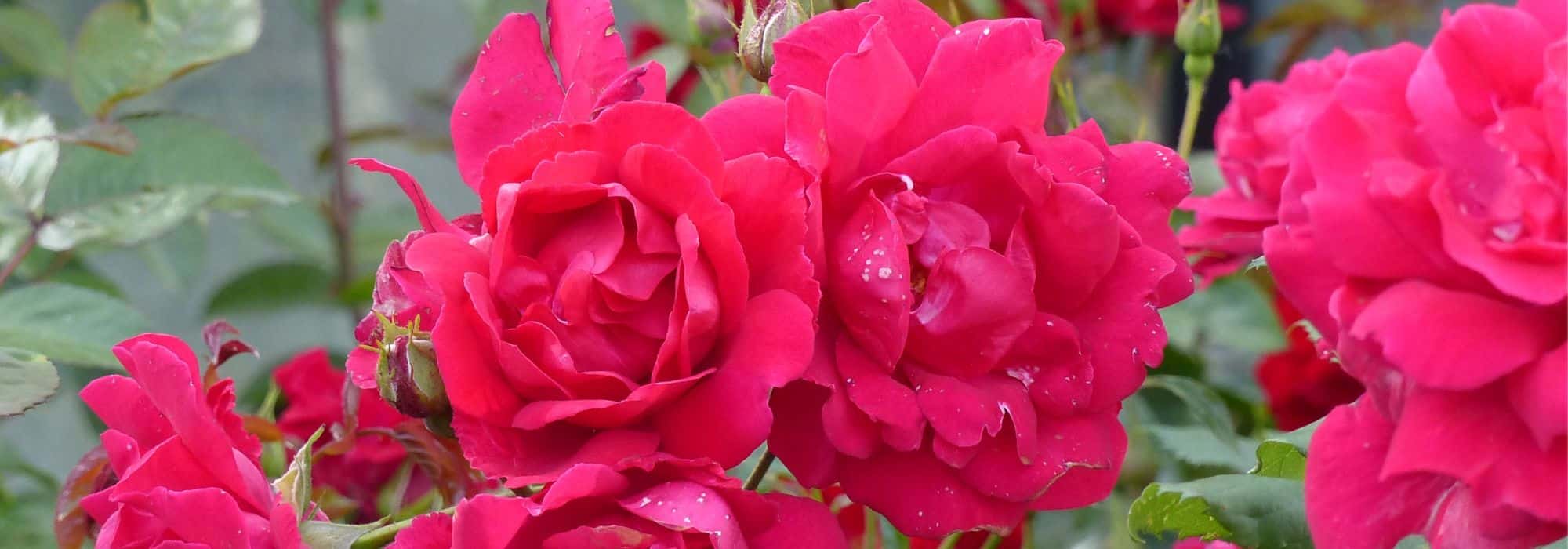
How to mulch roses?
Techniques and good practices to adopt
Contents
It is well established that mulching offers numerous benefits for soil and the development of your plants! It conserves moisture, reduces the need for watering and evaporation of water, hinders unwanted plants, enriches the soil—truly a valuable ally for gardeners and their plantings. But what about roses? A bit more demanding, roses certainly appreciate mulching, but with some specific conditions. Discover our tips for properly mulching roses, which mulches to use or avoid, and how to distribute it.
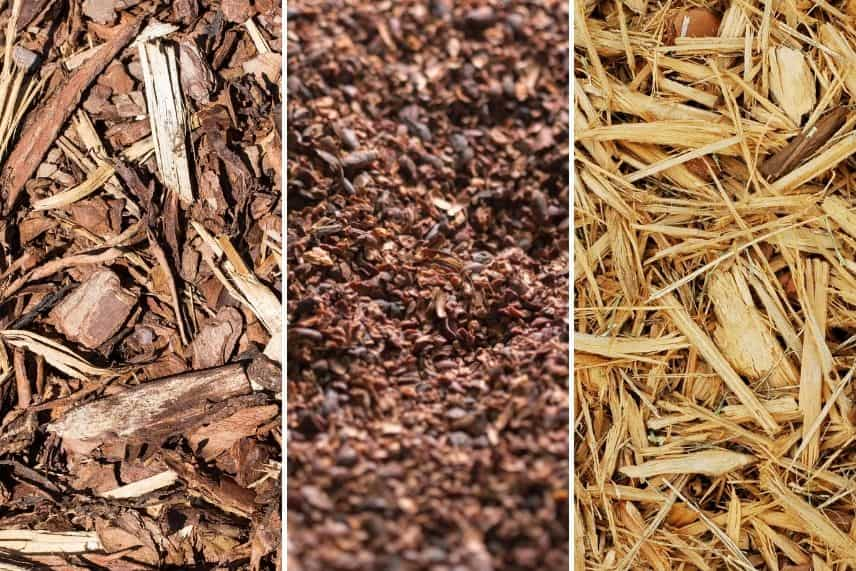
RCW, cocoa bark, and linseed pales

When to mulch roses?
Roses can be mulched in autumn or in early spring when the soil starts to warm up a bit. The mulch is renewed every year, or even every two years.
Read also
What is a rose fork used for?How to properly mulch roses?
Roses do not like to be overly mulched. It is advisable to apply a layer no thicker than 2 to 3 cm to allow for good oxygenation of the mulch and thus facilitate its decomposition. A layer that is too thick, especially in heavy, clay soils, can compact the soil and prevent it from breathing. Decomposition will then be slower, depriving your rose and the wildlife of nutrients. Therefore, prefer a thin layer of mulch, to be renewed frequently.
Also, choose a mulch that decomposes quickly, ideally “digested” within a year.
Finally, avoid covering the grafting point of the rose in spring, to prevent the development of “suckers” from the rootstock.
Discover other Roses
View all →
Available in 2 sizes
Available in 2 sizes

Available in 2 sizes
Available in 2 sizes
Available in 2 sizes

Available in 2 sizes
Available in 0 sizes
Available in 2 sizes
Available in 2 sizes

Available in 3 sizes
What is the best mulch for roses?
Whether bushy, climbing, old or modern, the rose, like many perennials and bushes, does not appreciate being grown in bare soil. Installing mulch at the base of roses allows for:
- adding nutrients to the soil as it decomposes;
- preventing the formation of a crust (a phenomenon of compaction) that hinders rainwater from penetrating the soil;
- acting as a barrier against “weeds,” making the more stubborn ones easier to remove;
- retaining moisture in summer and reducing the need for watering.
However, it is essential to select the right “mulch” that is well-suited to our roses. Here are some options you can use:
Hemp or flax mulch
With their light colours, ash-blond, hemp mulch and flax flakes create a beautiful, natural, homogeneous, and very decorative carpet. Despite its light appearance, the mulch adheres to the soil from the first rain or watering, allowing it to withstand winds. Organic and biodegradable, it nourishes the soil, limits the appearance of unwanted herbs, and protects the rose’s stump from water evaporation and cold. It can also be used in flower beds and vegetable gardens.
Buckwheat husks
Darker, in caramel brown tones, buckwheat husks are fine, lightweight, biodegradable, and easy to use. They nourish the soil as they decompose, while maintaining soil moisture and thus limiting the frequency of watering. Additionally, slugs and snails do not seem to appreciate this type of mulch.
Miscanthus mulch
When the stems of Miscanthus are reduced to mulch, they form an excellent groundcover for your roses, vegetable crops, or flower beds. This beautiful light carpet also withstands wind, limits runoff, and nourishes the soil as it decomposes. There are ready-to-use Miscanthus mulches, but you can also use your own cut stems when pruning your Miscanthus.
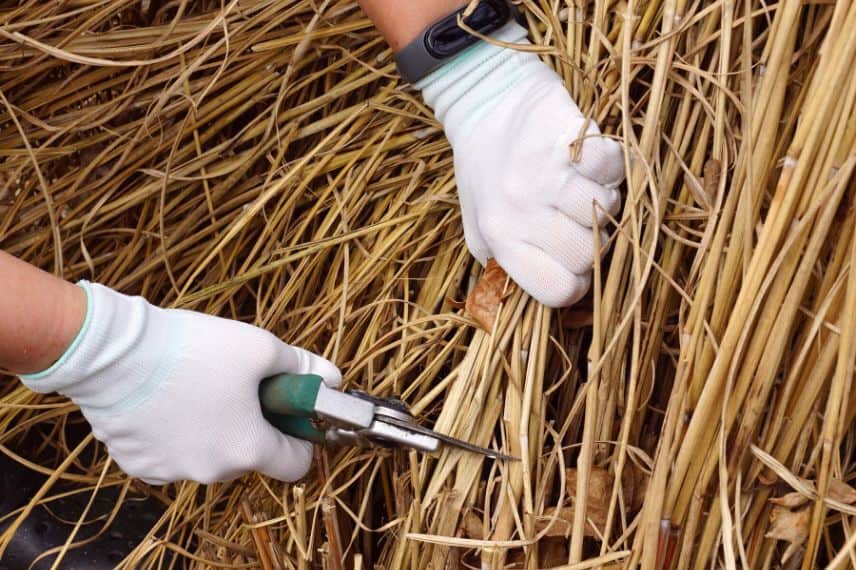 Once pruned, the Miscanthus clump can be recycled as mulch
Dry grass and hay
If you are the type to recycle garden waste, dry grass from mowing your lawn makes an excellent mulch for your roses. Economical and ecological, dry grass and hay provide a huge amount of nutrients to your soil. This type of mulch will decompose quickly within 1 to 6 months. However, be careful not to use grass or hay that has gone to seed. Simply let your grass dry in the sun for a few days before using it.
→ To learn more, read our article: What to do with mown grass?
Dead leaves
In autumn, dead leaves make an excellent mulch, rich in nutrients and forming humus as they decompose. Beneficial for both your roses and soil fauna, dead leaves also limit erosion, runoff, and help structure the soil. Moreover, they insulate the root system from winter cold. All for free, with just a little help from a leaf rake.
→ To learn more, read our article on: Dead leaves, how to use them in the garden?
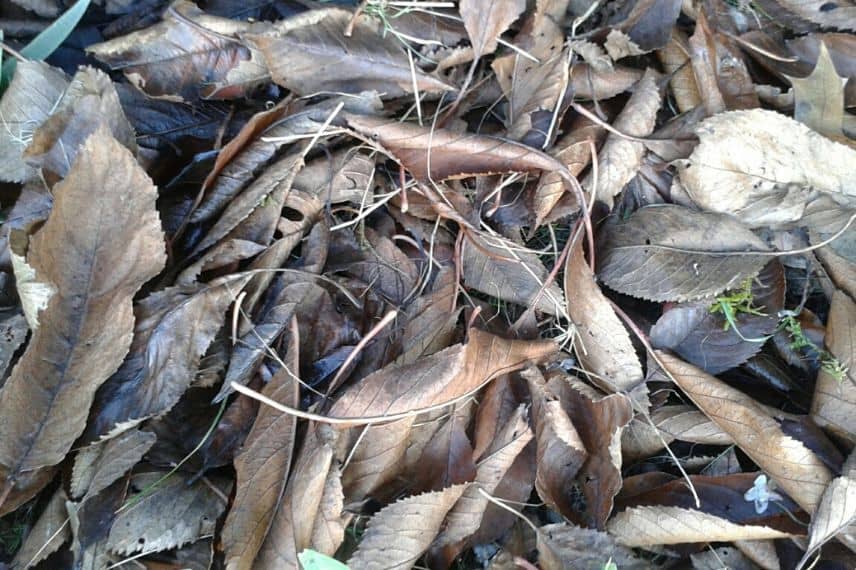 Dead leaves are very useful as mulch in the garden
Ingrid’s advice: When you want to add an amendment (manure, compost) at the base of your rose, simply clear the mulch using a rake or a small trowel. Place your amendment, cultivate to incorporate it into the soil, and then replace the mulch.
Read also
How to grow a rose bush in a pot?Mulches to Avoid
- For flourishing roses, avoid mulches with an acidic pH that can alter the nature of the soil and consequently, the well-being of the queen of flowers. Thus, ban mulches made from pine bark which acidifies the soil and decomposes slowly.
- In heavy or clay soils, also avoid using chipped bush material or pure wood chips (known as RCW: Ramial Chipped Wood), which, while rich in nutrients, can contain high levels of tannic acid that may lead to nitrogen deficiency during its prolonged decomposition. However, this issue can be corrected by incorporating shredded perennials, fallen leaves, or dry grass clippings that will provide nitrogen. Adding manure or a nitrogen fertiliser will also improve the balance of this type of mulch. Be careful to use only species of trees and shrubs with deciduous foliage and not resinous ones for your roses.
→ To learn more, read our article on RCW or Ramial Chipped Wood: what is it? How to use it in the garden?
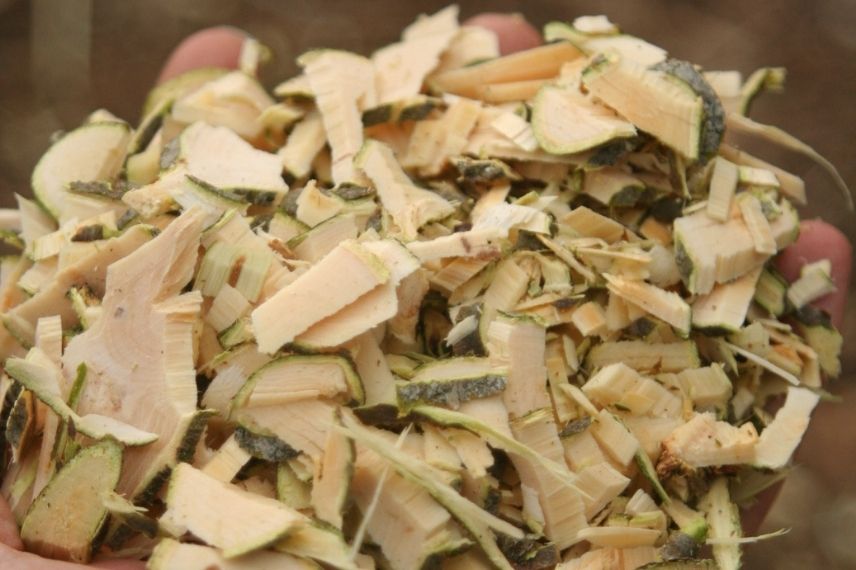
RCW (photo by arpent nourricier – Flickr)
Further reading:
- Find all our Rose varieties.
- To learn everything, check out our sheet on roses: the best varieties and how to grow them.
- Subscribe!
- Contents
![[mulching roses]](https://en.promessedefleurs.eu/blogwp/wp-content/uploads/2022/10/Comment-pailler-les-rosiers-.jpg "[plant_guide title=\"How to Mulch Roses\" image=\"roses.jpg\"]
To properly mulch {glossary} your roses, follow these steps:
1. **Choose the right mulch**: Opt for {glossary} mulch, such as compost or well-rotted manure.
2. **Prepare the soil**: Before mulching, make sure the soil around your roses is well-weeded and moist.
3. **Apply the mulch**: Spread a layer of mulch about 5-10 cm thick around the base of the roses, leaving a gap between the mulch and the stems.
4. **Renew the mulch**: Replenish the mulch every year in spring to maintain its effectiveness.
5. **Benefits of mulching**: Mulching helps retain moisture, suppress weeds, and improve soil quality around your roses.
By following these simple steps, you can effectively mulch your roses and promote their healthy growth and blooming.
[/plant_guide]")
Comments