


How to pair Dutch irises?
Ideas and inspiration for in-ground and container gardening across different garden styles
Contents
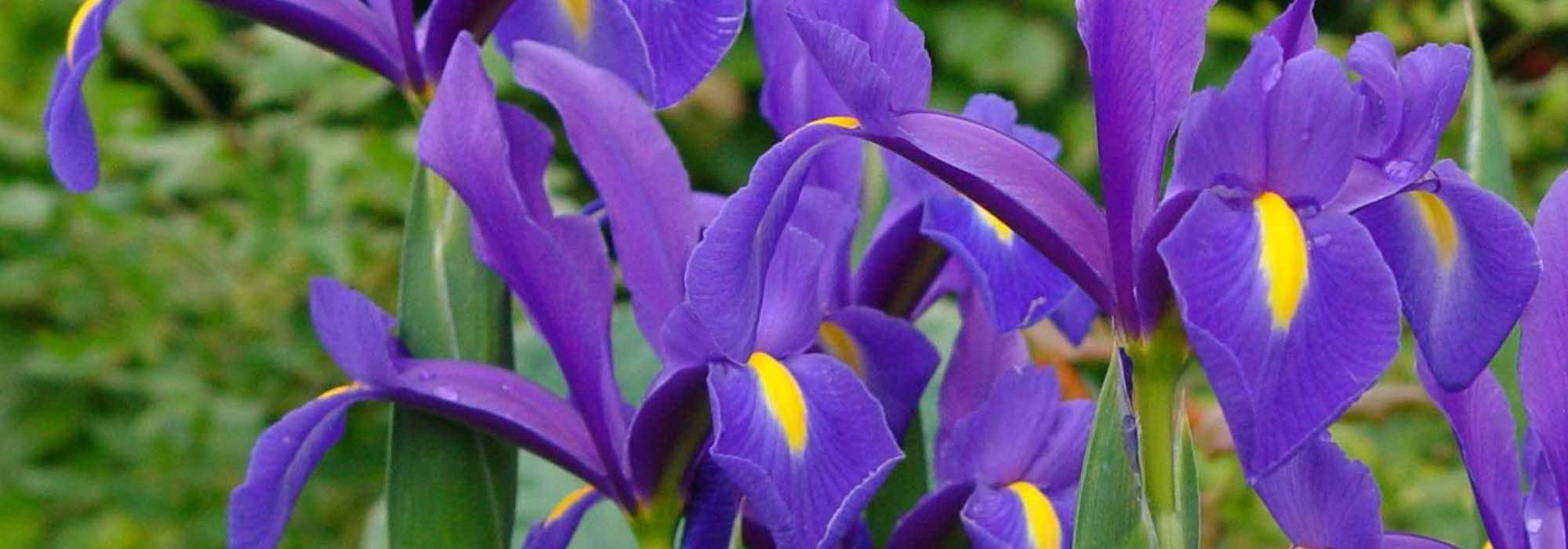
The Dutch Iris (Iris hollandica), also called florist’s iris, are less common than their garden cousins. They do not lack ornamental appeal: these spring bulbs produce sophisticated and colourful flowers, highlighted by a fine foliage reminiscent of grasses.
Easy to grow, Dutch Irises thrive in light, well-drained soils in full sun. They naturalise easily, returning faithfully year after year. In terms of pairing, they allow you to create diverse scenes, from the most graphic to the most bucolic, both in the garden and in pots for the terrace or balcony. So here are our five ideas to inspire you with Dutch Irises.

Potted arrangement with spring flowering, in a romantic style or with vivid colours
Choose a planter, pot or tub to create a beautiful flowering container display throughout spring. It will brighten balconies, terraces or windowsills as the days grow warmer.
Dutch Iris will pair very well with Amaryllis, whose flowers are just as elegant and colourful. To create a pleasing harmony, choose two to three dominant colours at most. For a romantic and uncluttered style, choose for example the variety ‘Apple Blossom’ with pale pink flowers striped with white, or theAmaryllis double ‘Ice Queen’ with its immaculate white blooms. Install them beside our Dutch Iris ‘Silvery Beauty’, with its delicate pale blue and white colouring. Add hyacinths, such as ‘China Pink’ with pale pink blooms.
For a warmer colour palette, favour Iris ‘Royal Yellow’ with their yellow blooms. Also consider the variety ‘Bronze Perfection’, with its blooms blending mauve, yellow and bronze. Pair them with other spring bulbs, such as fritillaries. Opt for the Fritillaria reuteri, with bell-shaped yellow flowers edged with purple, or the imperial fritillary ‘Prolifera’, with large orange blooms. Crocus angustifolius will also make good companions. Add a small ornamental grass for the light and airy touch, such as Carex comans.
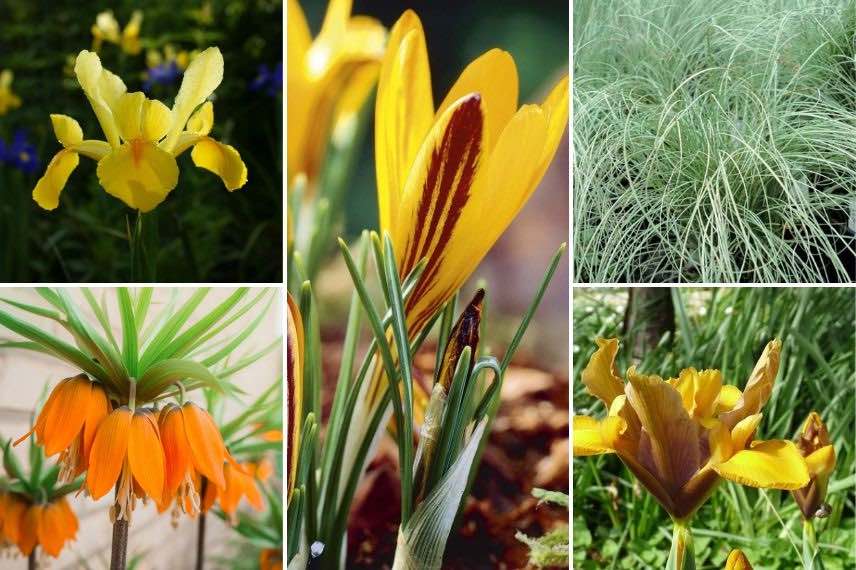
Clockwise from top left: Iris ‘Royal Yellow’, Crocus angustifolius, Carex comans ‘Frosted Curls’, Iris ‘Bronze Perfection’, Fritillaria ‘Prolifera’
Read also
Dutch iris: planting and growingIn a colourful mixed border, vibrant for several months
Mixed borders play with different colours and silhouettes, combining several types of plants (perennials, annuals, grasses…).
The Dutch Iris is among the first bulbs to flower in spring, sometimes as early as April for the earliest varieties, such as ‘Telstar’. This variety rewards us with flowers of a very bright bluish-violet, contrasted with a golden-yellow throat outlined in white. It will add structure, alongside other elegant and architectural plants, such as Digitalis purpurea ‘Alba’, which flowers from May, will be a perfect companion with its cream-white flowers and yellow throat. On the lupins’ side, the yellow clusters of ‘Gallery Yellow’ will create a beautiful contrast with the blue-violet of our Dutch Iris. And to add a touch of lightness, add a common Filipendula, whose small white flowers appear at the same time. Complete with the Erigeron karvinskianus and its yellow-centred flowers.
The flowering of the Dutch Iris is intense, but short-lived. It lasts only 2 to 3 weeks, before the plant goes into dormancy for the summer. That is why it is worth pairing it with later-flowering plants. They will take over, keeping the border looking good for many weeks. In this English-inspired border, our spring bulbs will, for example, be grown alongside Delphinium, these architectural perennials with long flowering spikes that are a delight all summer. They will also accompany Echinacea, with a more rustic charm. On the annuals side, think California poppies and Cosmos.
To complete this display, add grasses, whose airy foliage will let the whole display breathe. For example, choose Miscanthus.
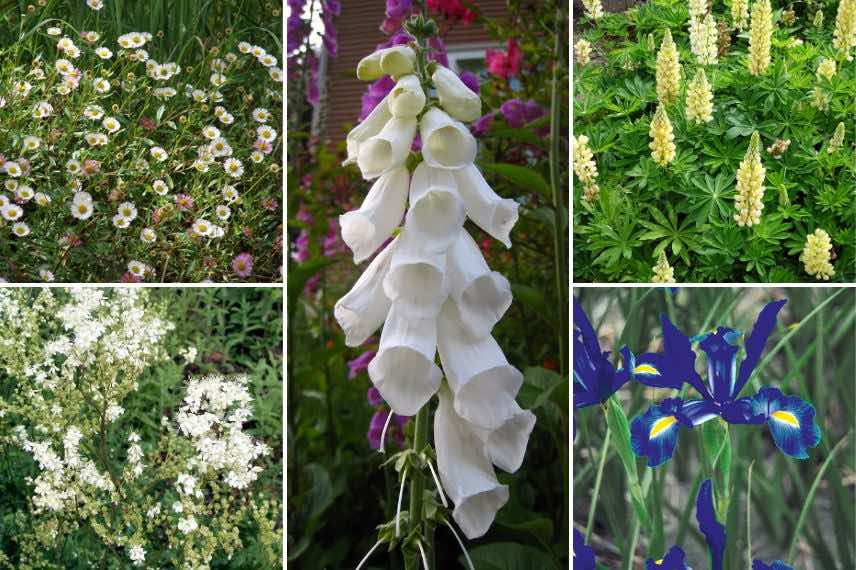
Erigeron karvinskianus, Digitalis purpurea ‘Alba’, Lupin ‘Gallery Yellow’, Iris ‘Telstar’, Filipendula vulgaris ‘Plena’
In a sunny rockery
Dutch irises will elegantly dress a sunny rock garden. These bulbs tolerate drought and prefer light soils, even sandy and stony ones. By contrast, they dislike stagnant moisture. They will, therefore, be in good company alongside plants that thrive in the same conditions, such as Mediterranean plants. For example, opt for helianthemums with white and yellow flowers, for sages as sun-loving groundcover Genista lydia, or also for sages. Small lavenders will also make good candidates.
Add more plants known for their drought tolerance, such as the vigorous Euphorbia cyparissias ‘Orange Man’ or yarrows.
You can also add small agapanthus, perfect candidates for dry gardens, which will bloom in summer. For example, choose ‘White Baby’ or ‘Pitchoune Blue’.
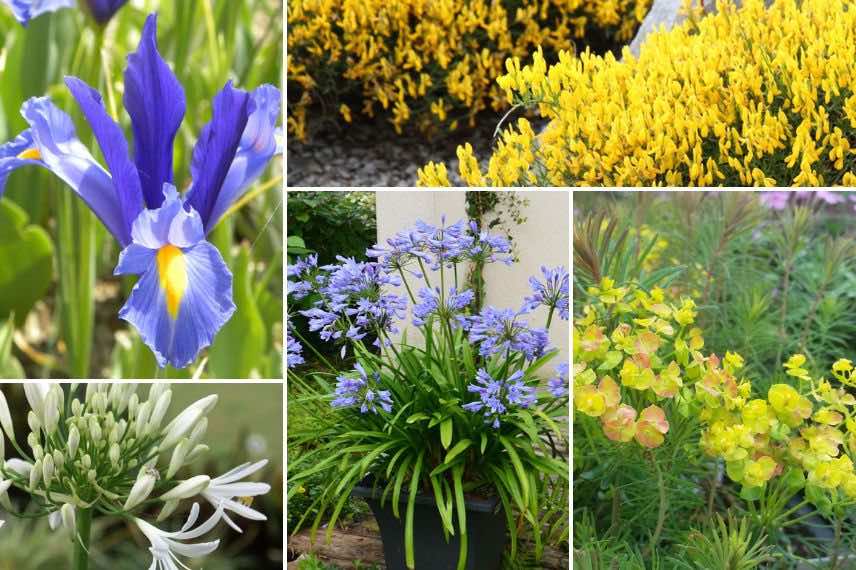
Dutch iris ‘Sapphire Beauty’, Genista lydia, Euphorbia cyparissias ‘Orange Man’, Agapanthus ‘Pitchoune Blue’ and ‘White Baby’
Read also
Spring bulbs: 6 nice pairing ideasIn a spring-flowering, two-colour, graphic border
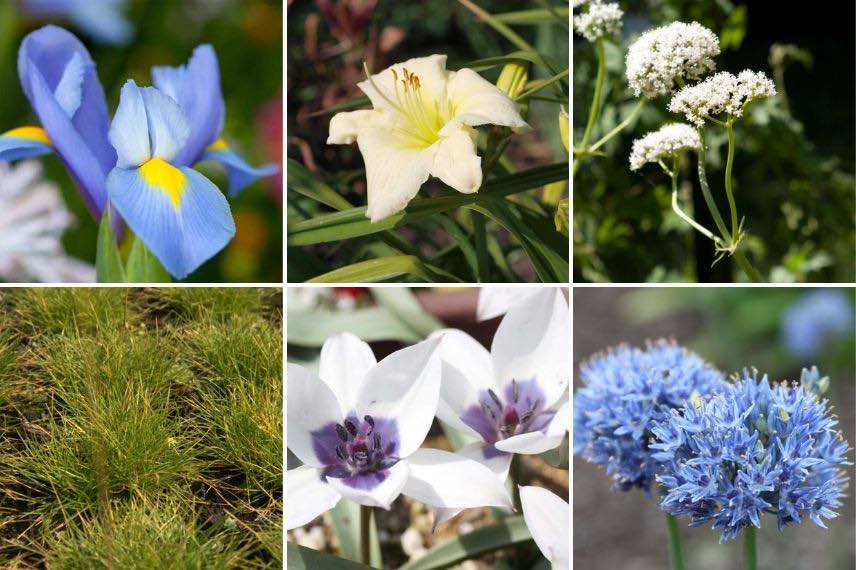
Dutch Irises also allow you to create very graphic and contemporary scenes, thanks to their slender foliage and their elegant, highly stylised flowering. Their flowers allow for monochrome or bi-colour scenes, for example by blending white- and blue-flowered varieties. They will be warmed by subtle touches of yellow.
For this, choose the Iris ‘Sapphire Beauty’ with intensely blue flowers, ‘Professor Blaauw’ with sky-blue flowering, or ‘White Excelsior’ with immaculate white. Add other bulbous plants, such as the striking botanical tulip ‘Albocaerula Oculata’, with white star-shaped flowers highlighted by a midnight-blue heart.
Complete with perennials: valerian, white daylilies (‘Joan Senior’, ‘Icily Light’) and white peonies.
Here again, agapanthus will pair very well with our irises. These landscape designers’ favourites bring roundness and verticality immediately. Their flowering lasts throughout the summer. For example, opt for the hybrids ‘Ever White’ and ‘Ever Sapphire’. In the same vein, also consider ornamental alliums, such as the Allium stipitatum ‘White Giant’ or the Allium caeruleum.
As ground cover, use small grasses with golden foliage to warm the whole display (Festuca glauca ‘Golden Toupee’), but also a Lithodora diffusa ‘Heavenly Blue’. This small undershrub produces flowers in a pretty gentian blue, appearing in late spring.
In a cut-flower garden
Dutch irises provide excellent cut flowers. Easily create a cutting garden by incorporating them into a bed or a small border alongside other flowers. Our irises will sit alongside must-have companions, including early-blooming shrub roses, carnations, peonies, but also their cousins Iris germanica. You can also add shrubs, such as a small lilac bush. Complete with grasses such as the Briza maxima, as well as other decorative foliage, such as Artemisia.
For more rustic summer bouquets, include perennial marguerites and Echinacea, which will bloom later than our irises. Also consider gypsophila, which are useful for adding volume and lightness to all bouquets.
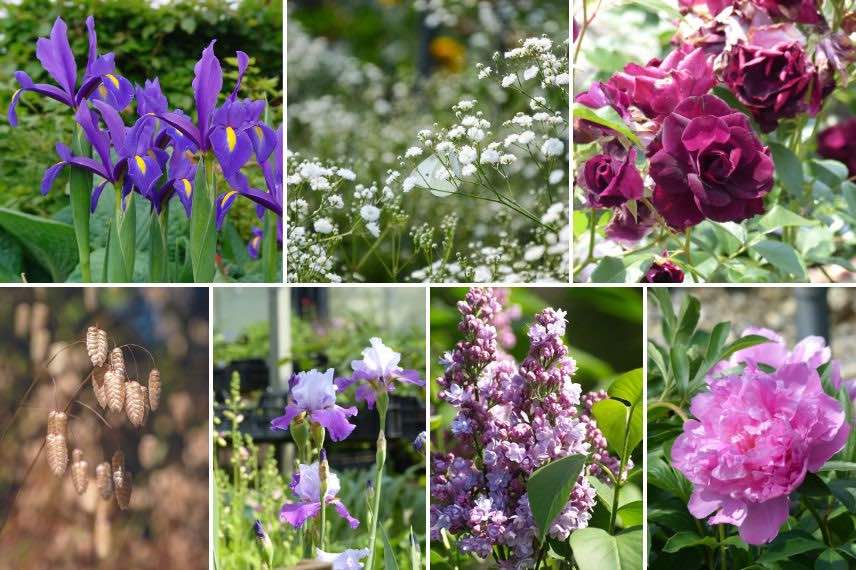
Dutch iris, paniculate Gypsophila, Rose, Peony, Lilac, Iris germanica, Briza maxima
- Subscribe!
- Contents
Comments