


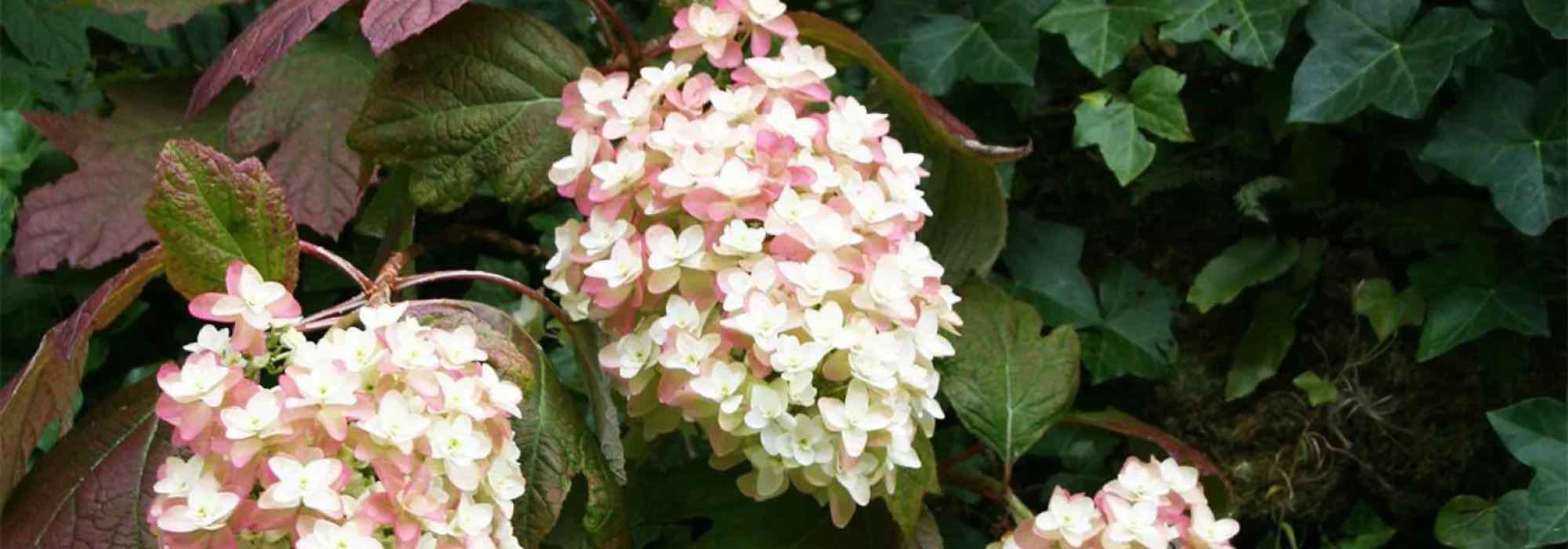
Hydrangeas in calcareous soil—it is possible!
Selection of lime-tolerant hydrangeas
Contents
Hydrangeas enchant gardens, borders and terraces with their summer inflorescences taking on a range of shapes—from ball to cone and flat-topped. They also offer a wide colour palette and a range of sizes. Macrophylla hydrangeas prefer soils tending toward acidic to neutral and dislike lime; some hydrangeas tolerate slightly calcareous soils: these are the oakleaf hydrangeas with oak-leaf foliage, the arborescens hydrangeas as well as the panicle hydrangeas or paniculated. Discover our selection of hydrangeas that tolerate calcareous soils, along with care tips and ideas for pairing with other plants for a flowering and harmonious garden.
For more information, consult our comprehensive guide: Hydrangeas: Planting, Pruning and Care.

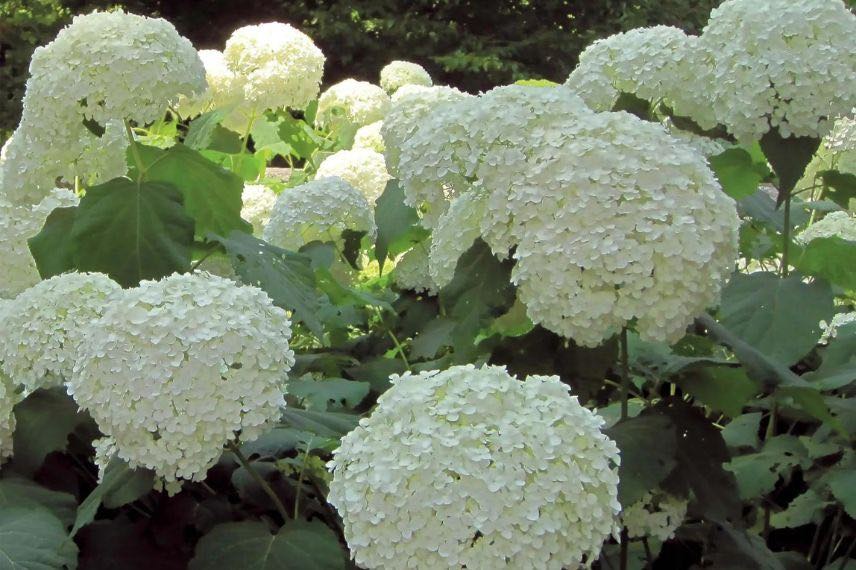
Hydrangea arborescens 'Strong Annabelle' (Incrediball) - arborescent hydrangea
Hydrangea arborescens ‘Strong Annabelle’ (Incrediball) is a ramified shrub with a rounded habit that bears impressive flowers forming 30 cm luminous spheres. Very floriferous, it flowers for a long period, from June to October. The cream-coloured flowers are borne on sturdy stems that do not bow under their weight. The spherical corymbs are composed of a multitude of small flowers with 3 to 4 sepals. The foliage is dark green, broad and ovate, crinkled and deciduous. The flowers are very beautiful in a bouquet. This Virginia hydrangea forms a shrub measuring 1.5 metres by 1.5 metres. It thrives in sun or partial shade, in cool, moist, rich, deep and well-drained soil of calcareous clay or clay-loam. It is hardy down to -23.5°C.
Plant this hydrangea in a contemporary garden, in a border or a flowering hedge, or in a large pot on a patio. It offers an architectural and neat silhouette and a welcome touch of light during flowering. In the garden, you can pair it with hellebores and with daffodils.
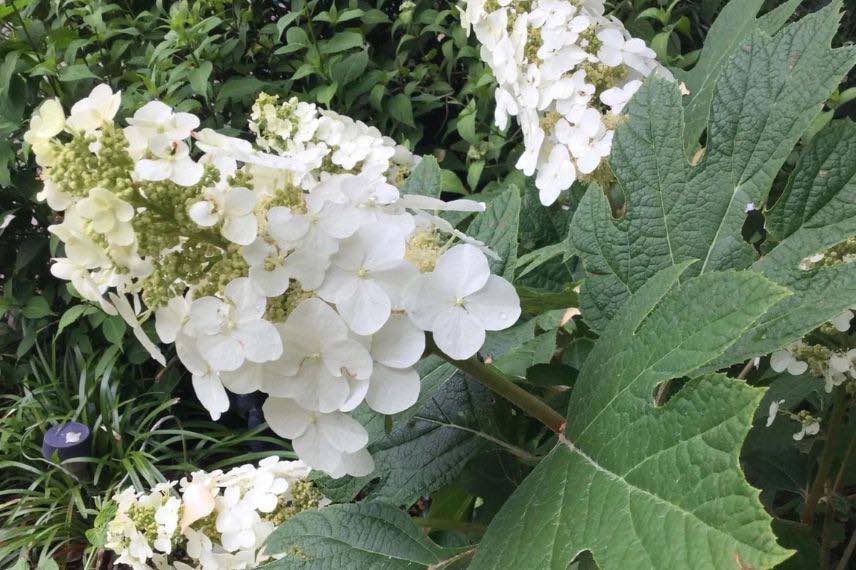
Hydrangea quercifolia 'Snow Queen' - oakleaf hydrangea
L’Hydrangea quercifolia ‘Snow Queen’ is an oakleaf hydrangea with sturdy stems and very floriferous. Remarkably, it offers a multitude of large clusters of white flowers on a backdrop of lobed foliage resembling oaks. The anise-white flowers become white and then turn pinkish-purple. They measure about 25 cm and cover the shrub from July to October in the form of curved panicles. The large leaves are divided into five deep lobes with dentate margins. They transition from dark green to reddish-brown in autumn. This Hydrangea quercifolia is not particular about soil and tolerates slightly calcareous soils. It tolerates a moist or dry, deep and rich soil. This shrub, growing to 1.5 m tall by 1.2 m wide at maturity, can be planted in sun or shade. It tolerates drought. For vibrant autumn colours, a sunny position is recommended, though not in scorching sun.
This hydrangea can be grown as a standalone specimen or integrated into a border or an informal hedge. It can be paired with other hydrangeas or amaranths to achieve a striking effect.
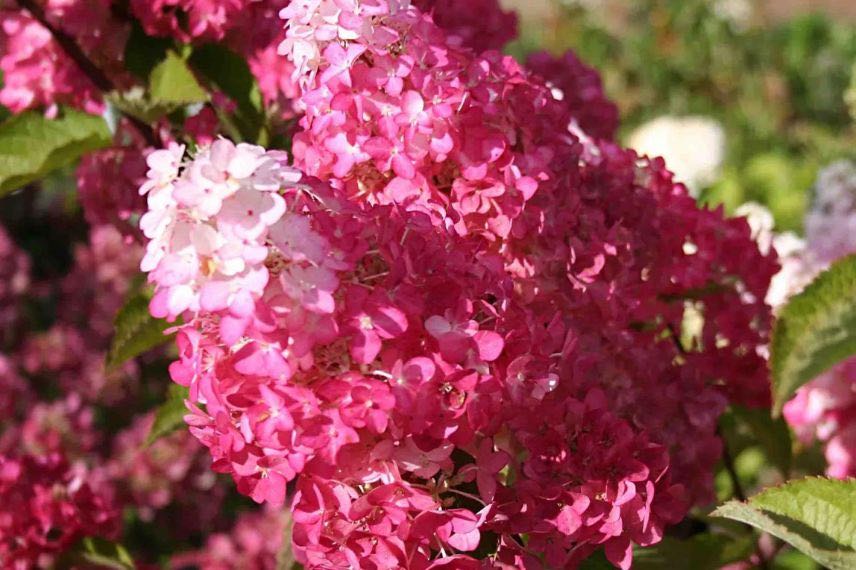
Hydrangea paniculata 'Fraise Melba' – paniculate hydrangea
Hydrangea paniculata ‘Fraise Melba – Panicle hydrangea is an improvement on the well-known variety ‘Vanille Fraise’. It grows to 2 m tall and 1.5 m wide at maturity, and it produces dense, conical panicles that have the characteristic of changing colour. They appear ivory-white, then turn pink and finish red. Flowering lasts from July to October. The flowers measure 25 cm and make beautiful cut-flower bouquets. The stems are sturdy and bear oval, deeply veined leaves. The foliage also changes colour, shifting from dark green to purple in autumn. It is deciduous. This hydrangea can be planted in full sun or partial shade, in moist, well-drained soil. It tolerates slightly calcareous soil. For good autumn colours, a sunny exposure is preferable. Hardy to -29 °C, it does not require pruning.
It can be grown as a standalone plant, in the ground or in a pot, as well as in a bed or a hedge. You can accompany it with ground-cover roses, pink Gaura and ornamental grasses.
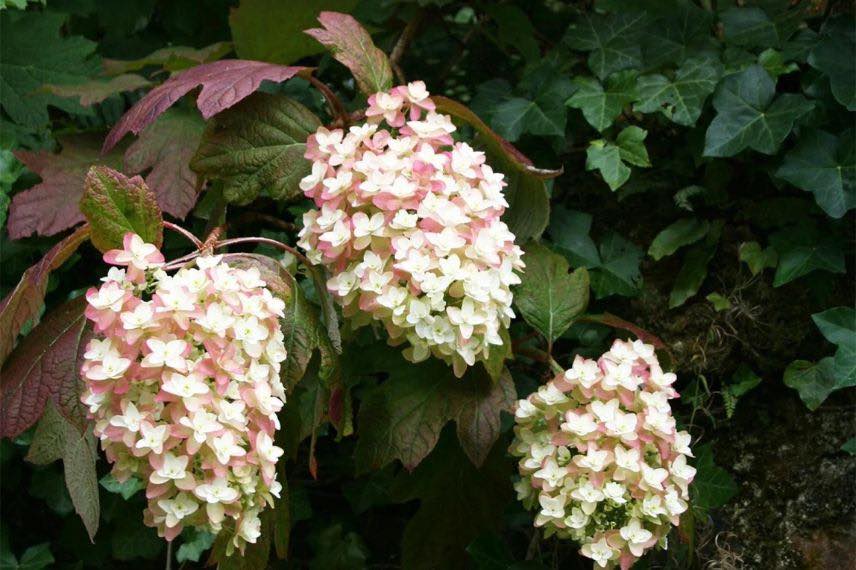
Hydrangea quercifolia 'Snowflake' – oakleaf hydrangea
Hydrangea quercifolia ‘Snowflake’ is a bush variety of oakleaf hydrangea with double flowers. The 30 cm inflorescences bloom from July to October. They are ivory-white and appear on large, pedunculate oakleaf-type leaves, a mid-green that turn red and brown in autumn if exposed to sun. The foliage is deciduous. It forms a bushy silhouette of 1.5 metres by 1.2 metres. Hardy to -23.5°C, this bush is easy to grow. It prefers to be planted in full sun in a cool, light and well-drained soil. It tolerates lime and partial shade. When planting, add fertiliser to the soil. To obtain beautiful autumn colours, plant preferably in full sun and in humus-bearing, neutral to acidic soil. It is advisable to prune dried inflorescences not at the end of flowering, but in winter or early spring following.
In a hedge or border, pair it with other hydrangeas such as arborescens or paniculata to vary the shapes of flowers, leaves and colours.
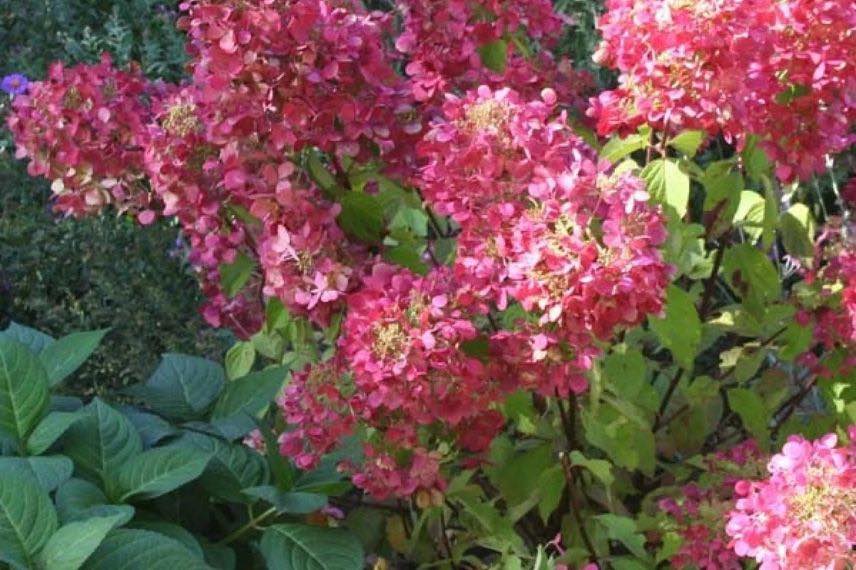
Hydrangea paniculata 'Diamant Rouge' – paniculate hydrangea
If you love large pink, almost red flowers, this hydrangea is likely to please you. Hydrangea paniculata‘Diamant Rouge – paniculate hydrangea stands out for its large flowering panicles bearing white colours that turn pink, then raspberry pink and burgundy. The flowers measure up to 30 to 40 cm in diameter and have a long lifespan. They appear from July to October, on mid-green foliage that becomes purple in autumn. The inflorescences are semi-round and composed of broad sepals. The foliage is deciduous. This bush with a bushy habit reaches a mature height of 1.5 metres and a width of 1.2 metres. Hardy to -29°C, it can be planted in full sun or partial shade, in moist, deep soil. It tolerates slightly calcareous soils. When planting, apply horn meal or dried-blood fertiliser. During flowering, water deeply at the base of the plant, taking care not to wet the leaves or flowers. Prune the dried inflorescences in winter or the following spring.
In your garden, pair it with another Hydrangea paniculata ‘Phantom’, whose white flowers turn pink.
- Subscribe!
- Contents

Comments