
Hydrangea paniculata Diamant Rouge®

Hydrangea paniculata Diamant Rouge®

Hydrangea paniculata Diamant Rouge®

Hydrangea paniculata Diamant Rouge®

Hydrangea paniculata Diamant Rouge®

Hydrangea paniculata Diamant Rouge®

Hydrangea paniculata Diamant Rouge®

Hydrangea paniculata Diamant Rouge®

Hydrangea paniculata Diamant Rouge®

Hydrangea paniculata Diamant Rouge®

Hydrangea paniculata Diamant Rouge®

Hydrangea paniculata Diamant Rouge®

Hydrangea paniculata Diamant Rouge®

Hydrangea paniculata Diamant Rouge®

Hydrangea paniculata Diamant Rouge®

Hydrangea paniculata Diamant Rouge®

Hydrangea paniculata Diamant Rouge®

Hydrangea paniculata Diamant Rouge®
View more pictures
Hide images

Michèle B.
Hydrangea paniculata Diamant Rouge®
Michèle B. • 10 FR
Hydrangea paniculata Diamant Rouge®
Hydrangea paniculata ‘Rendia’ Diamant Rouge®
Paniculate Hydrangea, Panicled Hydrangea, Panicle Hydrangea
Beautiful "foliage" plant BUT no flowers in prospect!!!
Michel, 28/05/2026
Back-to-school special offer!
Get €10 off for every €50 you spend! And get up to €40 off on a single order.
How does it work?
1. Shop your favourites
Add your favourite plants to your basket. For every €50 you spend (excluding delivery charges, store credit and the plastic-free option), you’ll receive a €10 voucher.
€50 spent = €10 voucher
€100 spent = €20 voucher
€150 spent = €30 voucher
€200 spent = €40 voucher
2. Place your order
Once your basket reaches one of the spending thresholds, place your order. You can even choose your delivery date!
3. Receive your voucher
As soon as your order has been shipped, you’ll receive an email containing your personal voucher code and its value.
4. Use it on your next order
Your voucher is valid for 90 days from the date you receive it. It can be used once only, on a new order worth at least the value of the voucher, excluding delivery charges.
Please note: Vouchers can be combined with other offers, but cannot be split or refunded.
Home or relay delivery (depending on size and destination)
Important: You may be charged customs duties by your country’s customs authorities upon delivery.
Schedule delivery date
and select date in basket
This plant carries a 24 months recovery warranty
More information
We guarantee the quality of our plants for a full growing cycle, and will replace at our expense any plant that fails to recover under normal climatic and planting conditions.

Would this plant suit my garden?
Set up your Plantfit profile →
Description
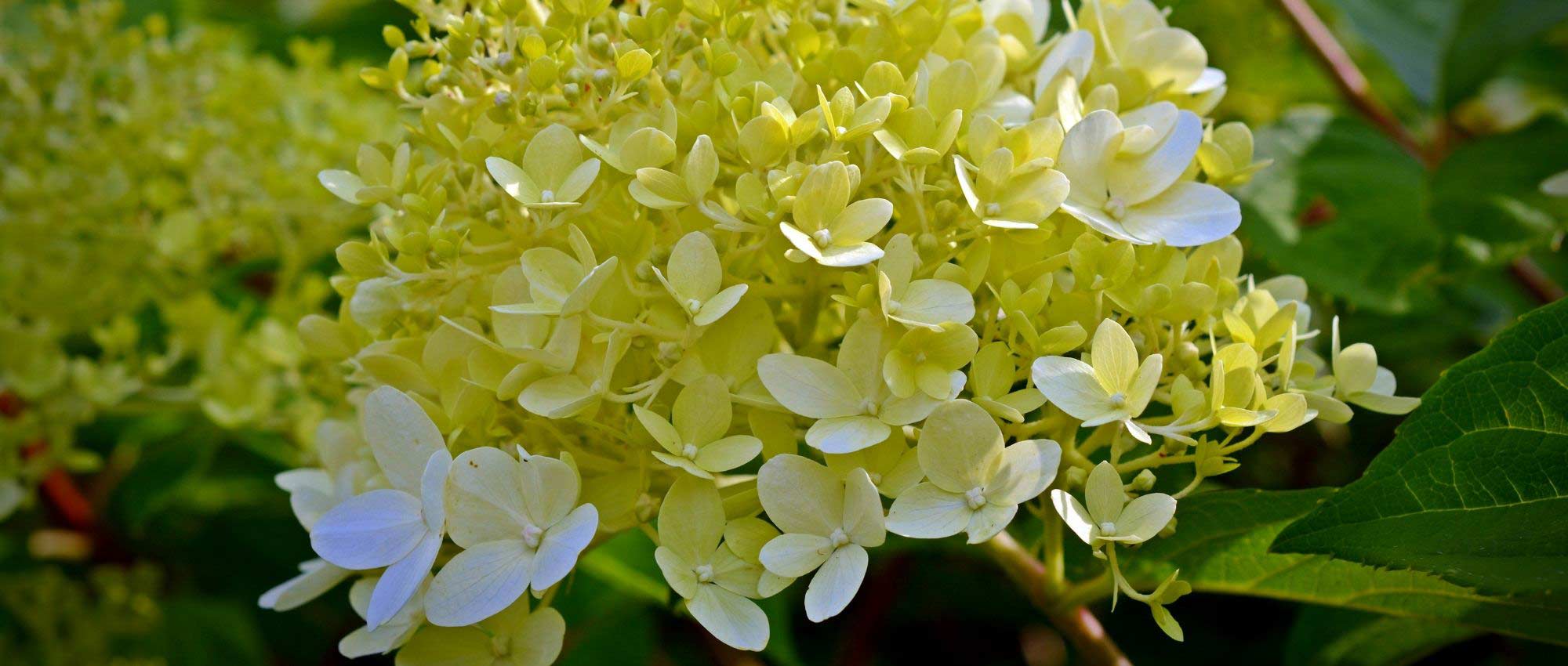
L’Hydrangea paniculata Diamant Rouge® ‘Rendia’ est réputé offrir l’une des colorations rouges les plus foncées parmi les hortensias paniculés. Ses grandes panicules s’ouvrent en blanc, se colorent rapidement de rose, puis arborent dès le mois d’août un rouge framboise qui évolue vers le lie-de-vin. Sa floraison précoce, dont les teintes évoluent sans cesse, confère à cet arbuste une présence remarquable durant toute la seconde moitié de l’été. En fin de saison, c'est pour son feuillage flamboyant qu'on l'apprécie.
Diamant Rouge® est le nom commercial du cultivar ‘Rendia’, sélectionné en France à Gorron par Jean Renault. Cette variété, issue d’une mutation découverte en 2007 sur un semis d’Hydrangea paniculata, a reçu une médaille d’argent au salon Plantarium de Boskoop en 2011. L’espèce type, Hydrangea paniculata, appartient à la famille des Hydrangéacées. Elle pousse naturellement dans les régions tempérées d’Asie orientale, notamment en Chine, au Japon, à Taïwan et sur l’île de Sakhaline, dans les bois clairs, les vallées et sur les pentes montagneuses.
L'hortensia Diamant Rouge est un arbuste touffu, dense, buissonnant et semi-dressé, haut de 1,50 m pour 1,20 m de largeur après cinq à dix ans. Ses tiges brun-rouge portent des feuilles ovales, dentées, d’un vert moyen à foncé. À partir de la fin de l’été, le feuillage développe naturellement de petites ponctuations rouge brun qui s’étendent à l’automne, avant que les feuilles prennent des nuances orangées ou pourprées. Cette pigmentation est une caractéristique de 'Diamant Rouge'. La floraison commence en juillet et se poursuit jusqu’en octobre. Les panicules, coniques à légèrement arrondies, mesurent couramment 30 cm de long, voire 35 à 40 cm sur les tiges les plus vigoureuses. Elles sont formées d’une majorité de fleurs stériles, parmi lesquelles les minuscules fleurs fertiles sont très peu visibles. L'ensemble passe du blanc au rose, puis au rouge framboise dès le mois d’août, avant de prendre une teinte lie-de-vin en fin de saison. La lumière et la température influencent fortement cette coloration. Une exposition lumineuse, associée à des nuits fraîches, intensifie le rouge. Sous une ombre trop dense ou dans les régions aux nuits estivales chaudes, les fleurs restent souvent plus roses. Le pH du sol n'a aucune influence sur leur couleur. La floraison est portée par des tiges brun-rouge assez solides qui peuvent être coupées pour faire des bouquets frais ou secs. Laissées sur l’arbuste, elles deviennent progressivement brunes et restent décoratives en hiver.
Cette variété ‘Diamant Rouge’, particulièrement colorée, trouve sa place dans un jardin romantique, d’inspiration anglaise ou plus contemporaine. Il peut être planté dans un massif arbustif, entouré de l’Hydrangea serrata ‘Blue Bird’, aux inflorescences plates bleues ou roses, et de l’Hydrangea quercifolia ‘Snowflake’, dont les fleurs doubles passent du blanc au rose. Le Deutzia ‘Yuki Cherry Blossom’, bas et arrondi, et le Clethra alnifolia ‘Hummingbird’, aux épis blancs parfumés, complètent cette scène fleurie à mi-ombre. Coupées fraîches ou séchées, ses panicules composent de grands bouquets avec des roses, des dahlias et des fleurs champêtres de fin d’été, notamment les asters d'automne.
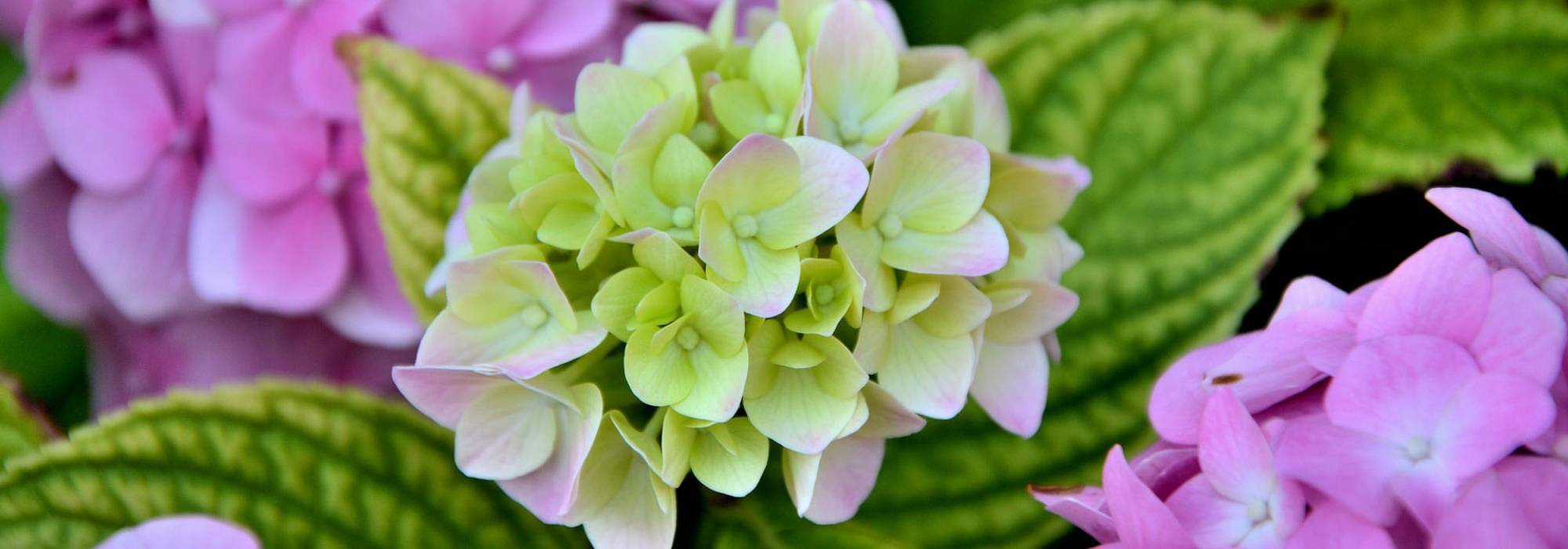
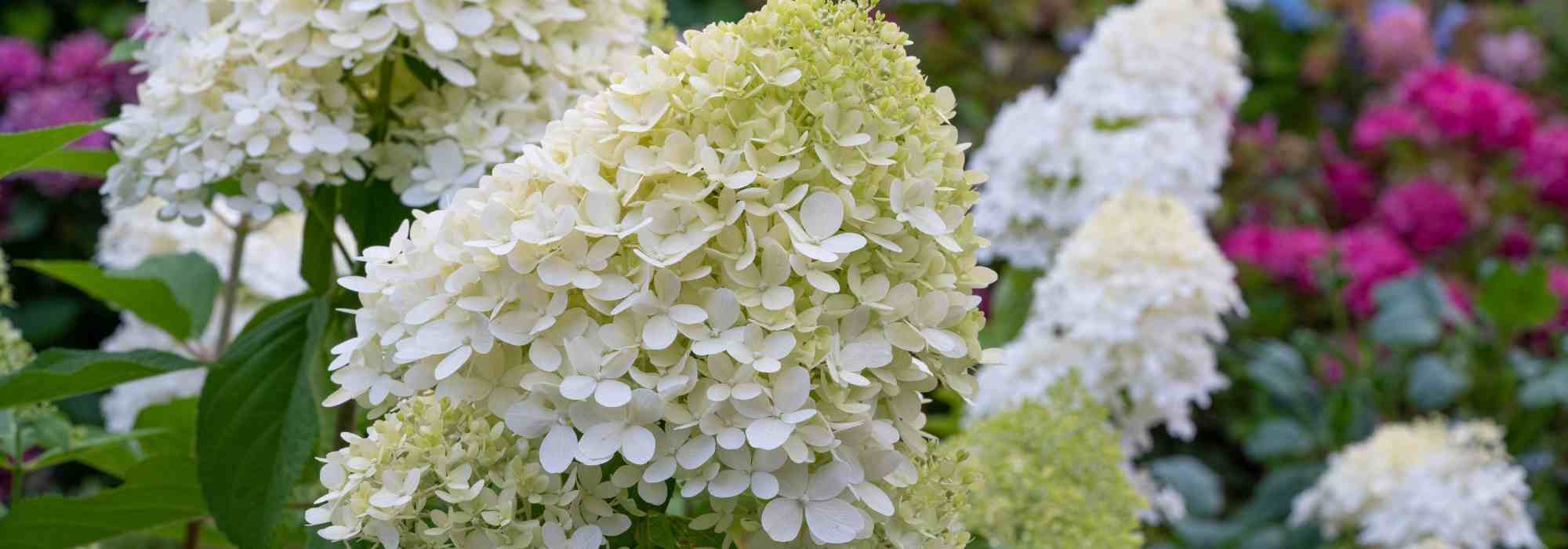
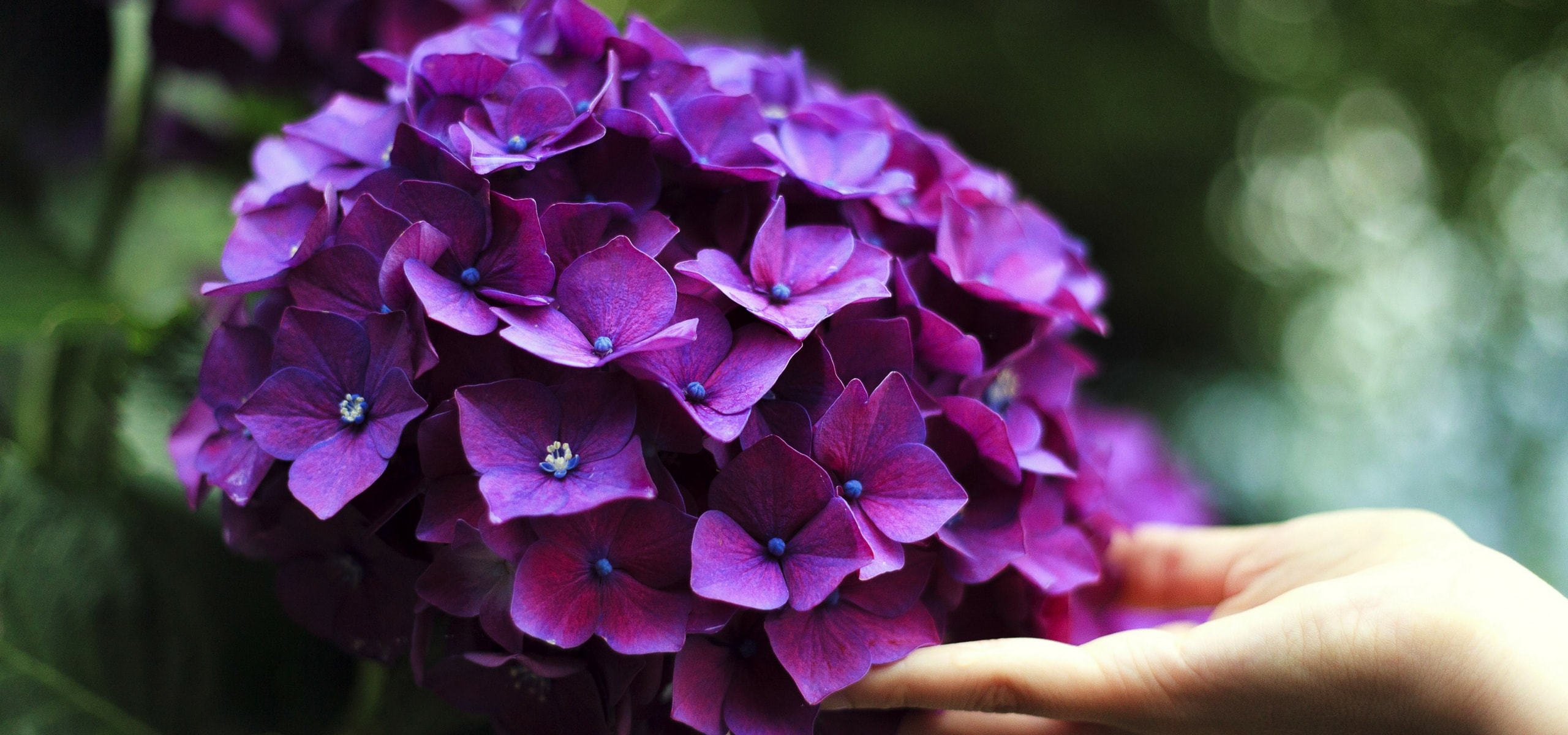
Hydrangea paniculata Diamant Rouge® in pictures


Plant habit
Flowering
Foliage
Botanical data
Hydrangea
paniculata
‘Rendia’ Diamant Rouge®
Hydrangeaceae
Paniculate Hydrangea, Panicled Hydrangea, Panicle Hydrangea
Hydrangea paniculata ‘Rendia’, Hydrangea paniculata Diamant Rouge®
Cultivar or hybrid
Planting and care
Plant your Hydrangea paniculata Diamant Rouge in spring or autumn, in deeply worked soil. A good base fertiliser (horn or dried blood) will encourage your plant to establish and will feed it without risk of burning. Hydrangea paniculata prefers humus-bearing soils, but tolerates slightly calcareous and occasionally dry soils more easily. If your soil tends to be dry, mix a large quantity of compost into the soil when backfilling the planting hole and create a watering basin at the surface. Growth resumes fairly late in spring. Water frequently during flowering, but avoid watering the foliage and flowers directly.
Planting period
Intended location
Care
Planting & care advice
-
, onOrder confirmed
Reply from on Promesse de fleurs
Recently viewed products
Haven't found what you were looking for?
Hardiness is the lowest winter temperature a plant can endure without suffering serious damage or even dying. However, hardiness is affected by location (a sheltered area, such as a patio), protection (winter cover) and soil type (hardiness is improved by well-drained soil).

The flowering period indicated on our website applies to countries and regions located in USDA zone 8 (France, the United Kingdom, Ireland, the Netherlands, etc.)
It will vary according to where you live:- In zones 9 to 10 (Italy, Spain, Greece, etc.), flowering will occur about 2 to 4 weeks earlier.
- In zones 6 to 7 (Germany, Poland, Slovenia, and lower mountainous regions), flowering will be delayed by 2 to 3 weeks.
- In zone 5 (Central Europe, Scandinavia), blooming will be delayed by 3 to 5 weeks.
In temperate climates, pruning of spring-flowering shrubs (forsythia, spireas, etc.) should be done just after flowering.
Pruning of summer-flowering shrubs (Indian Lilac, Perovskia, etc.) can be done in winter or spring.
In cold regions as well as with frost-sensitive plants, avoid pruning too early when severe frosts may still occur.
The planting period indicated on our website applies to countries and regions located in USDA zone 8 (France, United Kingdom, Ireland, Netherlands).
It will vary according to where you live:
- In Mediterranean zones (Marseille, Madrid, Milan, etc.), autumn and winter are the best planting periods.
- In continental zones (Strasbourg, Munich, Vienna, etc.), delay planting by 2 to 3 weeks in spring and bring it forward by 2 to 4 weeks in autumn.
- In mountainous regions (the Alps, Pyrenees, Carpathians, etc.), it is best to plant in late spring (May-June) or late summer (August-September).
The harvesting period indicated on our website applies to countries and regions in USDA zone 8 (France, England, Ireland, the Netherlands).
In colder areas (Scandinavia, Poland, Austria...) fruit and vegetable harvests are likely to be delayed by 3-4 weeks.
In warmer areas (Italy, Spain, Greece, etc.), harvesting will probably take place earlier, depending on weather conditions.
The sowing periods indicated on our website apply to countries and regions within USDA Zone 8 (France, UK, Ireland, Netherlands).
In colder areas (Scandinavia, Poland, Austria...), delay any outdoor sowing by 3-4 weeks, or sow under glass.
In warmer climes (Italy, Spain, Greece, etc.), bring outdoor sowing forward by a few weeks.
Shipping country and language
Your country of residence may be:
Your country of residence is:
For a better user experience on our website, you can select:
Your shipping country:
-
 Austria
-
 Belgium
-
 Bosnia & Herzegovina
-
 Bulgaria
-
 Croatia
-
 Cyprus
-
 Czechia
-
 Denmark
-
 Estonia
-
 Finland
-
 France
-
 Germany
-
 Greece
-
 Hungary
-
 Iceland
-
 Ireland
-
 Italy
-
 Latvia
-
 Liechtenstein
-
 Lithuania
-
 Luxembourg
-
 Malta
-
 Netherlands
-
 Poland
-
 Portugal
-
 Romania
-
 Serbia
-
 Slovakia
-
 Slovenia
-
 Spain
-
 Sweden
-
 Switzerland
Language:
-
French
-
 English
-
Spanish
-
Italian
-
German
-
Portuguese
-
Dutch
-
Finnish
My Account
Hello
My wish lists
My cart
Log in / Register
Existing customer?
This form is protected by reCAPTCHA - the Google Privacy Policy and Terms of Service apply.
New customer?
Create an account to track your orders, access our customer service and, if you wish, make the most of our upcoming offers.