


Little-known or forgotten squashes: treasures for the kitchen garden
Discover ten rare varieties of squash that deserve a place in the garden
Contents
In the world of cucurbits, where Musquée de Provence squash and butternut squash often reign supreme on autumn stalls and in vegetable gardens, hidden are little-known treasures, varieties with surprising shapes and flavours. These squashes, once the mainstays of our vegetable gardens, have often been eclipsed by the standardisation of agriculture and tastes. Yet they are a reflection of gastronomic richness and botanical heritage that is urgently worth rediscovering to maintain biodiversity.
Let us discover ten distinctive squash varieties, each with its own story, texture and a promise of delight.

Rare varieties of squash to enrich the vegetable garden
Why growing heirloom, rare, little-known squashes? Beyond mere culinary curiosity, rediscovering forgotten squashes is an act of preserving agricultural biodiversity.
Each variety of these cucurbits has unique agronomic and flavour qualities, which can enrich our tables and diversify our culinary practices.
Indeed, these squashes, whether ancient or completely little-known, often prove more disease-resistant or benefit from a longer shelf life. Not to mention the new flavours they offer.
By choosing to incorporate these little-known treasures into our gardens and kitchens, we actively contribute to safeguarding an invaluable plant heritage. It’s a way to ensure that the flavours and the distinctive shapes of these squashes will never be forgotten.
Autumn is their season, and it’s time to give them back the place they deserve, the starring roles in the kitchen garden and in gastronomy.
Read also
Squashes: buyer's guideFrench-origin heirloom squashes
Our journey through forgotten squashes begins, logically, in France, at the heart of terroirs that often harbour astonishing varieties, with vernacular names that are often highly evocative. This is, indeed, the case with our first squash.
Sucrine du Berry
The Sucrine du Berry, also known as “sucrette du Berry”, originates from the heart of France. It is an ancient variety of musquée squash (Cucurbita moschata) that captivates with its restrained sweetness and the intensity of its flavour. Late-ripening and sprawling, this variety of musquée squash produces pear-shaped fruits, typically weighing between 1 and 2 kg. These squashes feature a skin that is dark green and then ochre at maturity, and a bright orange flesh, with exceptional sweetness and fragrance.
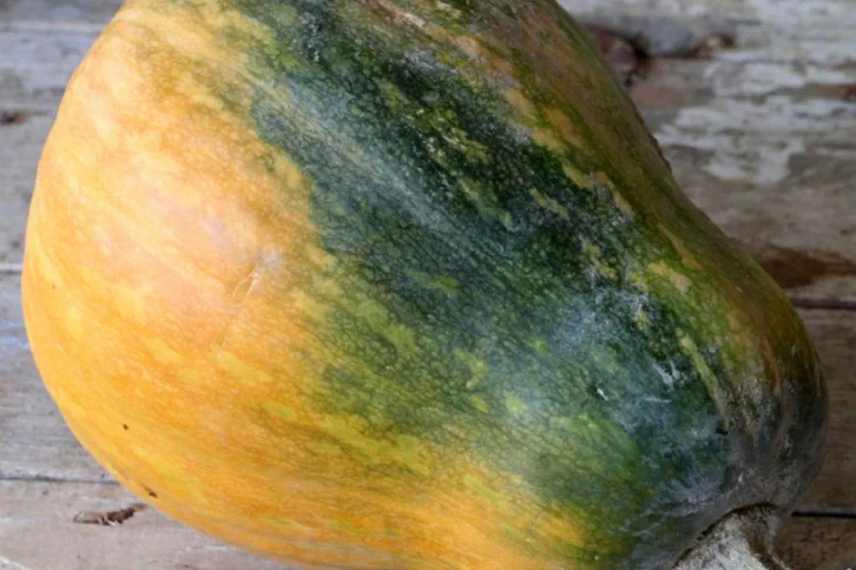
The Sucrine du Berry
Its sweet, musky flavour makes it an ideal candidate for soups, delicate purées, but also sweet preparations such as jams and cakes. It is precisely in these preparations that it reveals its full sweet potential.
Its long storage life of at least six months helps extend autumn.
Galeux d’Eysines Pumpkin
The Galeux d’Eysines pumpkin is a Cucurbita maxima pumpkin, easily recognisable above all others. There is nothing particularly attractive about its appearance, as its salmon-pink skin is speckled with corky, beige and warty growths. Yet behind such ugliness lies flesh with exceptional flavour.
Originating from the Bordeaux region, where it arose from natural hybridisation at the end of the 19th century, this squash seems almost afflicted with leprosy. That is what makes all the difference.
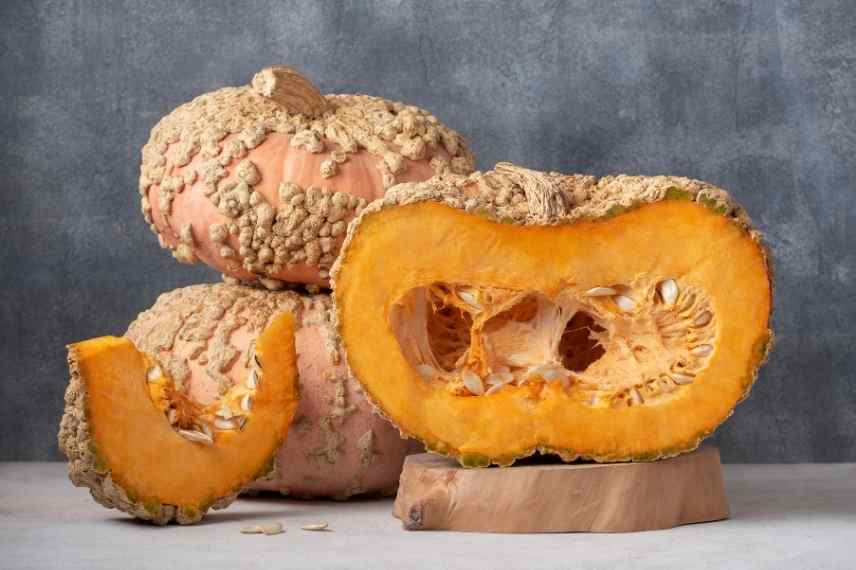
The Galeux d’Eysines pumpkin
Despite the unattractive appearance of the epidermis, the flesh of this squash is a delight: yellow-orange, thick, fine, firm and very sweet. It is traditionally used for rich soups, gratins, tarts and jams. This squash is a perfect example of the beauty that can lie behind ugliness. Thus, the adventurous gardener is rewarded with an intense flavour and holds up well to cooking.
Little-known squashes of Mediterranean origin
Italy, a land of sunshine and generosity in the garden as in the kitchen, offers us two varieties of squash with impressive stature.
Naples Long Squash
Naples Long Squash (Cucurbita moschata) is an elongated musky squash, often likened to a club, pestle or a violin, capable of reaching substantial weight, up to 25 kg, and a length of more than 60 cm. Considering that a plant can produce 3–5 fruits, one can say it is productive. Under the skin of dark green to olive-green uniform colour, one discovers a flesh abundant, yellow‑orange, firm, sweet, musky and very fragrant.
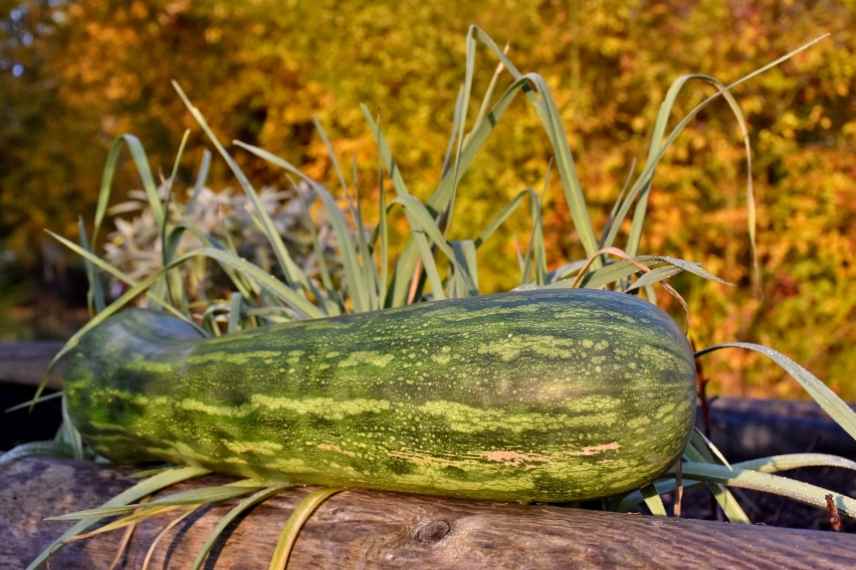
Naples Long Squash (Lunga di Napoli)
Its texture makes it versatile: it excels in soups, purées, but is also prized for ratatouille and jams. It is especially high‑yielding, as a fruit can feed a large family for several days. Its keeping quality is remarkable.
Tromba d’Albenga
Its cousin, Tromba d’Albenga (Cucurbita moschata), native to Liguria, is equally spectacular, but in a different way. It is a squash that coils around itself, in a snake-like shape, with a swelling at the base.
This climbing squash also has the peculiarity of being edible at two stages of ripeness, just like the Nice long squash. When young, its epidermis is light green. It is harvested at 30–40 cm and cooked like a courgette, with a very delicate flavour. At maturity, when it has turned ochre, it forms a long tether of a metre or more, with a swelling at the end containing the seeds.
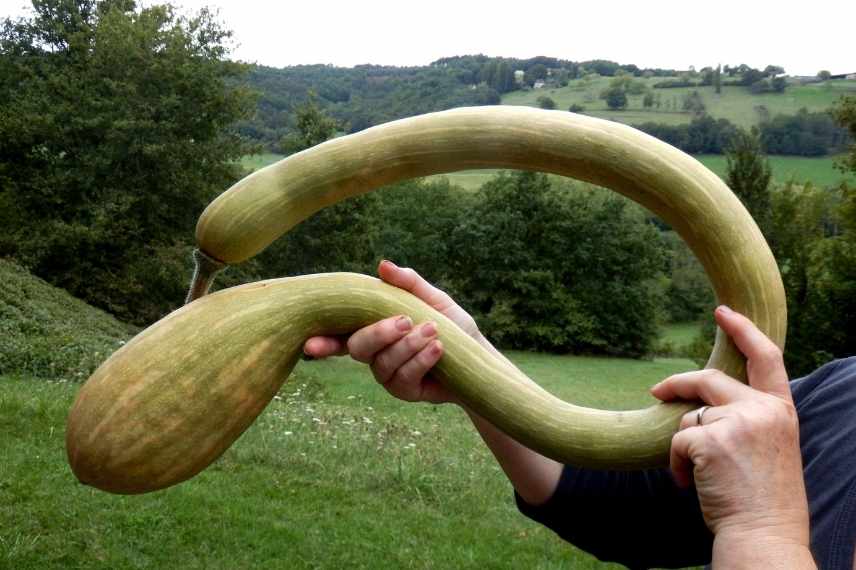
Tromba d’Albenga squash
Its flesh, firm and sweet, with a hazelnut-like flavour, stores exceptionally well, sometimes for nearly a year, and is perfect for gratins, soups and even, raw, in salads, a rare use for a winter squash.
Surprisingly colourful Squashes
Among the wide family of squashes, there are also lesser-known varieties in unexpected colours.
Blue Hungarian pumpkin
The Blue Hungarian pumpkin, of the Cucurbita maxima type, is a spherical and flattened pumpkin, with an epidermis that is a unique powdery blue-grey, making it a top decorative feature.
Brought back to France in the 1980s, this variety has flesh that is yellow to orange, very thick, with a soft, dense texture and a pronounced sweet flavour, often compared to chestnut.
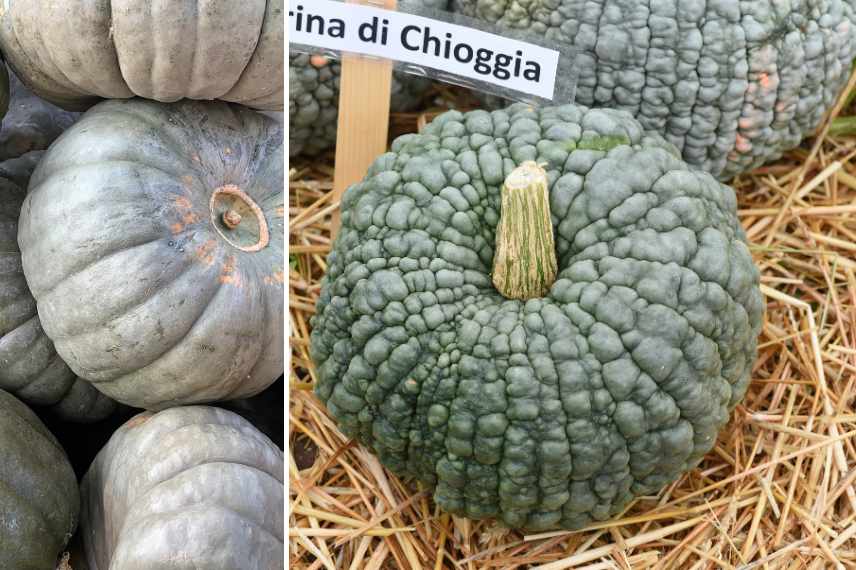
Blue Hungarian and Marina di Chioggia pumpkins
Marina di Chioggia pumpkin
Return to Italy, near Venice, to discover the Marina di Chioggia pumpkin (Cucurbita maxima). It is a round and strongly flattened fruit, weighing up to 4 kg, with a knobbly, ridged and verrucate epidermis, ranging in colour from dark blue-green to bronze-green. Beneath its rustic epidermis lies a flesh that is almost red-orange, very firm, thick and particularly sweet and mealy. This mealy texture makes it a perfect base for fritters or jams. But this squash is best known as the reference squash in Venetian cuisine, where it is traditionally cut into quarters, grilled with olive oil, or used in gnocchi and soups.
Its shelf life of around four to eight months makes it valuable in winter.
Smaller squashes with a touch of originality
These small-sized or oddly shaped squash varieties add a touch of originality.
Turk’s Turban
Turk’s Turban (Cucurbita maxima) is a small pumpkin shaped like a turban, variegated with orange, green and white. The 6 to 7 fruits per plant weigh between 100 and 800 g. Extremely decorative, this pumpkin is often used as a table decoration. However, its pale orange, firm flesh with a mild flavour makes it perfectly edible, notably for stuffing and roasting, or added to soups. Its individual size is ideal for an elegant presentation in the kitchen.
Delicata Squash
Delicata squash (Cucurbita pepo) is an old American variety, small in size, elongated and cylindrical, with a thin edible skin striped with dark green and cream, becoming more orange at maturity. Its name ‘Delicata’ suits it perfectly: its yellow-orange flesh is fine, mild and has a delicate hazelnut or chestnut flavour. Besides potimarron, it’s one of the few winter squashes whose skin does not need peeling, a major advantage in cooking!
It lends itself wonderfully to oven-roasted cooking, sliced into rounds or half-moons, often seasoned with olive oil, honey or spices, for a quick and tasty accompaniment.
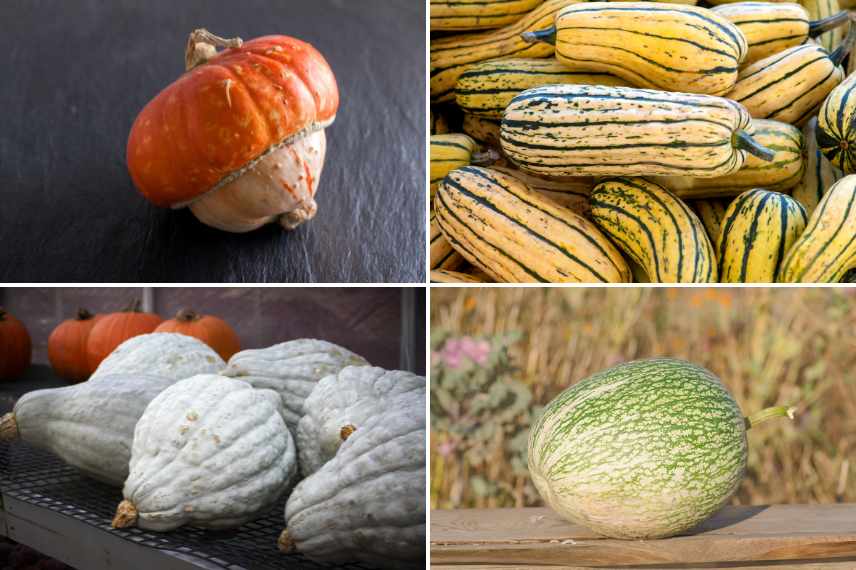
In clockwise order, Turk’s Turban, Delicata, Siamese Squash and Blue Hubbard
Blue Hubbard Pumpkin
Blue Hubbard Pumpkin (Cucurbita maxima) is an old American variety that produces large elongated fruits, pointed at the ends, with a blue-grey rind, sometimes slightly verrucose. Its fruits are massive: 5 to 12 kg, 30 to 50 cm long with a diameter of around 20 to 30 cm.
The flesh of this pumpkin, yellow-orange, is thick, dry, moderately sweet, and of good quality. It is eaten as purée, soup or gratin. Its dry texture makes it excellent for pumpkin bread or cakes, and its keeping qualities are among the longest, able to exceed six months, or even a year.
Siamese Squash
Siamese Squash (Cucurbita ficifolia) is the most distinctive in the group. At maturity, this large oblong fruit with a green skin speckled with cream reveals a white, stringy flesh that, when cooked, breaks down into long spaghetti-like strands. Traditionally, these filaments are mainly used to make the famous ‘angel-hair jam,’ a sweet speciality. However, young fruits can be eaten like courgettes, and the cooked pulp is also excellent in gratin (spaghetti squash style) or in soup.
- Subscribe!
- Contents
Comments