





























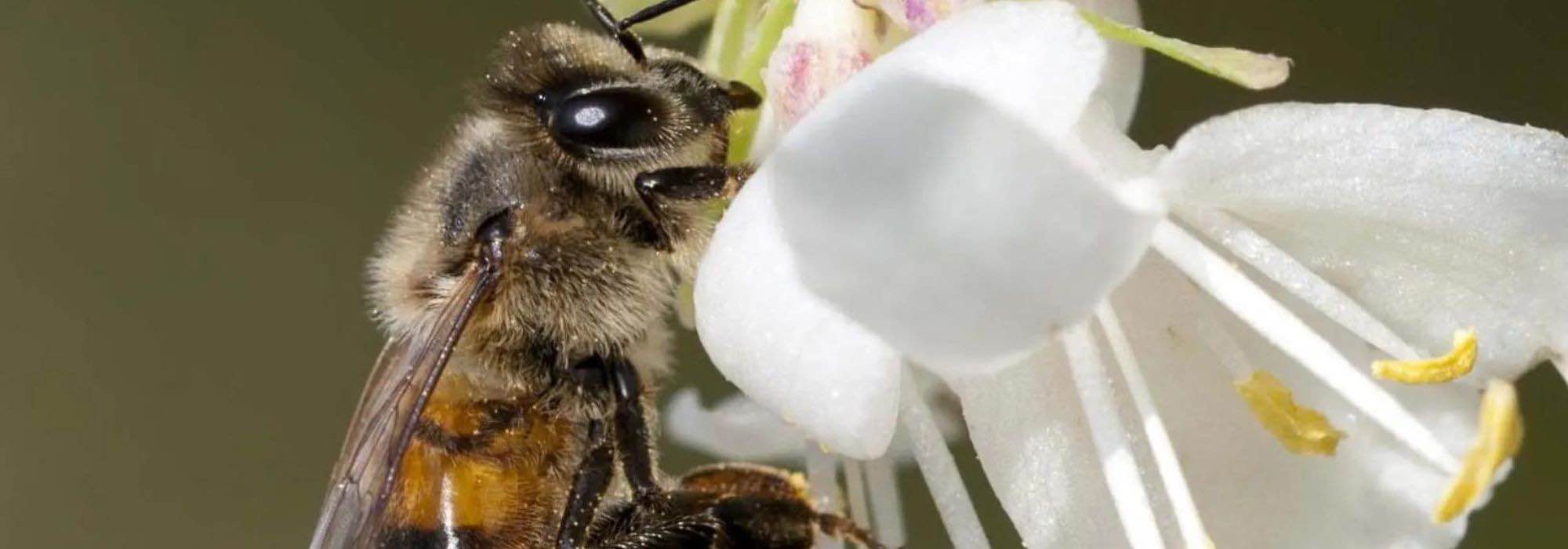
Melliferous bushes: a valuable aid to biodiversity
For all situations, seasons and climates.
Contents
Attracting pollinators to your garden is essential to promote biodiversity and ensure good pollination of plants. Melliferous bushes play a pivotal role in this ecosystem, offering abundant pollen, essential to the survival of bees and other pollinating insects. In addition to their ecological qualities, these bushes bring a touch of beauty and colour to the garden thanks to their spectacular flowering. In this article, we present a selection of the best melliferous bushes, including in winter and shaded locations.

Seasonal
Springtime
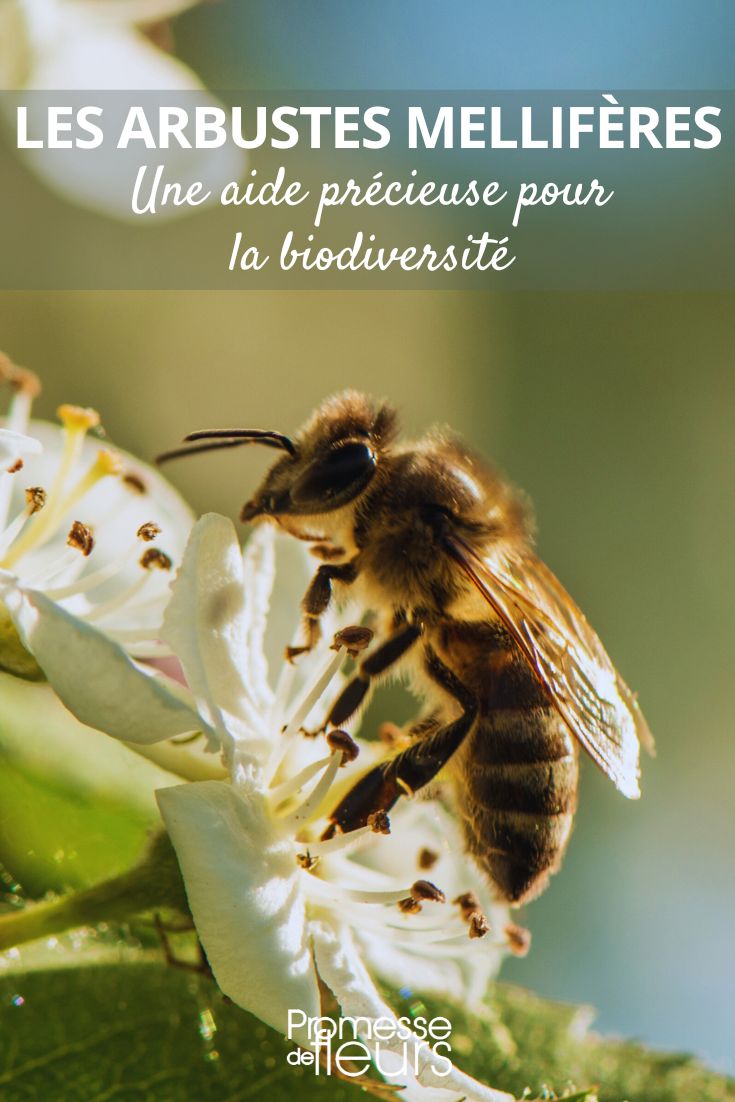
Aubépine is a honey-rich shrub whose flowering unfolds in the heart of spring, from April to June. Its white or pink flowers, grouped in corymbs, attract a multitude of pollinators, notably bees. The pollen richness of its flowers makes hawthorn a quintessential melliferous plant. It contributes to the production of quality honey and supports biodiversity in the garden. Hawthorns fill our countryside and are easy to grow in the garden, not fussy about soil type, provided it is well drained. To maximise the benefit of its umbels in flower, plant it in sun or light shade.
In addition to its spring flowering, it produces small red berries in autumn, which serve as food for birds. Its density and thorns make it an excellent defensive hedge and a refuge for wildlife.
Photinia fraseri (and its cultivars) is also a champion for attracting bees and foragers, provided it is allowed to grow freely without pruning. Indeed, while this shrub is commonly found in hedges, it is also interesting to cultivate as a border shrub or as a small tree in isolation. Photinia offers attractive flowering, in moss-like clusters of a white-crème that are highly visited by bees. Give it a soft, fairly deep soil. Once well established, it tolerates summer drought.
Summer
Céanothus blooms buzz actively in summer (or spring depending on species and varieties). Generally, deciduous céanothes flower in the heart of summer. These shrubs offer a profusion of blue, white or pink flowers, grouped in clusters, attracting bees and other pollinating insects. Easy to grow, céanothes adapt to various soil types, though they prefer well-drained soil that is slightly acidic to neutral. They thrive particularly in sunny locations and are drought-tolerant once established. Deciduous varieties with summer flowering, more frost-hirmade than evergreen, are however less drought-tolerant.
Vitex or Gattiliers flower from July to October in long blue, purple or white panicles on upright shoots. Also nicknamed “pepper trees,” their crumpled foliage emits a peppery scent. Much appreciated by foragers, they also have decorative foliage. Plant them in sun in well-drained soil; they withstand drought and sea spray. They are hardy only in the southern half of France and on the west coast, as they fear severe frosts.
Autumn
Autumn sees the flowering of several araliaceous shrubs with notable melliferous qualities. In September and October, fatsia or Japanese Aralia, with exotic foliage, offers small white pom-pom flowers, followed by black, round fruits. It prefers shady exposure and a cool, light, non-calcareous soil, and is hardy to about -12°C. Aralia elata forms a large shrub with deeply cut foliage, flowering in large clusters of white at the end of summer and in autumn. A true fragrant, bee-friendly mist, it prefers a half-shade exposure, or morning sun, sheltered from strong winds. It grows best in cool, moist, fertile soil, though poorer soil seems to yield hardier, longer-lived plants.
In winter
In winter, the mahonia takes centre stage, offering spectacular winter flowering in clusters of yellow or orange flowers depending on the variety, followed by blue berries. The sweet scent of its flowers complements its striking flowering, and visiting insects do not miss it. Mahonia grows in any soil type except compact, very wet soils. It is hardy and enjoys shade or partial shade. Its foliage, equally striking, is spiny, except for some varieties.
Lonicera fragrantissima (winter honeysuckle) is a winter-flowering honeysuckle, white and wonderfully scented, with jasmine- and lemon-like aromas. During this period, rarer in flowers, this non-climbing shrub is a boon for bees. Undemanding, it grows in all well-drained soils, in sun in the north or light shade in the south, in sheltered locations, ideally bright during the winter.
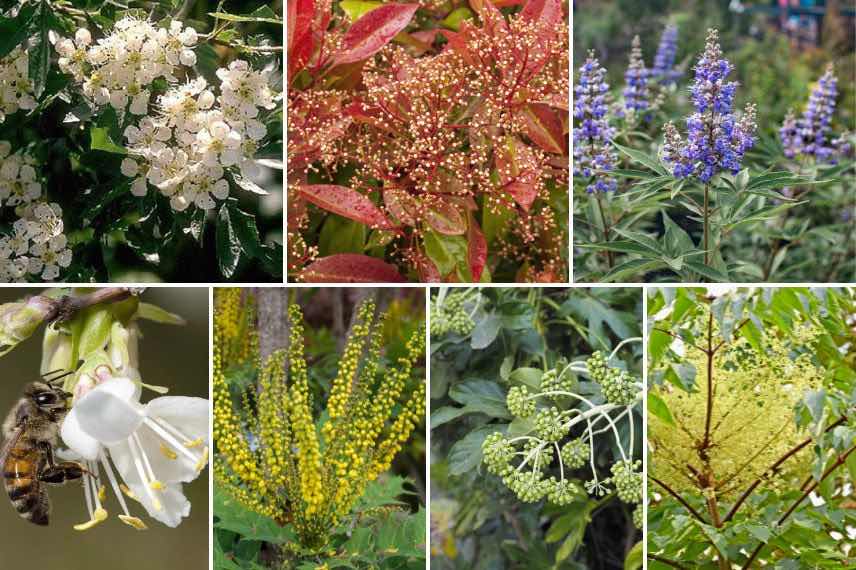
In clockwise order: Hawthorn, Photinia, Vitex, Aralia elata, Fatsia, Mahonia, Lonicera fragrantissima
Depending on exposure
While most bushes with very melliferous flowering prefer sun, even full sun, there are exceptions. As mentioned in the previous chapter, Araliaceae prefer semi-shaded to shaded exposures, as do Mahonia.
In shade, especially in the south, the pyracantha is a hardy evergreen shrub with sharp thorns. Its flowering takes place in May–June, in the form of numerous small white flowers, frequently visited by bees. In autumn, abundant fruiting yields a profusion of berries whose colours range from red to orange depending on the species. Pyracantha adapts easily to all soil types and thrives in partial shade, or even full shade in hot climates. It can withstand summer droughts perfectly once well established.
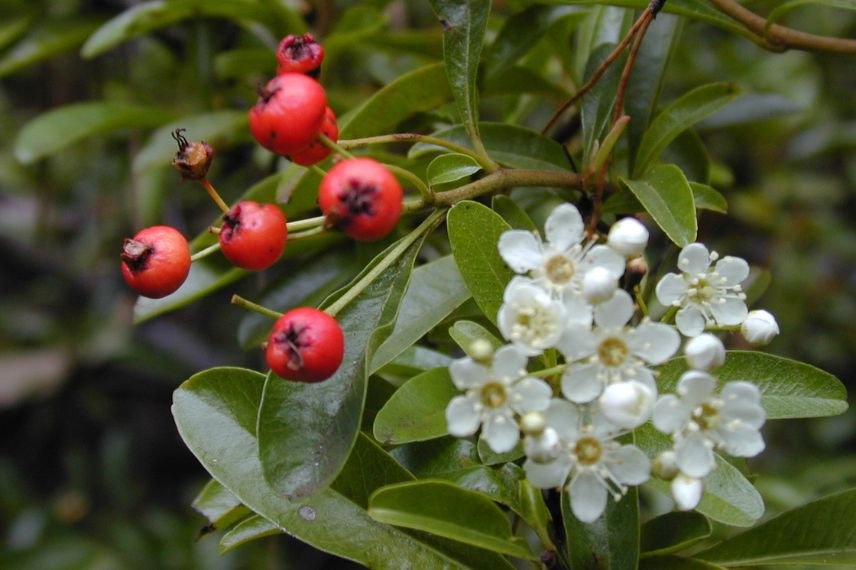
Pyracantha is floriferous and melliferous even in shade
Depending on soil type or climate.
In calcareous soil
Many melliferous shrubs native to the Mediterranean appreciate calcareous soils. Among those mentioned above, this is the case for Vitex.
The hawthorn also tolerates calcareous soil. Another shrub in the same family is a magnet for pollen. It is Crataegus azarolus or Azarole hawthorn, a deciduous fruit tree, slightly thorny, which offers pretty white flowering in spring (with a rather unpleasant scent). Flowering takes place in April, in the form of clusters or cymes of very small whitish flowers highly visited by bees. The Azarole hawthorn bears its tart-tasting fruits only under a Mediterranean climate. Very hardy, it tolerates summer drought very well and calcareous soils.
In acidic soil
Spring- or summer-flowering shrubs depending on species and varieties, the Spiraeas, highly regarded in the garden, grow in acidic to neutral soil, rather cool and well-drained, in a sunny or partially shaded position. However, they also adapt to poorer, drier soils and tolerate a bit of lime. From April to August depending on species, the flowering in clusters of small flowers ranges from pure white to pink and attracts many pollinators.
The Physocarpus are also very melliferous shrubs with white or slightly pink flowers arranged in corymbs that bloom between May and July. Of relatively fast growth, Physocarpus are planted in rich, loose, deep soil, preferably neutral to acidic, in a sunny or partially shaded site. They fear only excess lime and will struggle in poorer soils.
In poor soil
In poor soil, consider the pollinator magnet that is Spanish broom. Its golden-yellow flowering, truly beautiful in spring, is extremely fragrant and heady. Spartium junceum can be planted in any well-drained soil, even rocky, sandy, poor. It is indifferent to soil pH, which may be acidic or even very calcareous. It, however, requires full sun and dislikes heavy, clayey, water-logged soils. Note, it can be genuinely invasive in its preferred conditions.
The Laburnum or Laburnum anagyroides is a large shrub that can quickly reach 8 m across. It produces long clusters of pendulous flowers in a glorious golden yellow, very melliferous and fragrant between May and July. Very hardy, it pousses in all well-drained soils, poor and calcareous. It enjoys sun or partial shade, but ideally sheltered from the wind.
The evergreen ceanoths grow in well-drained soil, even if poor and very dry.
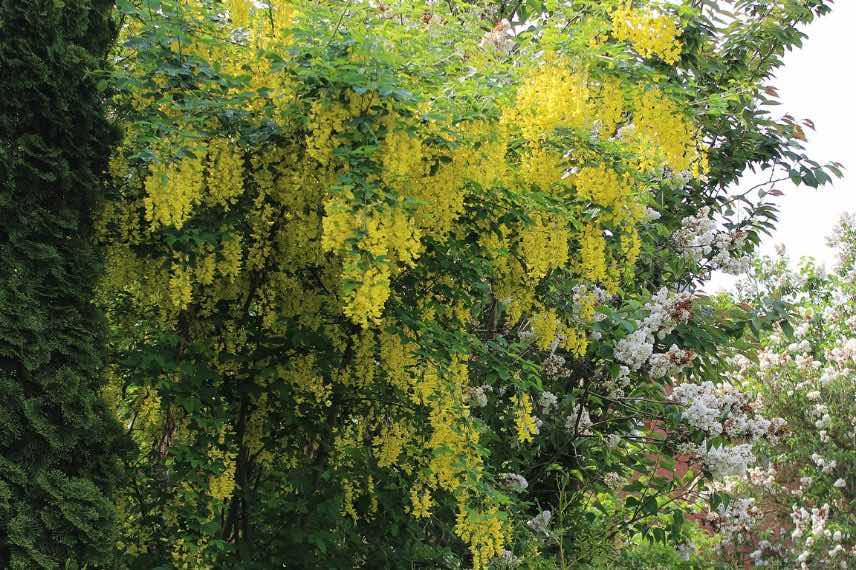
Laburnum, or cytisus, is a marvel in calcareous soil and highly melliferous
In cool climates
The rowan or Sorbus aucuparia dreads drought and enjoys cool climates, it can be found as far as Iceland and boreal Asia. It is a tree that does not like overly bright light and high heat. It prefers rich, cool but well-drained soil, without too much lime. From May to June, a profusion of small white flowers in corymbs, extremely melliferous, appears on this shrub known for its berries loved by birds.
- Subscribe!
- Contents
Comments