





























Our top 9 summer bulbs with orange flowers for full sun
Vibrancy for the garden or balcony
Contents
When summer unfurls its long, sunny days, what better way to celebrate this radiant season than by incorporating into your garden touches of vibrant orange? The orange-flowered summer bulbs offer a palette of warm hues ranging from soft apricot to blazing orange, thereby adding dynamism and a touch of exotica to the garden. Here are nine summer bulbs, each with distinctive characteristics and growing requirements. Whether you have a large garden or a small balcony, these summer bulbs will add a touch of cheer to your summer.

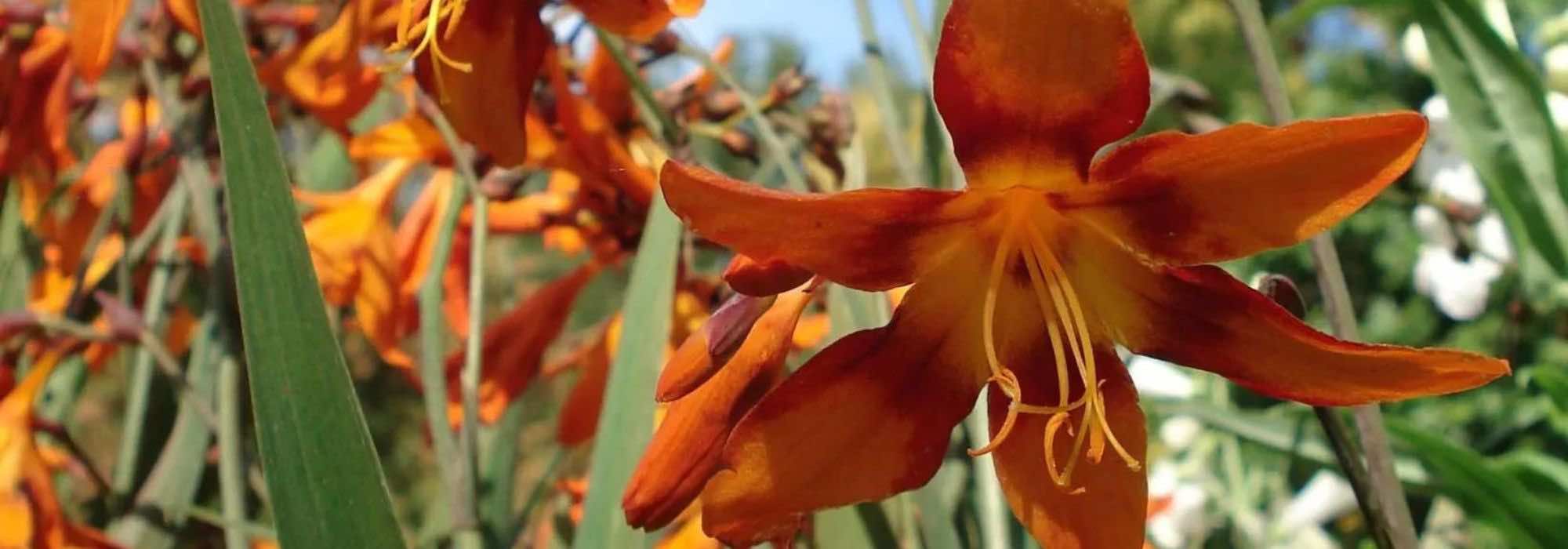
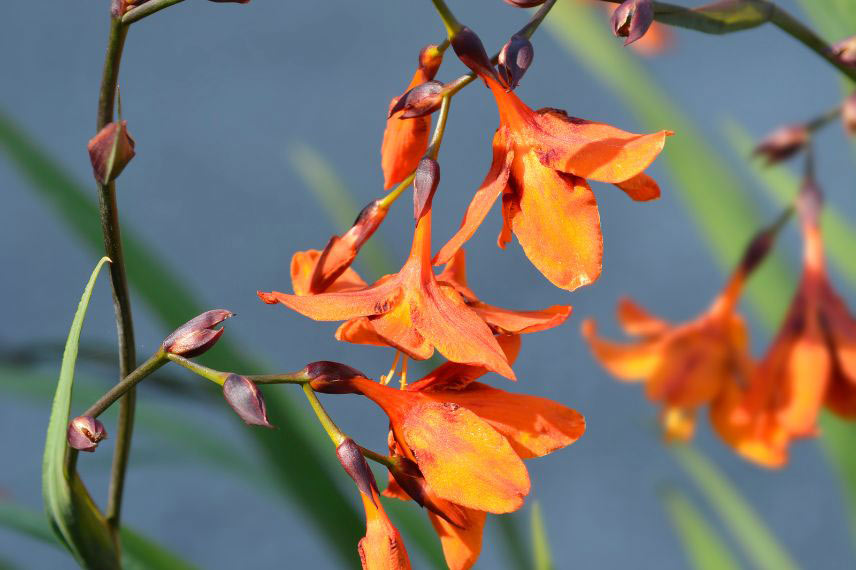
Crocosmia 'Emily McKenzie' - Montbretia
The Crocosmia ‘Emily McKenzie’ is a summer-blooming bulb that stands out for its bright orange flowers with a dark red heart. These flowers unfurl abundantly along slender stems, forming horizontal spikes. It flowers from July to September, reaching a height of 60 cm. The slender foliage of Crocosmias resembles that of gladioli, adding a touch of finesse to their appearance. Also known as montbretias, these hardy bulbs thrive in well-drained soils in full sun.
Crocosmias pair perfectly with other perennials such as Rudbeckias or Monardas and ornamental grasses, creating a natural, vibrant garden. They are also highly prized for cut flower arrangements, thanks to their lasting beauty and ability to bring a vibrant splash of colour.
Read also
10 summer bulbs to plant in springDahlia 'Dr P.H Riedel'
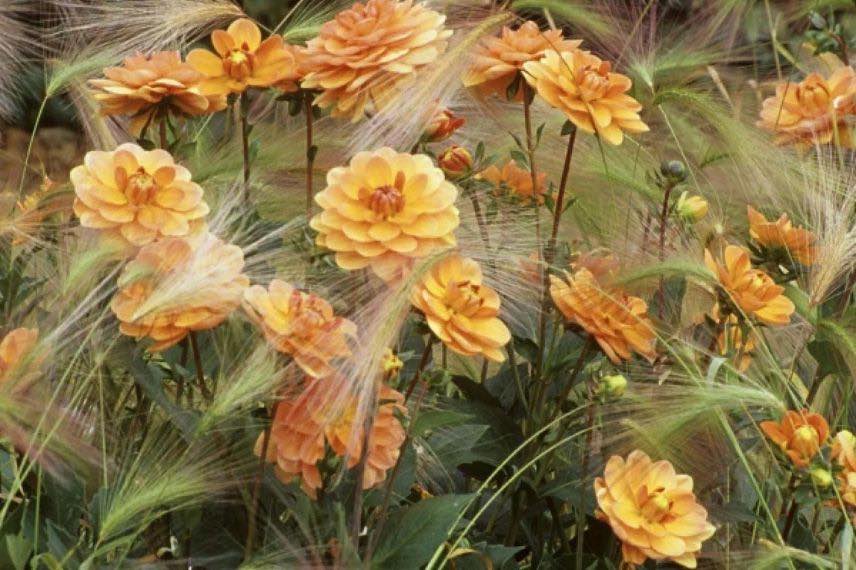
Dahlia ‘Dr P.H Riedel’ is a historic variety that offers orange medium-sized flowers on brown stems, flowering abundantly from summer to early autumn.
It stands out for its 12 cm diameter heads; the flowers change colour throughout the day, shifting from bright colours to soft shades with touches of gold or salmon pink.
The plant, reaching a height of 1.10 m and a width of 60 cm, may occasionally require staking for its slender stems. Its flowering lasts from July to October–November, especially if spent blooms are regularly removed.
Dahlias, originally cultivated in Mexico as a root vegetable, now adorn ornamental gardens and kitchen gardens. ‘Dr P.H Riedel’ thrives in raised borders and is a reliable choice for enriching borders with red flowers or golden grasses, or with purple foliage such as Cotinus ‘Royal Purple’ or Sambucus nigra ‘Black Lace’.
Lilium henryi – Henry's Lily
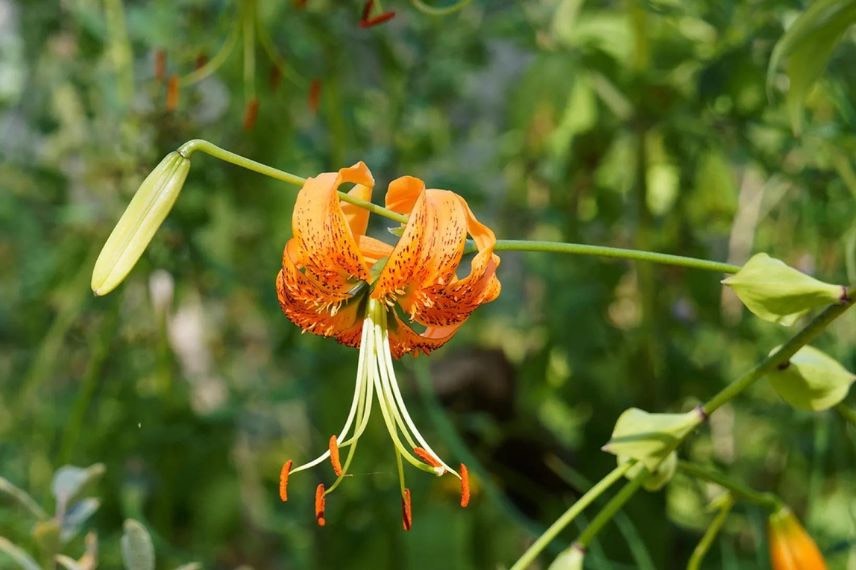
Botanical lily native to the mountains of central China, Lilium henryi is hardy and perfectly suited to a wide range of soils and climates. Its sturdy stem rises from the clumps to reach over 2 metres in height, bearing up to forty apricot-orange flowers in August, adorned with brownish-red markings. These flowers, inclined and reflexed, resemble lanterns and bear distinctive fleshy crests. Planted in well-drained soil, even calcareous and dry in summer, it will reliably rebloom each year.
Read also
5 late-spring flowering bulbsHedychium coccineum 'Tara' - Red ginger lily
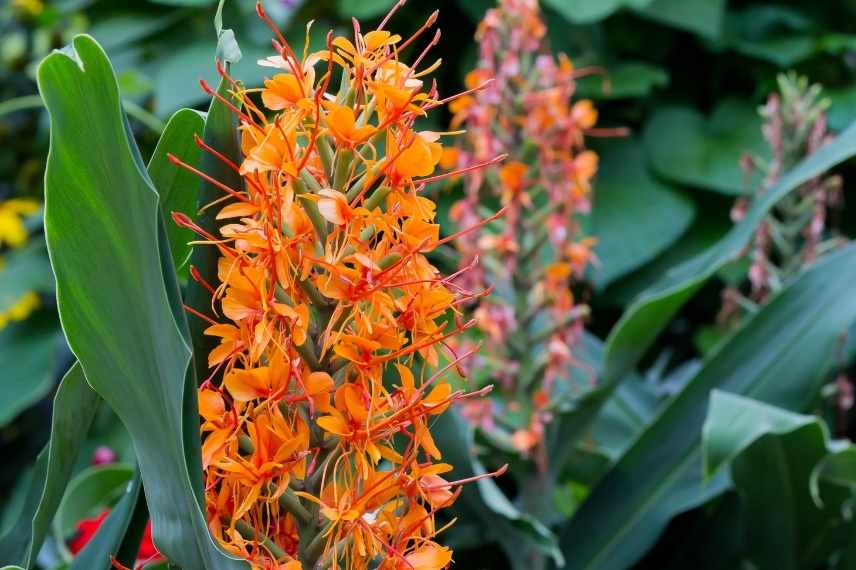
Hedychium coccineum ‘Tara‘, nicknamed Scarlet Ginger, is an ornamental ginger renowned for its hardy character and exotic appearance. As lush as cannas, this perennial plant develops strong, slender, flexible stems, clad with long, glossy green leaves. In late summer, it produces large cylindrical inflorescences of delicate, yellow-orange flowers. It is a focal point for any tropical-inspired border, even in regions north of the Loire.
The ‘Tara’ cultivar is a horticultural selection particularly suited to cooler climates, eventually forming an imposing clump 70 to 90 cm wide with a height of 1.20 m. Its flowering, which occurs in late August or September depending on the climate, comprises inflorescences 30 cm long that attract abundant bees thanks to their delicate structure and prominent stamens.
Hedychiums require rich, deep soil and must stay moist during their growing period. They can be paired with plants such as the Chinese windmill palm, the Japanese banana tree, against a backdrop of giant cannas to enhance the tropical atmosphere.
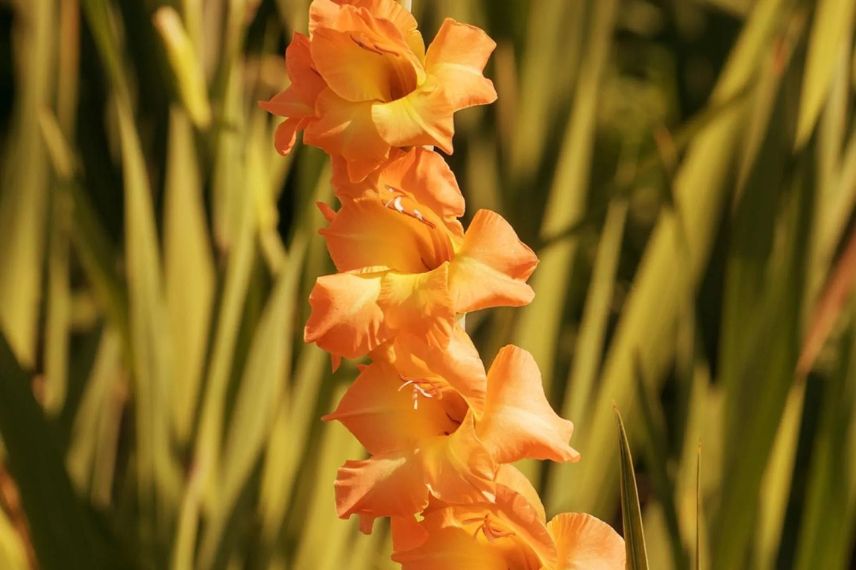
Gladiolus 'Conca d'Oro' - Gladiolus
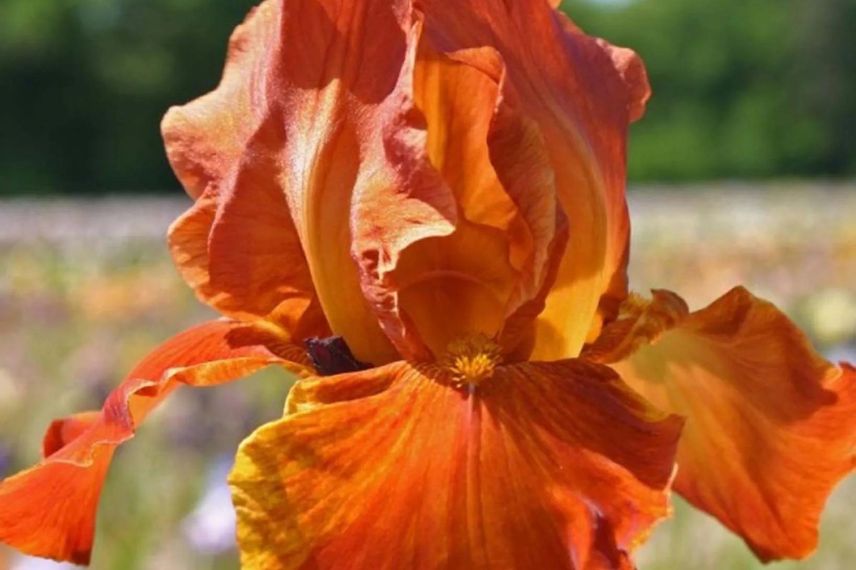
Iris germanica 'Brindisi' - Garden iris
The Iris germanica ‘Brindisi’, obtained in 1978, produces large, scented flowers and continues to captivate with its warm colour and enchanting fragrance.
The Iris ‘Brindisi’ reaches 90 cm in height when in bloom. Its long glaucous, sword-shaped leaves add to the silhouette’s elegance. The flowers appear on flowering stems in May, they bloom in June from the top toward the lower branching. Their coppery-orange-brown colour, enriched with saffron highlights and a touch of pink depending on the light, and their silky texture, are particularly remarkable.
To grow Iris ‘Brindisi’ successfully, choose a sunny, warm and dry site during the summer. This cultivar is suited to all climate types in France, standing up well to cold without any specific winter protection. A well-drained soil, even calcareous, is ideal.
The Gaura like the geraniums cast little shade on the irises and keep the bare iris border looking attractive all summer.
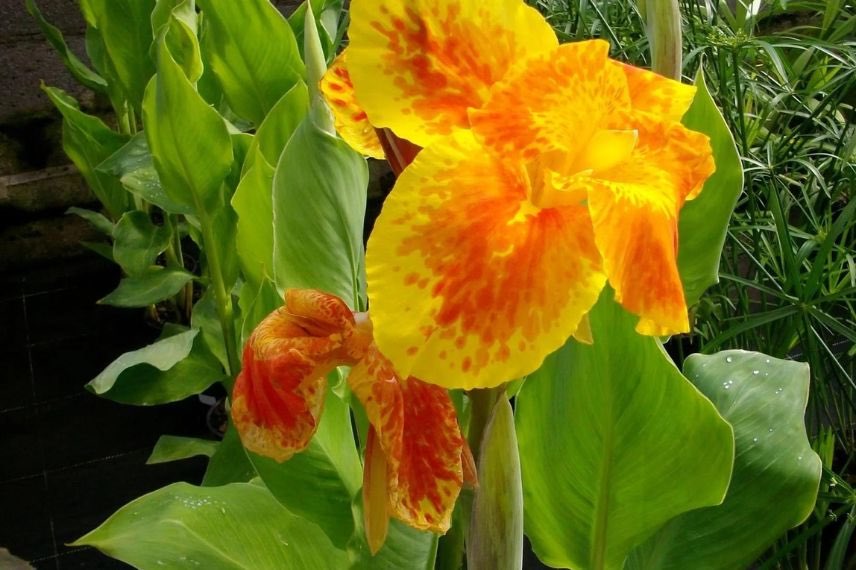
Canna 'Taroudant' - Canna lily
The Canna ‘Taroudant’ is a striking cultivar with bright orange flowers edged with broad borders and yellow maculations. This rhizomatous perennial forms a clump of large oblong leaves, which perfectly complement its summer flowers with a distinctive pattern. It lends an exotic touch to water features and brightens any sunny display. Small in size, this Canna is ideal for growing in containers, in pots or along borders.
The Canna ‘Taroudant’ emerges in spring to form a dense clump 60 cm tall by 40 cm wide. Its large leaves, mid-green with a blue tinge, frame slender flowering stems bearing asymmetrical flowers, grouped in dense spikes, from early summer to autumn.
Hybrid cannas, easy to grow, are perfect for exotic displays alongside plants such as agapanthus or amaranths. Like dahlias, the rootstocks of cannas should be dug up before frosts, wintered dry, indoors and replanted in spring to ensure flowering each year, in regions where winters are more severe.
Tropaeolum tuberosum 'Ken Aslet' - tuberous nasturtium
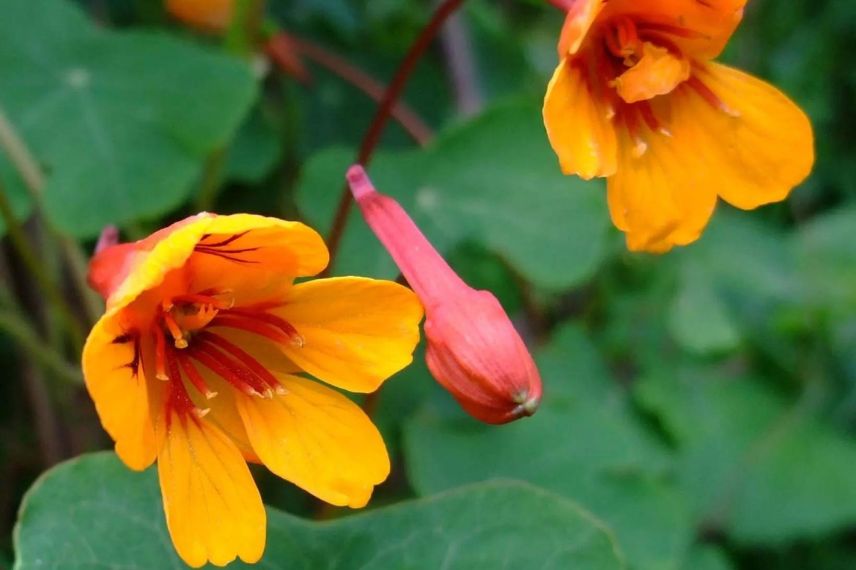
Early-flowering variety of tuberous nasturtium, Tropaeolum tuberosum ‘Ken Aslet’, which from July to September bears delicate yellow-orange bell-shaped flowers that seem to float above garlands of blue-grey foliage, with rounded, lobed leaves. This vigorous climbing plant is able to wind itself easily around its support, quickly turning a modest trellis into a spectacular flowering mantle. Tolerant of poor soils, its fleshy root, prized in cooking, does not tolerate the damp winter cold. It therefore requires care similar to that of a dahlia.
The tubers of Tropaeolum tuberosum, fully edible, resemble elongated pears, grow in clusters and can measure up to 15 cm.
To grow tuberous nasturtium, choose a sunny location with a support such as a trellis to allow the plant to climb, or let it cover the ground if space allows. It is suitable for both ornamental and edible gardens.
Tritonia laxifolia - Montbretia laxifolia
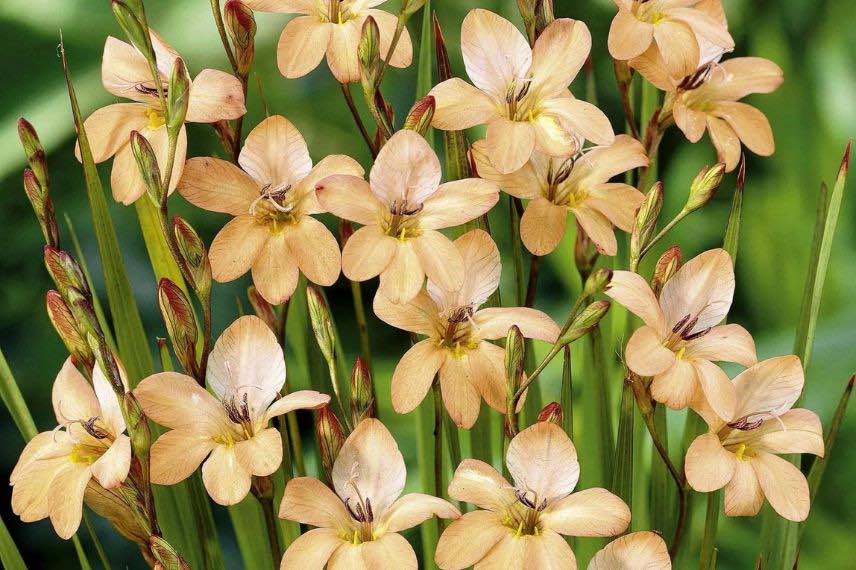
Tritonia laxifolia is a small bulbous plant native to South Africa, prized for its rarity and delicate flowering. Not very hardy, it is often grown in pots in temperate climates. During summer, short flowering scapes emerge from a tuft of narrow leaves, each bearing about ten small flowers in orange-chamois, arranged on the same side of the stem. The bulbs are planted in spring in pretty pots and should be kept frost-free over winter in a cold greenhouse or conservatory.
Tritonia laxifolia forms a small clump of linear leaves, resembling those of gladioli, and produces flowering scapes 15–20 cm tall. The flowers have a long tube that widens into six rounded orange petals, subtly edged with red, with yellow appendages on the lower petals.
For enthusiasts of South African bulbous plants, growing Montbretia laxifolia in pots is ideal, as it allows you to control the substrate moisture, a crucial factor in successful cultivation. This plant, reminiscent of a dwarf Crocosmia, pairs very well with daylilies or freesias in warm colours.
- Subscribe!
- Contents

Comments