





























Oxalis: the most beautiful varieties
Discover 7 remarkable and colourful varieties
Contents
Oxalis are highly valued for their beautiful decorative foliage, heart-shaped or triangular, in purple or green, resembling that of clover. They also stand out for their lovely small star-shaped flowers, which can be white, pink, yellow, or orange depending on the variety. Some Oxalis are quite tender and prefer to be grown in pots indoors during winter, then outside in spring. Others are particularly hardy and are suitable for a border in the garden, a rockery, or a pot on the terrace. Discover our selection of the 7 most beautiful varieties of Oxalis.
And to learn everything about their cultivation, feel free to check our complete guide “Oxalis: to plant, grow, and care for”

Oxalis deppei
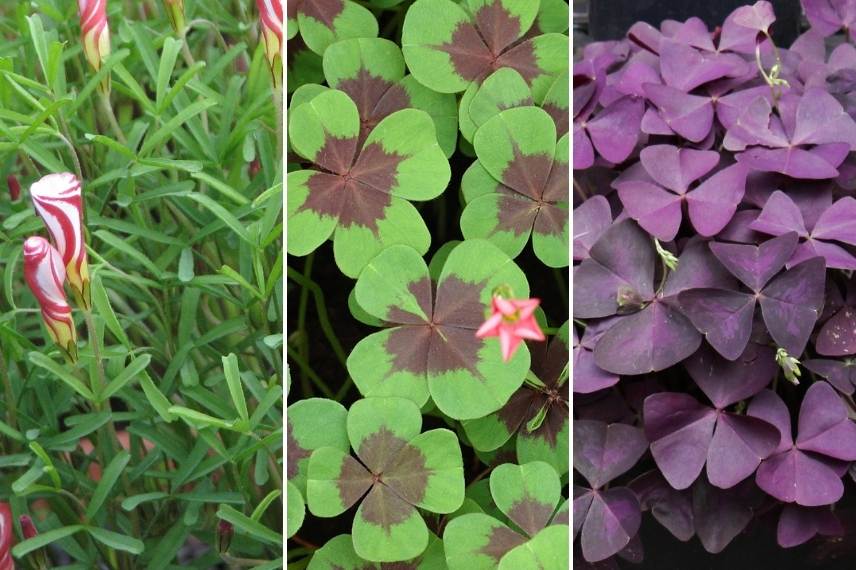
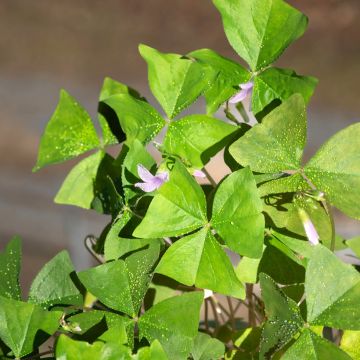
With its lovely light green four-leaf foliage, maculate with purple-brown, the Oxalis deppei truly resembles a large clover. It is also nicknamed the “lucky plant” or “false clover.” In the heart of summer, it produces a multitude of small pink flowers. The bulbs of this Oxalis are planted in the ground in regions with mild winters, where frosts do not drop below -10 °C. Elsewhere, its tubercles should be dug up each autumn or it can be grown in a pot to be stored during the cold season. It can also be cultivated indoors for its graphic and decorative foliage. This Oxalis enjoys full sun north of the Loire but prefers partial shade to the south, thriving in neutral to acidic soil that remains slightly moist.
The Oxalis deppei will blend perfectly into a border or pot, alongside perennials with colourful foliage, such as a heuchera with purple leaves. Phlox or a hardy geranium will also complement it with their beautiful colourful flowers.
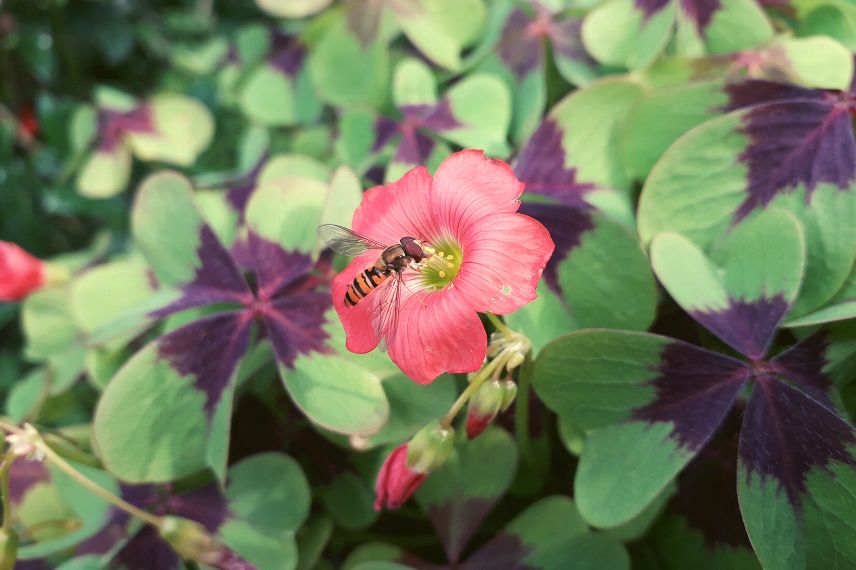
The Oxalis deppei, also known as “false clover”
Read also
Pairing ideas with oxalisOxalis triangularis
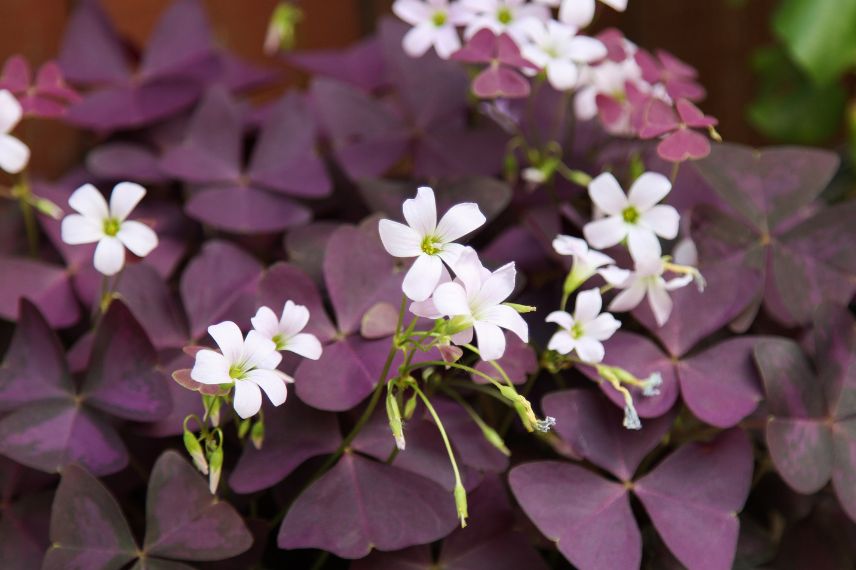
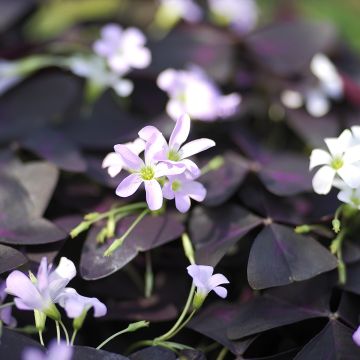
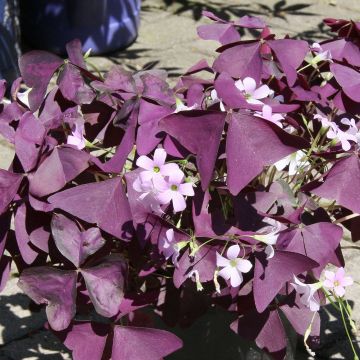
Oxalis triangularis is also known as “purple clover” due to its beautiful purple-red clover-like foliage, marbled with violet. Its leaves, or rather its leaflets, stand out for their triangular and graphic shape. From July to September, it also produces small flowers in pale pink to white, contrasting beautifully with its dark foliage. Very frost-sensitive, this original Oxalis is mainly grown in containers or pots that should be brought indoors during winter. It enjoys warmth and partial shade but is sensitive to scorching sun.
The beautiful purple foliage of Oxalis triangularis will make a statement on a terrace or balcony, alongside the generous flowering of petunias and other Impatiens. It can also be paired with the surprising foliage of a Colocasia and the soft green of a Lysimachia nummularia ‘Aurea’ to create a harmonious contrast.
Discover other Oxalis
View all →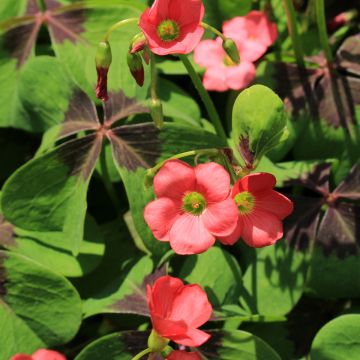
Available in 1 sizes
Available in 1 sizes
Available in 1 sizes
Available in 0 sizes
Available in 1 sizes
Available in 1 sizes
Available in 1 sizes
Available in 1 sizes
Available in 1 sizes
Available in 1 sizes
Oxalis versicolor
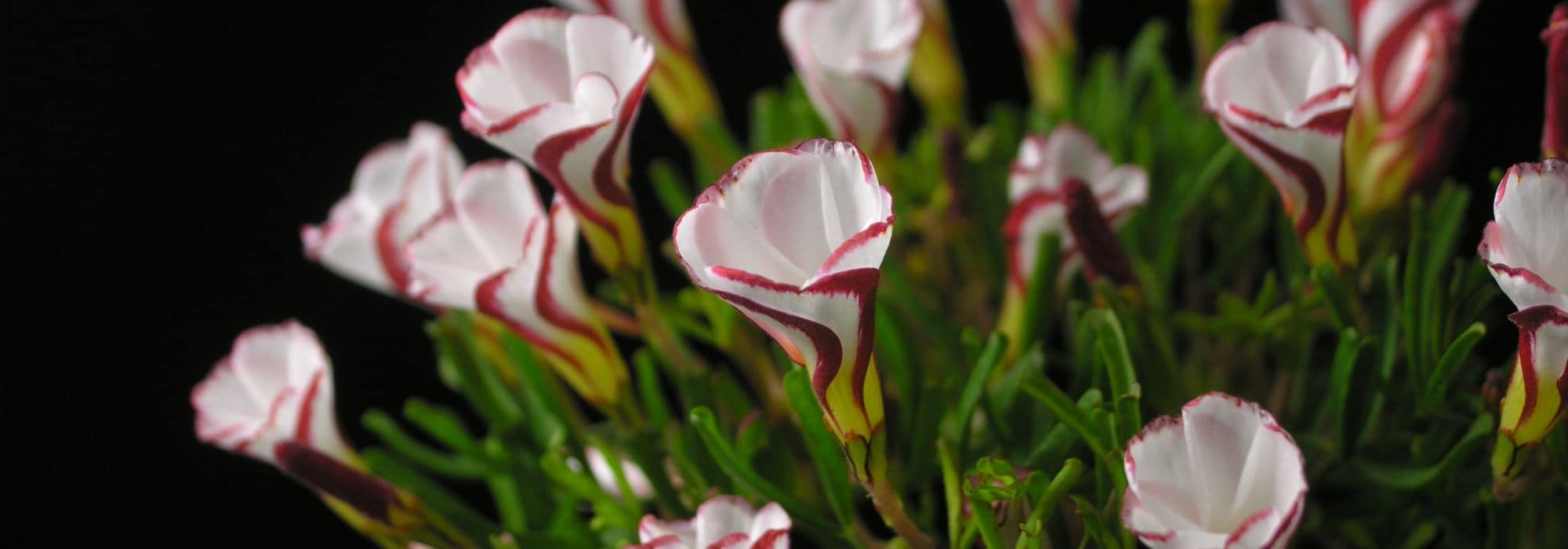
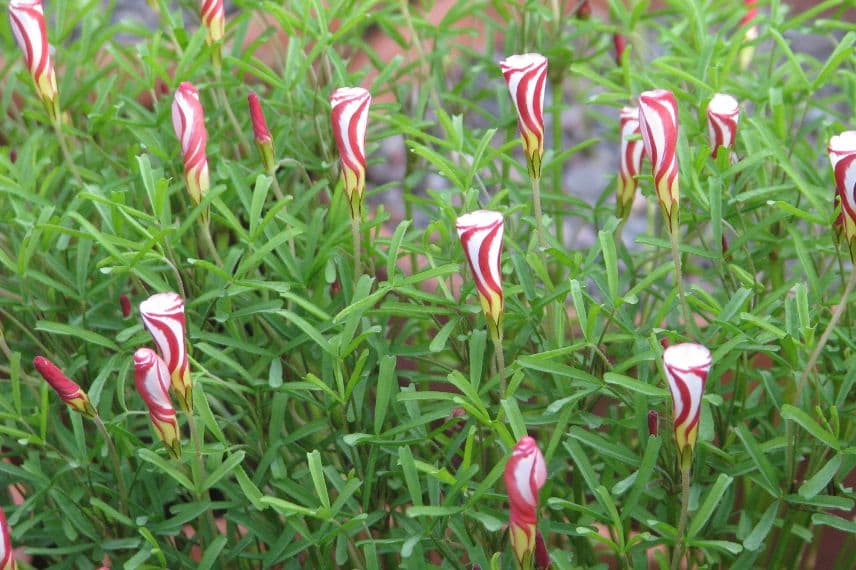
The Oxalis versicolor stands out for its astonishing long flowering period. Indeed, when still in bud, its white flowers are marginate with a cherry-red edge on the outside, creating an admirable spiral. They then resemble sweets, like candy canes or boiled sweets. Subsequently, they will bloom into small white flowers but will retain this exuberant reverse. The leaves of this Oxalis are very fine, in shades of soft green. Native to South Africa, it is quite frost-sensitive and cannot withstand negative temperatures. Its cultivation in open ground is therefore reserved for warm climates. In pots, it will brighten our interiors, where it will flower from November to March. Elsewhere, its flowering will be later, generally from spring to summer. Typically, the plant goes into a vegetative rest during the hot season.
It can be paired with other frost-sensitive plants that tolerate the dry air of our interiors well, such as a begonia or a succulent plant.
Read also
Choosing OxalisOxalis purpurea 'Garnet'
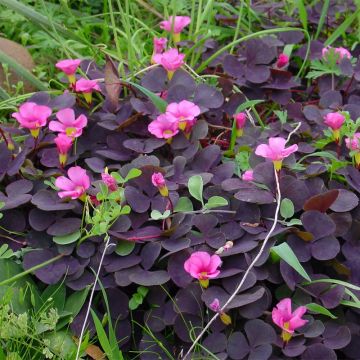
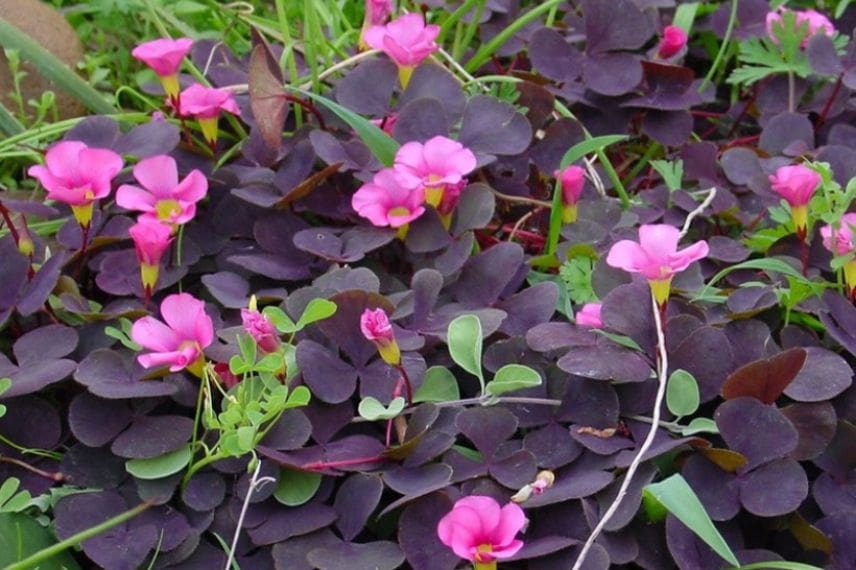
Oxalis purpurea ‘Garnet’ is a lovely variety with purple clover-shaped leaves, but with rounder leaves than those of Oxalis triangularis. This dark colour beautifully highlights its small star-shaped flowers, with bright pink petals surrounding a golden yellow centre. Not very hardy, this oxalis can withstand short frosts down to -10°C once well established. It enjoys the sun and warmth of the Mediterranean climate, where it will bloom in autumn and winter. In other regions, its flowering will be delayed until spring. Easy to grow, it adapts well both in the garden and in pots, on the terrace or indoors.
Plant a few bulbs of hyacinth or Muscari to accompany the flowering of Oxalis purpurea ‘Garnet’. Then, when it enters dormancy during the summer, Begonias and Dahlias will take over.
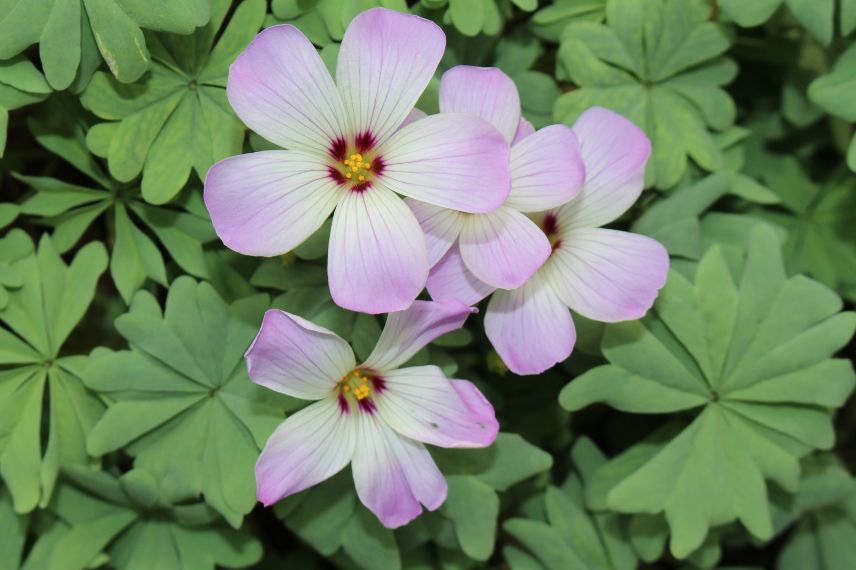
Oxalis adenophylla
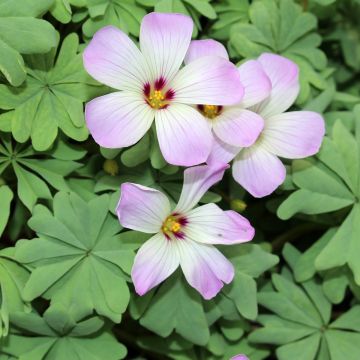
Originating from the Andes mountains, Oxalis adenophylla stands out for its excellent hardiness, able to withstand frosts down to -20 °C once well established. In the garden, it disappears in winter but reappears each spring. It then offers fine, grey-green leaves that are deeply lobed and heart-shaped, rarely exceeding 5 cm in height. From June to July, lovely pale pink flowers with bright pink centres and a few light yellow stamens appear. To bloom well, this Oxalis prefers full sun, well-drained soil, and can tolerate occasional drought. It will thrive in pots, rockeries, borders, and even indoors.
In a dry rockery, Oxalis adenophylla will pair beautifully with the green and silver foliage of a helianthemum, lavender, aubrieta, or with the flowers of Arabis or a campanula.
Oxalis triangularis 'Marmer'
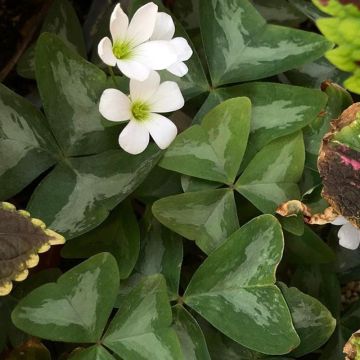
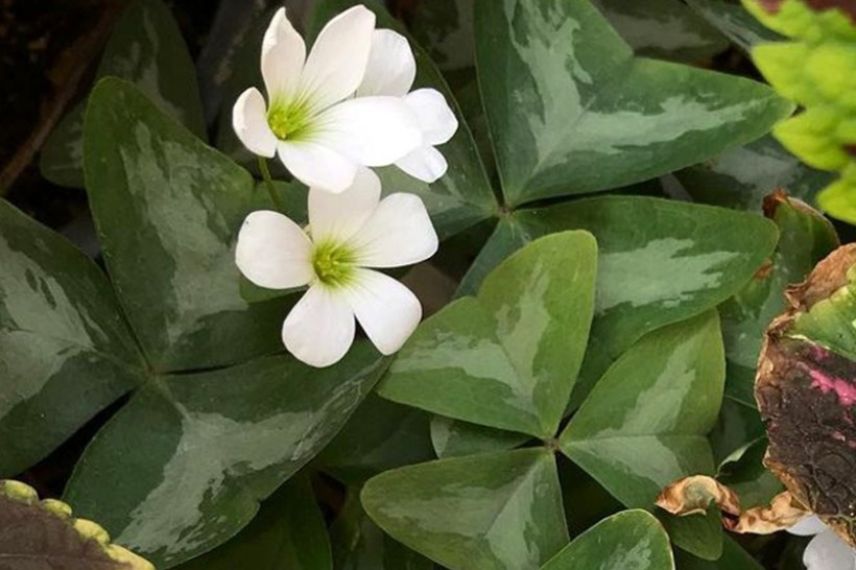
Oxalis triangularis ‘Marmer’ has attractive deciduous and graphic foliage, formed of triangular green leaves, marbled with white-silver in a V shape and with a purplish underside. From May to July, it produces small white flowers, sometimes pale pink, in a funnel shape. Not very hardy, this beautiful bulbous plant will mainly be grown in pots indoors, on the terrace or balcony in summer. The pot should then be sheltered at the first signs of autumn. This Oxalis prefers a partially shaded position, in compost that is always slightly moist during the growing season.
You can pair Oxalis triangularis ‘Marmer’ with the colourful flowers of certain annuals, such as Diascias, Alysses, Impatiens, petunias, and calibrachoas.
Oxalis 'Double Trouble'
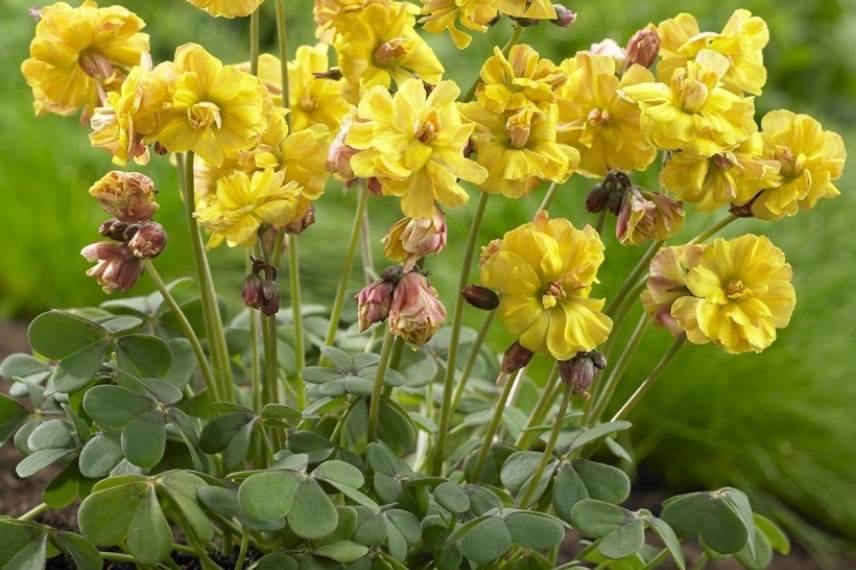
Oxalis ‘Double Trouble’ stands out for its long flowering period, starting in April and lasting until August. However, when grown indoors, it sometimes flowers in winter, then enters dormancy in summer. Its flowers are peach-pink when in bud before opening into double golden-yellow blooms. They are set above a small, very low, dense, and villous green foliage, resembling that of clover. Very little hardy, this Oxalis is only grown in pots, allowing it to be kept indoors during winter and then on the terrace in spring. It enjoys non-burning sunlight or partial shade, as long as its compost remains slightly moist during its flowering period.
The Oxalis ‘Double Trouble’ will be perfect in a display alongside pansies, violets, other Oxalis, or petunias.
For further reading
- Discover our range of Oxalis
- To find out everything, discover our complete guide on Oxalis: how to plant, grow, and care for
- Subscribe!
- Contents
Comments