




























The best potatoes for mash
Selection of floury potato varieties ideal for making mash
Contents
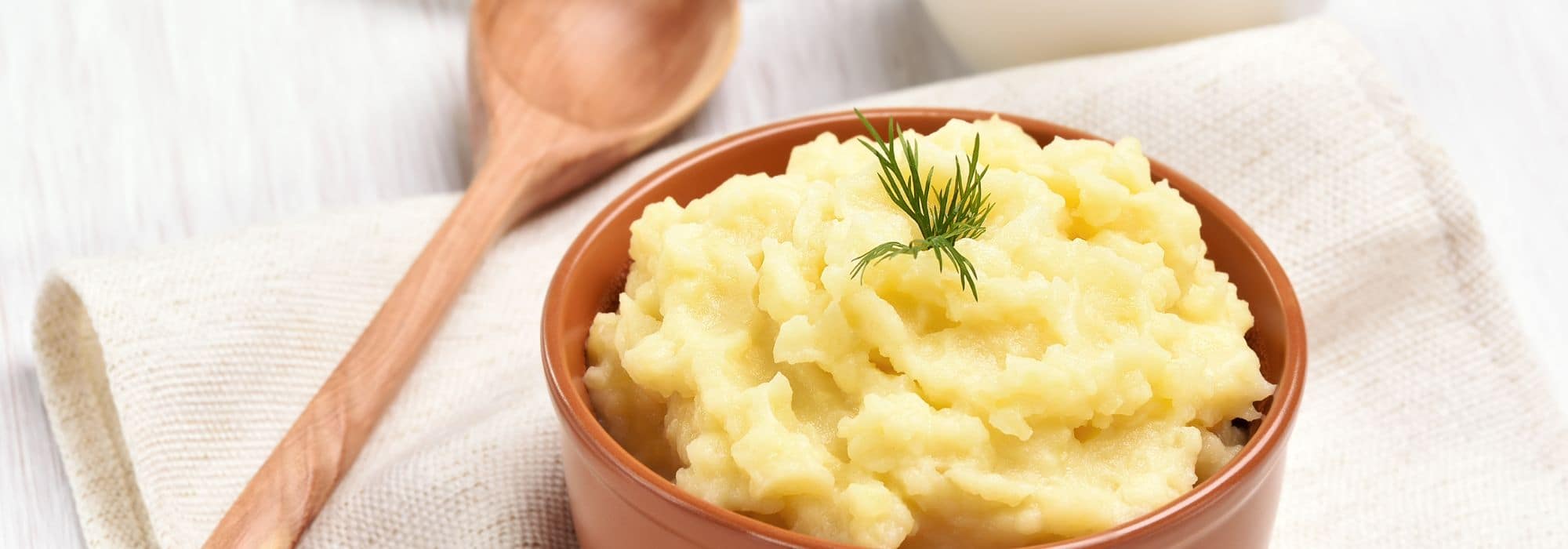
Ah, mashed potatoes… If there’s a comforting dish loved by both young and old, it’s definitely mashed potatoes. But not just any mashed potatoes! Let’s forget about the bland instant mash from the industry and focus on the creamy homemade version. All you need are potatoes, milk (whole is even better!), and butter to prepare a truly worthy mash. Some add a bit of cream, nutmeg, or a few herbs to the cooking water… Ultimately, it’s all about personal taste. But the key lies in using a fork or a potato masher (never a blender!) to mash the cooked potatoes. It’s also crucial to choose a variety of potatoes that has a floury texture. Here are all our tips for selecting the best potato varieties for making mash.

Which potatoes for creamy mash?
Mashed potato is one of the essential dishes in cuisine (French). Ideal for accompanying roasted or sauced meat, poultry, or fish, it also serves as the base for shepherd’s pie or gnocchi.
To be tasty, the texture of mashed potato must be smooth, fine, and creamy. While cooking, the mashing process, and seasoning are essential for preparing good mashed potato, the choice of potato variety is equally important.
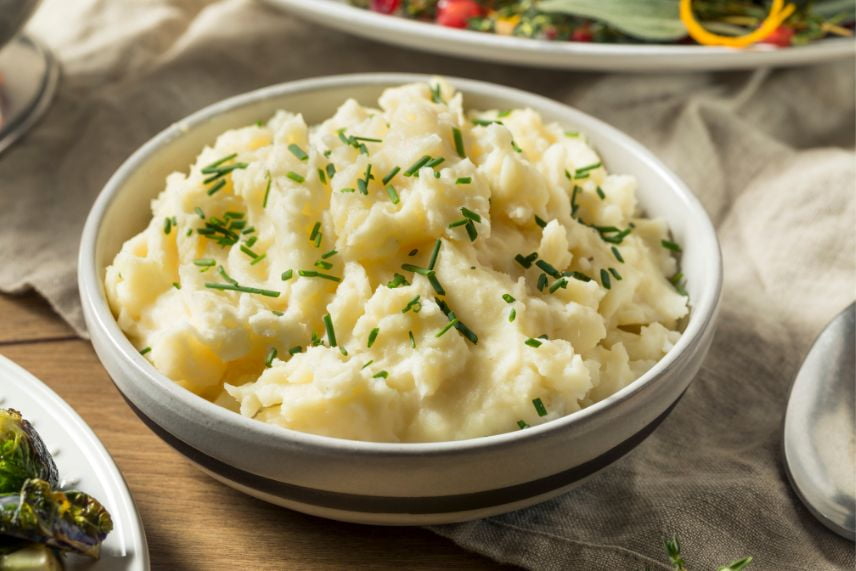
To make a delicious mash, one should opt for floury and low-moisture potatoes. Indeed, these potatoes with a dry flesh and coarse grain mash easily, they break down during cooking but remain soft, and absorb enough milk and butter.
Read also
Potatoes: planting, growing, harvestThe 'Bintje', essential for mash
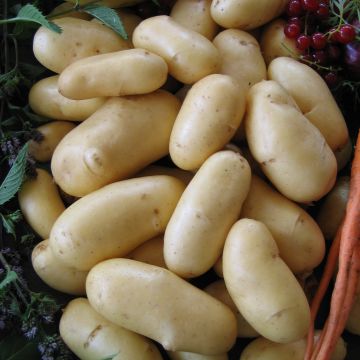
Difficult to overlook the ‘Bintje’ when discussing floury potatoes. It is a must-have, certainly the most widely cultivated potato in France. Perfect for making chips, the ‘Bintje’ is also great for mash.
It is a semi-early potato with yellow skin and flesh. It produces numerous medium-sized tubers that are oval to round in shape. It can be harvested as new after 90 days of cultivation, but it is primarily a storage potato that is grown for 120 days. It can be stored easily for 5 to 7 months. It may be sensitive to blight and common scab, but it is less prone to rust spots or dry rot and hollow heart.
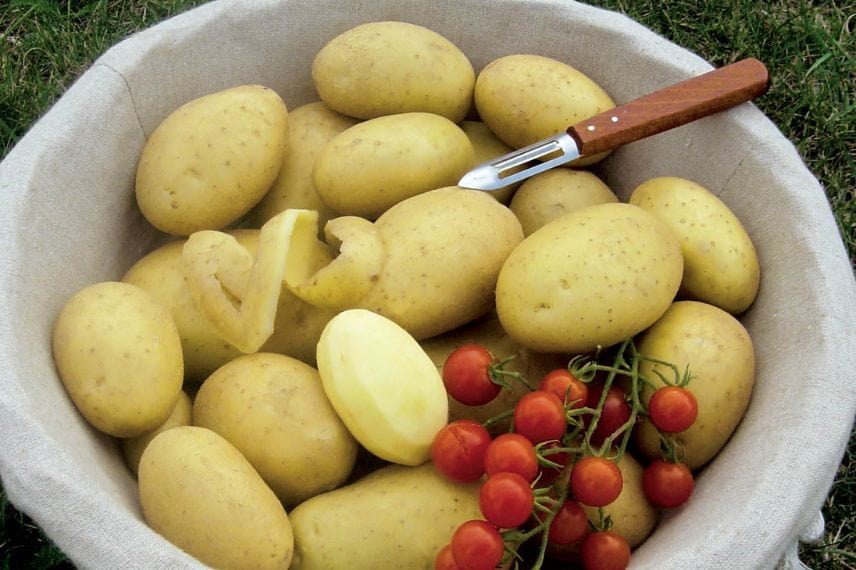
The ‘Bintje’
It is also a very versatile potato that is equally suitable for mash, chips, crisps, and steamed potatoes.
Of Dutch origin, the ‘Bintje’ has been listed in the species catalogue since 1935 and is the result of the cross-breeding between ‘Munterschen’ and ‘Franschen’.
Discover other Seed potatoes
View all →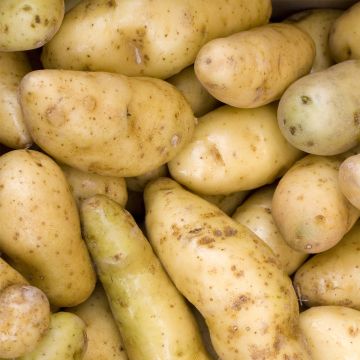
Available in 2 sizes
Available in 0 sizes
Available in 1 sizes
Available in 0 sizes
Available in 1 sizes
Available in 2 sizes
Available in 1 sizes
Available in 1 sizes
Available in 3 sizes
Available in 1 sizes
'Agria', a large, productive potato
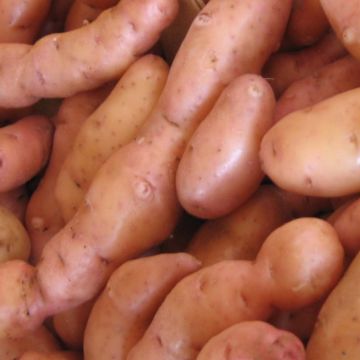
The Agria is a yellow-skinned and buttery yellow-fleshed potato, of German origin, and the result of cross-breeding between ‘Quarta’ and ‘Semlo’. Quite late, it is harvested at 110 days for early consumption, and at 140 days for storage and preservation. It can actually be stored for 5 to 7 months.
This potato variety produces very numerous tubercles that are ovate, regular, and with very shallow eyes. It has a very high yield potential. Additionally, it performs particularly well during difficult springs due to its resistance to blight and its hardiness.
This potato is also suitable for making chips, dauphinoise gratins, soups, and baking.
'Vitelotte' for colourful and unique mash
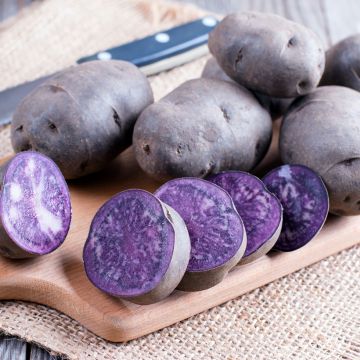
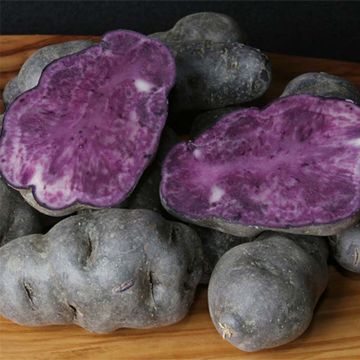
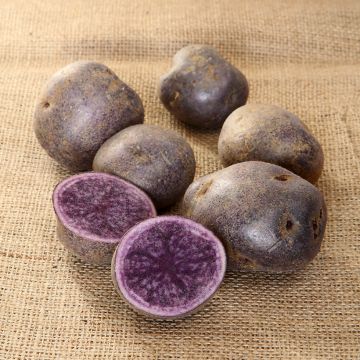
Easily recognisable by the dark bluish-purple colour of its skin and flesh, the ‘Vitelotte’ is an ancient variety, likely originating in 1812. It is a late variety that produces numerous tubercles, generally small in size and ovate, cylindrical in shape. The presence of many half-sunken eyes distributed across the tubercle can make it difficult to peel.
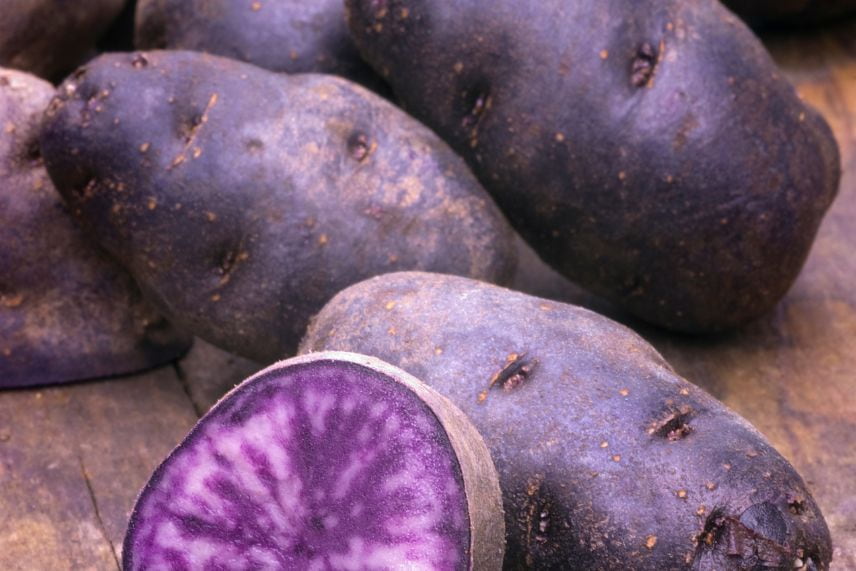
The ‘Vitelotte’
It can be sensitive to blight, which is why it needs to be closely monitored. It is harvested at 130 days for consumption as new potatoes, and at 150 days for storage.
Its flesh has a delicious nutty flavour and retains its beautiful purple colour when cooked. Your purées, as well as your chips or fries, are sure to surprise both children and adults!
The 'Melody', resistant to diseases
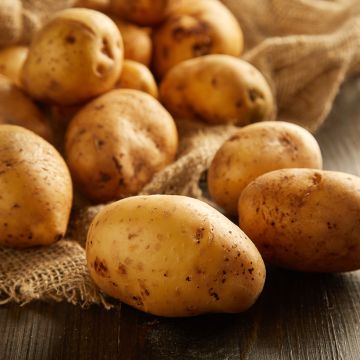
The ‘Melody’ is a semi-late variety of potato that offers excellent yields. It produces large, uniform ovate tubercles with shallow eyes. Its skin is yellow and its flesh ranges from white to yellow. It is harvested at 110 days if intended for new consumption, and at 140 days for storage and preservation.
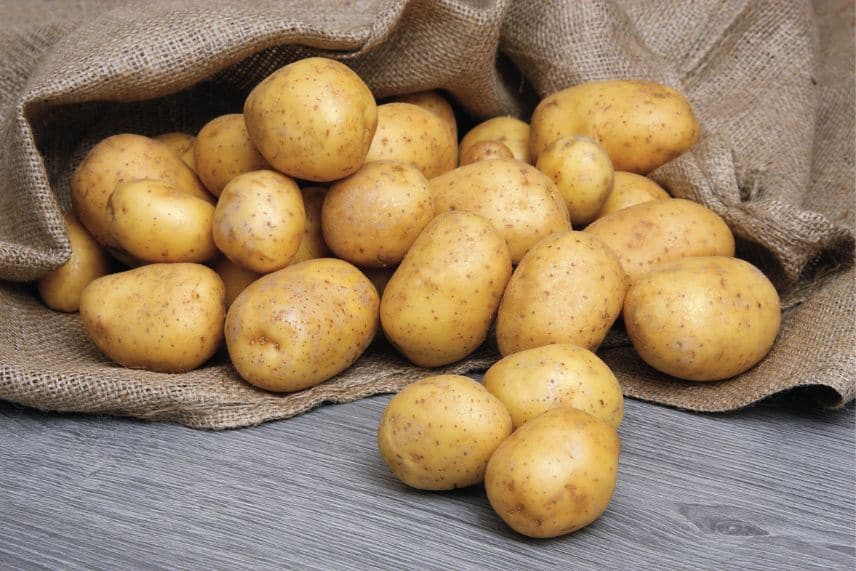
the ‘Melody’
It is a potato resistant to diseases, with excellent hardiness. Its flavour is rich and its texture is very appealing for both mash and chips or baking.
'The Spark', a potato with large tubercles
‘Étincelle’ is an absolutely delicious potato for mashing, but also for chips and jacket potatoes. In the garden, it is a semi-early variety that is harvested 100 to 110 days after planting. Very productive, it produces large, short, oblong, and fairly regular tubercles with yellow skin and flesh.
While it is resistant to blight, nematodes, and common scab, it can be susceptible to rhizoctonia and silver scab. A relatively recent potato, it is hardy, offers excellent yield, and has very good taste quality. Moreover, it is very easy to grow and proves to be very versatile in the kitchen.
- Subscribe!
- Contents

Comments