





























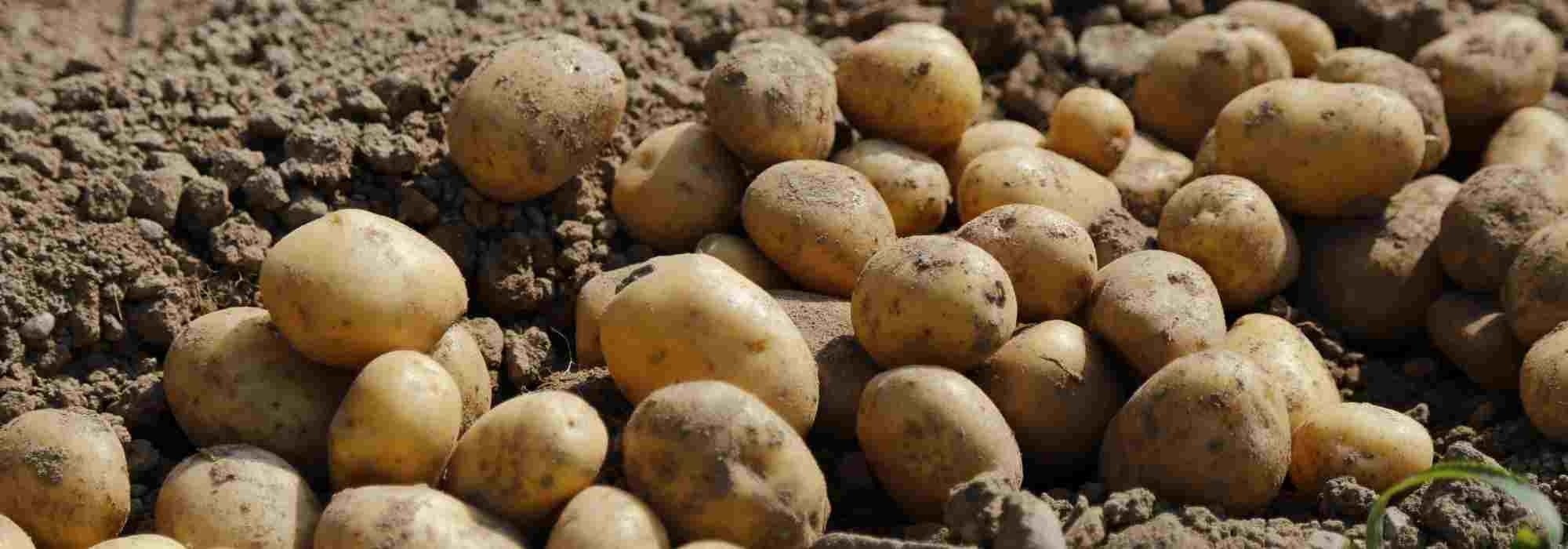
Storage potato varieties: our complete guide to choosing them
Selection of 7 late-season potato varieties that store well
Contents
If you love potatoes in the kitchen garden, you can really treat yourself. Indeed, by choosing the right varieties, you can cook potatoes in all their forms — chips, pan-fried, steamed, or mashed. Simply because potatoes (Solanum tuberosum) have a mealy, tender or firm flesh. Beyond this texture difference due to their starch content, potatoes are also distinguished by their harvest period. There are early, late or very late varieties. It is these latter varieties that we will focus on, as their late harvest enables long storage.
Discover our cultivation tips and our selection of the 7 best storage potato varieties.
For further reading, also read: Potato: planting, growing and harvest.

What exactly is a storage potato?
A new or early potato is harvested before full maturity, between 70 and 90 days after planting. These are potatoes that should be eaten promptly, as they do not keep well. In contrast to these early potatoes, the seed potatoes are harvested at full maturity. That is at least 110–120 days of cultivation, and up to 150 days. Seed potatoes therefore have a clearly longer growing cycle that allows them to develop a thicker skin.
Thus, seed potato varieties are planted between mid-March and May, depending on region and climate. Generally, it is said that potatoes should be planted when lilac is in bloom. From February–March onward, tubers should be sprouted in a bright, but cool place.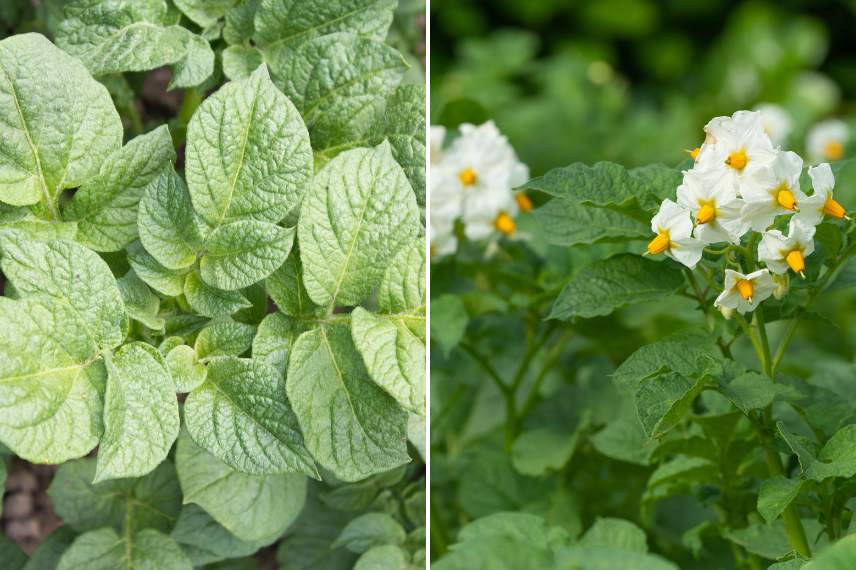
Harvest of seed potatoes takes place when the foliage begins to wither, turns yellow and dries up. This harvest will take place between late August and early September.
And they can be stored for six months to a year, provided they are stored under optimal conditions.
Read also
Planting potatoHow to harvest and store these late potatoes?
To store your potatoes for a year, it is essential to harvest them and store them in the best possible conditions. A potato bruised at harvest will rot, a potato kept in light will turn green and become unfit for consumption.
Our tips for harvesting potatoes
- Use a digging fork for harvesting potatoes
- Plant the digging fork at a reasonable distance and depth from the plant to avoid damaging the tubercles
- Lift the clump gently to reveal the potatoes
- Gather the tubercles on the soil to let them dry for a day so they lose surface moisture
- After this drying period, harvest the potatoes by briefly removing the soil with your hands. Do not rub too hard to avoid damaging the skin
- Meticulously remove tubercles that are slightly damaged, stained or showing greening. These potatoes should be cooked quickly. The others, free from any suspicious traces, can be stored.
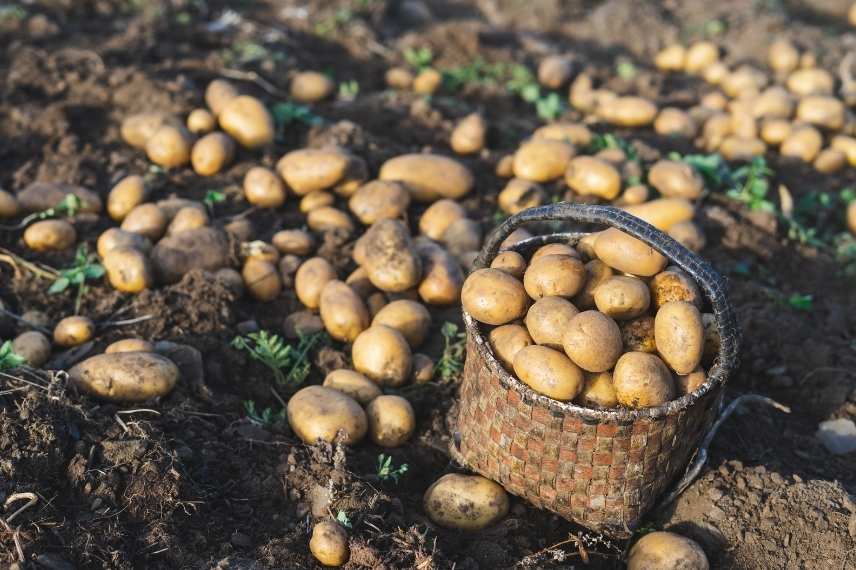
After lifting, potatoes should be allowed to dry on the soil for at least a day
Our storage tips
If you want to store potatoes throughout the winter and spring, storage conditions are crucial. Potatoes should be stored in a dark place, as light promotes greening. They should also be kept in a cool, frost-free, well-ventilated and humidity-free room. A temperature between 5 and 8 °C, or up to 10 °C maximum, is ideal for keeping potatoes firm. A cellar is perfect, but potatoes store very well in a garage.
Potatoes should not be stored near fruits such as apples and pears, or onions that emit ethene, a substance that promotes germination.
Potatoes should be placed in crates or wire racks, possibly in wicker baskets or jute sacks. Avoid placing them on the floor, which is often slightly damp in a cellar. Likewise, air must circulate between the tubercles, so they can be placed on a bed of straw.
Last tip: check your stock regularly to set aside any damaged potato. Rot spreads very quickly.
Our selection of 7 storage potatoes
Given the number of potato varieties, choosing can be difficult. We therefore offer you 7 varieties that combine their storage potential with ease of cultivation, disease resistance and excellent flavour.
The Nicola variety
Originating from Germany, ‘Nicola’ is a potato variety that offers handsome, elongated tubers, with a pale yellow-white skin and yellow flesh. It stores for five to seven months without any difficulty. It is a late-maturing potato that benefits from excellent cooking quality, ideal for steaming or gratins, or for salads thanks to its firm flesh. It possesses excellent culinary quality.
It can be somewhat susceptible to late blight, but resistant to viruses and to scab. It does not tolerate drought very well.
The Pompadour variety
This French potato variety ‘Pompadour’, of very good culinary quality, was created in 1992 from a cross between BF15 and ‘Roseval’. It also benefits from a Label Rouge in Picardy where it is grown in sandy and loamy soils. It is harvested between 130 and 150 days after planting. With an oblong, regular and elongated shape, this potato offers a yellow skin with a slightly coppery tint, fairly fine. Tender and melt-in-the-mouth, its yellow and firm flesh, low in dry matter, hides a delicate flavour of fresh butter.
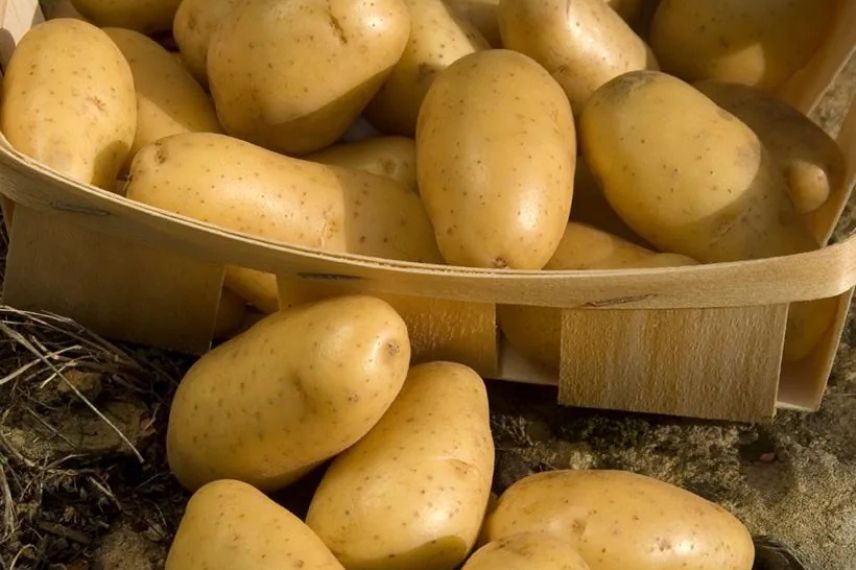
The Pompadour variety
It is a perfect potato for steaming, gratins, mashes and salads, but not at all suitable for frying.
It is a very productive variety that yields medium to large-sized tubers. It can be susceptible to common potato diseases.
The ‘Bleue d’Artois’
The ‘Bleue d’Artois’ is an old potato variety notable for its blue-violet skin and flesh. It therefore looks very striking on the plate. It is a semi-late variety that is harvested 120 days after planting and stores very well.
Very distinctive, this potato stands out with its oblong tubers and a firm, not mealy, flesh, delicious mashed, steamed or sautéed. It is also well suited to making chips or fries. To preserve the blue colour when cooking, simply add a few drops of vinegar to the water. By contrast, at frying, the colour persists more easily.
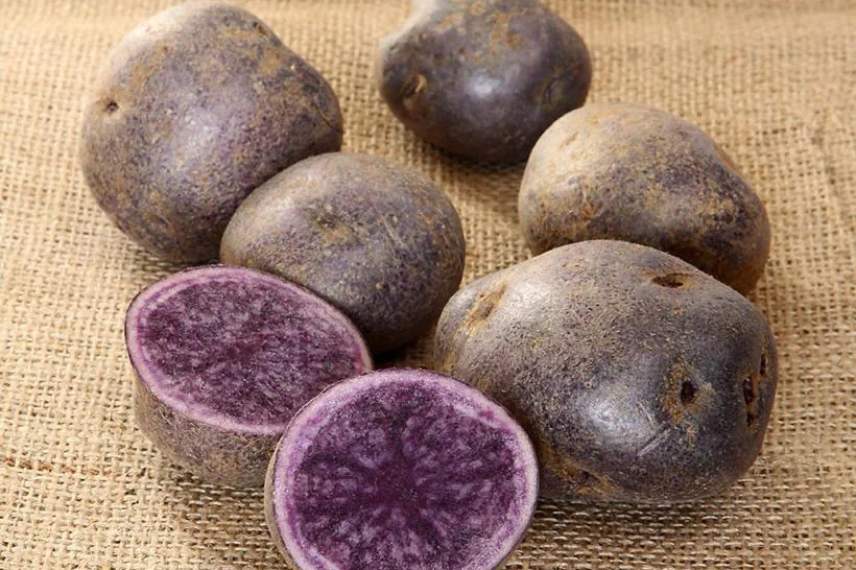
With a good yield, this variety is easy to grow, as it is little affected by the most common diseases, including late blight.
The ‘Prospère®’ (or ‘Stemster’)
The variety ‘Prospère®’, also known as ‘Stemster’, produces mid-late potatoes that are harvested 120 to 145 days after planting. It can be stored for at least eight months. It is also really easy to grow, being resistant to diseases, particularly late blight, and to drought. It requires little water and little hilling. It proves to be profitable and productive.
Its tubers are covered with a pink skin that hides a white to yellow, melting flesh, making it a versatile potato in the kitchen. The tubers are fairly large and oval, very regular and easy to peel.
The ‘Blanche’
Here’s a potato variety tailor-made for beginner gardeners! The variety ‘Blanche’, registered in 2011, has many advantages: great ease of cultivation, resistance to drought and to diseases including late blight and scab, an excellent yield, great versatility in cooking and very good storage life until April. When we say it’s an ideal potato!
It yields large and long tubers, with a yellow skin and pale yellow, fairly floury flesh. This flesh makes delicious purées or soups, but also very crispy chips. It can also be cooked as jacket potatoes.
The Étincelle variety
‘Étincelle’ remains a potato blessed with all the qualities. Easy to grow, it proves very productive. The obtained tubers are large, oblong and short, with yellow skin. The flesh, also yellow, is thin and moderately firm. This makes it a perfect potato for fries, purées or soups. It can also be cooked as a jacket potato.
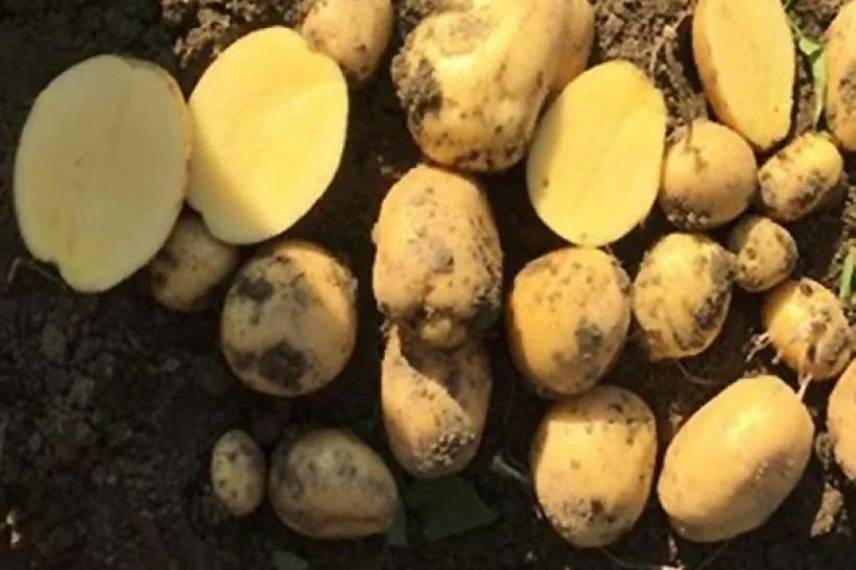
The Étincelle variety
Although classified as semi-early, this potato stores very well. It is harvested about 120 days after planting. It shows very little sensitivity to scab and to late blight and is resistant to nematodes.
The ‘Rouge des Flandres’
The ‘Rouge des Flandres’ is an old potato variety that hardly hides its characteristic. This late variety yields oblong and elongated tubers with red skin and red flesh. Its flesh is mealy, making it wonderful for fries and purée.
In the garden, it is hardy, late, and resistant to diseases and drought. With very good storage life, this potato is harvested between 120 and 150 days after planting.
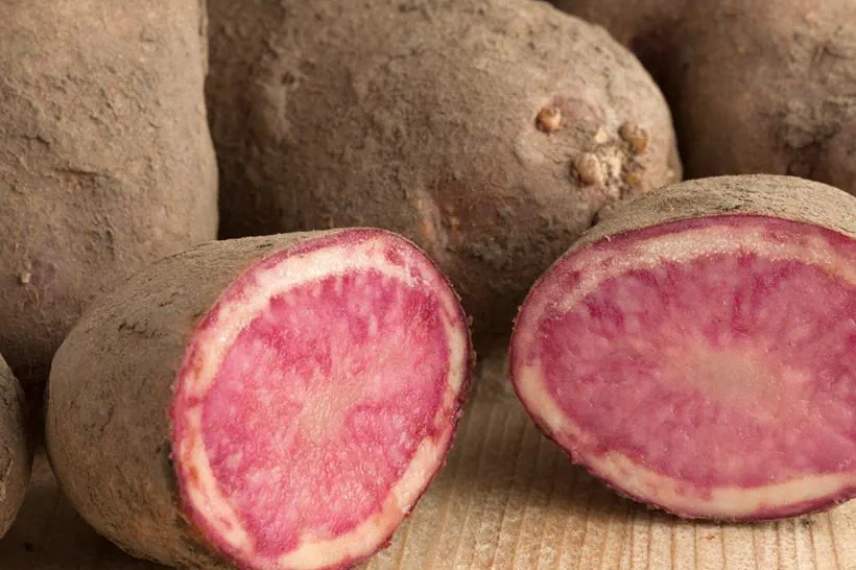
The Rouge des Flandres variety
And some more:
We could also mention the varieties Désirée, Charlotte, Goldmarie, Ulysse, Agria… which fall into the category of long-storage potatoes.
- Subscribe!
- Contents
Comments