





























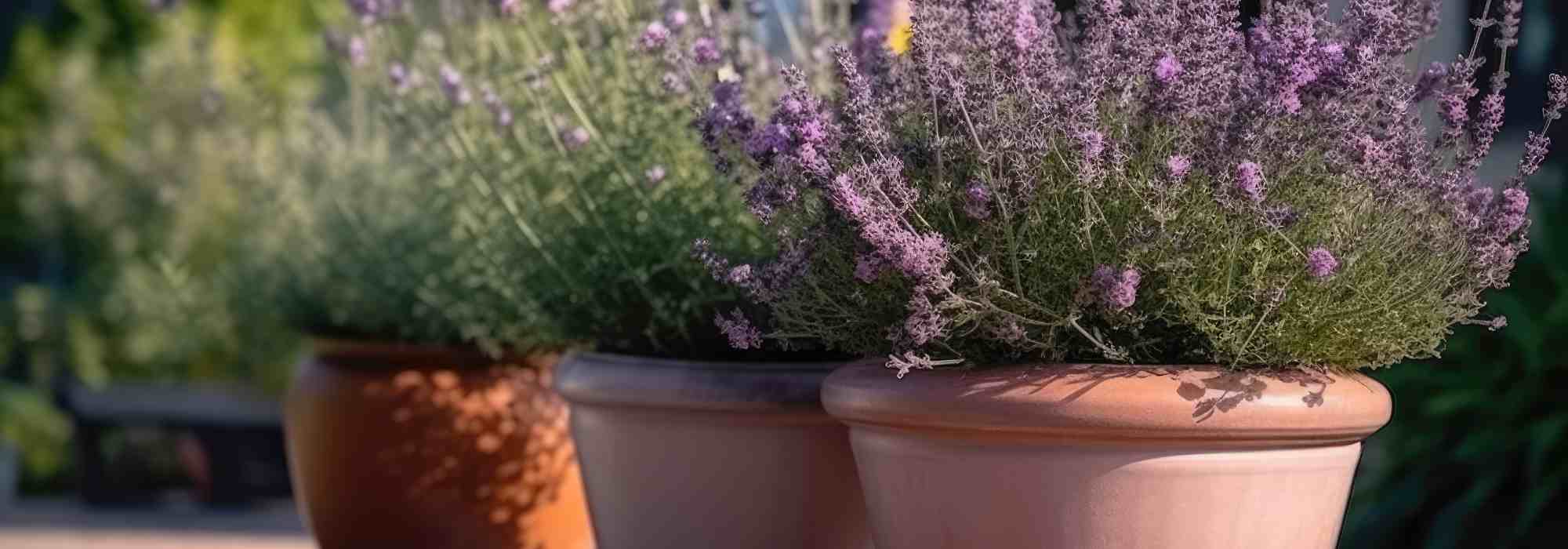
The ABC of Pot Planting
Everything you always wanted to know about pot planting but were afraid to ask!
Contents
Growing your plants in pots allows you to enjoy greenery when you’re not fortunate enough to have a garden, which is often the case in urban settings (courtyard, balcony, terrace…). We also love pots for the unique decor they bring to the garden itself. Potted plants also help overcome certain obstacles in a garden, such as bypassing their hardiness since they can be brought indoors, or allowing us to unleash all our desires as each pot can contain plants that we might not have been able to associate together in the garden. However, be aware that these containers require frequent watering in summer.
In this article, we’ll tell you everything you need to know before embarking on the cultivation of potted plants: tips, techniques, and maintenance! Follow the guide, or rather the alphabet…
A as ADVANTAGES
Changing the scenery in spring or autumn, pots also allow for planting when conditions are challenging (concrete slabs or rooftop terraces, poor or low-quality soil at the base of hedges). They often accommodate slowly growing bushes, allowing them to remain “cramped” for a while.
Another significant advantage is the ability to mix plants with different substrate needs (dry or moist) in various containers.
Some plants prone to the voracious appetite of slugs also benefit, such as hostas, which remain elevated in a pot, somewhat sheltered from those pesky gastropods…
However, planting in pots also simply allows for the preservation and cultivation of a plant for a time, while considering its placement in the garden.
Finally, one can enjoy a sort of mobile garden, positioning the various pots as desired or differently according to the sun’s path, thus protecting them at times from excessive sunlight. This proves very useful when there is space to move the pots into the shade when going on holiday…
Read also
Potted plants: how to grow and care?A as ADAPTED PLANTS
It’s difficult to make a list, as many plants thrive in pots, with some, like Agapanthus and Clivia, even preferring to be a bit cramped! Opt for compact or dwarf varieties, but if you’re using a container, you can afford to be a bit more adventurous. Vary the shapes with stemmed subjects, plants with a rounded habit, and more flexible plants. Your preferences will also guide you towards a type of plant, but of course, the exposure is crucial. Among the highly ornamental plants that accept pots are: Hebe, Cycas revoluta, dwarf conifers or those not exceeding 2 m in height, such as Pinus nigra ‘Nana’, small Acer palmatum, bougainvillea, Deutzia crenata ‘Nikko’, bay laurel, Acer campestre ‘Nanum’, dwarf fruit trees, Daphnes, Fuchsias, Dianthus, etc.
→ Discover the best bulbs to plant in pots, How to grow a Hebe in a pot?, The best Agapanthus to grow in pots, our selection of conifers for pots, and all our articles dedicated to potted plants.
B as BEST PRACTICES
Use rainwater whenever possible for watering. This will prevent your terracotta pots from whitening faster than their shadow. Moreover, it will be much more beneficial for the plants, specifically those referred to as heather soil plants.
It is worth noting that plants sold in plastic containers should not be left as they are. It is important to always replant them in a suitable pot, slightly larger. This is because black plastic does not allow for sufficient exchange or aeration, and the plant will quickly need to grow.
Plants sold in containers can be planted all year round, although it is advisable to avoid the height of summer or the depths of winter.
Combine bulbs with a few compact annuals or perennials that will take over once the bulbs have finished flowering.
C as CARE
Adopting potted plants requires more regular and attentive care than plants planted in the ground, as watering and fertilising will be more frequent tasks.
But the pots themselves deserve some pampering! Remove the visible limescale marks on terracotta pots by cleaning them with white vinegar.
Finally, old pots, covered in moss or grime, should be thoroughly cleaned before use, especially if they have housed another plant. Use white vinegar again, mixed with Marseille soap if possible, hot water, and a brush or sponge tough enough to remove residues and dirt from both the inside and outside of the pot. This is essential to prevent the spread of diseases or bacterium, and to eliminate efflorescence.
C as (POT )CHOICE
The pot is a statement decoration that connects with the rest of the apartment or house and garden, but it primarily serves as a protective container against cold and heat.
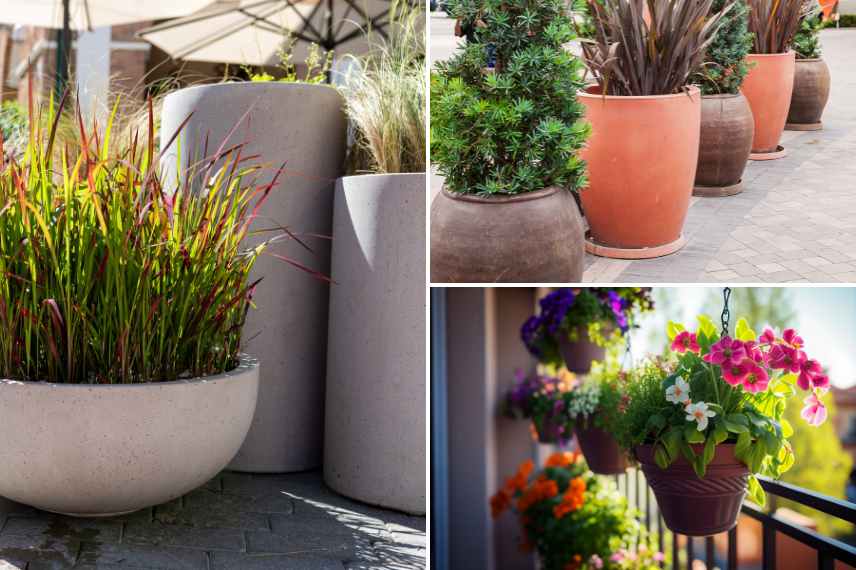
In terms of its dimensions (see Pot Size below), material (see Material), as well as its shape and colour, choosing a pot requires careful consideration to achieve a visually interesting result that suits the type of plant. A medium perennial or an annual can thrive in a small or medium pot, while tall flowering plants (grasses, cannas, agapanthuses) and bushes deserve a larger pot height. Succulents, alpine plants, and cacti can thrive in minimal substrate, thus generally requiring smaller containers.
Plants that are more water-hungry or less hardy should be kept in larger containers that provide more substrate, offering greater protection during extreme heat and cold.
Another aspect not to overlook is the frost resistance of pots. This should be checked on terracotta pottery, as not all are equally resistant (this depends on the firing temperature of the clay, which also affects the pot’s price).
Finally, consider varying and mixing shapes, or conversely, harmonising them: low pots (troughs, basins), balcony planters, square or rectangular boxes, jars, and rounded or oval pottery, double-walled pots, water-retaining pots, vintage zinc pots… The range is undeniably expanding! However, be cautious with urn-shaped pots, as removing the plant can be challenging due to the narrow top.
→ also read Olivier’s article Plastic, biodegradable, or terracotta pot
D as DRAINAGE
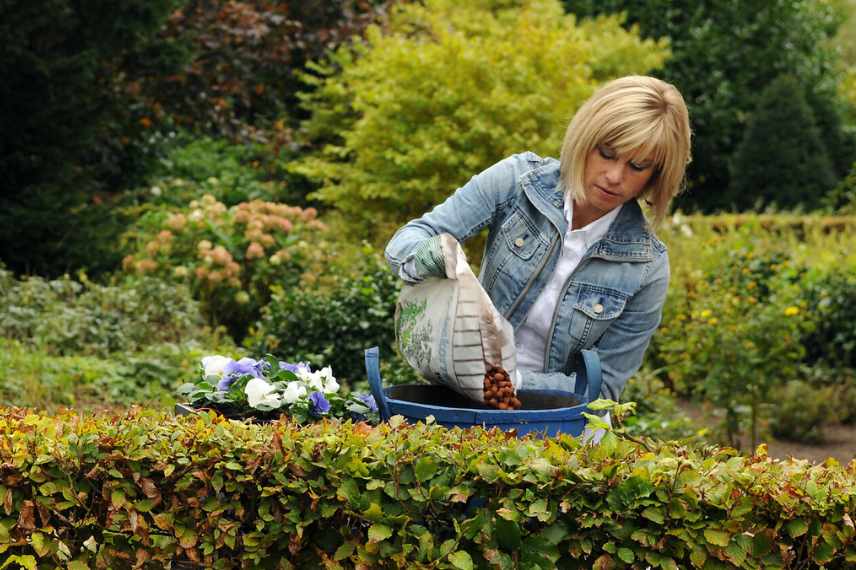
A crucial step for the vast majority of young plants in pots during their planting. A layer of clay balls or gravel about 4-5 cm deep for a medium-sized pot helps ensure drainage for the plant, which will have its roots less exposed to moisture when the bad season arrives. It is not essential for seasonal plants that prefer fresh substrates, such as cannas or arums.
F as FERTILISATION
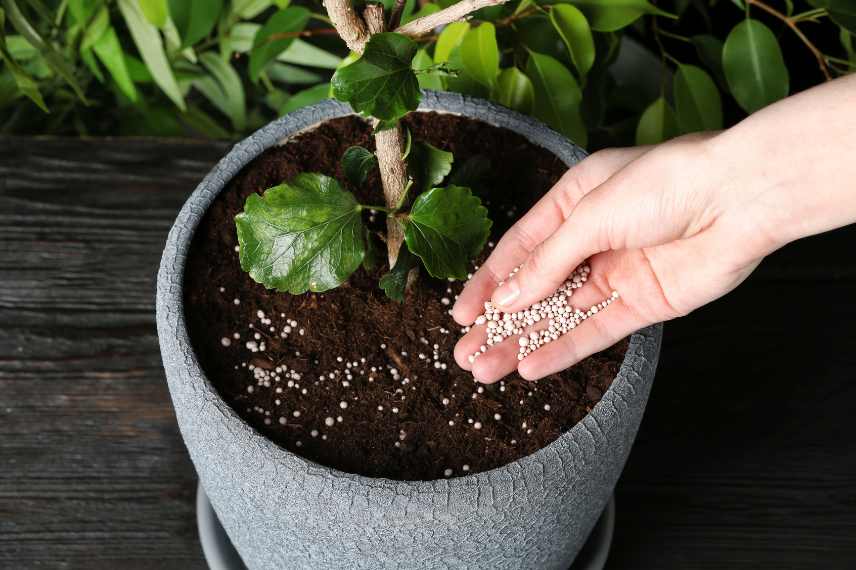
The addition of fertiliser is necessary when the plant is grown in a pot. The substrate depletes much more quickly and does not benefit from organic enrichments as it does in open ground. It is particularly useful during the growth and flowering periods of plants, generally between March and September. A fertiliser should no longer be used from autumn, to allow potted plants to harden off before the coldest days. Liquid fertiliser is recommended for annual plants in pots, as it is easier to dose, but slow-release granules (crushed horn and dried blood mixed) are more beneficial and less cumbersome to apply (usually a single dose is sufficient). Foliage plants require fertiliser that is predominantly nitrogenous (the ‘N’), while flowering plants will be supported throughout the summer by fertiliser that is mainly high in potash (K). Feel free to use tomato fertilisers, rich in potash, which are excellent for promoting flowering!
→ Read also: Fertilisers for planters and pots: when and how to use them; Fertilisers for planters and pots, which to choose?, Balcony, terrace and small gardens: composts and fertilisers perfect for small spaces and Universal or specific fertiliser: how to choose?
H as HARDINESS
Be mindful of the lower hardiness when planting in pots, as the indications found for a given plant pertain to planting in the ground. Generally, you should expect 2 to 3°C less for pot cultivation, as the plant has less substrate available and is more vulnerable to the cold. Special attention should be given to citrus trees planted in pots, as well as delicate Mediterranean or exotic plants such as bougainvilleas, Proteas, arborescent ferns, and so on.
→ Also read our tips for Protecting balcony plants in winter; 7 citrus trees to grow in pots
H as HUGE PLANTS
We regularly provide tips on planting small trees in pots. Some can indeed thrive in a limited volume of soil. With less soil, the shrub will develop a smaller root system, and its aerial growth will be correspondingly reduced.
It is also important to remember that the size of a shrub or tree will always be smaller in a pot than when planted in the ground (which are the dimensions indicated on the label or in the characteristics of the plant).
For shrubs and small trees, we primarily select compact, dwarf, or upright forms (fastigiate or columnar) that will take up less space in small areas. Japanese maples are among the stars of terraces, with a silhouette that is often spreading, making them suitable for larger terraces and shaded areas.
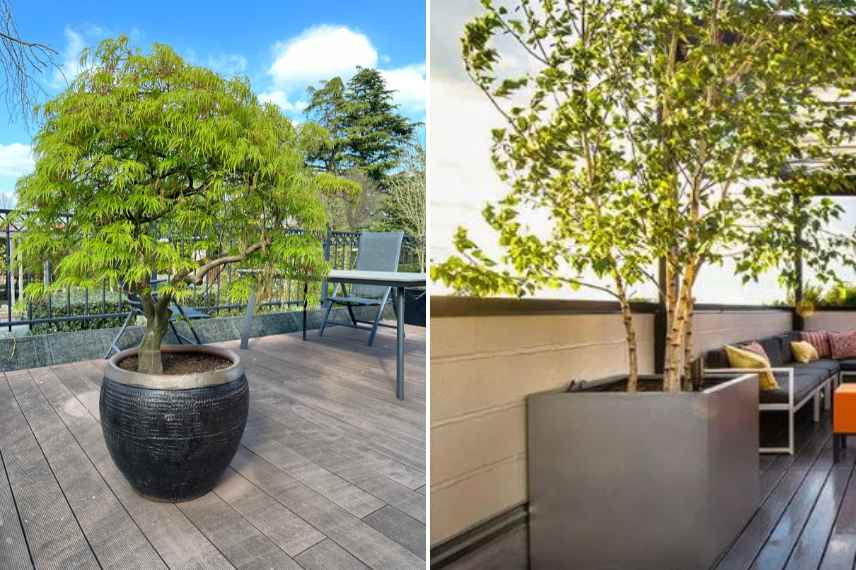
For a large plant, a large pot, or even a large container
H as HUMIDITY
Long live unglazed pots! They accommodate plants in cool or waterlogged soil that sometimes cannot be planted in the garden due to a lack of suitable soil. Therefore, it is easy to grow plants that require moist soil in pots without drainage holes. Attractive zinc troughs or washbasins are perfect, for example, for housing horsetails or arum lilies, while glazed stoneware pots are useful for planting a few Farfugiums or white Thalies.
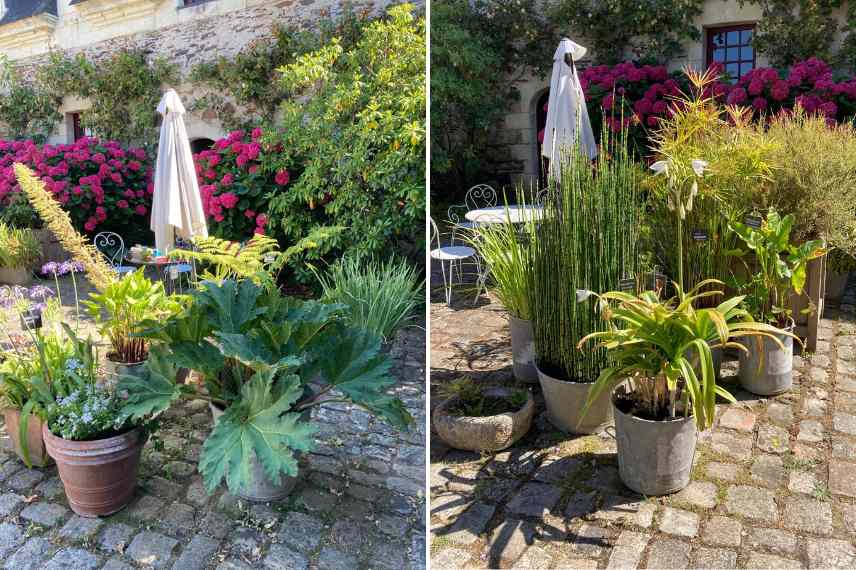
At the Manoir de la Groie (49), Gunnera, horsetails, and arum lilies welcome visitors… (© Gwenaëlle David-Authier)
I as INDOOR PLANTS
Indoor plants require special care. Most of them are tropical plants that should generally not be exposed to direct sunlight. Bottom watering or misting for the more delicate ones, with villous or glossy leaves, these exotic plants often suffer from overly dry interiors. Even the less experienced gardeners among us can grow beautiful plants, including succulents, which require little care… For indoor plants, misting is recommended for lush plants with shiny or glossy foliage, as it also helps to dust them. As with watering, rainwater is preferable whenever possible.
→ To read: The secrets to successful watering: 7 golden rules for your indoor plants; Outdoor plants that also thrive indoors, The easiest indoor plants to care for, Cacti and indoor succulents: how to grow and care for them; How to get rid of aphids on indoor plants, How to water indoor green plants? and How to clean the foliage of indoor plants?
M as MATERIAL
It’s an aspect not to be overlooked when choosing your container or pot. Each material has its advantages and disadvantages. To summarise, one could say that:
- Plastic is inexpensive, lightweight, frost-resistant, often colourful for modern uses… but it allows little air circulation for the plant, as it is hermetic (though it means you can water a bit less often), and it is not to everyone’s taste.
- Terracotta is aesthetically pleasing, porous, allowing for good gas exchange, and it fits into many décors… but it is expensive, heavy, and can be frost-sensitive depending on the models.
- New synthetic materials (fibreglass, concrete) are lightweight, offer a good quality-price ratio, provide a nice range of shapes and sizes, but should be reserved for plants in cool soil due to the limited aeration they offer.
- Wood is beautiful, allows roots to breathe well, ages gracefully, and is useful for large containers, but it is costly and requires more maintenance.
- Metal: in the form of zinc or Corten steel, it is useful in contemporary spaces, lightweight, practical for plants in cool soil, but it heats up too much in the sun and does not allow for good soil aeration.
- Stone and concrete: also aesthetically pleasing in urban settings, frost-resistant, but they retain heat and remain expensive, too heavy for elevated terraces.
→ Also read: Plastic, biodegradable or terracotta pot? with advice from Olivier and Terracotta in the garden: our ideas and inspirations.
M as MULCH
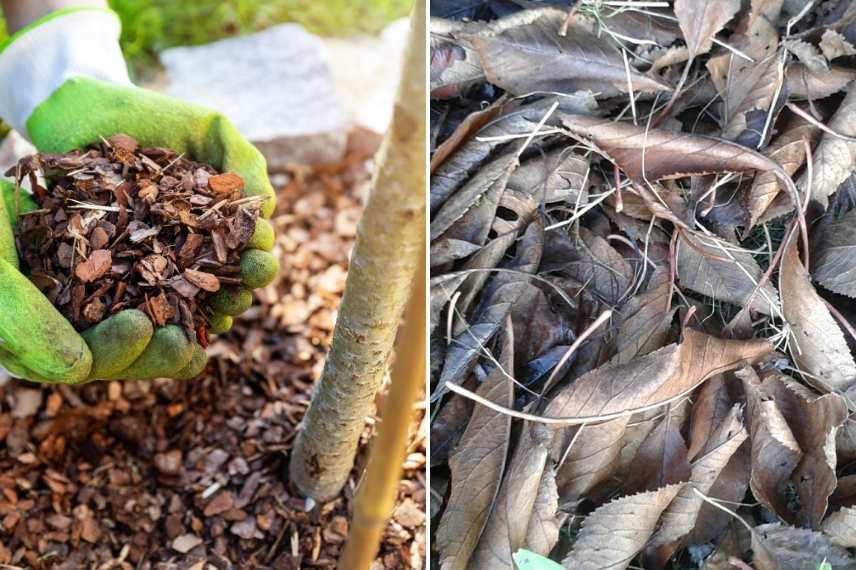
Covering the soil surface with a protective layer a few centimetres thick is essential for potted plants. This helps maintain a certain level of coolness, reduces water evaporation, and prevents compaction from watering. It also protects the plant during winter. Mulch in pots is often intended to be decorative (clay balls or even pebbles for some plants), but for most plants, it is preferable to use an organic mulch that will enrich the soil as it decomposes: dead leaves, buckwheat husks, pine chips, or cocoa shells, as well as a type of chip like RCW or miscanthus flakes.
P as POTTED GARDEN or POSTCAPING
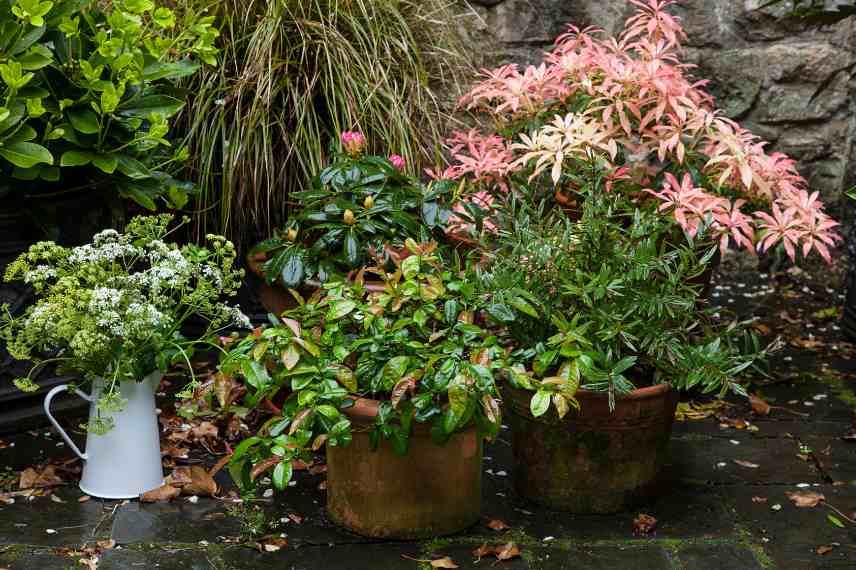
In the city, small dreary patios are perfect places that can be transformed with a wave of a magic pot! Often shaded, they allow for the cultivation of many plants that thrive there. Grouping pots together works particularly well with similar materials or colours. The abundance of pots and foliage creates a lush atmosphere. For example, combine Fatsia japonica, Aspidistra elatior, and non-running bamboos in a semi-shaded space, or use topiary forms for a classic style.
Discover our ideas in Potscaping or container gardening: a modular and portable garden and Which plants to choose for landscaping an interior courtyard?
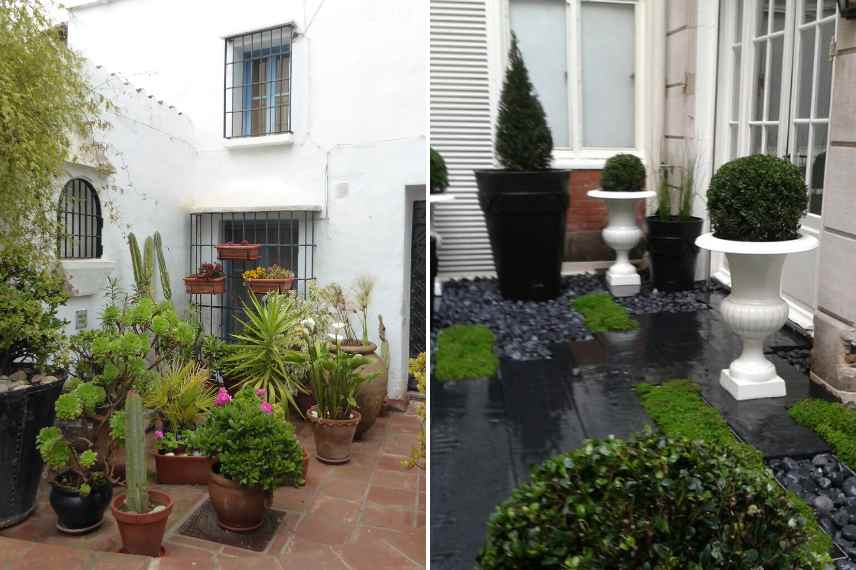
Pot gardens with radically different looks allow for all kinds of creativity. On the left in a patio in Spain, on the right in a courtyard in Paris (© Gwenaëlle David-Authier)
R as RECYCLING
Rather than buying often expensive pots or containers, recycling certain decorative elements or items found at flea markets is a great idea! To avoid a cacophony of pots, try to find your style by keeping to a consistent material or colour for your pots. The result is usually very successful and more personal than commercially bought pots, especially in small groupings of 3 to 5 pots.
→ Learn more with Decor idea: plants in unusual containers
R as REPOTTING
It is an important operation for potted plants to develop better in a larger container. We repot in spring, in March, and in autumn, preferably for indoor plants. It is possible to repot all year round if the pot breaks, for example, while avoiding the peak heat.
What are the unmistakable signs? The plant grows more slowly, the substrate dries out quickly after watering, and the roots start to coil at the bottom or against the wall of the pot… Remove as much old substrate as possible by gently freeing the roots, replant in a larger pot (three fingers larger), and water generously. Do not add fertiliser for 6 months, as the new substrate is sufficiently nutritious. You may need to break the old pot if the plant resists.
Repotting generally occurs every 2 to 3 years.
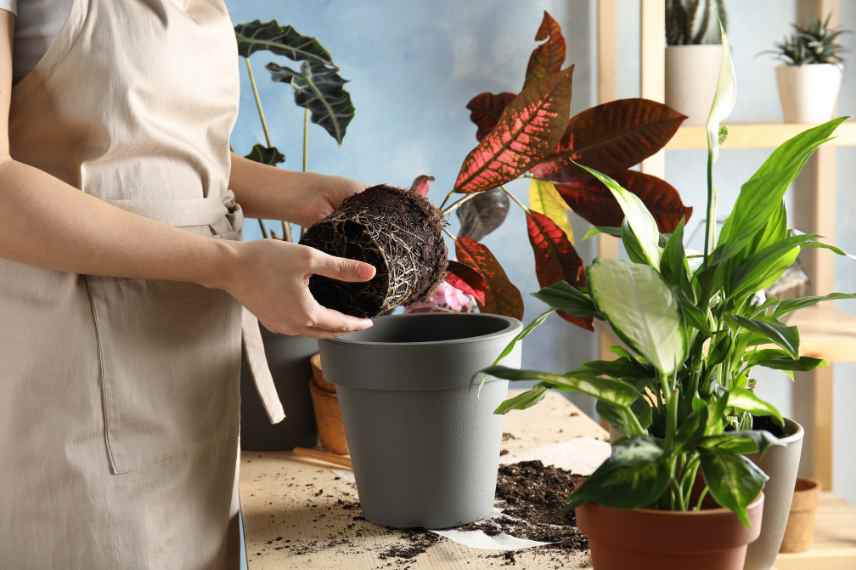
→ Read also: How to repot a houseplant? and Key steps for successfully repotting a plant: a guide for beginners and How to choose the ideal pot for repotting a plant?; How to repot an orchid?
R as ROOT SYSTEM
It does not allow for pot planting for certain species, as they have a taproot. For some plants, you must resign yourself to abandoning this practice: peonies, acanthus, Oriental poppies, etc. Roses will be chosen accordingly, but there are many that accept this method of cultivation (see the roses for pots and the English roses for pots).
Conversely, some invasive plants in the garden, due to their suckering nature, are perfectly managed in pots. Take advantage of this to install the most beautiful or useful among them, as they will be contained: Sorbaria sorbifolia ‘Sem’, Houttuynia cordata, some bamboos, as well as mint or lemon balm among the herbs…
→ Learn more in Olivier’s article: plants that sucker and plants that are difficult to grow in pots
S as (POT) SIZE
Important point, the pot should be neither too small nor too large and should be suitable for the dimensions of the plant. Some plants even prefer to have their roots confined in a pot. However, the larger the pot, the better the plant will thrive, as it will have sufficient substrate available. Pots with a diameter of less than 30 cm are reserved for small or very compact plants.
For larger specimens, we will be dealing with planting troughs, large raised planters, or even orange tree containers. On balconies and terraces, be mindful of the weight of some large containers, opting for lightweight materials such as plastic, fiberglass, or resin.
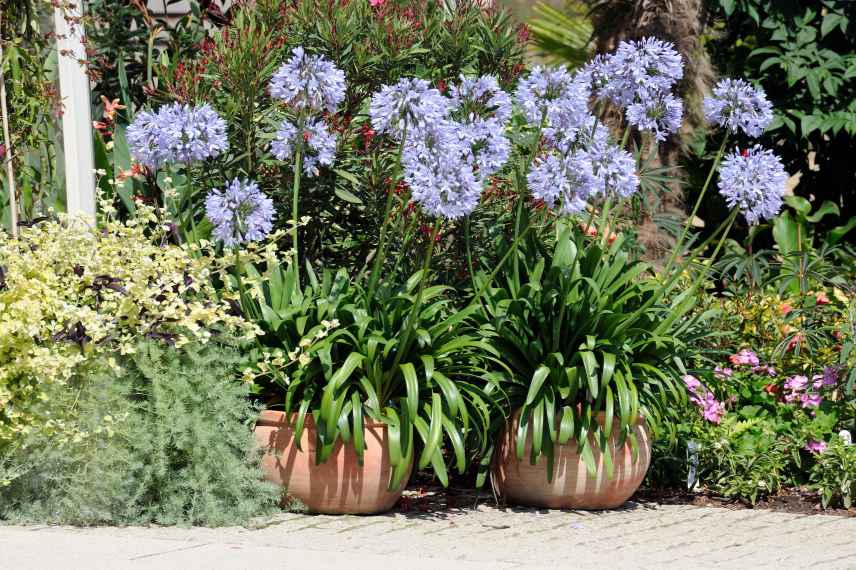
Adapt the pot to the size and spread of the plants
→ Also read 8 dwarf bushes to grow on an east-facing balcony; 8 dwarf bushes to grow in pots on a west-facing balcony; 8 dwarf bushes to grow in pots on a north-facing balcony; 8 dwarf bushes to grow in pots on a south-facing balcony
S as STYLE
Terraces and balconies are highly sought-after spaces that are particularly cared for in terms of appearance. Whether they serve as the often-used transition between the house and the garden, or as the only outdoor space when living in an apartment, they can take on very different styles depending on whether one wishes to create a romantic charm, a Japanese or exotic spirit, or a rustic scene versus a very modern design to harmonise with the type of dwelling. The plants, as well as the type of pot, will impact the desired aesthetics.
> Which plants for a zen balcony?; Which plants for an exotic balcony?; Which plants for a romantic balcony?; Which plants for a contemporary balcony?
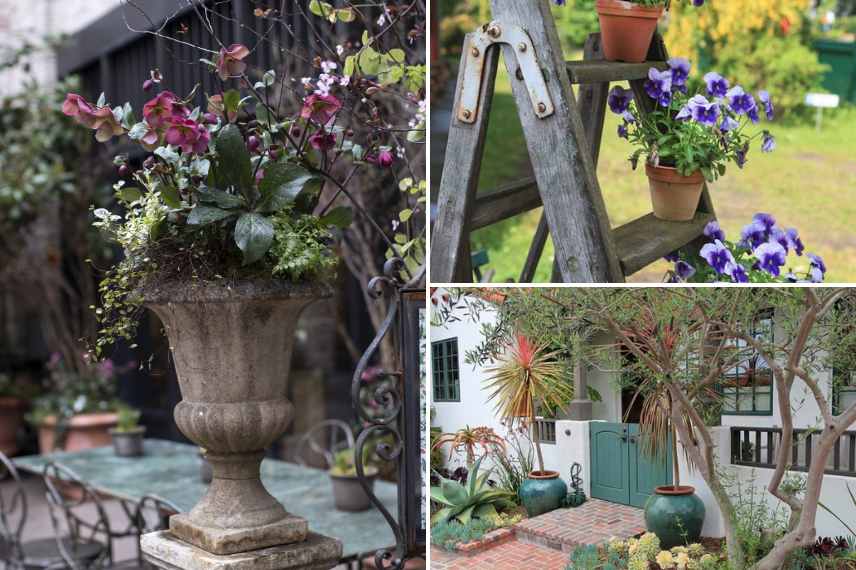
Very classic Médicis vase, small raw terracotta pots or glazed jars… the pot gives a true personality to your plantings
S as SUBSTRATE
The substrate is the growing medium, the mix of soil in which the plant will thrive. It is essential for the good health of plants, especially in pots! In urban areas, people often buy universal or multi-purpose composts. Choose high-quality ones, enriched with fertiliser to boost flowering plants, as they will be effective.
Don’t skimp on purchasing good compost for planting bushes that will be kept in their pots for a long time. Annuals or perennials will thrive in composts that are both rich and ensure good water retention. As for composts for Mediterranean plants, they can be replaced with a portion of sand added to good compost to facilitate drainage.
If you have a garden, it is always preferable to create your own substrate, using garden soil, compost, and including a good leaf mould for the most demanding plants.
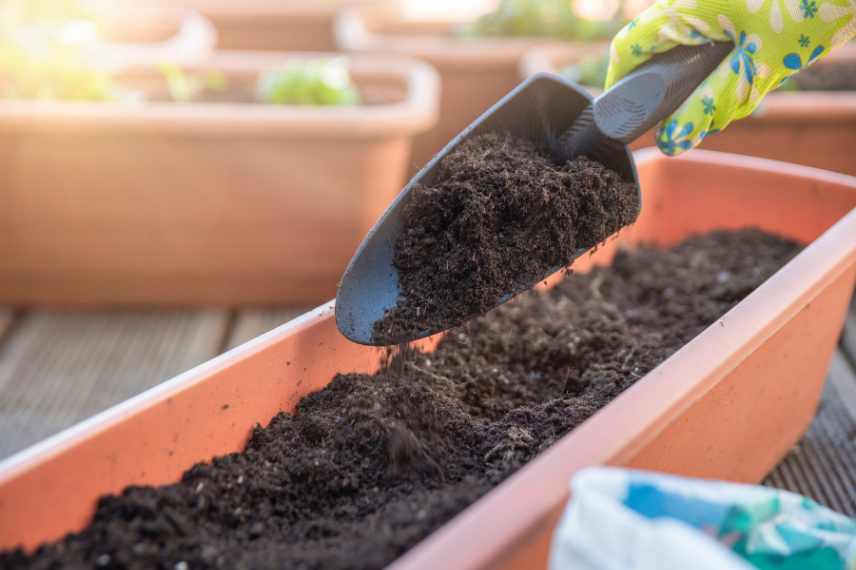
→ To delve deeper into the topic, Virginie advises you with How to choose good compost?
S as SURFACING
This operation is specific to potted plants that cannot be easily repotted, due to their size or fragile root system, for example. Climbing plants are also included. To best regenerate the substrate in the pot, gently remove about 5 cm of the nutrient-depleted soil, taking care not to damage the roots, and replace it superficially with fresh potting soil, ideally mixed with compost to nourish the plant well. Then, water generously. This should be done in spring, before the resumption of growth, around March.
→ See also: Potted plants, what is top dressing?
S for SPACE OPTIMISATION
Play with the shapes and sizes of pots to enhance part of the balcony, patio, terrace, or garden beds. Hanging pots, climbing plants against the dividing wall, large containers for bushes, and lower troughs for small plants…
Place some plants at height, on a tripod or a low wall, for example, to create different levels and to better enjoy their trailing flowers, such as Hellebores, begonias, etc.
In a contemporary setting, pots have their say! They contribute as much as the plants to the sober and elegant atmosphere, often very graphic, when they are repeated like a pattern. The overall effect becomes refined.
→ Learn more with Ingrid: How to arrange pots on a terrace?
U as USES
Plant a unique young plant per pot/container when it justifies its place with its evergreen foliage or silhouette to maintain a prominent position. This is the case, for example, with topiary plants. If you wish to combine several types of plants or varieties in the same container, intersperse evergreen and deciduous plants if possible. Beautiful specimens are often installed in pairs around an entrance to enhance it.
V as VOLUME
It’s a question that arises with every new purchase: what volume of soil do I need and what size pot for my bush/my plant/my vegetables, etc.?
The volume for a square/rectangular container is the easiest to calculate: multiply the width by the length by the height. For round pots, it’s a bit more complicated; you apply this formula: 3.14 x pot radius squared (r2) x pot height.
Here are some guidelines for standard pots:
- For a round pot with a diameter of 30 cm, plan for about 10 litres of potting soil
- For a pot with a diameter of 40 cm, plan for about 30 to 35 litres of potting soil (depending on its height).
→ Learn more in our advice sheet: How to calculate the volume of potting soil needed for a pot?
W as WATERING
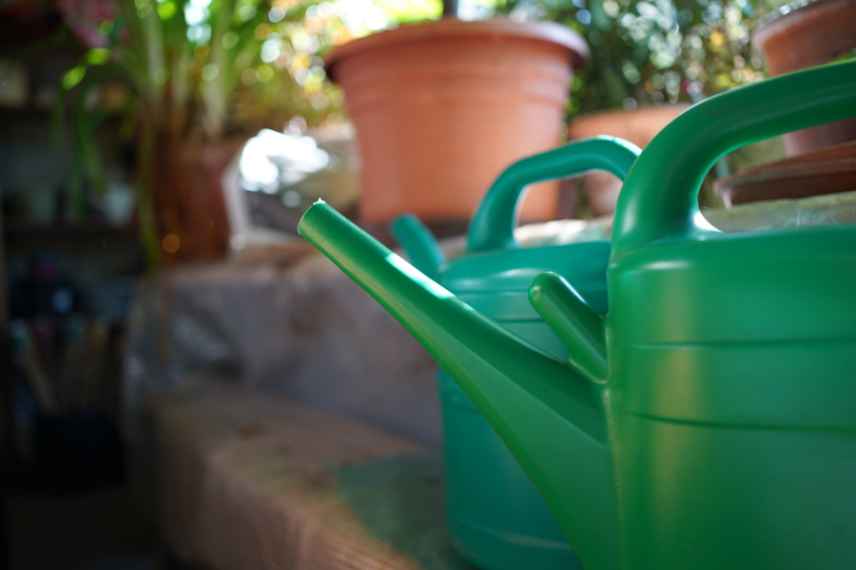
This is THE crucial topic! However, plants have such different needs that it is difficult to establish a rule. The amount of soil is limited in a pot or container, so watering is necessarily more frequent than in open ground. The frequency and amount of water will often be done by guesswork, or rather by feel! It is usually recommended to let the substrate dry out between waterings, checking the moisture with a finger inserted a few centimetres deep.
As with open ground, it is also better to water generously but less frequently than a little every day, ideally in the morning. Regarding saucers, be careful not to let water stagnate in them (which can attract the tiger mosquito), but to isolate the pot from the saucer with a handful of gravel or clay balls to allow air circulation and prevent root asphyxiation.
In the south of the country, depending on exposure or in case of drought, misting can help rehydrate a wilted plant due to heat or one with large foliage. However, it does not replace watering. Do this in the morning, especially not in full sun to avoid burns.
→Also read: Watering potted plants and our tips for managing potted plants in summer: Potted plants and watering: managing extreme heat during your absence, Irrigation solutions for a balcony or terrace, How to refresh your balcony and terrace in summer? Are there planters and pots that require little watering?; Drip irrigation: is it really the panacea?, and our advice on bottom watering for houseplants.
W as WINTERING
To help them survive the winter, frost-sensitive plants or slightly hardy evergreen young plants grown in pots will receive special treatment: they should be placed in an unheated greenhouse or conservatory, or any bright room with an ambient temperature of 10°C-12°C, or even cooler. Mulching (see below) and the application of a fleece over the aerial parts should be considered as soon as the first frosts arrive. Protecting the pot is also important, as it helps shield the roots, making them less exposed to the cold (bubble wrap, hessian in several layers, anything that can act as a barrier to the cold). Finally, storing pots on risers helps them survive the winter better, reducing contact with the cold or frozen soil.
→ Read: Overwintering potted plants to protect them from the cold
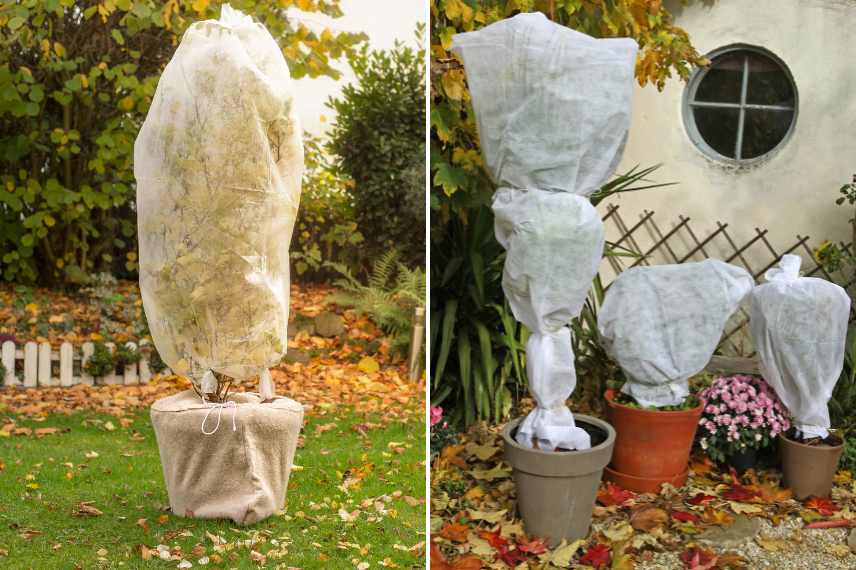 Protective cover for the aerial parts, but also for the pot…</caption]
X as XEROPHILOUS
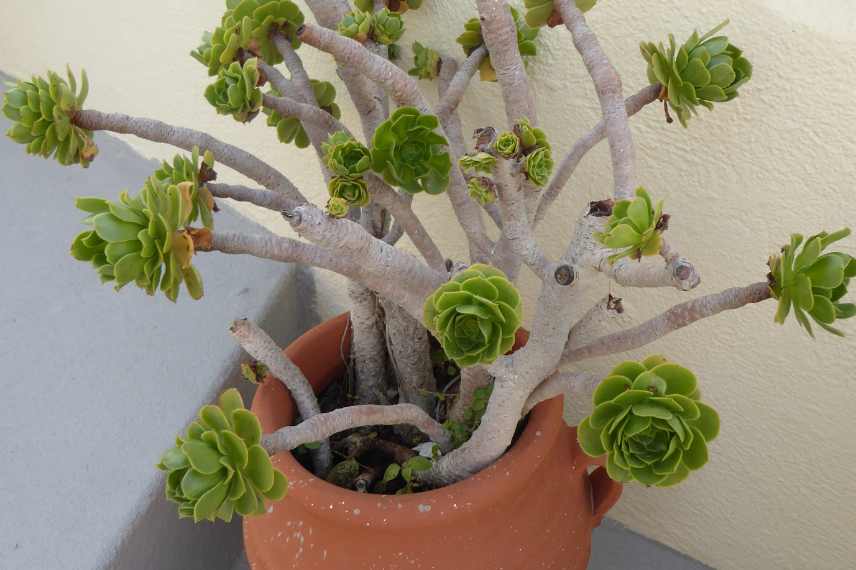
Xerophilous plants (from dry terrain), succulent plants (commonly known as fleshy plants), and cacti are somewhat unique, as they have very different needs: little or no watering, a substrate mixed with gravel or small stones, pumice, and sand to ensure excellent drainage, and a very sunny exposure… Not to mention that they are often frost-sensitive and will require appropriate wintering, or that they should be brought indoors in autumn to a non-heated space to be kept as houseplants.
→ Also read: growing Yucca in a pot; growing an agave in a pot; growing cordyline in pots
Learn more...
Consult our guides in our sections dedicated to Potted plants and Planters and potted flowers.
- Subscribe!
- Contents
Comments