





























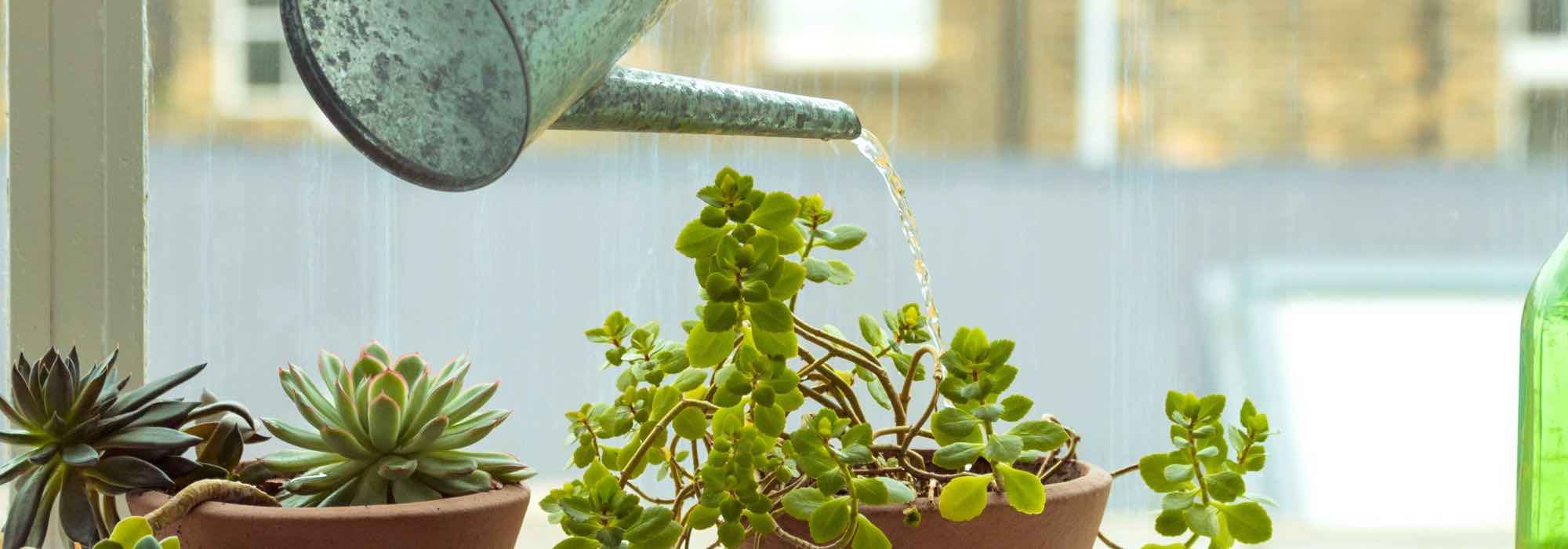
The secrets to successful watering: 7 golden rules for your indoor plants
Our tips for avoiding watering mistakes
Contents
Watering indoor plants may seem simple, but each plant has specific needs that require attention and understanding. Knowing when and how to water your plants is not just a matter of routine; it is a crucial element that directly affects their health and growth. This article explores seven fundamental rules for watering indoor plants effectively.

Take into account the specific needs of your plants
To ensure the health and longevity of your indoor plants, it’s crucial to understand their water needs, which vary greatly depending on the species. Each plant has unique requirements influenced by its natural native environment. For example, succulents and cacti, native to arid environments, require less watering than tropical plants such as ferns and orchids that thrive in humid environments.
To water your plants properly, start by identifying their genus and their specific needs. Plants originating from humid regions benefit from frequent but moderate watering, whereas those from dry regions prefer infrequent but plentiful watering.
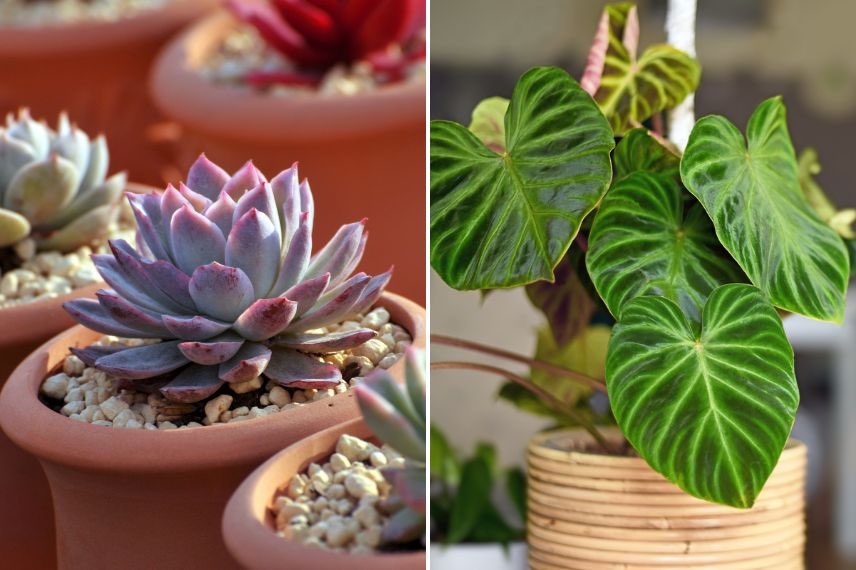
Two types of plants whose watering needs are opposite: succulents are very undemanding and Philodendron is more water-hungry
It is also important to consider growth conditions such as light, temperature and season, as they directly influence water needs.
Observing the signs the plant gives you is important to determine whether it is receiving the right amount of water. Wilting foliage or leaves dropping can indicate under-watering, while yellowing leaves or mould growth on the soil can be signs of overwatering.
Moreover, the type of growing medium plays a crucial role; well-drained, it helps prevent excess water and the many problems that follow.
Read also
Misting indoor plantsWater your plants with suitable water
Tap water, while convenient, often contains chlorine and mineral salts that can accumulate in substrate and potentially harm some sensitive plants.
→ Read our article: which water to use for watering your plants?
- For plants sensitive to minerals, on which you frequently observe brown tips, such as calatheas, opt for rainwater or filtered water.
- Hardier plants, including succulents, generally tolerate tap water well.
Water temperature is an important consideration in avoiding stress to the roots. Water that is too cold can slow root growth and even damage them. Ideally, use water at room temperature to ensure optimal nutrient uptake without shocking the roots. To ensure an adequate temperature, let the water stand in the room where your plants are for a few hours before watering.
Water properly
- Surface watering : It is the most common method. It involves pouring water directly onto the surface of the substrate. This method suits most plants, but it is important to ensure that water penetrates down to the roots. Water slowly to allow even absorption.
- Capillary watering : This technique involves placing the plant’s pot in a container filled with water, allowing the soil to absorb the water through the drainage hole. It is an effective method to prevent over-watering, but it may prove insufficient in very dry environments or for plants with higher water needs.
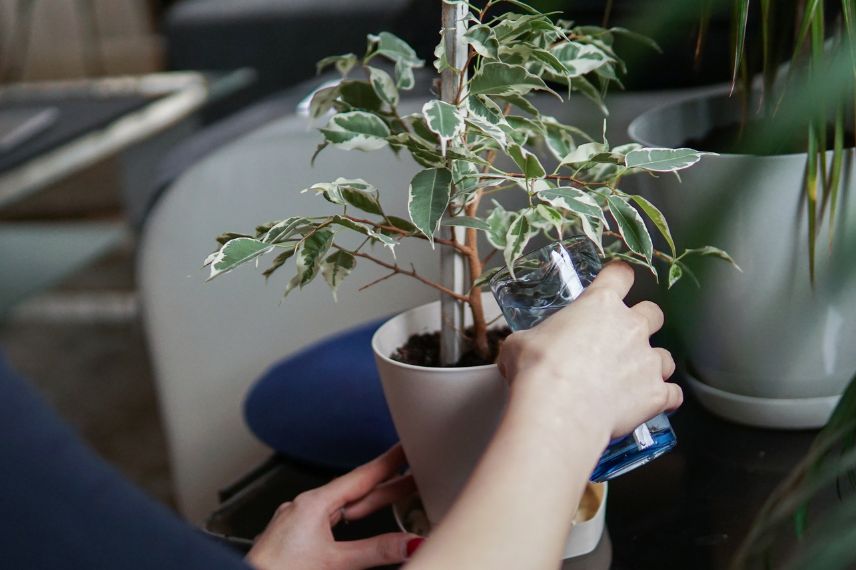
Most plants are watered from the top. Water slowly to ensure the entire substrate is hydrated
Water at the right frequency and amount
Determining the frequency and amount of watering suitable for your indoor plants is essential. These aspects depend on many factors, in addition to the type of plant, such as indoor temperature, substrate type and the season.
- Conditions such as temperature, humidity and air circulation affect the rate at which the substrate dries. In a hot, dry environment, you will need to water more frequently than in a cool, humid climate.
- A well-draining substrate will dry more quickly than a dense, clayey substrate. Use a suitable potting mix for each plant type to optimise water retention and root health.
- Plants tend to grow more actively in spring and summer, periods during which they require more water. In autumn and winter, their growth slows, reducing their watering needs.
To correctly assess when to water, check the substrate moisture a few centimetres below the surface with your finger. If it is dry, it is time to water. Avoid watering on a fixed schedule, as water needs may change with variations in the indoor environment and the plant’s life cycle.
Signs that a plant needs water
Each plant shows distinct signs when its water needs are not met. Here are a few indicators to watch for:
- Wilted or drooping leaves : This usually indicates a lack of water. Leaves may become soft and dull.
- Yellowing leaves : This can be a sign of overwatering, especially if the yellowing leaves are also soft and start to rot at the base.
- Pot weight : Lift the pot to feel its weight. A light pot generally indicates the soil is dry, while a heavier pot may still contain water.
If you modify the indoor environment, such as turning on the heating in winter or using air conditioning in summer, observe how this affects the substrate moisture and adjust your watering accordingly. Heaters can dry the air and the substrate quickly, requiring more frequent watering.
Hygrometers measure the substrate’s moisture level, helping you decide whether your plants need water without guessing or relying solely on touch. This is particularly useful for plants with specific moisture requirements or for less experienced gardeners.
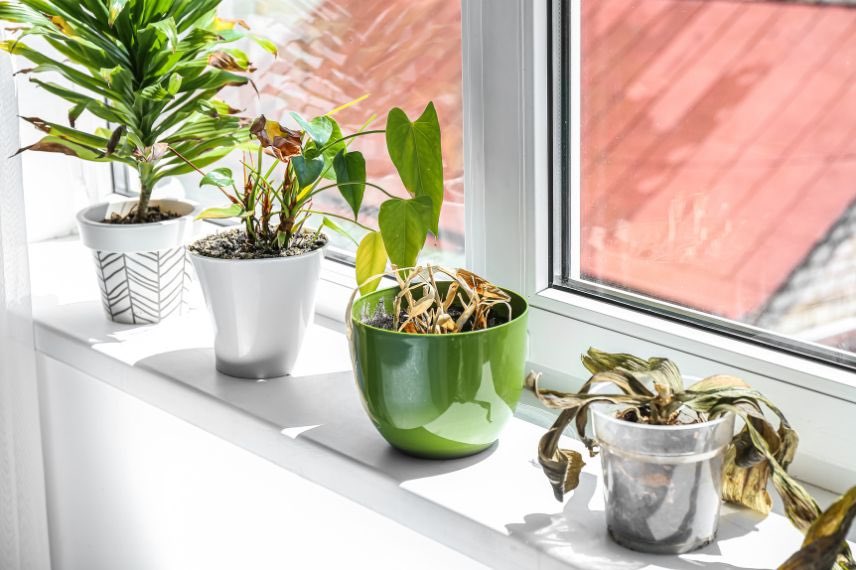
On the background plant, the brown tips probably indicate water stress, but the other plants have clearly suffered from watering neglect
Ensure good drainage
Without adequate drainage, water can stagnate in the potting mix and the pot, causing root rot and other problems.
Stagnant water in the substrate and the pot deprives the roots of the oxygen they need to survive, leading to root rot. Good drainage allows excess water to flow away, ensuring that the roots stay well-aerated and healthy.
Choosing a pot and substrate suited to your plants
- Using pots with drainage holes is essential to prevent water buildup. The holes allow excess water to drain away freely. If your pot lacks drainage holes, consider drilling one. If you use a cachepot on top, ensure the bottom of the inner pot does not retain residual water.
- The choice of substrate is equally important. Use a potting mix suited to the needs of your plants. For example, cacti and succulents prefer a sandy, very well-draining substrate, while tropical plants require a richer, moister substrate, but still well-draining.
Improving drainage
- Add a layer of clay balls, gravel or broken pottery at the bottom of the pot to improve drainage. This prevents water from stagnating and allows air to circulate around the roots.
- Incorporating perlite into the substrate can improve its drainage capacity. This lightweight, porous material allows water to flow more easily through the substrate.
- Place pots on saucers or supports to allow water to drain freely and prevent the roots from sitting in water.
Dust the leaves of your plants
Leaf cleaning is a practice often overlooked, yet essential for the health and beauty of your indoor plants. By removing dust and accumulated debris, you allow your plants to breathe and photosynthesise more efficiently. Additionally, clean, glossy leaves make your plants more attractive. Here are some tips for cleaning the leaves of your indoor plants:
- For large smooth leaves, use a soft, damp cloth. Gently wipe each leaf to remove dust. Support the leaf with one hand to avoid tearing it.
- For plants with many small leaves, a light shower can be more effective. Place the plant in the shower or outdoors and use a jet of water that isn’t too cold to wash the leaves.
- Use a spray bottle filled with water to mist the leaves, then wipe them gently with a soft cloth. This method is particularly useful for plants with delicate leaves.
- For plants with villous or textured leaves, use a soft brush to remove the dust, but do not use water.
Lukewarm water is generally sufficient for cleaning the leaves. You can also add a few drops of mild soap to the water to remove sticky residues, but rinse the leaves well afterwards to avoid any soap residue.
Do not use commercial leaf polishing products, as they can clog leaf pores and hinder respiration. Also avoid harsh chemicals that can damage plants.
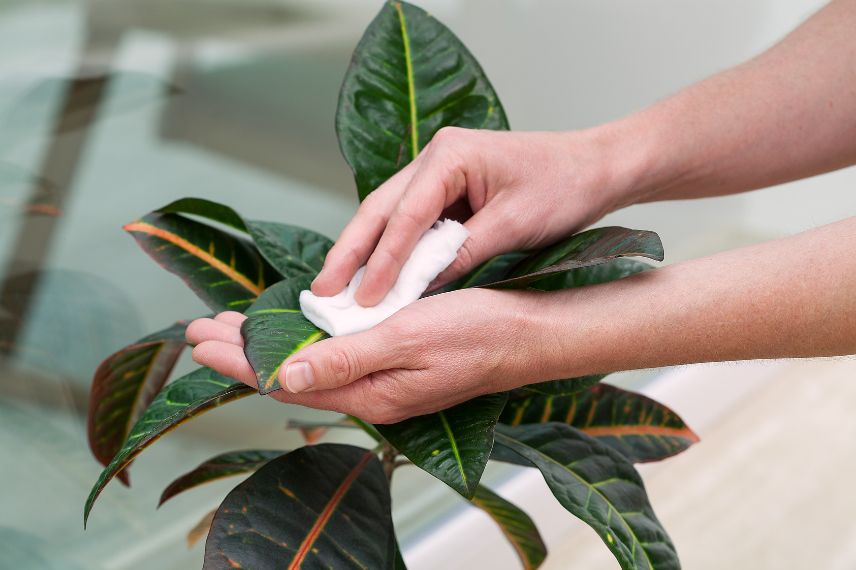
Depending on the plant, use a soft damp cloth or a shower rinse to clean the leaves and allow them to photosynthesise effectively
Give your plants a conducive environment
A measured watering is crucial, but it will not allow your houseplant to thrive if it does not receive enough light or dries out each winter near a radiator. Placing your plants in the right place is essential before giving them your proper care.
Group plants with similar light and humidity needs to simplify care.
Light: a key factor for your plants
Light is one of the most critical elements for photosynthesis, the process by which plants convert light into energy. Different plants have varying light needs:
- Plants such as cacti and succulents require a lot of direct light. Place them near south- or west-facing windows to maximise exposure to sunlight. They do not mind the sun’s rays.
- Tropical plants generally require bright but indirect light. If they are placed behind a window that receives direct sunlight, it is necessary to diffuse the light with a sheer curtain or move them away from the window.
- Plants such as pothos, Calatheas or ferns tolerate lower light conditions. They can be placed further from windows or in rooms with medium natural light.
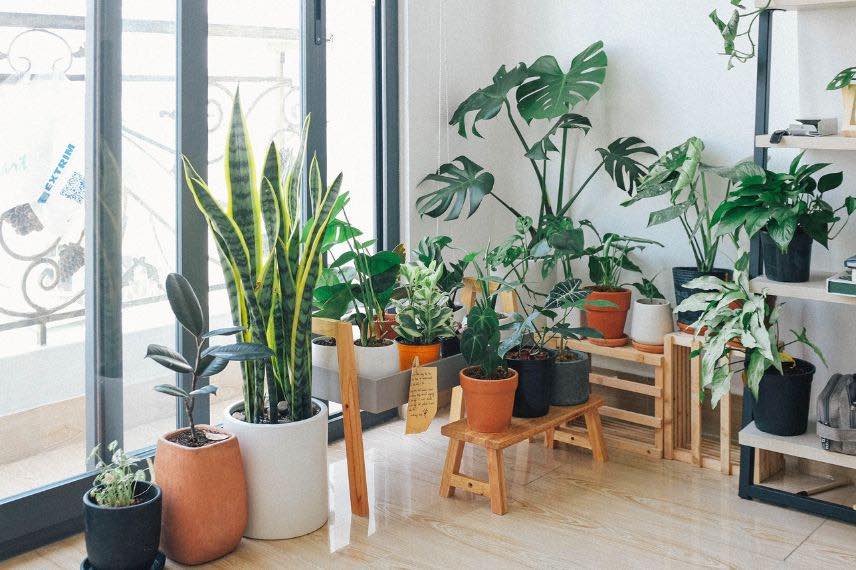
Grouping your plants by their light and humidity needs, which also simplifies care and watering
Maintain a stable temperature for your plants
- Most houseplants prefer steady temperatures, between 18°C and 24°C. Avoid placing them near direct heat sources such as radiators, or in draughts from windows and doors.
- Extreme temperature fluctuations, such as those caused by air conditioning or radiators, can stress plants and slow their growth. Maintain a stable temperature to support their well-being.
Humidity: create a favourable environment for your plants
Humidity plays a crucial role, especially for tropical plants that require a more humid environment:
- Ferns, Calatheas and tropical plants benefit from high humidity. Place them in well-lit bathrooms or use humidifiers to increase ambient humidity.
- Cacti and succulents prefer drier conditions and can be placed in rooms with medium to low humidity.
- Subscribe!
- Contents
Comments