





























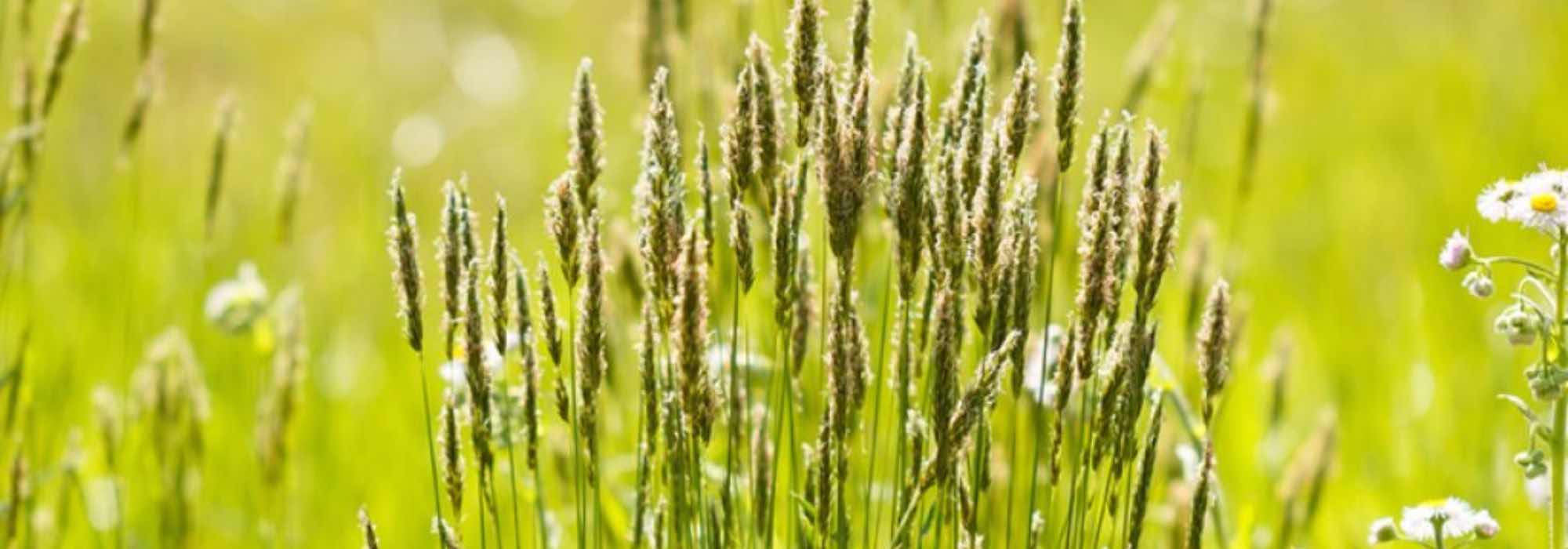
Top 9 cold resistant grasses
Selection of very hardy grasses
Contents
Charming ornamental plants, grasses add a touch of lightness and volume to the garden, while stylishly structuring beds, borders and rockeries. These perennial plants require little to no maintenance and have fine, architectural foliage that is elegant and sometimes evergreen. Robust and easy to grow, most prefer a sunny position and well-drained, even poor and dry, soil. Some grasses are also very hardy and can withstand very low temperatures down to −40 °C! Discover our selection of 9 grasses that resist the cold and that you can plant in almost any region.

The Deschampsia cespitosa 'Goldschleier' - tufted hair-grass
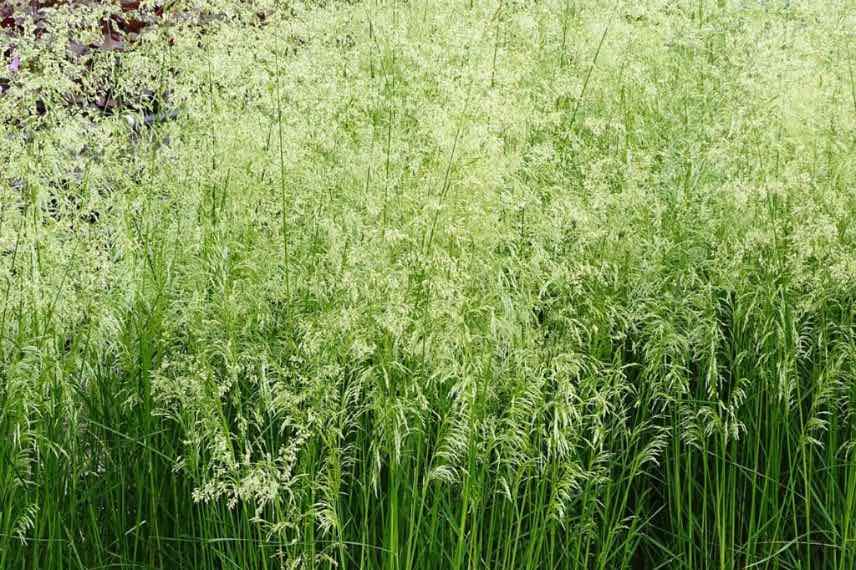
The Deschampsia cespitosa ‘Goldschleier’ – tufted hairgrass is an evergreen and perennial grass, among the hardiest as it can withstand temperatures down to −40 °C. Reaching 90 cm at ripeness, it forms a compact tuft of very fine, green, arching leaves. In summer, from July to October, they are covered with large, airy inflorescences evoking panicles with golden and silvery highlights. Spectacular in summer and winter, it is undemanding and self-seeds in the garden without taking over.
It enhances flower beds alongside bulbous plants such as the daffodils, or large perennials such as coneflowers, Japanese anemones and large autumn asters.
Read also
Planting grassesCarex pendula - Pendulous sedge
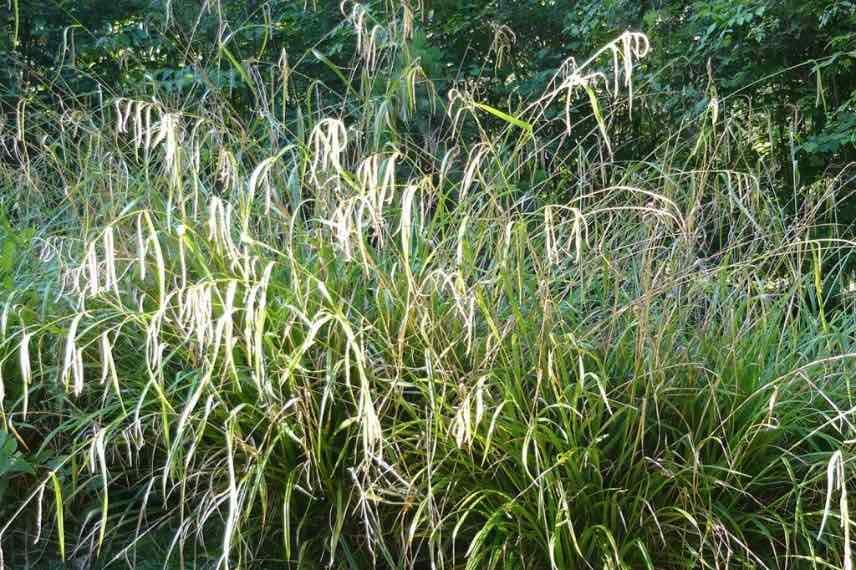
The Carex pendula – Pendulous sedge is a species of grass that grows on wet banks and is hardy down to -29 °C. It is a reliable choice with dark green, evergreen foliage, forming large, spreading, supple clumps that can reach up to 1.20 metres. The leaves are broad, dark green above and pale bluish-green beneath. In June and July, the stems are adorned with long, very fine and highly decorative spikes that hang down and are blackish in colour.
This grass is perfect planted on the banks of a stream and placed alongside Gunnera or Begonia grandis evansiana in a garden with an exotic look.
Sheep's fescue - Festuca ovina
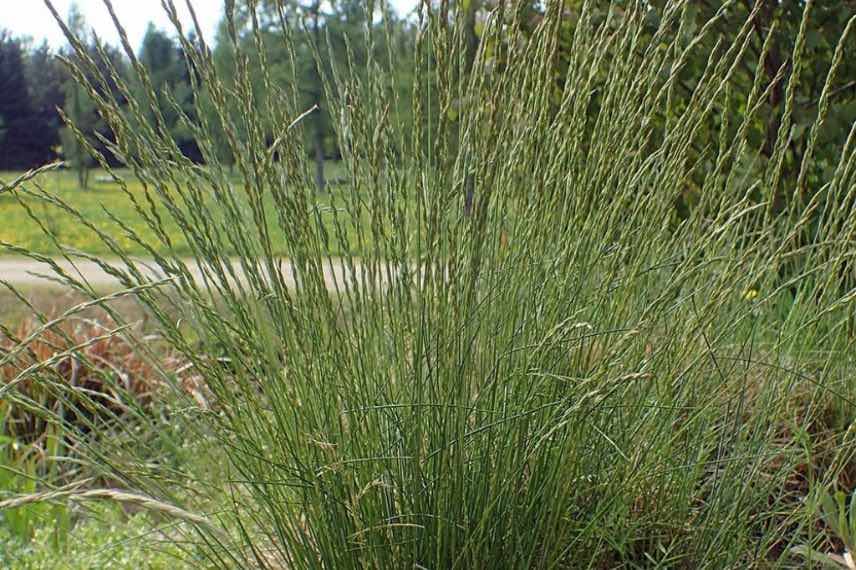
The Sheep’s fescue – Festuca ovina resists, it too, severe cold and offers hardiness down to −29 °C. Very robust, this small grass 25 cm high forms a compact, upright clump of fine bluish-green leaves that turn straw-yellow in winter. From May to August, it produces green flower spikes with purplish hues. It is ideal for dry, arid gardens and adapts to challenging locations.
It carpets beds, rockeries and borders with a thick, dense carpet and can also serve as a groundcover or an alternative to the lawn. Pair it with blue fescues to create beautiful colour contrasts and fill empty spaces with white pebbles, sand or lava gravel for a contemporary graphic effect.
Read also
Grasses: which variety to choose?Holcus mollis 'Albovariegatus'
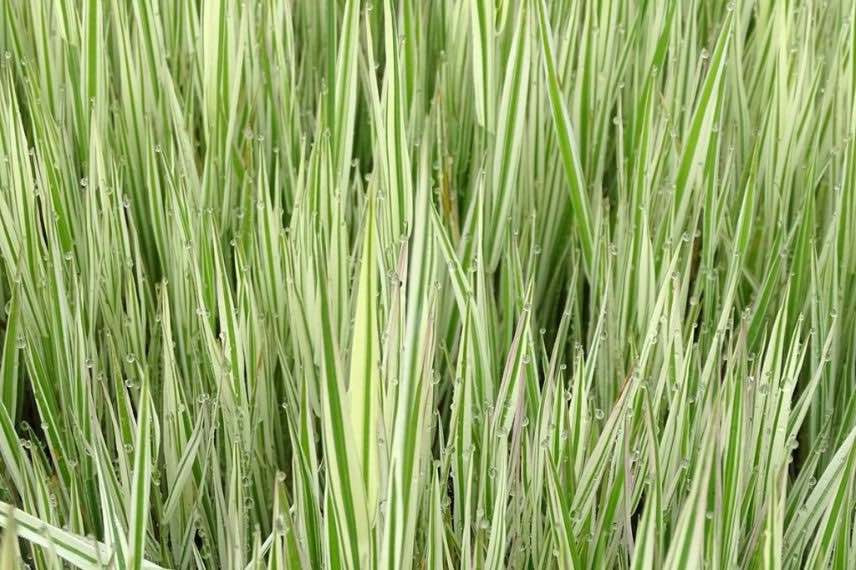
The Holcus mollis ‘Albovariegatus’ is an unusual grass, with its foliage variegated in bright white and green. Semi-evergreen, this foliage forms clumps of long, narrow leaves that can reach 50 cm tall. In June and July, it bears pale green, feather-like inflorescences. This perennial plant tolerates temperatures down to -29 °C. It thrives in shade, in cool, even clay soil. In a rich, moist substrate it can become invasive.
It will brighten a shaded border alongside arums with white flowers.
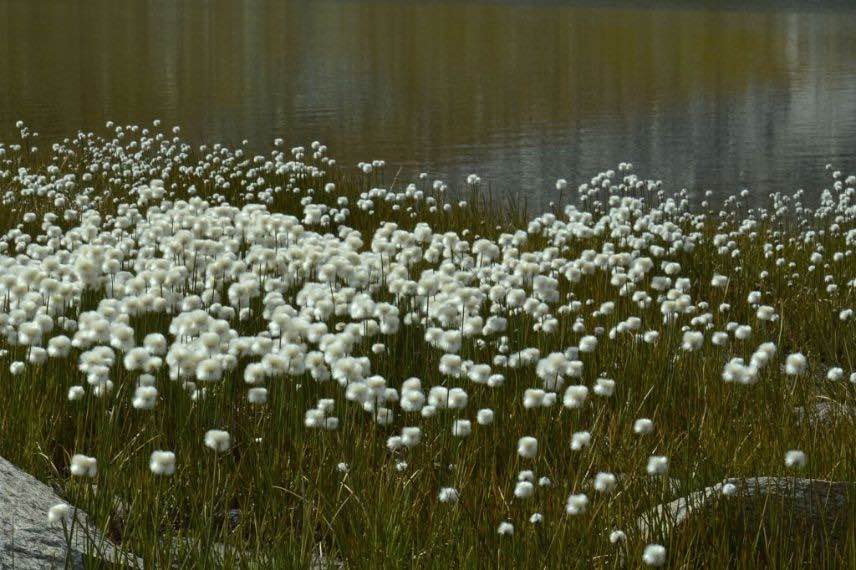
Eriophorum angustifolium - Narrow-leaved cottongrass
The Eriophorum angustifolium – narrow-leaved cotton-grass is a grass of very high hardiness, which withstands down to −45 degrees and is perfect for very cold climates, as this promotes its flowering. This unusual plant for collectors establishes itself in wet, marshy, shallow, acidic places exposed to the sun. It forms a clump of thin leaves 60 cm high at maturity and bears fluffy, immaculate white, cotton-like inflorescences from June to August. It is lovely in cut flower arrangements.
In a cut flower arrangement, you can use it as a dried flower and pair it with dahlias, roses or your favourite flowers. It will bring a charming touch of lightness and elegance.
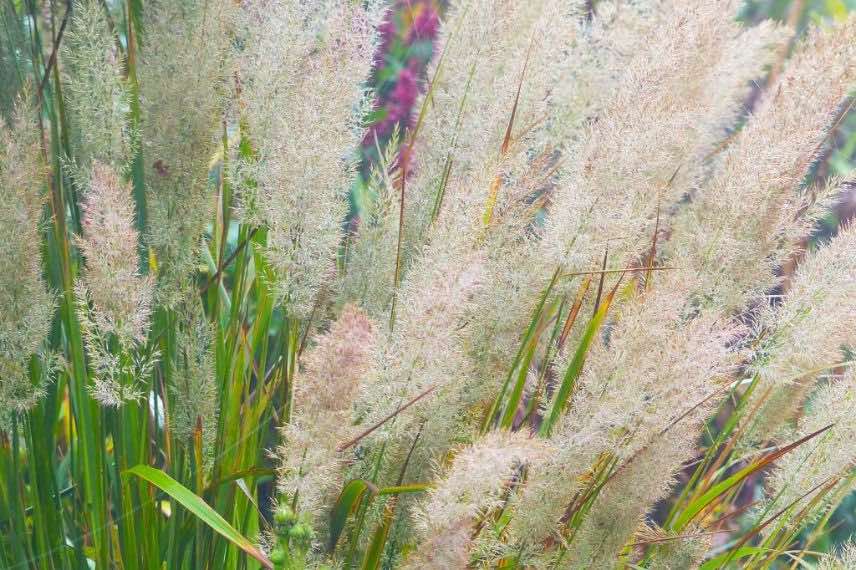
The Calamagrostis brachytricha - Diamond Herb
The Calamagrostis brachytricha, also called Diamond grass, is a large grass 1 metre high, with upright stems bearing narrow, graceful leaves, green tinged with bronze-coloured highlights. Purple inflorescences appear from August to October and take on blond hues that catch the light spectacularly. Hardy down to −29 degrees, it favours sun and partial shade as well as a cool soil. Its foliage is deciduous.
It dresses borders with great elegance and helps create a natural atmosphere alongside tall plants with a natural or wild appearance, such as coneflowers or the Buenos Aires verbenas.
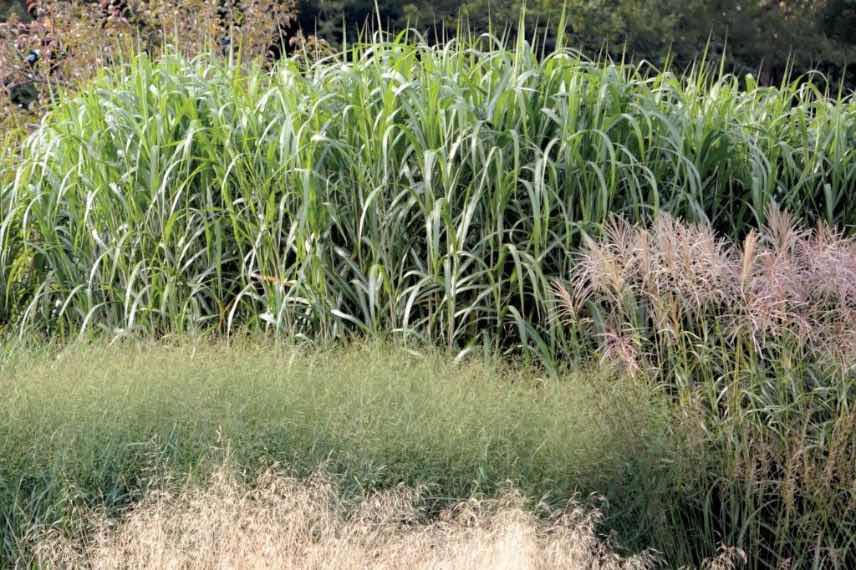
The Miscanthus giganteus — giant Chinese reed
The Miscanthus giganteus or giant Chinese reed is one of the very large grasses and can reach up to 3 metres in height. Not only impressive for its height, it is also notable for its hardiness as it withstands cold down to −29 °C. It forms vertical clumps of ribbon-like, arching leaves. The foliage, pale green with a slight bluish tint, displays a silvery central vein. In winter it takes on blond and brown tones. From October to November its supple stems are topped with silver spikes 20 cm long, which are wonderful in cut flower arrangements. To thrive, this plant needs fresh, deep soil, but not fertile. It requires space, but is not invasive.
This grass is used in a border to give structure or can be planted as a specimen on a lawn. Give it companions such as cosmos, perovskias or asters.
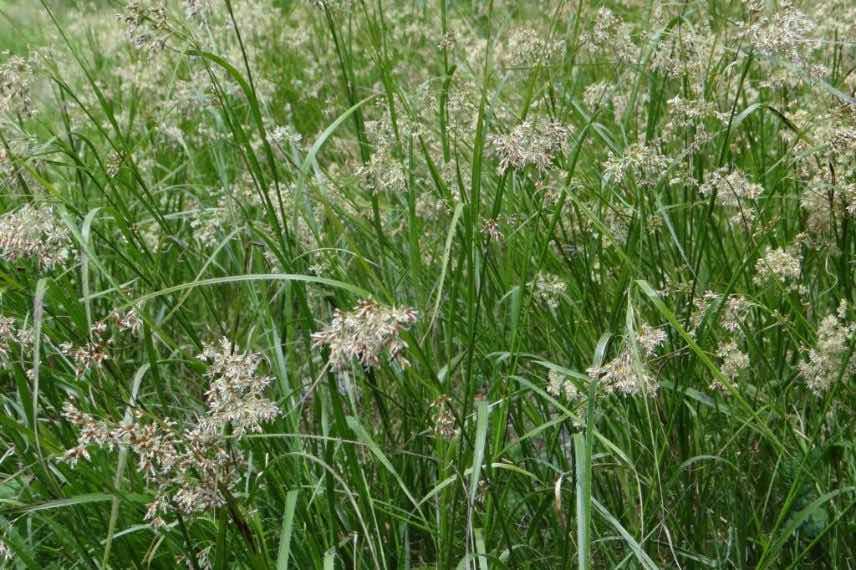
Luzula sylvatica - Greater wood-rush
Hardy down to -29 degrees, the Luzula sylvatica – woodrush is a small 30 cm tall groundcover grass. These broad evergreen leaves are edged with bristles and coloured a very bright light green. It is perfect for brightening shady spots in the garden. Flowering occurs from April to June in the form of delicate panicles with small brownish spikelets. Its inflorescences have brown, bronze and golden highlights. It establishes itself in shade or partial shade in fresh soil.
It is an excellent perennial for dry or damp shade, perfect for adorning the base of deciduous bushes. It also pairs well with camellias or hibiscus.
Anthoxanthum odoratum - Sweet Vernal Grass
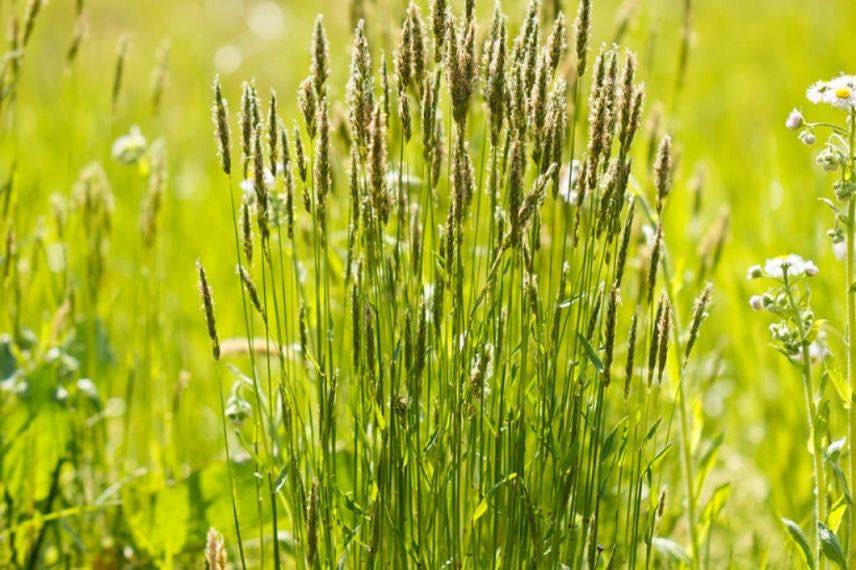
The Anthoxanthum odoratum – Sweet Vernal Grass also withstands severe cold down to −29 °C. This grass grows up to 45 cm tall, in small tufts of erect, narrow, fine leaves. It is found in meadows, woods and pastures. It can be cultivated as a forage plant and gives off a hay-like scent. The glaucous green foliage in spring and summer turns straw-yellow in winter. From May to July it bears 5–7 cm inflorescences, spikelets initially yellowish‑green, turning straw‑yellow in autumn.
This hardy plant establishes itself in rock gardens, in full sun or partial shade, in poor, slightly acidic soil. It is ideal for dry gardens and pairs well with fescues.
Other grasses also prove very cold-hardy. This is the case for Carex atrata – mountain sedge (down to −34 °C), Carex sylvatica – wood sedge (down to −29 °C), Alopecurus pratensis ‘Aureovariegatus’ (down to −29 °C). Pampas Grass would have been a natural inclusion in this selection, but it is now banned from sale because it appears on the list of invasive plants.
- Subscribe!
- Contents
Comments