





























Vegetables and fruits to nibble in the vegetable garden
Quickly harvested, quickly eaten. Our suggestions for a pick-and-eat vegetable garden.
Contents
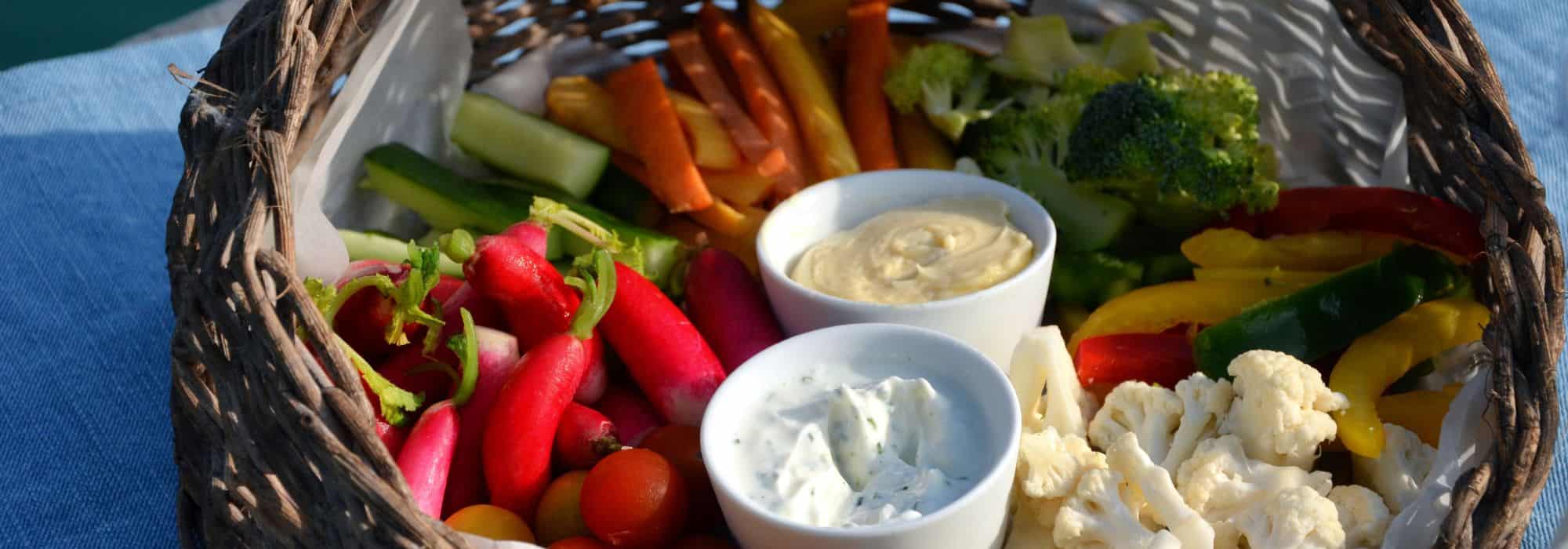
Etymologically speaking, to nibble means to take a few bits of food here and there to snack on the go, like a little bird. If you nibble in front of the fridge, it’s a gateway to extra pounds. However, nibbling in the garden is a true pleasure. For a fruit or a vegetable, harvested from the vegetable patch, washed, and eaten immediately, holds a unique flavour and aroma. Similarly, these small fruits or vegetables that grow in our vegetable garden and are eaten raw form the basis of an aperitif with friends, all in a natural and spontaneous way. A few dips, a sprinkle of fleur de sel, and the aperitif is served!
Discover with us these fruits and vegetables that allow for nibbling in the vegetable patch.
You can also preview them by browsing our spring 2023 catalogue. Head to pages 58 and 59.

Vegetables to nibble on the go
Des amis dropping by unexpectedly for drinks? Not keen on serving the usual crisps, biscuits, and salted peanuts, or even the classic slices of sausage? How about a quick trip to the vegetable garden to offer a healthy and light aperitif that will delight your guests’ taste buds?
After all, what could be better than nibbling on small vegetables with a good glass of wine (in moderation, of course)? Freshly picked, rinsed for just a few minutes, these little vegetables go straight from the garden to the plate. Crisp, colourful, packed with fibre, vitamins, and minerals, they also have the advantage of being low in calories. You can therefore munch on them guilt-free and enjoy their unique flavour, unbeatable freshness, and nutritional benefits.
In mini form, these vegetables can be served as they are, simply accompanied by a sprinkle of fleur de sel, or a light sauce made from yogurt or cheese, enhanced with lemon or a few leaves of aromatic herbs like chives, basil, or mint, all straight from your garden.
Cherry Tomatoes, a Must-Have on the Table
Is it really possible to skip the small cocktail tomatoes at aperitif time? With their sweet and tangy flavour, cherry tomatoes are very easy to grow in the garden, productive, and full of sunshine. Plus, with just a few plants in the vegetable garden, or even on your balcony or terrace, you can play with colours, shapes, and flavours. Our selection includes:
- The ‘Sweetbaby’: the smallest of the cherry tomatoes, but it compensates for its size with an unmatched sweet and fragrant flavour!
- The ‘Sweetie’: a small cocktail tomato with a sweet flavour, ideal for small spaces like balconies due to its limited spread.
- The ‘Yellow Grapes’: a tomato with tiny yellow fruits that grow in clusters.
- The ‘Osu Blue P20’: this Peruvian tomato is sure to impress your guests with its almost black blue fruits.
- The ‘Poire jaune (Yellow Pearshaped)’: this heirloom variety with excellent yield produces yellow pear-shaped fruits.
Crisp and Colourful Radishes
Crisp and crunchy, radishes can be enjoyed straight from the ground and washed. Don’t hesitate to keep the tops to make a pesto and offer fresh radishes to your guests, simply accompanied by a knob of salted butter or a few pinches of fleur de sel. And in the garden, they are champions of rapid growth!
As with tomatoes, play with colours and shapes:
- Colourful round radish mix: reds, white-tipped reds, yellows, purples, and whites… Perfect for adding colour to your aperitif!
- 18-day radishes: super fast growth for long radishes that can be sown from February to October.
- The ‘Rouge Saxa 2’: round and bright red, this radish is very tasty.
Snap Peas
Young peas can be eaten raw, as they are still low in starch. How about offering fresh, bright green peas, just out of their pods? You can even make the aperitif more interactive by letting guests shell their own pods!
- The ‘Pois nain Douce Provence’: this variety is very productive and offers beautiful long pods with 7 to 9 round green peas.
- The ‘Plein le Panier’: its name hints at its productivity. This variety produces slightly square and flattened peas.
Mini Peppers
Lovers enjoy crunching on raw peppers. To make preparation easier, choose varieties that produce miniature peppers.
- The ‘Chocolate Bell’: the peppers from this variety are small and a lovely chocolate brown colour.
- The ‘Balconi’: this variety produces mini red horn-shaped fruits with a sweet flavour. Ideal for small spaces.
All the Mini Carrots
Carrots are delicious cut into small sticks for dipping in a sauce. You can make it even simpler with round baby carrots, which can be bitten into in one go.
- The ‘Marché de Paris’: a variety of carrot with small tender and tasty roots.
Tomatillos and Cucamelons to Discover
If you want to surprise your friends, opt for slightly unusual fruit-vegetables. Besides the questions they raise, they allow for the discovery of new flavours.
- The Cucamelon or Melothria: a climbing vegetable plant that produces pale green striped fruits with a flavour similar to cucumber.
- The Purple Tomatillo: a vegetable plant with fruits that are a cross between a tomato and a physalis.
Read also
Radish: sowing, growing, harvestingSnackable fruits in the vegetable garden
Often, birds are the first to come and peck at these little sugar-filled fruits that grow in the garden. But you’re not the most generous! So hurry to the vegetable garden to pick these fruits that should delight the whole family. Easy to harvest and easy to enjoy, they bring joy to both little ones… and adults.
Strawberries, impossible to do without!
Whether you have a vegetable garden or just a terrace or balcony, strawberries grow everywhere. Heralds of spring, they add a bit of sugar and sunshine to our lives. And for those who love to multiply flavours, why not try wild strawberries or strawberries in more surprising colours:
- ‘Alexandria’: a wild strawberry that produces intensely flavoured fruits
- ‘Ciflorette’: a non-repeat flowering variety with excellent tasting strawberries
- A collection of 3 strawberry plants: ‘Famberry’, ‘Cherry Berry’, and ‘Pineberry’: different colours, aromas, and flavours
Physalis, hypervitamin fruits
The Physalis, also known as Cape Gooseberry or Coqueret, is a perennial plant grown as an annual, offering yellow to orange fruits encased in a calyx from August to October. This plant can be cultivated in both vegetable gardens and ornamental gardens.
- ‘Goldita’: produces large yellow-orange fruits
- Physalis peruviana: its large, tangy fruits can reach the size of a small apricot
Kiwis, packed with vitamins
Kiwis are the fruits of Actinidia deliciosa, a voluble liana native to China. To obtain fruits, it is necessary to plant a male and a female plant. However, increasingly, self-fertile varieties like Kiwi arguta ‘Issai’ are available, offering smooth green fruits tinged with red. These kiwis can be enjoyed without peeling.
As for the variety ‘Jenny’, also self-fertile, it produces fruits with bright green flesh.
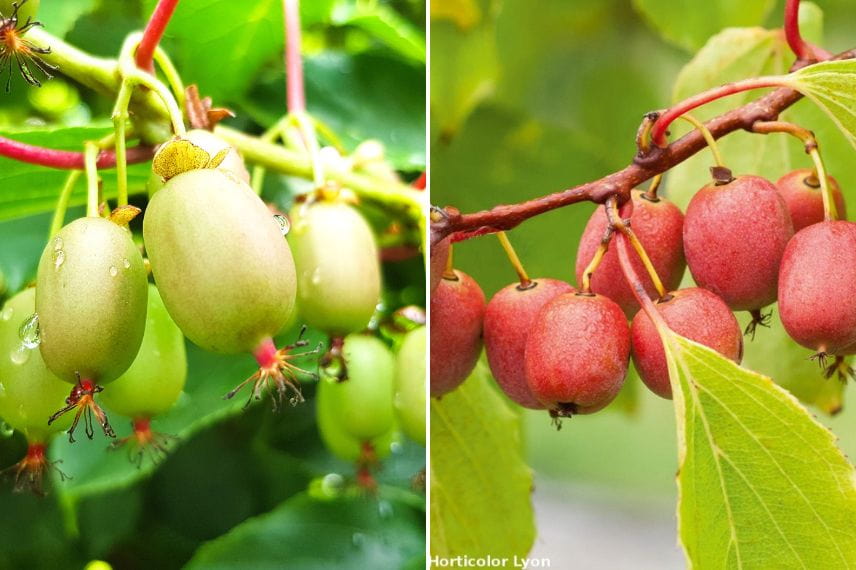
The kiwi arguta ‘Issai’ and the kiwaï ‘Ken’s red’ (©Horticolor Lyon)
Kiwaïs, straight from Siberia
A cousin of the kiwi, the kiwaï is a fruit with smooth skin (which is edible), smaller than the kiwi, often green with red speckles. A male and a female plant are needed to produce fruits. We offer a pre-formed duo of kiwaïs that will produce fruits with red skin and flesh.
Peanuts from the vegetable garden to create a surprise.
If you want to leave your guests speechless, simply say, as naturally as possible: “I need 5 minutes, I’m going to get some peanuts from the garden!” Because yes, peanuts, seeds of the peanut plant, are easy to grow in the garden.
The peanut is indeed an herbaceous plant that produces pods, which have the unique characteristic of burrowing underground to form its fruits, the peanuts. They are harvested like tubercles.
Peanut plants are planted directly in the ground in regions with a mild climate, and in pots elsewhere. 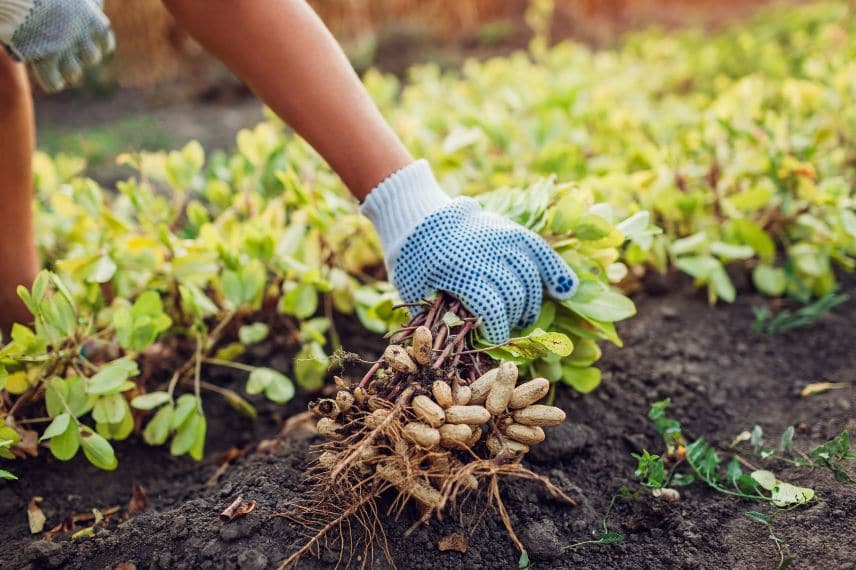
- Subscribe!
- Contents
Comments