





























Which vegetables to grow in summer?
Summer is a season conducive to late sowing and planting, as well as autumn and winter vegetables
Contents
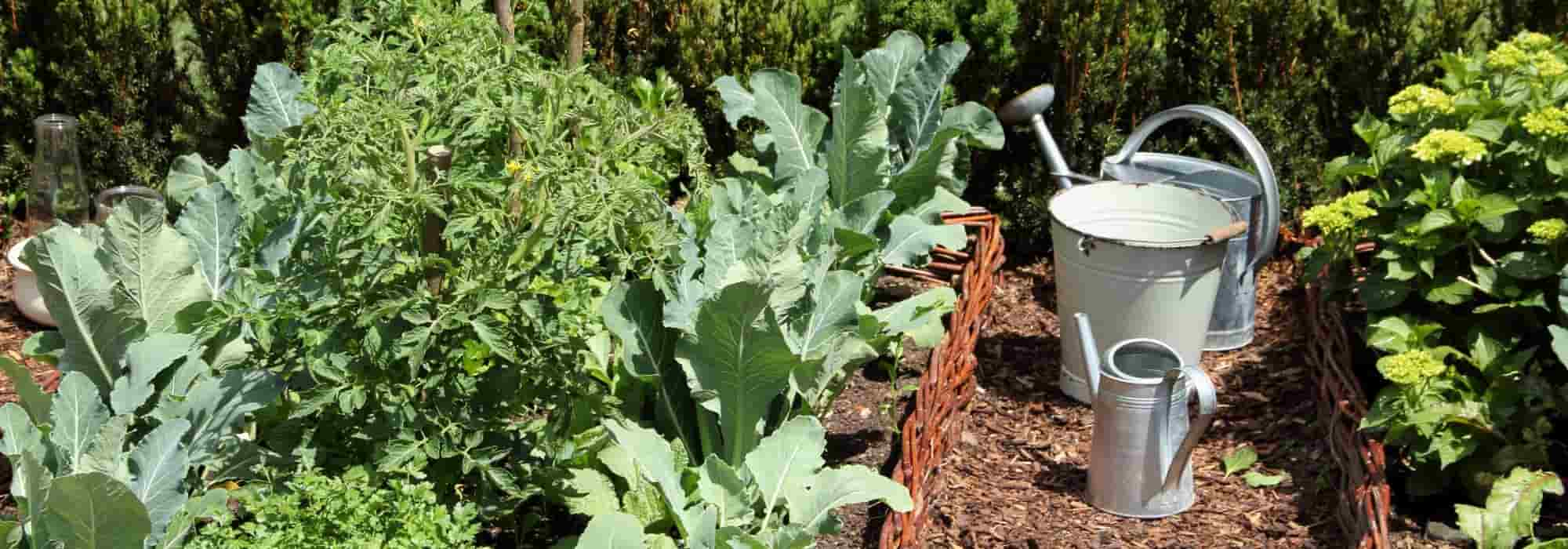
21st of June, summer is here. The soil is warm, and the sun’s rays are scorching. The vegetables sown or planted in spring are starting to produce, and you have already harvested and enjoyed some tomatoes and courgettes, beans, and new potatoes… While the season is mainly about relaxation, you are already spending a lot of time watering your vegetable garden. Indeed, for several years now, with climate change, an increasing number of regions are experiencing early heatwaves and recurring droughts. The lack of water can change the way you grow your vegetable garden. It is therefore imperative, to grow your vegetable garden in summer, to properly nourish your soil in advance, to mulch generously, to provide shade if necessary, to water at the right time and in the best way, and above all, to cultivate varieties suited to the season.
Let’s explore together which vegetables to sow or plant in summer to ensure bountiful harvests by September, in autumn, and even throughout winter for some vegetables.

Root vegetables to grow in summer
Root vegetables are certainly the ones that cope best with heat due to their cultivation methods. Moreover, they require minimal care, meaning less work during a time when it’s more pleasant to nap in the shade than to weed in the vegetable garden! Additionally, these vegetables benefit from a longer growth period, allowing for harvest throughout autumn and even storage in winter.
Black Radishes and Winter Radishes
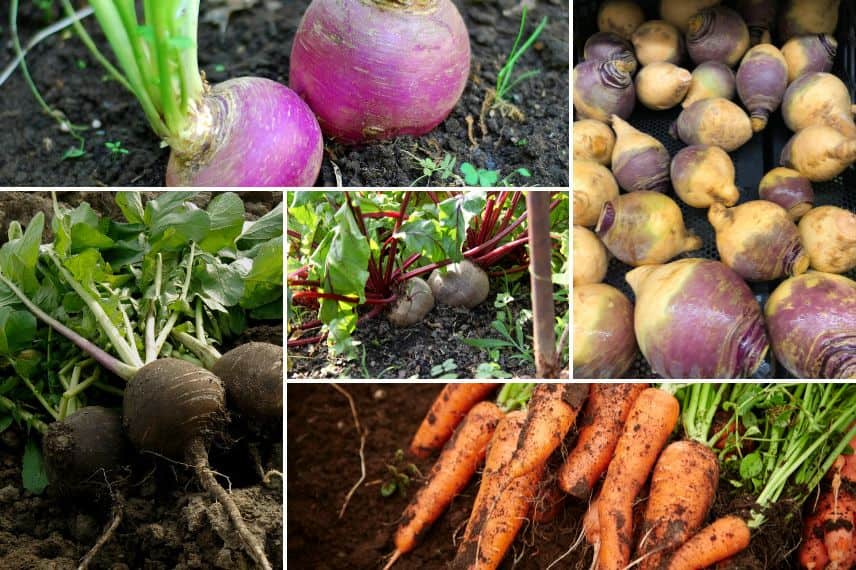
The black radish is a typical winter vegetable with a taproot that is round or elongated, featuring a pure white flesh. The black radish has a rough skin and a very distinctive spicy flavour. Relatively tolerant and easy to grow, black radish is sown in light, deep, cool, and rich soil. As for the harvest, it spans from October to frost. To expect a yield of black radishes, you must start sowing as early as June. This sowing can continue until the end of August, every two to three weeks, to achieve staggered harvests.
To ensure a bountiful harvest, it is essential to keep the soil consistently moist. This is why watering is recommended throughout the summer, along with mulching.
Feel free to vary the varieties by choosing from:
- The black radish ‘Gros rond d’hiver’
- The radish ‘Long maraîcher’
- The white Daikon radish ‘Mino Early’, a cousin of the black radish
- The winter radish ‘April Cross’ with white roots
- The Chinese winter pink radish
How to sow?
- Draw furrows spaced 25 cm apart and 2 cm deep
- Place a black radish seed every 15 cm
- Cover with fine soil and firm down with the back of a rake
- Water gently
It is also possible to sow small radishes every month until September, provided they are well watered. Without watering, radishes become hollow and pungent.
Turnips
The turnip, a root vegetable from the Brassicaceae family, is a traditional winter vegetable, although some varieties can be grown as early crops. To enjoy turnips as early as October, it is essential to sow them from July to August. You should favour varieties such as ‘Jaune boule d’or’, ‘Auvergne tardif’, the ‘Blanc dur d’hiver’, and the ‘Plat de Hollande’ turnip…
Turnips should be sown in light, rich, and cool soil, free from lime, preferably in full sun. The soil must be well worked and loosened. Likewise, radishes should be watered regularly. Mulching is recommended to space out watering and avoid weeding.
Feel free to consult my article: How to choose turnips? and the turnip cultivation sheet. by Aurélien
Rutabagas
An ancient vegetable, the rutabaga produces a large root with white flesh reminiscent of turnip but more swollen. Although it still suffers from a poor reputation due to its consumption during the Second World War, it deserves a prominent place in the vegetable garden. It has a pleasant nutty flavour. It is mainly consumed cooked in stews or raw in salads.
The rutabaga thrives in all types of soil as long as they are cool, fertile, and rich in humus. The soil should be deep and the location sunny. As it is sensitive to drought and periods of intense heat, it is essential to water it well to prevent the root from becoming fibrous. Mulching will help retain moisture.
The rutabaga is sown from May to July directly in the ground. When the seedlings have 4 to 6 leaves, they are transplanted.
For further reading: Rutabaga: sowing, cultivation, and harvest
Carrots
If the sowing of carrots began in spring, it can continue until July. This allows for a late-season carrot crop that will be harvested from September to November as carrots are hardy. Carrots are sown directly in the ground, in deep furrows of 2 cm and spaced 25 cm apart in light, rich, deep, and well-worked soil.
To learn more: Carrot: sowing, growing, and harvesting
Beetroots
Like carrots, beetroots can be sown until July in well-worked, deep, and cool soil, which should have been enriched with manure or compost the previous autumn. Furrows should be spaced 30 cm apart and 2 cm deep. Then, seeds should be sown every 5 cm.
To find out more: Beetroot: sowing, growing, and harvesting
Leafy vegetables to grow in summer
Leafy vegetables are delicate in summer as the scorching rays of the sun can damage their foliage. This is why it is preferable to sow them in partial shade, for example, sheltered by taller-growing vegetables like tomatoes, corn, and Jerusalem artichokes…
 Corn salad, spinach, watercress, rocket, purslane, and salad
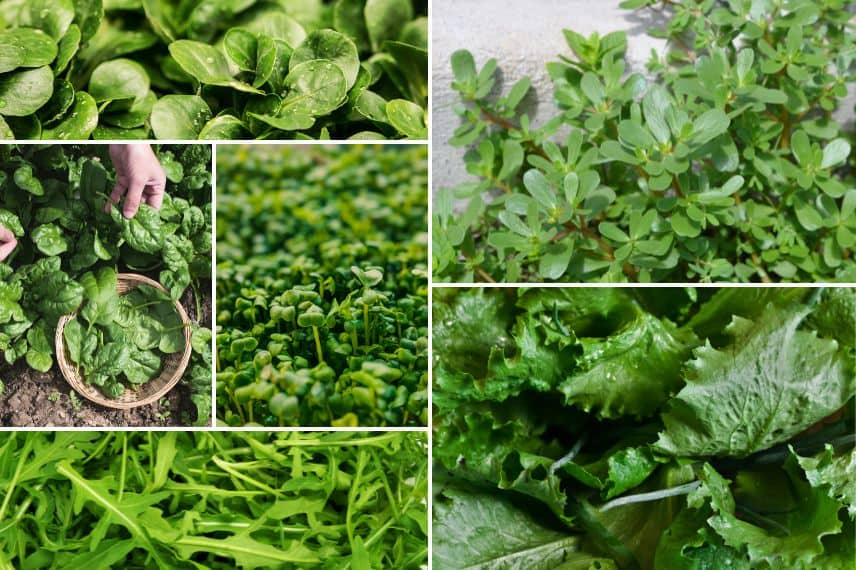
Several leafy vegetables are specifically grown in summer to be consumed in autumn, while others can still be sown.
Corn Salad
Not demanding in terms of soil as long as it is sufficiently compact, cool, and well-drained, corn salad is sown in partial shade, as it truly fears intense heat.
Depending on the varieties, the sowing period varies slightly, which is why it is essential to rely on the instructions mentioned on the packets. The large-seeded varieties (‘Large-seeded Corn Salad’, ‘Dutch Large-seeded Corn Salad’) are sown from mid-July to the end of August, while the small-seeded varieties are sown from late August to October.
To learn more: Corn Salad: sowing, cultivation, and harvest
Spinach
This is a very easy leafy vegetable to grow! However, spinach requires cool, rather rich soil that is high in organic matter. The soil must also be well-drained. It is a vegetable that enjoys temperate climates and fears drought. Therefore, in summer, it is preferable to sow it in partial shade or even in full shade.
The second imperative lies in the choice of variety. In summer, it is essential to sow winter spinach varieties (‘Giant Winter’, ‘Apollo’, ‘Monstrueux de Viroflay’). Sowing of these winter varieties will take place in August and September.
To learn more: Spinach: sowing, growing, and harvesting in the vegetable garden.
Rocket
Rocket can be sown until the end of June, except during periods of intense heat. So, if the summer is rather mild, do not hesitate to sow rocket seeds throughout June, either in rows or broadcast, in well-drained, fertile soil, in a rather sunny location.
To learn more: Rocket: sowing, growing, and harvesting
Purslane
The purslane (Portulaca oleracea) is a fleshy summer vegetable plant with reddish stems, either prostrate or upright, and small, round, thick leaves. These leaves, with a slightly tangy and peppery flavour, can be eaten raw in salads or cooked in soups. To germinate, purslane seeds need warmth. It is indeed a very robust plant that tolerates high heat well. It thrives in dry, light, well-drained soils. Purslane is sown in full sun.
This is a vegetable that requires no specific maintenance.
To learn more: Purslane: sowing, growing, and harvesting
Watercress
The watercress (Lepidium sativum) is a fast-growing land cress with finely divided leaves. It has a rather peppery flavour that works well in salads, soups, or as a garnish for steamed potatoes. Not demanding, watercress can be grown in ordinary soil, even weakened by previous crops, in a rather shady location in summer. Watercress can be sown from March, but sowing can continue in July and August, even into September.
To learn more: Watercress: sowing, cultivation, and harvest
Salads
Several salads can be sown in summer: lettuces, escaroles, and curly chicories. The key is to choose the variety suited to the climatic conditions. Indeed, in summer, salads bolt very quickly as they fear heat.
To make your choice among the salads to sow in summer:
Cabbages to grow in summer
Broccoli, cauliflowers, and curly kales can be sown until the end of June for a harvest from October to February. The Daubenton cabbage or perennial cabbage can be planted until July. However, it is especially the Chinese cabbage that is grown in summer. Indeed, most varieties of Chinese cabbage are sown in July or August in moist, organic-rich soil and in a sunny location. If Chinese cabbages benefit from these growing conditions, the seeds germinate quickly, and the cabbages can be consumed from 45 days after sowing.
I propose a selection of the 6 main Chinese cabbages to grow in the vegetable garden.
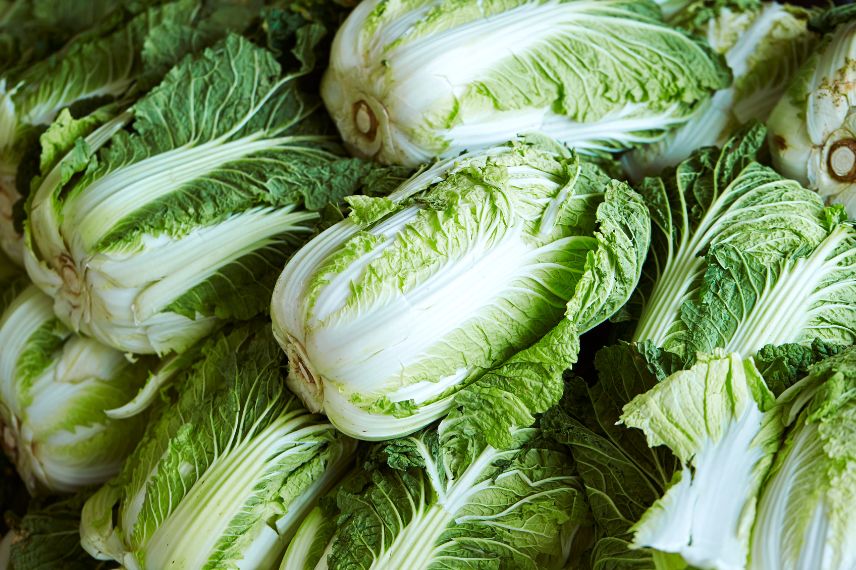
Chinese cabbages are sown in July and August
White onion to sow in August
If the coloured onion is sown in March, the white onion is sown in August, preferably in the second half of the month. It prefers light but firm soils, where no recent fertilisation has been applied. Additionally, the soil must be perfectly drained, as excess water can cause downy mildew.
Sowing is done in rows spaced 20 cm apart. They will be transplanted at the end of September when the young plants are the size of a pencil.
For further reading: Onion: sowing, planting, cultivation, harvest
Squashes and their relatives to sow in summer
Squashes, pumpkins, gourds, jack-o’-lanterns, and other butternuts and potimarrons should be sown either in pots from mid-April to mid-May or directly in the ground from mid-May to mid-July, in fertile soil enriched with compost or manure. Simply make holes 3 cm deep and sow three seeds in clusters.
Once the seedlings are well developed, thin them out to keep only the strongest plant. 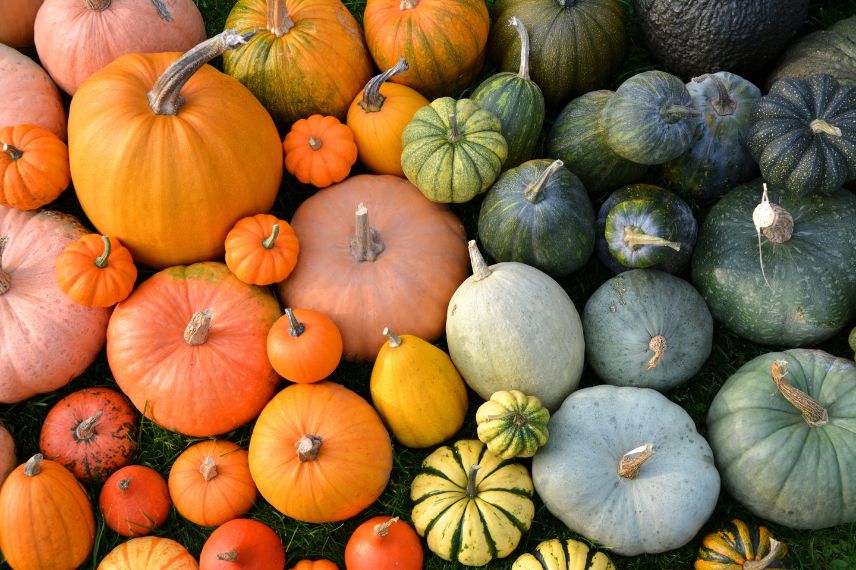
For further reading:
- Sowing and growing squashes, courgettes, pumpkins, and other gourds: it’s easy and it’s now!
- Squashes: sow, plant, grow, harvest
- Subscribe!
- Contents
Comments