


What to sow in spring?
All our tips for successful sowing in the garden
Contents
Beautiful days are just around the corner, and with them, the garden is gradually coming back to life! It’s not just the vegetables in the vegetable patch that need sowing! Give nature a helping hand by doing your own sowing of trees, shrubs, fruit trees, perennial flowers, or annuals! From late February to early March, it’s time to start preparing your ornamental garden for the beautiful season. The months of March, April, and June are crucial for gardening. Just because the cold lingers and the last frosts are still a threat doesn’t mean you shouldn’t start planting. In a sheltered spot or in the garden after the last frosts, you can sow to welcome spring in style. Now is the time to order your seeds and plan your sowing! Discover the sowing tasks to carry out in the garden this spring!

When and how to sow?
You can sow seeds collected from beautiful specimens in nature during your walks or in the garden (discover our tips for making your own seeds). You can also buy seed packets, ensuring you respect the sowing periods. In addition to being an economical technique, home sowing allows you to obtain more resilient plants with a stronger root system. The collected seeds must be mature and well-dried once extracted from the fruits.
Tree seeds only germinate when climatic conditions are optimal. Spring is a favourable season for sowing. However, some seeds require preparation to aid germination: a cold stratification process, which involves placing them in the refrigerator for 1 to 3 months to gently break their dormancy. Discover our advice sheet to learn all about the stratification technique. Others require soaking in lukewarm water for 24 hours before sowing. For sowing, you have two options: sow directly in place when the soil begins to warm up, usually around April, or prepare your plants under cover in February-March, or even in autumn. You will transplant the young plants after the frosts when the root system is well developed.
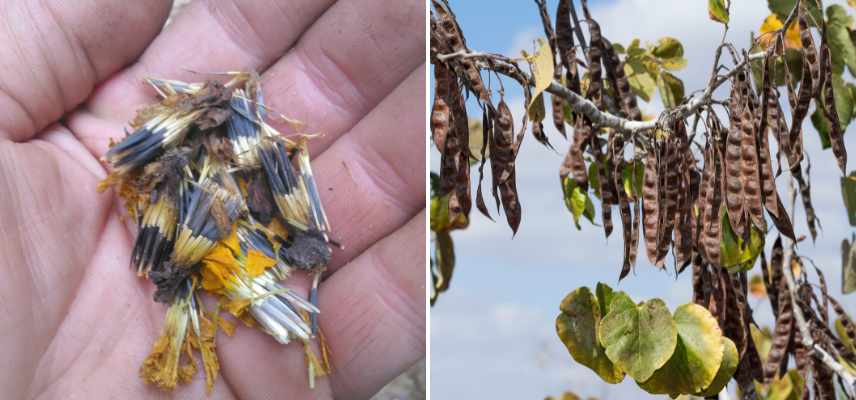
Seed harvesting can be done from both annual and perennial plants as well as trees (here, seeds of marigolds and Judas tree)
Read also
10 tips for gardening on a budgetOrnamental and fruit trees
Have you ever thought about growing your own young plants of trees? Sow an apple tree, a plum tree, or even an oak! Whether deciduous or evergreen, fruit-bearing or ornamental, sowing a tree is very simple. For fruit trees, you will need to wait between three and five years before you can harvest fruit. Among the easiest trees to sow, you will find the oak, the common ash, the hornbeam, beech, the birch, pines, the maple, alder, dogwood, black locust, crape myrtle, mulberry, hazel, pear, apple tree, plum tree, almond tree, apricot tree, cherry tree, or even a peach tree.
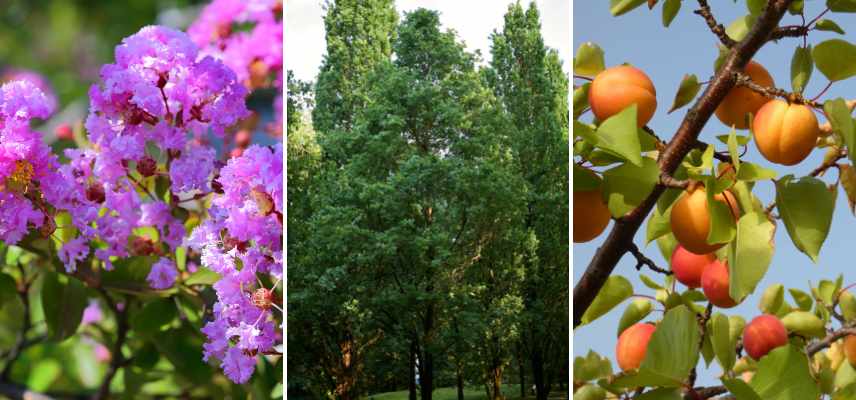
Crape myrtle, Oak, and Apricot tree
Hedge plants
Persistent hedge shrubs or deciduous ones allow you to quickly create pleasant screens, windbreaks, flowering hedges, or small borders depending on their height. You will choose based on your climate and needs (fast growth, coastal, flowering, trimmed, with decorative foliage…). Deciduous bushes such as Buddleia, weigela, Japanese quinces, Deutzias, Hibiscus, black locust or false acacia, Pyracantha, or Cornus are good candidates for spring sowing. For evergreens, consider Eleagnus, Pyracantha coccinea, hornbeam, cotoneaster, Ligustrum japonicum or Japanese privet, or even barberry.
→ Get inspired on our blog by discovering our tips for creating a magnificent flowering hedge!
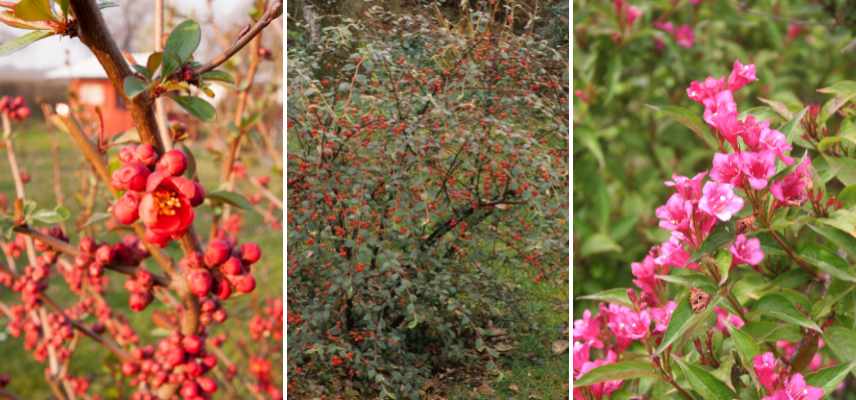
Japanese quince, Cotoneaster, and Weigela
Ornamental shrubs
Flowering bushes, with decorative habit, for small gardens, fragrant, with striking foliage, once again in the range of bushes intended for your flower beds or to plant in isolation, the choice of species is vast. You will choose your bush by variety, by type of soil, by flowering period, by colour, according to its size or your climate, to plant in the garden at the back of a flower bed, in a hedge, in solitude, or in a pot. Evergreen bushes will remain decorative all year round and will provide a permanent plant structure to your garden. Among the easiest ornamental bushes to sow, you will have plenty of options including: buddleia, callicarpa, Albizia, broom, hibiscus or althea, coronilla, callistemon or bottlebrush, camellia, caramel tree, Judas tree, acer, Mahonia, eucalyptus gunnii, serviceberry, or florist’s mimosa (Acacia dealbata).
→ Discover our wide range of shrubs!
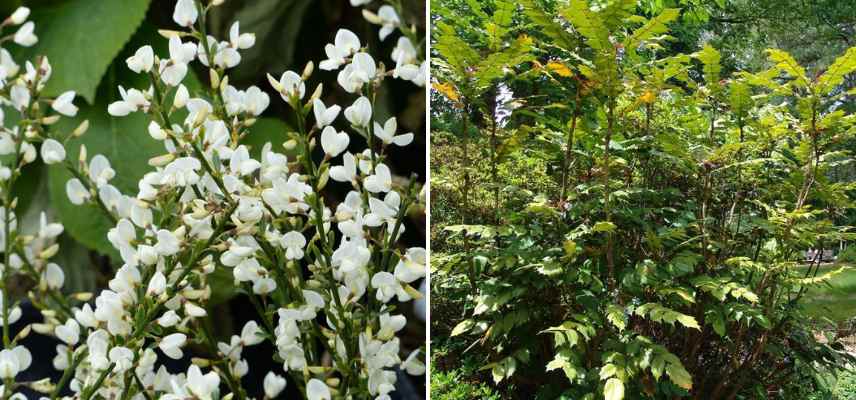
White broom and Mahonia x bealei
Climbing plants
For flowering as early as summer, sow your climbing plants in spring! However, some may take several years before they bloom, so be patient! To flower, add colour, or green your facades, fences, pergolas, and arbors, climbing plants are essential. They are also useful for hiding an unsightly wall or screening an annoying view. Annual climbing plants, such as Ipomoea, Sweet Pea, climbing Nasturtium, or Black-eyed Susan are perfect for creating a floral display in no time. Evergreen or perennial climbing plants like wisterias, some passionflowers, or honeysuckles also sow very well at the beginning of spring.
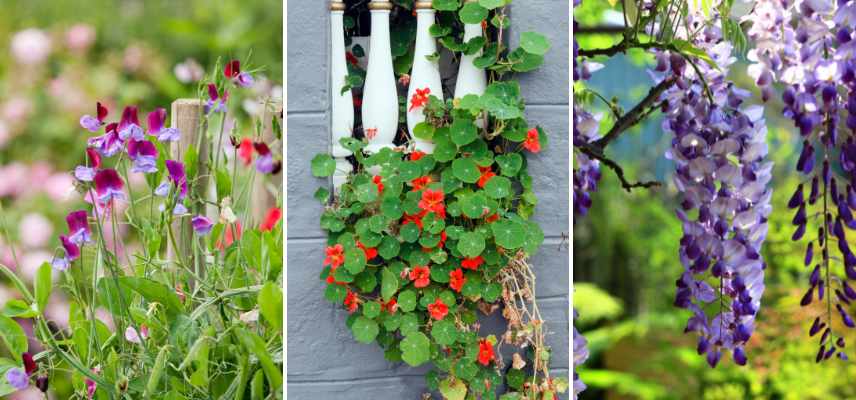
The result will be quick with annual climbers (sweet pea and nasturtium), but patience is required for a climber like wisteria.
Perennials
Perennial plants have the advantage of staying in place for several years, returning faithfully every year. With original flowers and more classic flowerings, they invite colour, texture, or fragrance to your garden for many years. Many perennial flowers can be sown. They are sown directly in the ground in spring, or a little earlier under cover at the end of winter. Columbines, coreopsis, gaillardias, oriental poppies, perennial flax, gaura, oxeye daisy, hollyhocks, rudbeckias, or lupins, not to mention herb plants. Sowing perennial flower seeds allows you to create beautiful lasting displays at a lower cost than if you were to buy young plants.
→ Discover all our perennial flower seeds!
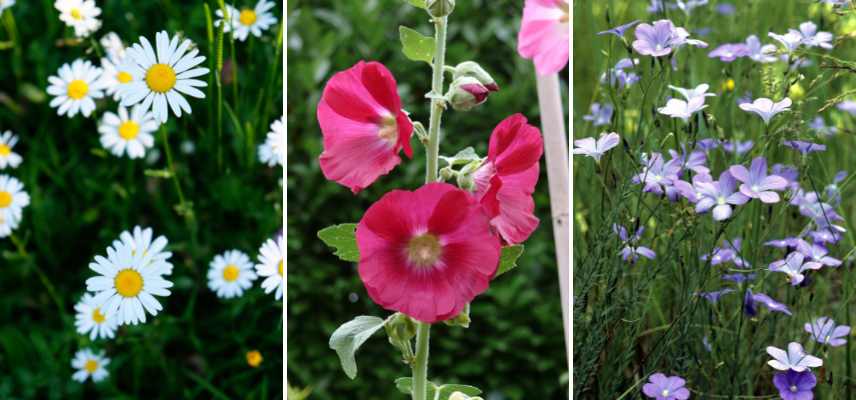
Leucanthemum, hollyhock, and perennial flax
Annuals and biennials
The annual varieties are generally easy to grow. Annual flower seeds, depending on their hardiness, can be sown directly in the garden when the soil warms up and the risk of frost has passed, or started in trays under cover and then transplanted outdoors. With them, it’s effortless to achieve flowers for 7 months out of 12, from April to October! They fit perfectly into summer borders among perennials or along edges, as well as in pots or window boxes to brighten up gardens, terraces, or balconies, sometimes until the first frosts. Ageratum, sweet alyssum, amaranth, marigold, sweet William, begonia, bacopa, calendula, nasturtiums, cornflowers, chrysanthemums, cosmos, foxgloves, lobelias, sunflowers, or even nigella ensure continuous flowering from summer to autumn and are unmatched for brightening up the beautiful season.
Biennial plants like pansies, daisies, forget-me-nots, wallflowers, and other primroses can be sown as early as late winter to flower in the garden as soon as the nice weather arrives. Their life cycle is shorter, but they deserve a prominent place in borders, beds, and window boxes.
⇒ Virginie’s tip: mix biennials with annuals and perennials to extend the flowering period and maintain floral displays for longer.
→ Find all our tips and advice for successfully sowing annual seeds: how to do it right, in the ground or in trays.
→ Discover everything you’ve always wanted to know about biennial plants.
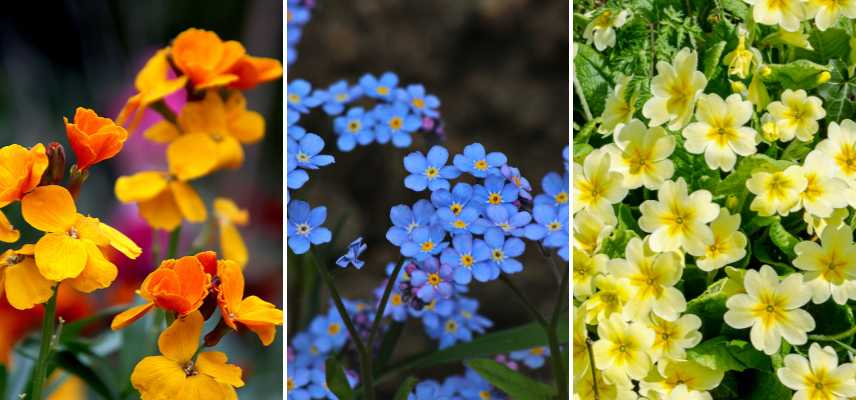
Wallflower, forget-me-not, and primroses
- Subscribe!
- Contents

Comments