





























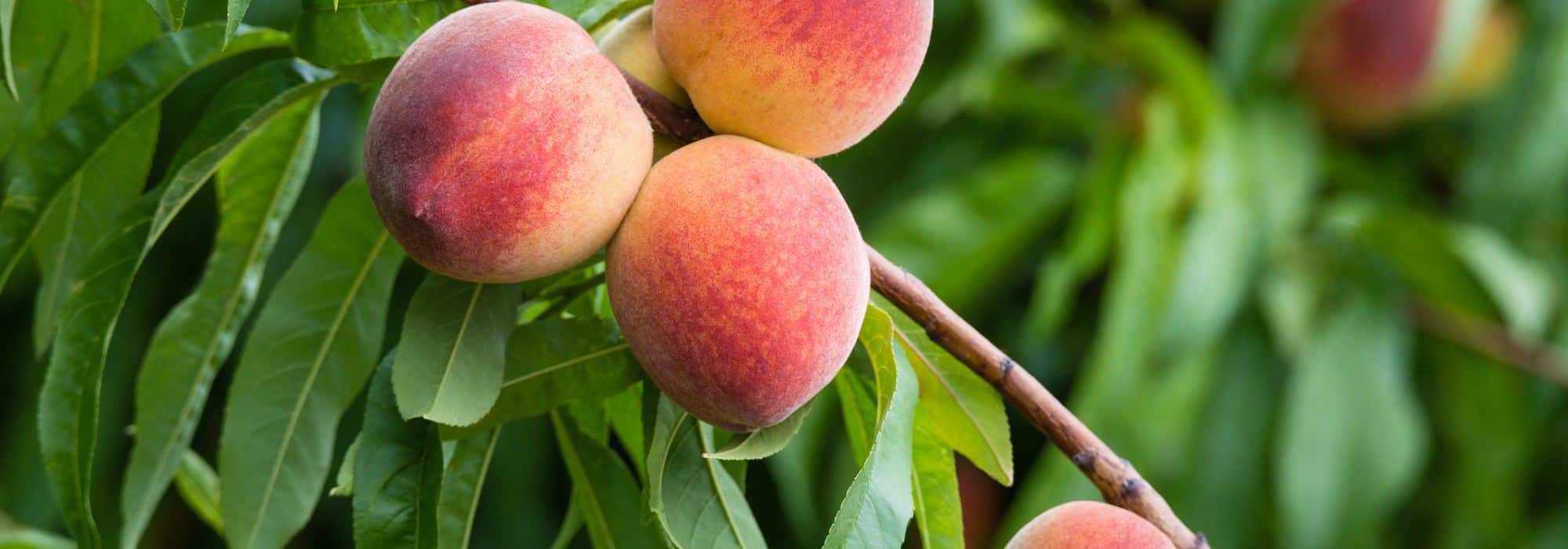
Which fruit trees bear fruit the fastest?
Our selection and tips for producing beautiful fruit quickly
Contents
I’m not telling you anything new when it comes to gardening, patience is often required, especially when it comes to growing fruit trees. However, waiting for the first harvest can sometimes seem endless to many gardeners. Fortunately, some fruit trees stand out for their ability to bear fruit quickly, offering a harvest (sometimes) as early as the second year after planting for the enthusiastic gardener. Nevertheless, choosing the species isn’t everything (you can’t stomp your feet or look down your nose either)! The tree’s pruning at purchase and proper planting also influence rapid fruiting.
In addition to presenting early-fruiting fruit trees in terms of the speed of fruiting, we will offer practical tips for choosing the right tree, planting it, and looking after it, to maximise your chances of abundant and early harvests.

Top fast-fruiting fruit trees
When you want to harvest fruit without waiting for years, some fruit trees and specific varieties stand out for how quickly they come into production. Here is a (non-exhaustive) list of a few early-fruiting fruit trees:
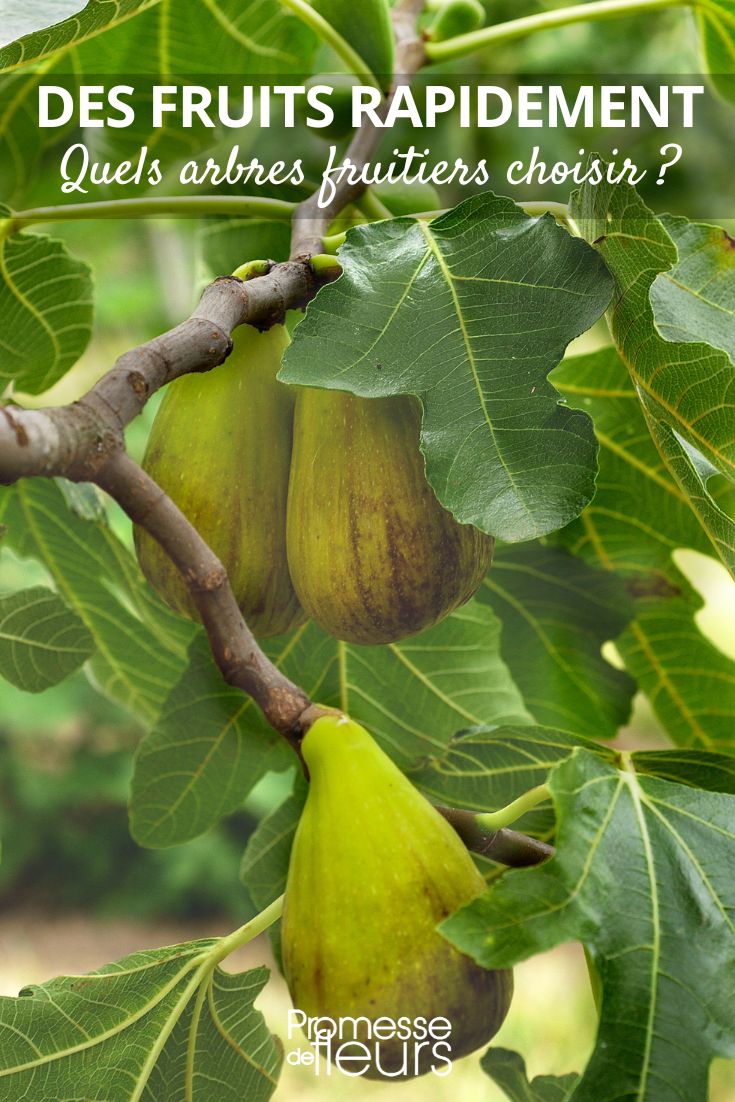
The fig tree: fruiting as early as the second year
- Fig trees are renowned for their rapid growth and their ability to bear fruit in the first or second year after planting.
- Generally undemanding, they adapt to different climates and they are particularly drought-tolerant once established.
- Varieties such as
‘Brown Turkey’ and ‘Icecrystal’ can bear (a few) fruits in the first year after planting (and with careful care from a thoughtful gardener). These varieties are valued for their resilience and ability to adapt to different climates, including cooler areas if sheltered during winter.
→ Find our fig trees and our articles: “Fig tree: planting, pruning and maintenance” and “Fig tree: how to choose the right variety?
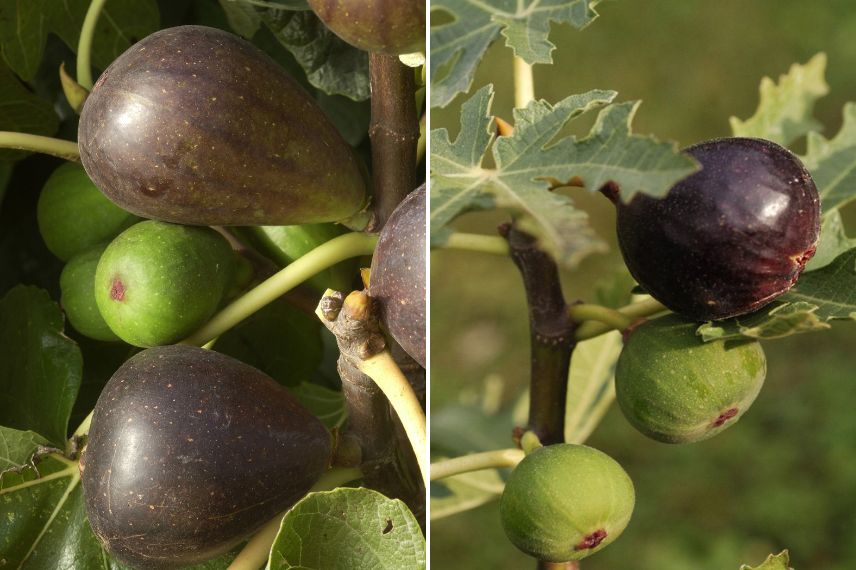 Figs of ‘Brown Turkey’ and ‘Icecrystal’</caption]
The apple tree: a classic easy-to-grow
-
- Some apple trees can begin bearing fruit in 2 to 3 years after planting, especially if you opt for early varieties or dwarf rootstocks that encourage faster maturation.
-
- There are many apple varieties. They are suited to temperate regions, but some varieties are, for example, resistant to scab for damp regions, others to late blooming for cold regions, or drought-tolerant for warmer regions. In short, the apple tree can be planted (almost) anywhere in France if you choose varieties that suit your region.
→ Find our apple trees and our articles: “Apple tree: planting, pruning and care” and “Apple tree: how to choose the right variety?
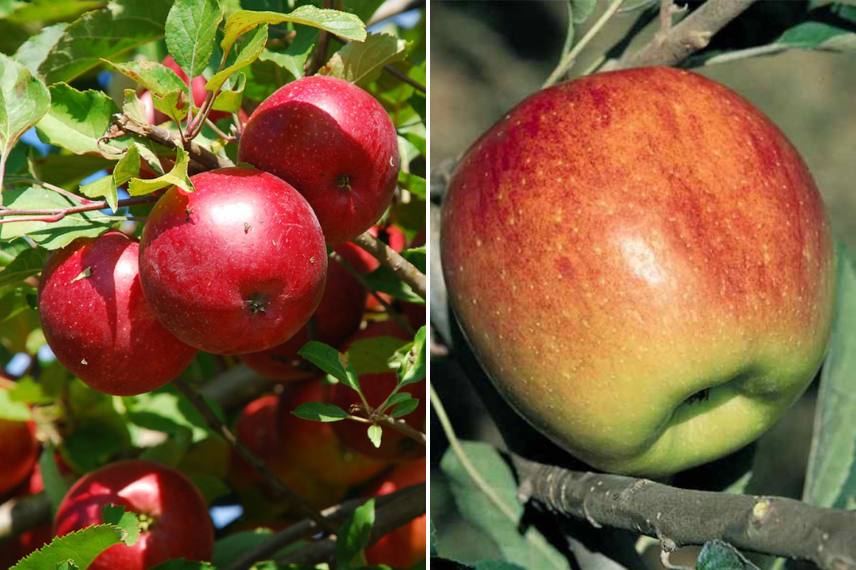 Apples ‘Gala’ et ‘Fuji’</caption]
The cherry tree: fruiting from the second year
-
- Cherry trees are among the first fruit trees to flower in spring, and some varieties can bear fruit quickly, often within 2 to 3 years after planting.
-
- Rather hardy, they adapt to almost all regions if given a sunny location and well-drained soil. But beware late frosts that can damage flowering.
-
- Sweet cherry varieties, such as
‘Burlat’ and ‘Stella’, can begin bearing fruit three years after planting. ‘Stella’ is particularly interesting as it is a self-fertile variety, meaning it does not require another cherry tree nearby for pollination (though the presence of a pollinator improves yield).
- Sweet cherry varieties, such as
→ Find our cherry trees and our articles: “Cherry tree: planting, pruning and maintenance” and “How to choose a cherry tree”
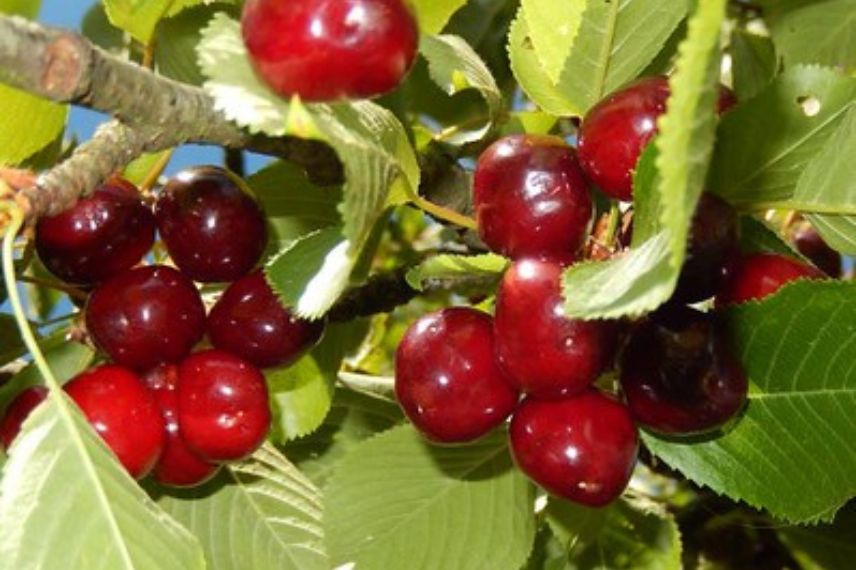
Cherry tree ‘Burlat'</caption]
The apricot tree: drought-hardy
-
- Apricot trees are known for their rapid production, with some trees beginning to bear fruit in the second or third year.
-
- They prefer warm, sunny climates. They can be sensitive to late frosts, which requires careful variety and site selection.
-
- For quick fruiting, apricot trees ‘Précoce de Saumur’ and ‘Royal’ are solid choices. These varieties can offer fruit from the second year if conditions are favourable.
→ Find our apricot trees and our articles: “Apricot tree: planting, pruning and care” and “our comprehensive buying guide for choosing an apricot tree.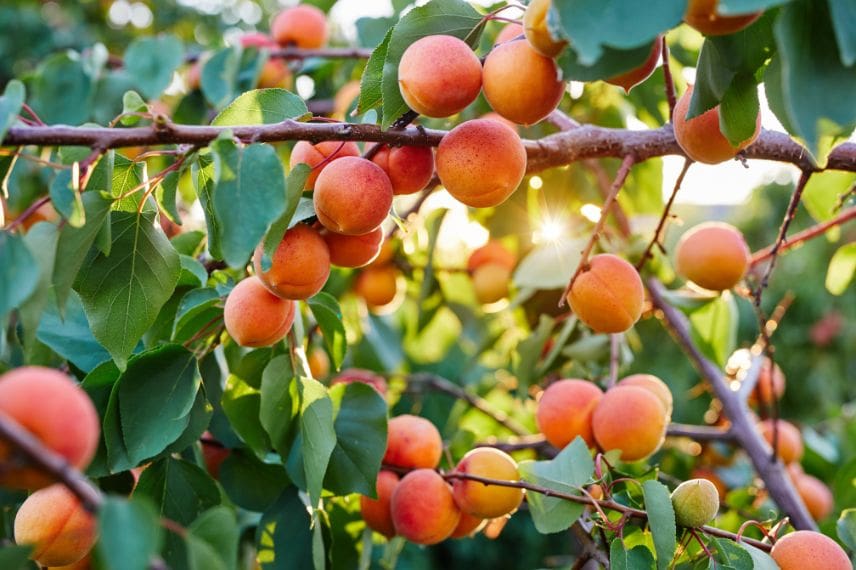 Apricot tree
The peach tree: ideal for hot climates
- Peach trees can also offer rapid production, with juicy, sweet fruits, from the third year after planting.
- These fruit trees thrive in hot, sunny climates. They do however require particular care to avoid damage from late spring frosts.
- For those aiming to harvest peaches as early as possible, the varieties ‘Redhaven’ and ‘Bonanza’ (a dwarf variety) are excellent choices. ‘Redhaven’ is valued for its disease resistance and climate versatility, while ‘Bonanza’, thanks to its compact size, is ideal for small gardens or container growing.
→ Discover our selection of peaches and our dedicated articles: “Peach tree: planting, pruning and harvesting its fruits” and “How to choose a peach tree or a nectarine tree?”
[caption id="attachment_250350" align="aligncenter" width="856"]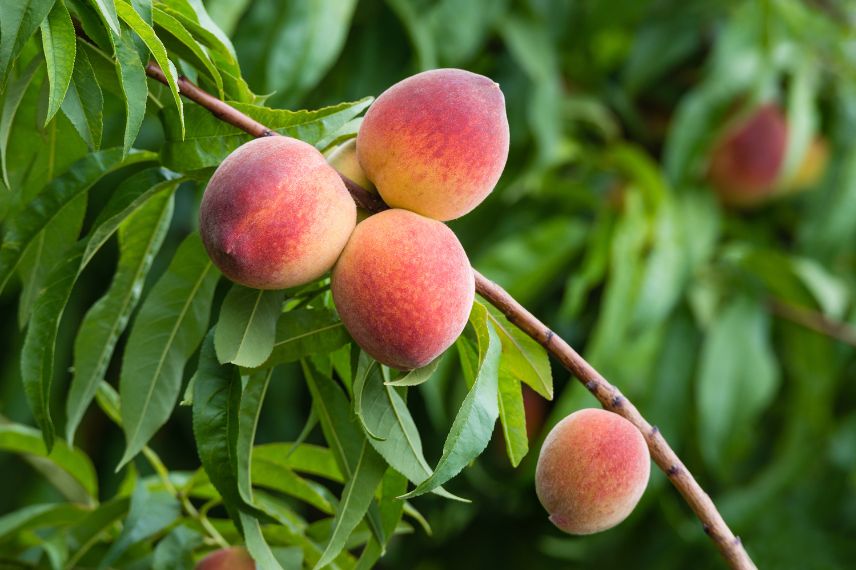 Peach tree
The plum tree : rapid growth and abundant production
- Plum trees are renowned for relatively rapid production, with varieties that begin bearing fruit in 3 to 4 years after planting.
- Adapted to a wide range of climates, they are less sensitive to late frosts than other fruit trees.
- Among early-fruiting varieties, ‘Mirabelle de Nancy’ is famous for its small, sweet plums, ideal for eating fresh or for turning into jams and preserves.
→ Find our range of plum trees and our articles “Plum tree, Mirabelle plum tree: planting, pruning, harvest” and “ Plum tree: how to choose the right variety?
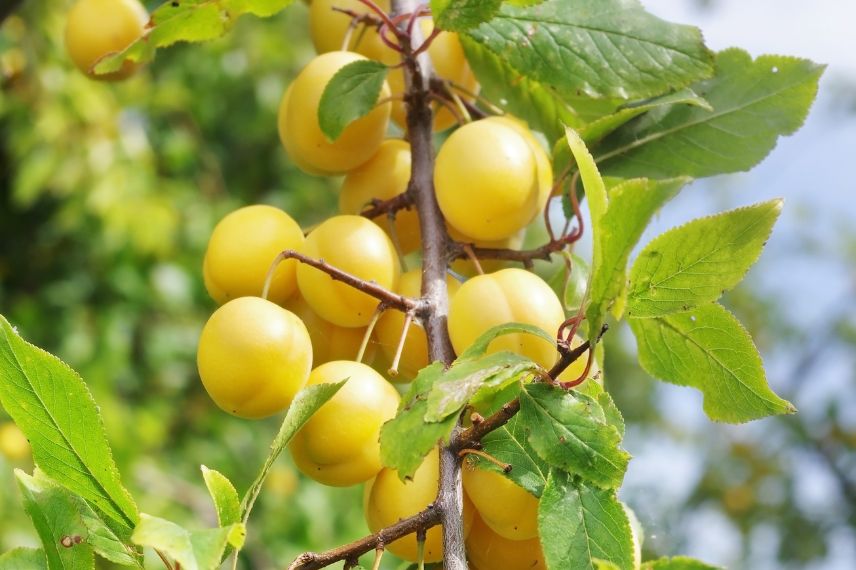
A Mirabelle plum tree
Choosing a fruit tree based on its climate
To begin with, choose a tree suited to your region’s climate to ensure fruiting. For example, if you live north of the Loire, forget trees that require warmth such as the almond tree, the banana plant, or the pomegranate tree… Sure enough, they will grow in some of these regions (those with climates not too harsh), but you won’t see them bear fruit.
Another example, apple trees and pear trees fare much better in temperate regions, such as Brittany or Normandy.
In addition, you will need to take into account the flowering and harvest period according to your climate. In regions with long winters (north of the Loire, the east) we will favour varieties with late flowering, to avoid the flowers being destroyed by a late frost. Similarly, we will prefer fruit trees whose harvest takes place before the first autumn frosts.
Conversely, in regions with milder winters (south, Atlantic coast) one may opt for a fruit tree that flowers early in spring and/or with a late harvest. But you will also need to select varieties able to withstand heat and occasional drought.
Choosing a fruit tree based on its soil
The nature of your soil also plays a role in your choice for your orchard… and in the speed of fruiting. Some fruit trees generally prefer a type of soil, whether clay, sandy, calcareous or humus-rich.
For clay soils, which retain water well but can be heavy and poorly drained, trees such as apple and pear trees adapt well. Don’t hesitate to improve drainage during planting to avoid excess water around the roots.
Sandy soils, on the other hand, offer excellent drainage, but retain nutrients and water less well. Fruit trees such as peach trees, apricot trees, and certain cherry trees thrive in these conditions, thanks to their preference for well-drained soils. For these soils, adding organic matter and regular watering will help maintain adequate moisture and fertility.
In calcareous, slightly alkaline soils, fruit trees such as fig trees and some plum trees show good adaptability.
And if you’re lucky enough to have humus-rich soil, you’ll be spoilt for choice (still bearing your region in mind).
Read also
10 dwarf fruit trees to grow in potsChoosing a fruit tree based on its size
Finally, it’s worth buying a tree that is already at an advanced stage of development to harvest fruit more quickly. Admittedly, the purchase cost will be higher, but it allows you to gain one to two years of cultivation—and thus harvest!
Dwarf fruit trees, thanks to their compact size, bear fruit more quickly than larger specimens. The latter will focus on growth in the early years before bearing fruit.
Planting tips
One final point to get your fruit trees bearing fruit quickly: don’t neglect planting!
- Choose the ideal spot for your tree. Generally, most fruit trees prefer a site with ample sunlight. Then opt for a spot sheltered from strong winds to prevent damage to flowers and fruit.
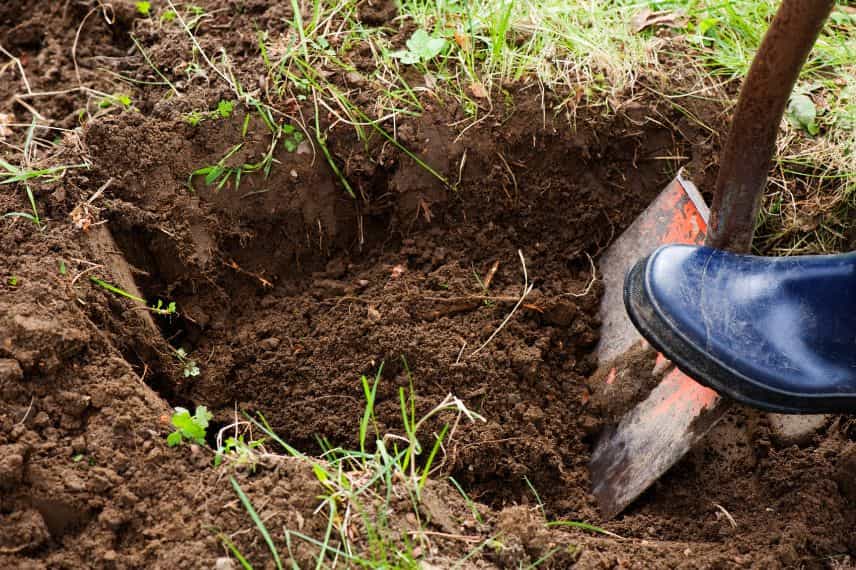
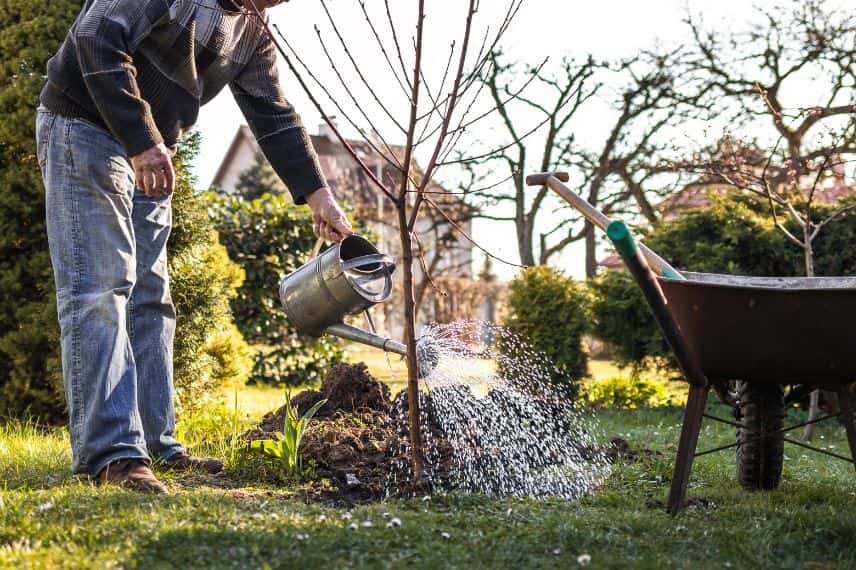
- Dig a planting hole twice the width of the root ball and just deep enough so that the collar (the base of the trunk) is level with the soil. This will aid root growth.
- Ensure the soil provides good drainage to avoid the risk of root rot. You can improve it by incorporating coarse sand or gravel into your garden soil.
- Adding compost or potting compost improves soil structure (whether for heavy or poor soils) and provides the nutrients needed for a good start.
- An initial thorough watering is crucial to remove air pockets and ensure contact between the roots and the soil.
- To encourage good establishment and healthy growth, keep the soil slightly moist, but not waterlogged during the first weeks. Then, stay vigilant in case of dry spells during the first two years after planting.
- A good mulch helps conserve moisture, reduces weeds and protects the roots.
- Subscribe!
- Contents
Comments