





























White alder 'Monstrosa': the gnarled tree that enhances small gardens
A distinctive tree, ideal for adding character to your garden without taking up too much space
Contents
If you are looking for an original and decorative tree that truly stands out from the crowd, Grey Alder ‘Monstrosa’ is for you. With its contorted habit, slow growth and an intriguing silhouette, this tree is ideal for adding a touch of character to a garden, even a small one.
Adapted to restricted spaces, the Alnus incana ‘Monstrosa’ is valued for its ability to create a unique focal point all year round. In winter, its knotted branches are fully revealed, turning the tree into a true living sculpture. Easy to maintain and frost-hardy, it suits both as a solitary specimen and in an informal hedge or near a water feature.
→ Discover in this article why this unusual tree is the perfect choice to enhance a small garden with a touch of natural whimsy.

White alder 'Monstrosa': a botanical curiosity
Origin and history
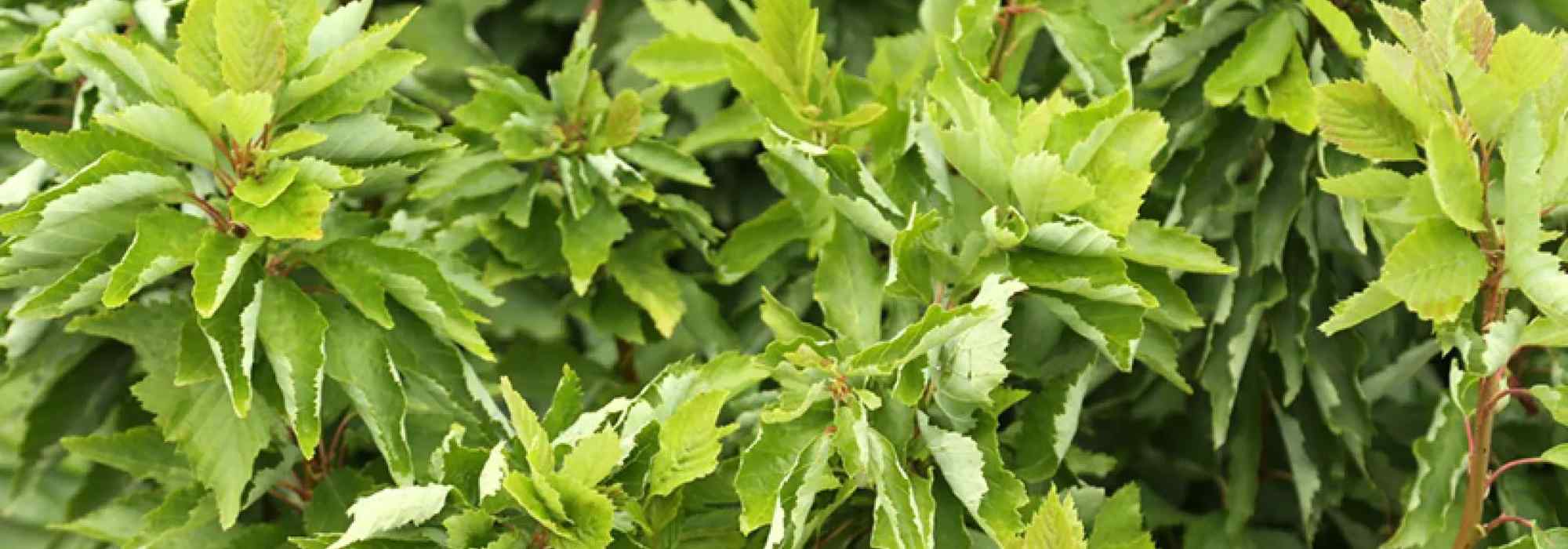
Alnus incana ‘Monstrosa’ or Alnus incana var. monstrosa Späth is a rare and unusual variety of the white alder. Its name could have been “monstrous alder” owing to fasciation*, a mutation that gives it reduced growth and its atypical ramification. Its leaves, similar but smaller than those of the classic white alder, grow on frond-like shoots, borne by short, flattened and twisted branches.
*Fasciation : in botany, fasciation is a mutation of varied origins where branches, peduncles or petioles flatten and extend into a band-shaped form, rather than retaining their cylindrical form.
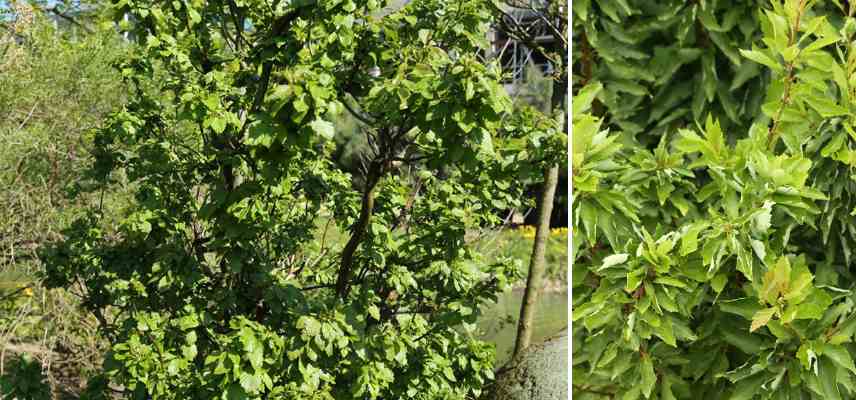
This dwarf tree (2 m across in all directions) charms with its picturesque silhouette, particularly striking in winter, when its bare branches reveal its unique structure.
Alnus incana ‘Monstrosa’ was discovered in Poland around 1883 and introduced into cultivation by the German nursery Späth.
Note bene : Incana derives from Latin incanus meaning “covered with greyish-white hairs” referring to the hairy underside of the young leaves.
→ The genus Alnus (alders) is fairly little known. For more information, discover our complete fact sheet on alders: Alder: plant and grow.
General appearance
Height and habit
At maturity, the white alder ‘Monstrosa’ reaches a modest height of 2 to 3 metres, making it ideal for urban gardens or restricted spaces. Its slow growth and compact size make it an excellent choice for creating a focal point without dominating the surrounding space.
Shape and bark
One of the most striking features of this variety is its twisted habit. Its branches intertwine irregularly, giving the tree a sculptural, almost ghostly appearance in winter. Even without leaves, its structure remains highly decorative, creating interesting patterns of shade and light in the garden.
Its bark, smooth and light grey when young, may crack slightly with age, adding further to its winter appeal.
Leaves
The white alder ‘Monstrosa’ is a deciduous tree. Its leaves, a bright green during the growing season, take on beautiful yellow to orange hues in autumn before falling, prolonging its visual interest throughout the year. The leaves are oval and slightly dentate, typical of the species Alnus incana.
Flowering
Unlike other alders that develop decorative catkins, the white alder ‘Monstrosa’ is primarily grown for the beauty of its twisted ramification and not for its flowering. The white alder ‘Monstrosa’ is, in fact, sterile and does not develop any flowering (or very rarely one or two inconspicuous flowers).
Read also
Alder diseases and parasitic pestsWhy is the alder 'Monstrosa' perfect for small gardens?
1. Slow growth and compact size
As noted, one of the main advantages of the white alder ‘Monstrosa’ is its slow growth and compact size. At maturity, it reaches around 2–3 metres in height, making it a small tree perfect for urban gardens, patios or even large planters. Unlike other trees that can quickly become invasive, this variety remains compact and manageable. It does not require regular pruning to control its growth, which is ideal for those who want a structured garden with minimal maintenance.
2. Originality and a unique focal point
The Monstrosa white alder never goes unnoticed. Its twisted habit and gnarled branches give it a striking silhouette that naturally draws the eye. Each specimen is slightly different, adding an artistic dimension to the garden. When planted as a specimen, it quickly becomes a striking focal point, bringing character even to the tightest spaces. This singular tree is an excellent way to create a picturesque or mysterious ambience in a contemporary garden or one with a more natural feel.
3. Ease of maintenance
Another major asset of the Monstrosa white alder is its ease of maintenance. Once well established, it requires little maintenance. It does not require pruning, except for removing dead or poorly oriented branches to maintain a good structure. Resistant to disease and cold (down to -20°C), it also tolerates different soil types, making it particularly hardy and easy to grow.
4. Year-round appeal
Even in winter, when most trees lose their appeal, the Monstrosa white alder continues to stand out. When its leaves fall, it reveals the full beauty of its distinctive architecture. Its contorted silhouette and flattened branches create a fascinating winter display, adding texture and depth to the garden during the coldest months. This makes it an excellent option for extending the garden’s visual interest throughout the year, even during the quiet season.
The Monstrosa white alder’s extras
- Resilience: tolerates urban pollution and wind well
- Soil improvement: thanks to their association with nitrogen-fixing bacteria (Frankia), alders can enrich poor soils.
CAUTION! Alnus incana, the type species, is a pioneer species that can be invasive if conditions suit it (rich, calcareous soil). This is not the case for the cultivar ‘Monstrosa’ which is sterile and does not produce flowers and rarely produces root suckers.
Growing and care of white alder
Exposure: sun to partial shade
The white alder ‘Monstrosa’ thrives in exposures that are sunny to partial shade. It prefers plenty of light to promote healthy growth, but also tolerates slightly shaded areas. Excessively shaded exposure could, however, slow its already moderate growth and alter the beauty of its twisting branches. Place it in a well-lit space where it can enjoy morning or afternoon sun, while being protected from the scorching rays of midsummer.
Soil type: adaptability and tolerance
One of the major advantages of the white alder ‘Monstrosa’ is its great tolerance to different soil types. It adapts equally well to light, well-drained soils as to damper sites. This ability to thrive even in difficult conditions makes it a valuable ally for greening degraded areas or poor soils.
It also tolerates calcareous soils, often problematic for other species. This tree will fit into your garden with ease, provided that water does not stagnate permanently at the root zone.
Watering: moderate and drought-tolerant
The white alder ‘Monstrosa’ requires only little watering once well established. Moderate watering is recommended during the first year after planting to encourage establishment. Thereafter, the tree becomes drought-tolerant. However, in prolonged drought, occasional watering can be beneficial to maintain dense, vigorous foliage.
Hardiness: hardy to -20°C
The white alder ‘Monstrosa’ is very hardy and can withstand temperatures down to -20°C. It is therefore perfectly suited to gardens located in regions with harsh winters.
Pruning: minimal maintenance for a harmonious silhouette
The white alder ‘Monstrosa’ requires very little pruning. Its slow growth and natural form reduce the need for regular interventions.
- Balance the silhouette: a light pruning can be carried out if you wish to even out or emphasise the tree’s twisting branches.
- Removal of dead branches: it is recommended to periodically remove dead or damaged branches to maintain a pleasing structure.
Pruning should ideally be carried out in late winter or early spring, before the vegetation resumes, to avoid disturbing the growth of new shoots.
Read also
The alder: planting and growingHow best to use or combine Alnus incana 'Monstrosa' in your garden?
The White Alder ‘Monstrosa’ is a true botanical jewel that integrates easily into many garden styles, while adding a touch of singularity thanks to its twisted and sculptural habit. Its picturesque silhouette makes it a focal piece ideal for structuring space or creating an intriguing focal point. Here are some ideas for showcasing this unique tree and pairing it harmoniously with other plants.
Isolated planting: a natural focal point
The White Alder ‘Monstrosa’ reveals its full splendour when planted as a solitary specimen. Its twisted silhouette and flattened branches naturally draw the eye, especially in winter when the tree is bare of its leaves. Placed at the centre of a lawn or in a strategically placed corner of the garden, it becomes a true living sculpture that you enjoy watching throughout the year.
For maximum effect, plant it near a water feature (pond, basin or fountain) where its winter reflections will shimmer gently on the surface. The contrast between the still water and the tree’s knotted structure creates a poetic and tranquil atmosphere.
In an informal hedge: a touch of originality
Although often grown as a solitary tree, the White Alder ‘Monstrosa’ can also be incorporated into an informal hedge to introduce a note of originality and break the monotony of more traditional shrubs. Its sinuous branches stand out from the rest of the hedge, adding relief and an unexpected texture.
By pairing several specimens with other evergreen or deciduous shrubs, you will create a living and varied hedge that evolves with the seasons.
Plant associations: enhancing its presence
The White Alder ‘Monstrosa’ pairs perfectly with a variety of perennial plants and groundcovers that highlight its distinctive silhouette. Here are some ideas for associations:
- Ornamental perennials: pair it with Heucheras with colourful foliage or Japanese grasses that bring lightness and movement to the tree’s base. Grasses create an interesting contrast with the alder’s twisted and rigid branches.
- Exotic ambience: plant it in a bed with an exotic look, surrounded by male ferns (Dryopteris filix-mas) or Polystichum polyblepharum, whose delicate texture complements the alder’s irregular form. This pairing creates a lush scene recalling a mysterious woodland understory.
- Woodland floor flowers: at the base of the alder, favour groundcovers such as violets (Viola), periwinkles (Vinca) or Brunnera. These small flowers bring a splash of colour and discreetly dress the base of the tree, enhancing its natural and countryside charm.
In a tub or on a terrace: original and compact
Thanks to its compact size and slow growth, the White Alder ‘Monstrosa’ is also suitable for cultivation in a large tub. It can thus be installed on a terrace or in an internal courtyard, bringing a note of originality even in restricted spaces. In winter, its twisted branches and bark provide a minimalist and graphic aesthetic, perfect for modern or zen gardens.
Other plants to discover for lovers of twisting forms
If the unusual aspect of the White Alder ‘Monstrosa’ appeals to you, you might also enjoy other trees and shrubs with similar shapes:
- Aesculus hippocastanum ‘Monstrosa’ : a horse chestnut variety with a deformed habit, ideal for creating an extraordinary garden.
- Salix erythroflexuosa : a willow with spiralled and orange-tinged branches, particularly decorative in winter.
- Robinia pseudoacacia ‘Twisty Baby’ : a small Robinia with twisted branches, perfect for small gardens or tubs.
- Subscribe!
- Contents
Comments