





























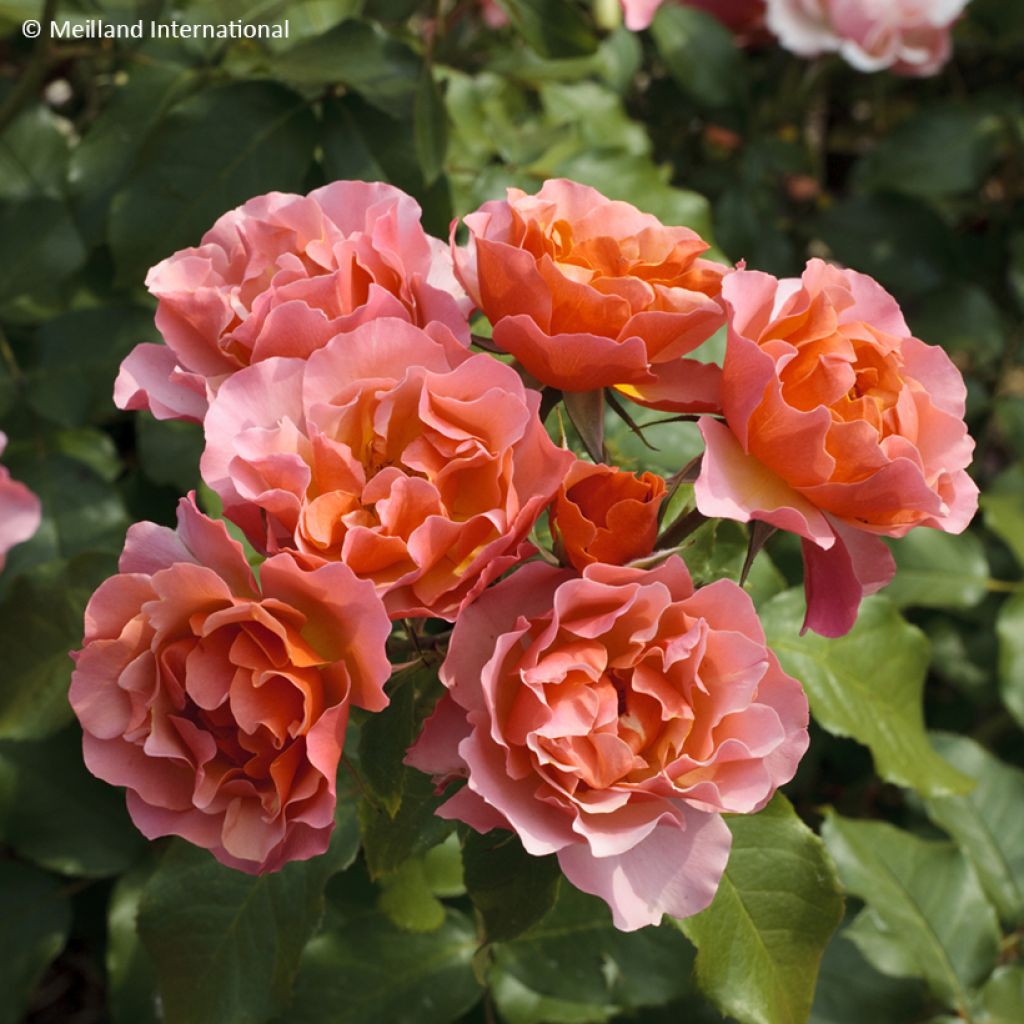
Rosa Jean Cocteau - Floribunda Rose
Share your pictures?
Hide split images
New arrival
Rosa Jean Cocteau - Floribunda Rose
Rosa 'Meikokan' JEAN COCTEAU®
Floribunda Rose
Be the first to leave a review
Special offer!
Receive a €20 voucher for any order over €90 (excluding delivery costs, credit notes, and plastic-free options)!
1- Add your favorite plants to your cart.
2- Once you have reached €90, confirm your order (you can even choose the delivery date!).
3- As soon as your order is shipped, you will receive an email containing your voucher code, valid for 3 months (90 days).
Your voucher is unique and can only be used once, for any order with a minimum value of €20, excluding delivery costs.
Can be combined with other current offers, non-divisible and non-refundable.
Home or relay delivery (depending on size and destination)
Schedule delivery date,
and select date in basket
This plant carries a 6 months recovery warranty
More information
We guarantee the quality of our plants for a full growing cycle, and will replace at our expense any plant that fails to recover under normal climatic and planting conditions.
This multi-award-winning bedding rose offers abundant and continuous flowering, revealing roses with warm and nuanced blends of light and deep orange, with undulate and angular petals. Compact and well-ramified, it is taller than wide, elegantly bringing structure to beds and borders. Its dense, glossy foliage highlights the brilliance of its flowers which continuously renew from June until the first frosts. Disease-resistant, it easily adapts to gardens as well as potted patios.
Flower size
8 cm
Height at maturity
90 cm
Spread at maturity
50 cm
Exposure
Sun, Partial shade
Hardiness
Hardy down to -23°C
Soil moisture
Moist soil
Best planting time
February, October
Recommended planting time
March to May, September to November
JAN
J
FEB
F
MAR
M
APR
A
MAY
M
JUN
J
JUL
J
AUG
A
SEP
S
OCT
O
NOV
N
DEC
D
Flowering time
June to November
JAN
J
FEB
F
MAR
M
APR
A
MAY
M
JUN
J
JUL
J
AUG
A
SEP
S
OCT
O
NOV
N
DEC
D
Description
The Jean Cocteau® Cluster-Flowered Rose embodies boldness and elegance through its flamboyant flowering, where shades of light to deep orange subtly intertwine. Compact and well-branched, it offers a balanced silhouette that elegantly structures flowerbeds, borders, and large pots. Its dense, bushy habit combined with a perpetual and generous flowering from June until frost makes it an ideal choice for creating warm and luminous displays. Hardy and easy to grow, it brings an artistic and timeless dimension to the garden, staying true to the legacy of the illustrious poet it is named after.
The Jean Cocteau® 'Meikokan' rose developed by the Meilland house belongs to the Rosaceae family and the Floribunda (cluster-flowering roses) group. It is also known as the Tequila Supreme Rose or Charleston Rose. Selected in 2009 to join Meilland's prestigious 'CLASSICS' collection, it stands out for its extraordinary colouring—a gradient of light to intense orange with the outer petals darker than the inner ones. Its roses bloom into elegant 8 cm-diameter cups revealing a palette of solar hues that evolve with the flowers' age and the ambient light. These semi-double blooms consist of around 27 petals per flower with undulate and angular shapes. Borne in inflorescences of 2 to 5 flowers, they add a masterpiece painting touch to the entire bed. The flowering is continuous, renewing itself from June until the first frosts. This rose develops a compact, well-branched, bushy habit, reaching 80 to 90 cm in height with a spread of 40 to 50 cm. Its dense, glossy green foliage provides the perfect backdrop for its vibrant flowers. Exceptionally robust, the Jean Cocteau® Meikokan rose boasts excellent disease resistance.
Thanks to its compact habit and warm-toned flowering, the Jean Cocteau rose brings a harmonious structure to flowerbeds and brightens borders, even in small gardens. It pairs beautifully with silver-grey foliage like that of an Artemisia 'Powis Castle' whose finely cut foliage highlights the brilliance of its orange flowers. For a refined combination, it can be paired with a Pierre de Ronsard® rose whose pale pink flowers will provide a softening contrast and create a sophisticated feel. Alongside it, the copper-toned spikes of an Eremurus 'Cleopatra' will extend the luminous intensity of its roses, adding height and dynamism. Grown in isolation in a large pot, this rose will become a striking focal point on a sunny patio where it will capture light throughout the day.
Report an error about the product description
Rosa Jean Cocteau - Floribunda Rose in pictures
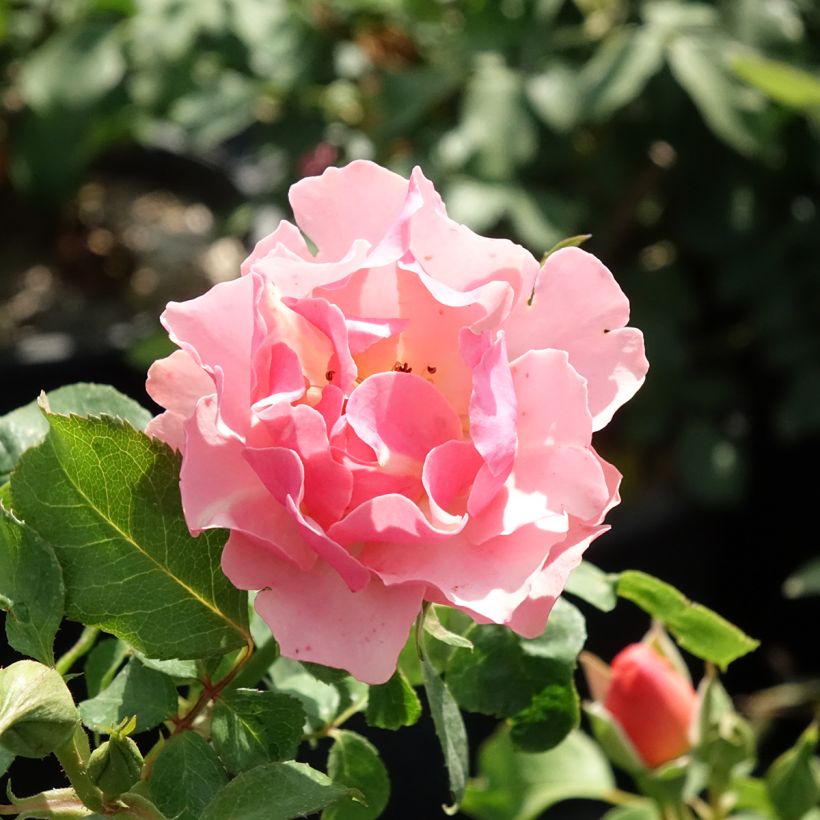
Rosa Jean Cocteau - Floribunda Rose (Flowering)
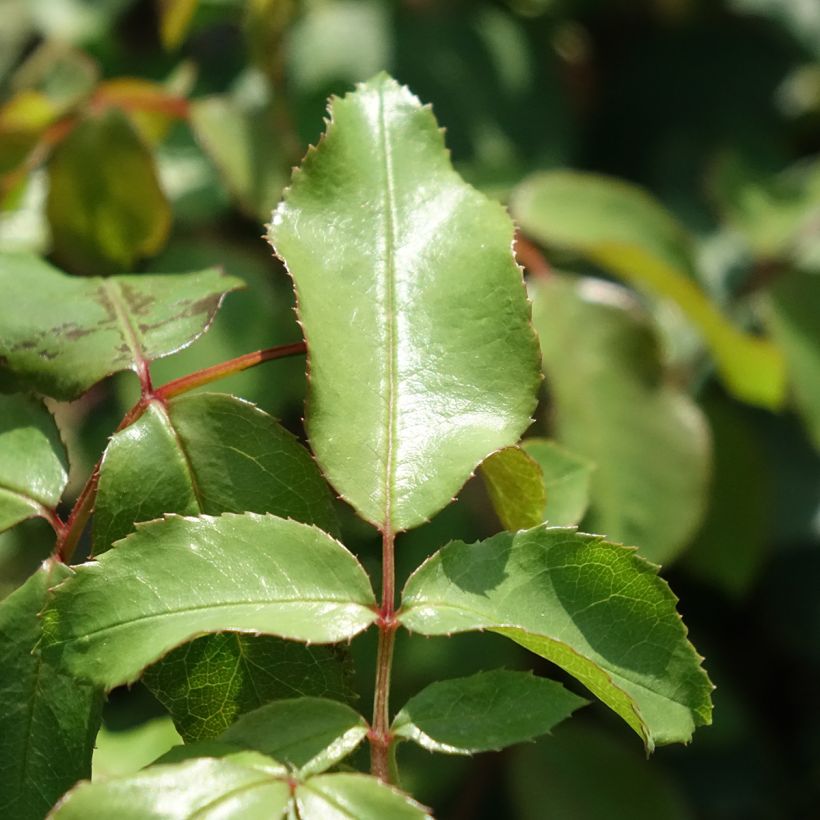
Rosa Jean Cocteau - Floribunda Rose (Foliage)
Plant habit
Height at maturity
90 cm
Spread at maturity
50 cm
Habit
irregular, bushy
Growth rate
normal
Flowering
Flower colour
orange
Flowering time
June to November
Inflorescence
Corymb
Flower size
8 cm
Good for cut flowers
Cut flower blooms
Foliage
Foliage persistence
Deciduous
Foliage colour
green
Botanical data
Genus
Rosa
Cultivar
'Meikokan' JEAN COCTEAU®
Family
Rosaceae
Other common names
Floribunda Rose
Botanical synonyms
Rosa JEAN COCTEAU, Rosa 'Meikokan' CHARLESTON
Origin
Cultivar or hybrid
Product reference
•
24290
Planting and care
To plant your Jean Cocteau rose, prepare the soil by working it to a depth of 25 cm, breaking up any clumps and adding a base fertiliser such as dried blood or dehydrated horn at the bottom of the planting hole. Place your plant after removing it from its pot, covering the top of the root ball with 3 cm of soil. Backfill and water thoroughly to eliminate any air pockets. During dry weather, water regularly for a few weeks to encourage root development. Also consider feeding your rose with a special rose fertiliser to promote flowering.
Roses often develop spots or look unsightly by late summer, but this does not affect their growth. These spots are not harmful to the plant; it's a natural occurrence. Follow our expert advice to address this issue and read our article: Help! My Roses Have Spots



Planting period
Best planting time
February, October
Recommended planting time
March to May, September to November
Intended location
Suitable for
Meadow
Type of use
Border, Edge of border, Small gardens, Container
Preferred climate
All
Hardiness
Hardy down to -23°C (USDA zone 6a)
Show map
Ease of cultivation
Beginner
Planting density
1 per m2
Exposure
Sun, Partial shade
Soil pH
Any
Soil type
Clayey (heavy), Clayey-chalky (heavy and alkaline), Silty-loamy (rich and light)
Soil moisture
Moist soil, Well-drained, deep soil.
Care
Pruning instructions
Deadhead regularly during the flowering period. Annual pruning, after the frosts, in spring: shorten all shoots to between 3 and 5 buds depending on their vigour. Clean up any dead wood in autumn and winter.
Pruning
Pruning recommended once a year
Pruning time
February to March
Soil moisture
Moist soil
Disease resistance
Very good
Overwinter
Can be left in the ground
This item has not been reviewed yet - be the first to leave a review about it.
Leave a review →
Share your review
Haven't found what you were looking for?
Hardiness is the lowest winter temperature a plant can endure without suffering serious damage or even dying. However, hardiness is affected by location (a sheltered area, such as a patio), protection (winter cover) and soil type (hardiness is improved by well-drained soil).

Photo Sharing Terms & Conditions
In order to encourage gardeners to interact and share their experiences, Promesse de fleurs offers various media enabling content to be uploaded onto its Site - in particular via the ‘Photo sharing’ module.
The User agrees to refrain from:
- Posting any content that is illegal, prejudicial, insulting, racist, inciteful to hatred, revisionist, contrary to public decency, that infringes on privacy or on the privacy rights of third parties, in particular the publicity rights of persons and goods, intellectual property rights, or the right to privacy.
- Submitting content on behalf of a third party;
- Impersonate the identity of a third party and/or publish any personal information about a third party;
In general, the User undertakes to refrain from any unethical behaviour.
All Content (in particular text, comments, files, images, photos, videos, creative works, etc.), which may be subject to property or intellectual property rights, image or other private rights, shall remain the property of the User, subject to the limited rights granted by the terms of the licence granted by Promesse de fleurs as stated below. Users are at liberty to publish or not to publish such Content on the Site, notably via the ‘Photo Sharing’ facility, and accept that this Content shall be made public and freely accessible, notably on the Internet.
Users further acknowledge, undertake to have ,and guarantee that they hold all necessary rights and permissions to publish such material on the Site, in particular with regard to the legislation in force pertaining to any privacy, property, intellectual property, image, or contractual rights, or rights of any other nature. By publishing such Content on the Site, Users acknowledge accepting full liability as publishers of the Content within the meaning of the law, and grant Promesse de fleurs, free of charge, an inclusive, worldwide licence for the said Content for the entire duration of its publication, including all reproduction, representation, up/downloading, displaying, performing, transmission, and storage rights.
Users also grant permission for their name to be linked to the Content and accept that this link may not always be made available.
By engaging in posting material, Users consent to their Content becoming automatically accessible on the Internet, in particular on other sites and/or blogs and/or web pages of the Promesse de fleurs site, including in particular social pages and the Promesse de fleurs catalogue.
Users may secure the removal of entrusted content free of charge by issuing a simple request via our contact form.
The flowering period indicated on our website applies to countries and regions located in USDA zone 8 (France, the United Kingdom, Ireland, the Netherlands, etc.)
It will vary according to where you live:
- In zones 9 to 10 (Italy, Spain, Greece, etc.), flowering will occur about 2 to 4 weeks earlier.
- In zones 6 to 7 (Germany, Poland, Slovenia, and lower mountainous regions), flowering will be delayed by 2 to 3 weeks.
- In zone 5 (Central Europe, Scandinavia), blooming will be delayed by 3 to 5 weeks.
In temperate climates, pruning of spring-flowering shrubs (forsythia, spireas, etc.) should be done just after flowering.
Pruning of summer-flowering shrubs (Indian Lilac, Perovskia, etc.) can be done in winter or spring.
In cold regions as well as with frost-sensitive plants, avoid pruning too early when severe frosts may still occur.
The planting period indicated on our website applies to countries and regions located in USDA zone 8 (France, United Kingdom, Ireland, Netherlands).
It will vary according to where you live:
- In Mediterranean zones (Marseille, Madrid, Milan, etc.), autumn and winter are the best planting periods.
- In continental zones (Strasbourg, Munich, Vienna, etc.), delay planting by 2 to 3 weeks in spring and bring it forward by 2 to 4 weeks in autumn.
- In mountainous regions (the Alps, Pyrenees, Carpathians, etc.), it is best to plant in late spring (May-June) or late summer (August-September).
The harvesting period indicated on our website applies to countries and regions in USDA zone 8 (France, England, Ireland, the Netherlands).
In colder areas (Scandinavia, Poland, Austria...) fruit and vegetable harvests are likely to be delayed by 3-4 weeks.
In warmer areas (Italy, Spain, Greece, etc.), harvesting will probably take place earlier, depending on weather conditions.
The sowing periods indicated on our website apply to countries and regions within USDA Zone 8 (France, UK, Ireland, Netherlands).
In colder areas (Scandinavia, Poland, Austria...), delay any outdoor sowing by 3-4 weeks, or sow under glass.
In warmer climes (Italy, Spain, Greece, etc.), bring outdoor sowing forward by a few weeks.