





























5 viburnums to create a hedge
Our selection of Viburnum to easily create a privacy screen, a windbreak, or to define an area.
Contents
Viburnums are among the most popular bushes in the garden. This is no surprise, as they boast numerous ornamental advantages! We love them for their abundant flowering, decorative fruiting, delightful fragrance, and foliage that takes on beautiful colours in autumn.
These bushes are perfectly suited for creating hedges, whether they are neatly trimmed or more natural and wild. They tolerate pruning well and are easy to grow. Whether to shield from prying eyes, break the wind, or simply to delineate areas in the garden, viburnums can form hedges of all sizes, tall or low.
For a lasting effect in all seasons, choose species with evergreen foliage. For a diverse hedge, combine them with other bushes that retain their leaves (Japanese spindle, Photinia, Mexican orange blossom, oleaster…). Consider deciduous bushes to allow light through in winter, or bushes with staggered flowering for a lively hedge throughout the seasons. At their base, grow spring bulbs, perennials, or small grasses.
Here are our 5 favourite viburnums to grow in pots or in the ground to create a hedge!

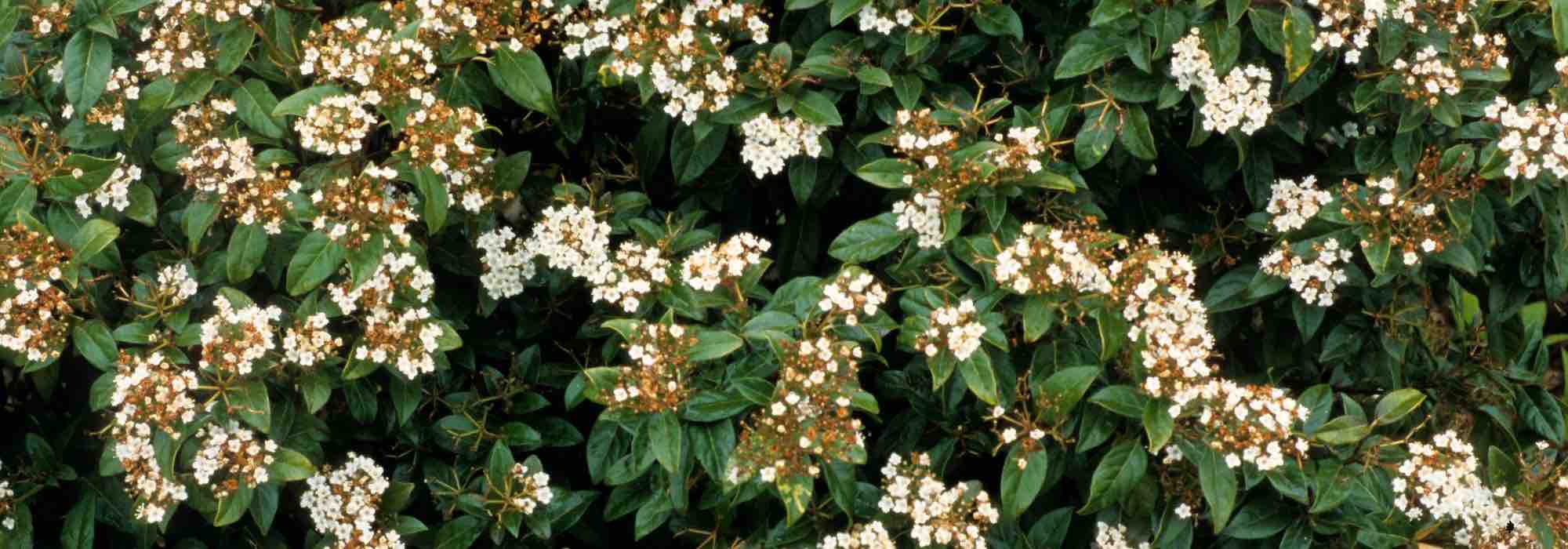
Viburnum tinus or laurel tin: the essential reliable choice for creating a hedge.
On no longer needs to introduce the laurel tin, this bush with evergreen foliage that reveals beautiful umbels of white flowers in winter. It is one of the most appreciated shrubs for creating hedges, thanks to its tolerance to almost all situations and the density of its foliage.
Measuring 2.50 m in height and 2 m in spread at ripeness, its bushy silhouette is ideal for creating privacy in the garden or sheltering from gusts of wind. It can even be grown in a pot, to create a hedge on the terrace or a large balcony. Well-suited to pruning, it is an ideal candidate for a neat and well-maintained hedge, but it can also be planted in a free-form hedge.
There are many varieties of Viburnum tinus.
- ‘Spirit’ offers an early flowering, forming its pink flower buds as early as the end of November (2.50 m in height and 2 m in spread).
- With its 1.50 m in all directions, ‘Gwenlian’ is a perfect variety for creating a medium-sized hedge in small spaces, such as urban gardens, on a terrace or balcony.
- ‘Eve Price’ features a white-pink flowering and moderate growth (1.80 m to 2 m in height with the same spread).
- ‘Purpureum’ stands out with its young leaves tinged with purple and bronze. In terms of silhouette, it also offers moderate growth (1.75 m in height and 90 cm in spread).
- ‘Variegatum’ has variegated foliage, green edged with cream yellow, particularly bright in all seasons (2.50 m in height and 2 m in spread).
From its Mediterranean origins, the laurel tin has retained a very good tolerance to drought.
Viburnum rhytidophyllum: an impressive viburnum with dense foliage
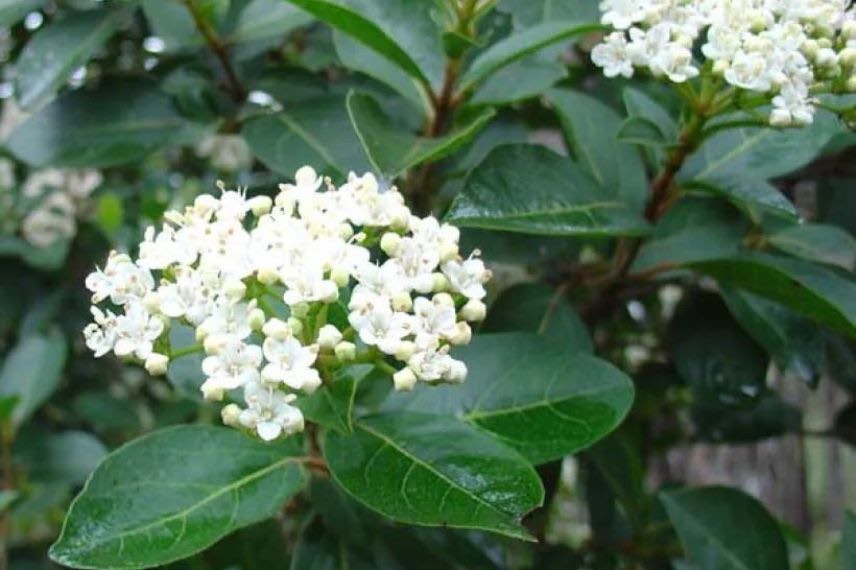
The wrinkled-leaf viburnum has a dense, evergreen foliage, ideal for creating hedges. It can reach 3.5 metres in all directions at maturity. Its rapid growth and ease of cultivation make it easy to establish a hedge in the garden.
Its foliage is one of its ornamental assets: it displays a dark, glossy green, velvety grey underneath. The long, ovate leaves have a remarkably crinkled texture, which explains this viburnum’s common name. Pendulous, they give the bush a slightly weeping appearance.
In spring, this Viburnum reveals large, flat corymbs made up of cream-white flowers. This flowering gives way to lovely red berries, turning black at ripeness. An ornamental species in all seasons!
Viburnum opulus: for a natural and rustic-looking hedge that allows light to filter through in winter.
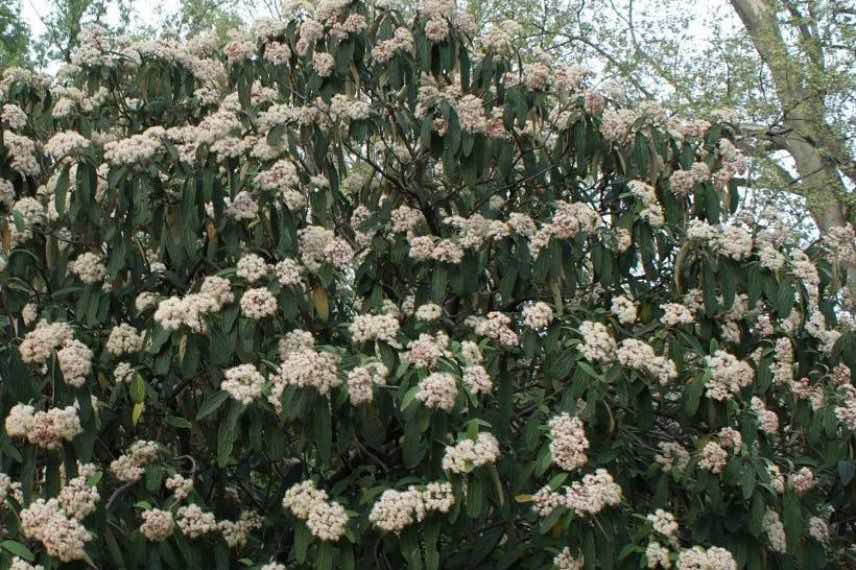
The Guelder rose is a deciduous bush that takes on beautiful purple hues before its leaves fall. Its naturally rounded silhouette and palmate foliage give it a natural, rustic appearance. Viburnum opulus is ideal for creating a hedge that allows light to pass through in winter, if you do not require a green screen during the cold season.
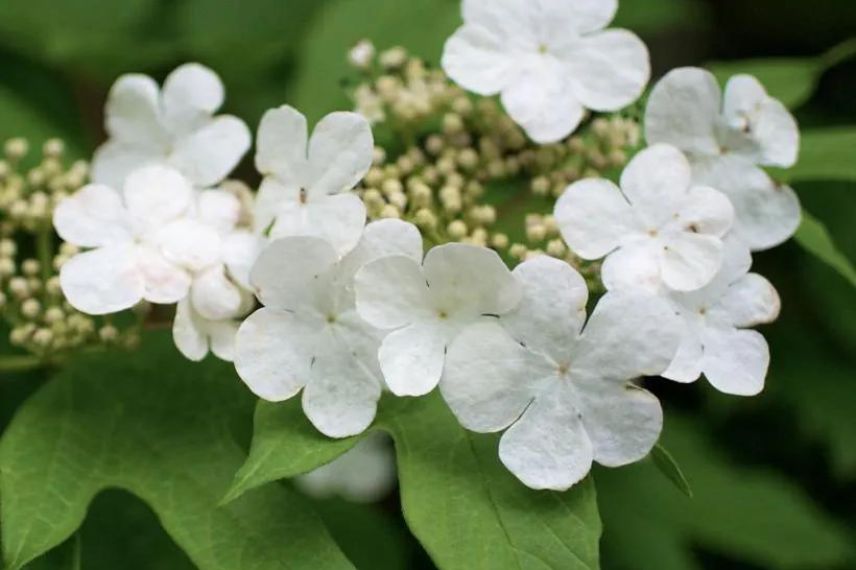
At the end of spring, it reveals beautiful flat corymbs made up of small white flowers, reminiscent of hydrangea flowering. Slightly fragrant, these flowers delight pollinating insects. They will precede an equally ornamental fruiting, with small shiny red berries.
The typical species measures about 3 to 3.5 metres in all directions. In smaller gardens, opt for smaller, more compact varieties, such as the aptly named ‘Compactum’ (2 metres in height and 1.5 metres in spread). The Viburnum opulus ‘Roseum’ is particularly known for its magnificent round and immaculate flowering, resembling a snowball.
This native species grows naturally in France, just like the wayfaring tree and the laurel. It thrives in humid undergrowth, even in marshy areas. From these origins, it has retained a preference for cool soils and does not tolerate drought well.
Viburnum lucidum: an evergreen foliage that changes colour in autumn
The shiny viburnum is not one of the most common Viburnum species. However, this bush has plenty of qualities! Its evergreen foliage remains in place throughout the seasons, but has the advantage of changing colours, a characteristic generally found in deciduous species. Its beautiful bright green leaves indeed partially take on red to purple hues in response to the cold, enlivening autumn and winter.
Vigorous, easy to care for, tolerant of pruning, and well-branched, it is perfect for creating a true permanent green screen. Its silhouette will easily reach 3.75 metres in height and 2 metres in spread.
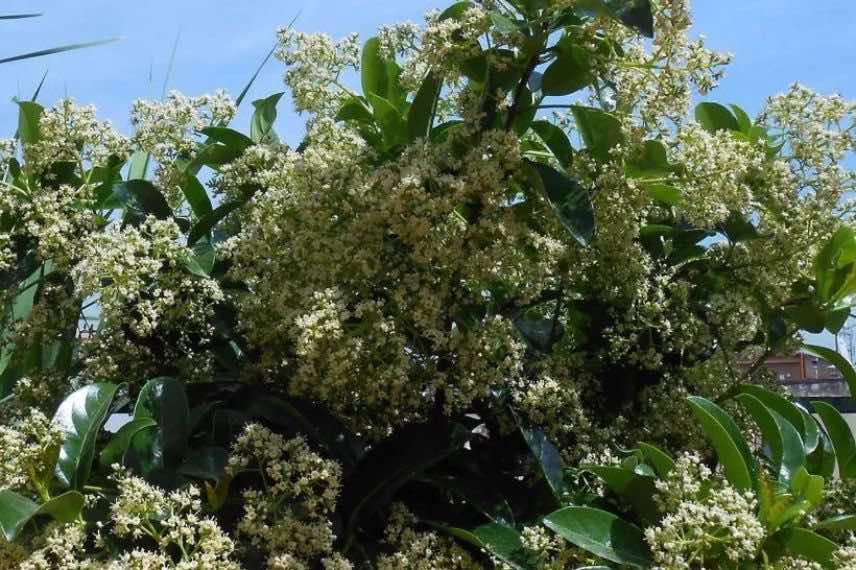
Flowering occurs at the end of spring, revealing small bouquets of very fragrant cream-white flowers. Following this, small fruits transition from coral red to black, providing a spectacle while delighting the birds.
Accommodating, this viburnum will withstand drought, heat, and even calcareous soils. Only harsh winters (below -10 to -12°C) can be detrimental to it.
Viburnum davidii: for creating a low hedge or for small spaces
The David viburnum stands out with its small silhouette, measuring about 1 metre in all directions. This dwarf Viburnum with a bushy habit is ideal for creating a low hedge in restricted spaces or delineating an area in the garden without blocking out all the light. It can be grown both in the ground and in pots.
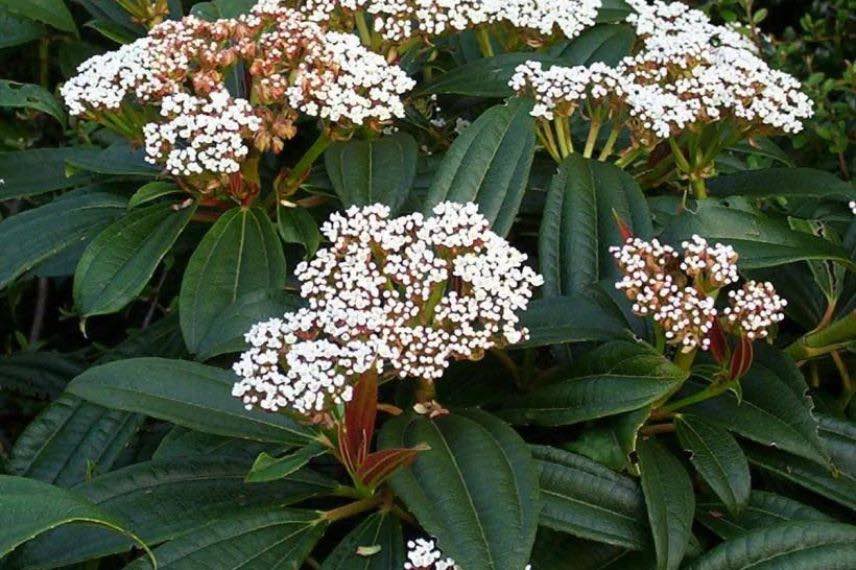
Evergreen, its foliage remains decorative all year round. The leaves display a lovely glossy dark green, contrasting with the petioles tinged with red.
Another decorative asset: its fruiting. The flowering in clusters of white flowers occurs in late spring. It is then followed by beautiful shiny blue ovoid berries, borne on red peduncles. An ideal viburnum for adding colour to shaded areas!
- Subscribe!
- Contents
Comments