





























7 compact and long-lasting hydrangeas
varieties to enhance the garden
Contents
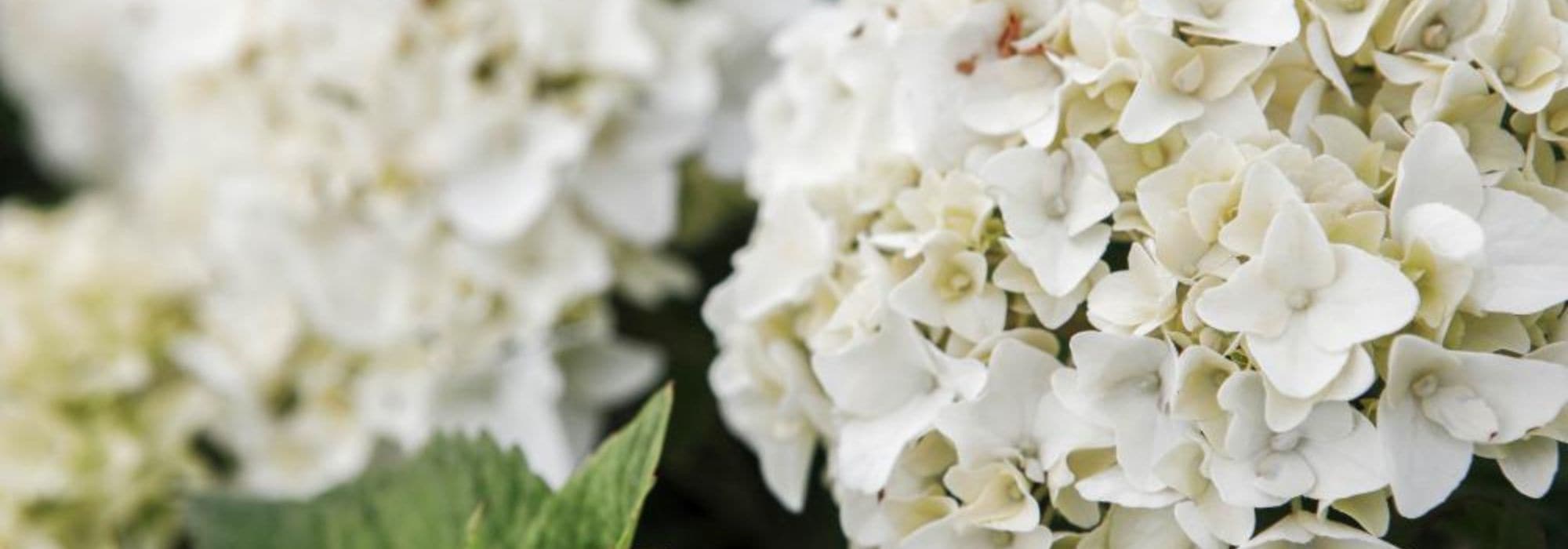
Highly valued for their abundant summer flowering, Hydrangeas are charming shrubs bearing ball, cone, flat, or broad inflorescences. Their flowers can be white, mauve, blue, pink, red, or bicoloured. Among the myriad of existing varieties, some cultivars have a dense and compact form, adding roundness and beauty to the garden. These decorative characteristics can be found in classic hydrangeas, ball-shaped, flat-headed, as well as in hybrid Hydrangeas and even quercifolia. Discover our selection of 7 compact and long-lasting Hydrangeas.

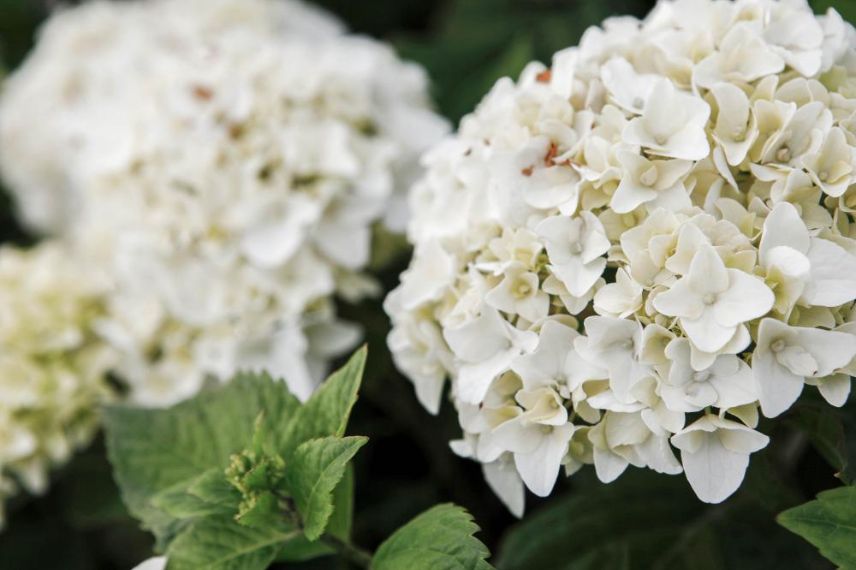
Hydrangea macrophylla 'Endless Summer® The Bride'
Here is a hydrangea with multiple qualities! The variety ‘Endless Summer® The Bride’ is highly valued for its abundant flowering, particularly repeat flowering from June to October. Its small florets are gathered in large clusters of globular flowers, white in acidic soil or pale pink in slightly acidic or even neutral soil. Low maintenance in terms of pruning, it can produce flowers on both the young shoots of the year and the wood from the previous year. Hardy, it withstands winter frosts down to -30 °C and is not afraid of spring frost. This hydrangea forms a beautiful rounded, compact shrub, about 1.30 m high and 1.40 m wide, which should be planted in partial shade, in acidic or neutral soil. Its dark green foliage in summer turns yellow in late summer before falling in autumn. The ‘Endless Summer® The Bride’ hydrangea will naturally find its place in a shrub hedge or in a border alongside a fuchsia or annual impatiens.
Hydrangea macrophylla ‘Endless Summer The Bride’
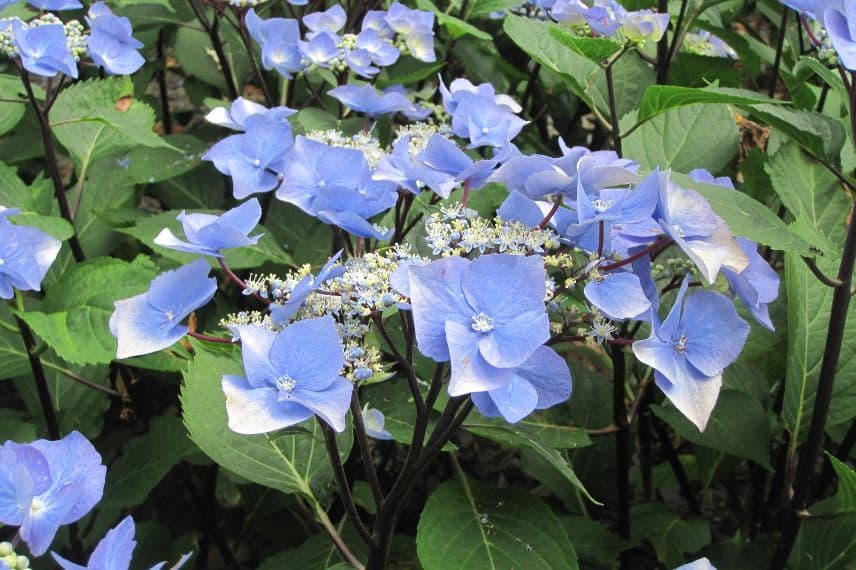
Hydrangea macrophylla 'Zorro®'
The Hydrangea ‘Zorro®’ likely derives its varietal name from its surprising decorative wood, as black as the outfit of the famous masked vigilante. This dark hue has the advantage of highlighting the dark green of its large deciduous leaves, as well as its blue-violet flowers. These rounded inflorescences with flat heads appear late, from August to October. Only acidic soils rich in aluminium sulfate will yield this blue-violet shade, while in neutral soil, the flowers will turn a beautiful bright pink. Its slightly spreading habit will give it the shape of a large shrub, measuring between 1.50 m and 1.80 m high depending on the richness of the soil. It will make a statement in a free-standing hedge or in a border alongside other hydrangeas, Japanese anemones, or foxgloves.
Hydrangea macrophylla ‘Zorro’
Discover other Hydrangeas
View all →
Available in 3 sizes
Available in 1 sizes
Available in 1 sizes
Available in 3 sizes
Available in 1 sizes
Available in 1 sizes
Available in 1 sizes
Available in 2 sizes
Available in 2 sizes
Available in 2 sizes
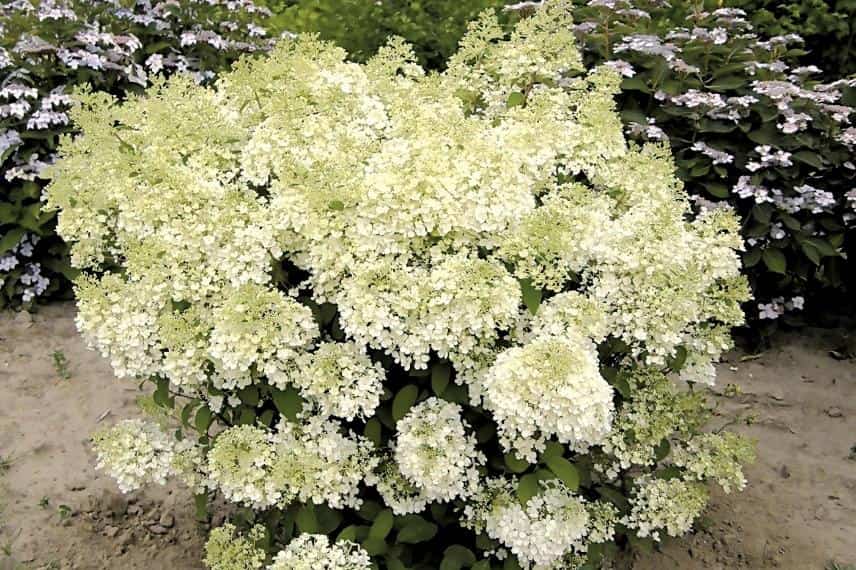
Hydrangea paniculata 'Bobo'
Small and stocky, the Hydrangea ‘Bobo’ forms a charming shrub that barely exceeds 70 cm in all directions. This compact size is perfect for enhancing terraces, balconies, and small gardens. It compensates for its small stature with a spectacular flowering from August to October, featuring large panicles of white flowers tinged with green, which gradually turn cream, then pale pink at the end of flowering. They will make a statement in the garden and are perfect for creating fresh or dried bouquets. This exceptional flowering temporarily covers its dark green foliage. In autumn, its leaves will turn red before falling. Hardy and robust, this Hydrangea enjoys full sun or light partial shade, in rich soil that remains slightly moist, either acidic or neutral. It also tolerates poor soils and occasional drought once well established, but its flowering will be less spectacular.
Hydrangea paniculata ‘Bobo’
Read also
Hydrangea: 7 ideas to pair it withHydrangea macrophylla 'Hovaria Hopcorn'
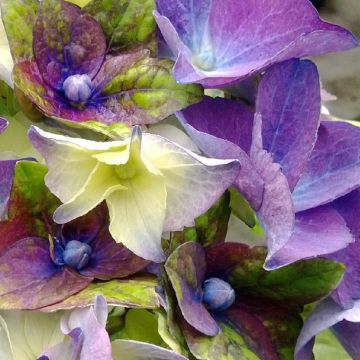
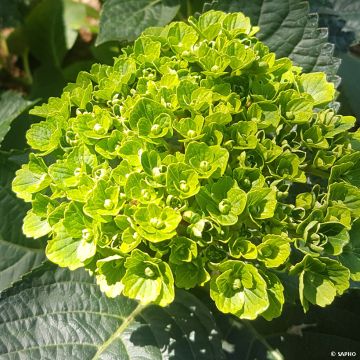
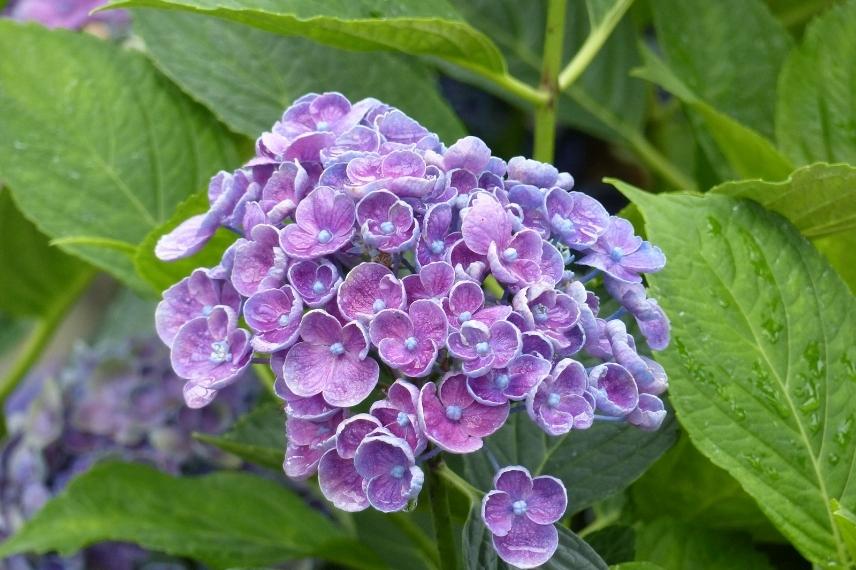
Hydrangea ‘Hovaria Hopcorn’ stands out for the unique shape of its frilled and curled sepals, resembling popcorn (which is indeed where it gets its varietal name). With this distinctive shape and their beautiful intense bluish-purple colour, its flowers are reminiscent of those of lilac. This original flowering in a hydrangea occurs from July to October, accompanied by dark green, deciduous foliage. Compact and dense, this charming shrub reaches 1.20 m in all directions at maturity. Although it prefers partial shade, this hydrangea will tolerate a sunny exposure, in acidic soil to maintain its beautiful bluish-purple colour. In neutral soil, its flowers will take on a rather pinkish hue. It will make a statement when planted alone, in a perennial or shrub border, or in a pot on the terrace, alongside annual impatiens as neighbours.
Hydrangea macrophylla ‘Hovaria Hopcorn’
Hydrangea macrophylla 'Wedding Gown'
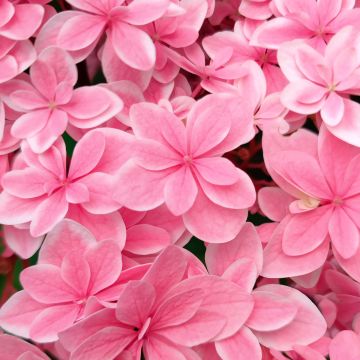
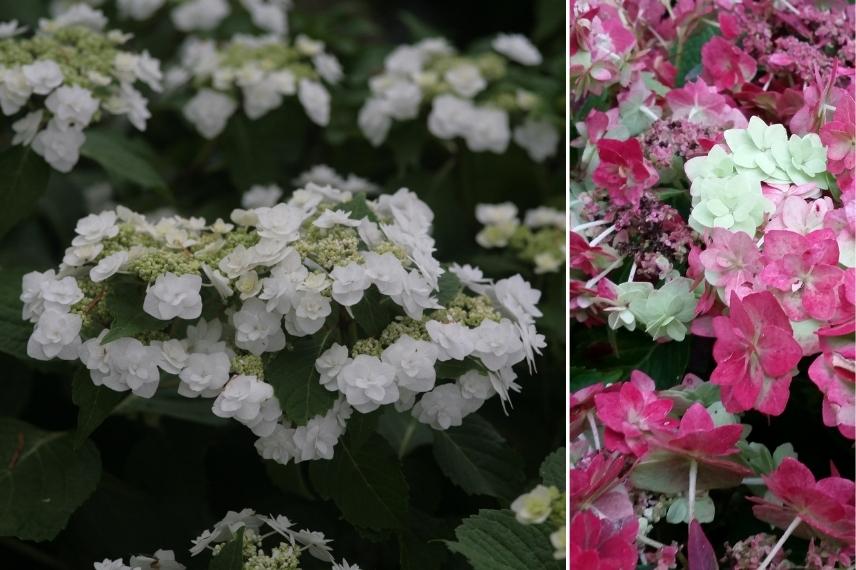
The Hydrangea ‘Wedding Gown’ will surprise you with its long and variable flowering. In June, above its dark green deciduous foliage, small star-shaped flowers with triple sepals of pure white colour bloom. Over time, they become punctate with pink, eventually turning crimson red by late summer. This small bushy young plant has a dense habit and forms a ball of 1.10 m in all directions at maturity. This beautiful hydrangea thrives in non-scorching sun, partial shade, and even shade, in acidic or neutral, rich soil that remains slightly moist at all times. It will bring softness and originality to the terrace, in a container or pot, in the garden as a specimen or in a mass, alongside the colourful flowers of spring-flowering bulbs or a Fuchsia.
Hydrangea macrophylla ‘Wedding Gown’
Hydrangea paniculata 'Sundae Fraise'
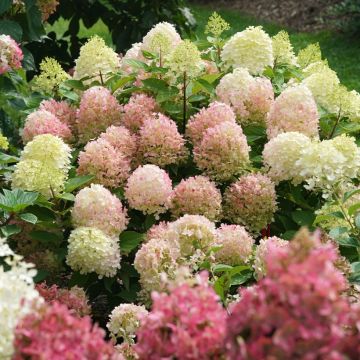
The Hydrangea ‘Sundae Fraise’ is a beautiful shrub, with dark green, deciduous foliage, growing between 1.20 m and 1.50 m at ripeness. When planted in sunlight, it produces large panicles of white flowers from July to October, quickly turning to soft pink, creating lovely colour gradients during the beautiful season. By late summer, the flowers eventually become carmine pink and its foliage takes on an orange hue. The branches that are less exposed to sunlight will bear panicles of flowers in lighter, whitish colours. Very hardy, this beautiful hydrangea will make a statement in a pot, as a specimen, or in a border alongside a Miscanthus or a Physocarpus. The Hydrangea ‘Sundae Fraise’ should be planted in sunlight if one wishes to enjoy its beautiful autumn colours, in humus-bearing soil, with a tendency towards acidic or neutral.
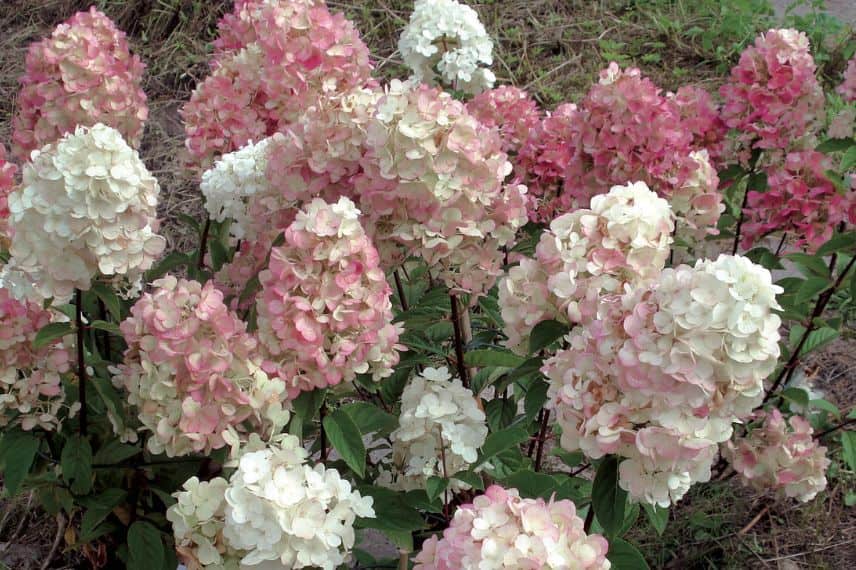
Hydrangea quercifolia 'Snowflake'
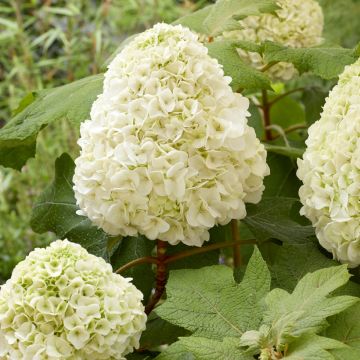
The Hydrangea ‘Snowflake’ stands out with its lovely small double flowers, gathered in elongated and curved panicles. They bloom in July, initially in an anise white, before turning a washed pink in autumn. It is also known as oak-leaved hydrangea due to its beautiful lobed leaves, which closely resemble those of the pedunculate oak. When the shrub is planted in sunlight, its deciduous foliage, medium green in colour, takes on beautiful decorative reddish-brown hues in autumn. Bushy in shape, it reaches 1.50 m in height and 1.20 m in spread at maturity. Very hardy, the Hydrangea quercifolia ‘Snowflake’ enjoys full sun and light partial shade, in humus-bearing soil, preferably neutral to acidic, but it tolerates some lime. It will naturally find its place in a free-standing hedge or in a shrub bed, alongside a Nandina or a Physocarpus.
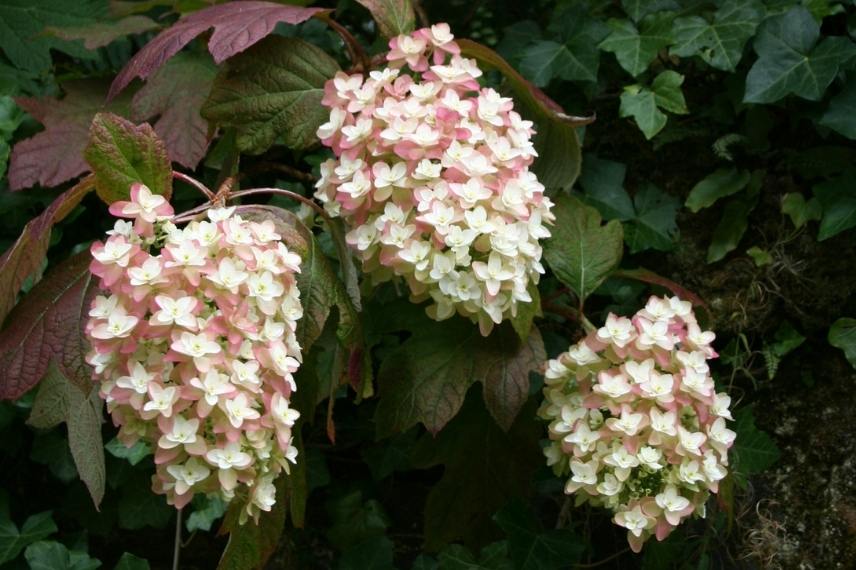
Hydrangea quercifolia Snowflake
For further reading
- Find all our varieties of Hydrangea
- To learn everything, check out our guide on Hydrangeas: planting, pruning and care.
- Subscribe!
- Contents

Comments