
Hydrangea paniculata Bobo

Hydrangea paniculata Bobo

Hydrangea paniculata Bobo

Hydrangea paniculata Bobo

Hydrangea paniculata Bobo

Hydrangea paniculata Bobo

Hydrangea paniculata Bobo

Hydrangea paniculata Bobo

Hydrangea paniculata Bobo

Hydrangea paniculata Bobo
Hydrangea paniculata Bobo
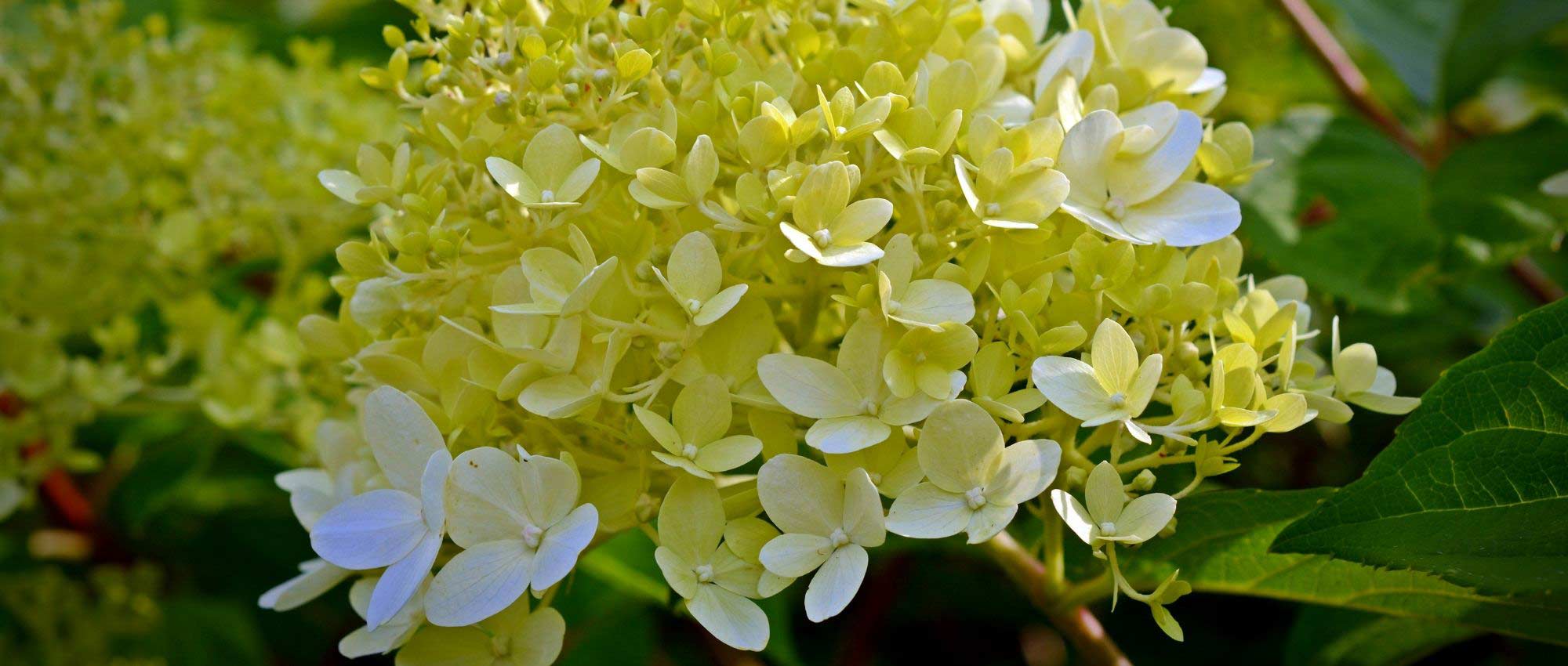
Hydrangea paniculata Hydrangea paniculata ‘ILVOBO’, Hydrangea paniculata Bobo®
Paniculate Hydrangea, Panicled Hydrangea, Panicle Hydrangea
Very cute dwarf Bobo hydrangea, it has adapted well.
Nath44, 12/03/2025
Back-to-school special offer!
Get €10 off for every €50 you spend! And get up to €40 off on a single order.
How does it work?
1. Shop your favourites
Add your favourite plants to your basket. For every €50 you spend (excluding delivery charges, store credit and the plastic-free option), you’ll receive a €10 voucher.
€50 spent = €10 voucher
€100 spent = €20 voucher
€150 spent = €30 voucher
€200 spent = €40 voucher
2. Place your order
Once your basket reaches one of the spending thresholds, place your order. You can even choose your delivery date!
3. Receive your voucher
As soon as your order has been shipped, you’ll receive an email containing your personal voucher code and its value.
4. Use it on your next order
Your voucher is valid for 90 days from the date you receive it. It can be used once only, on a new order worth at least the value of the voucher, excluding delivery charges.
Please note: Vouchers can be combined with other offers, but cannot be split or refunded.
Home or relay delivery (depending on size and destination)
Important: You may be charged customs duties by your country’s customs authorities upon delivery.
Schedule delivery date
and select date in basket
This plant carries a 24 months recovery warranty
More information
We guarantee the quality of our plants for a full growing cycle, and will replace at our expense any plant that fails to recover under normal climatic and planting conditions.

Would this plant suit my garden?
Set up your Plantfit profile →
Description
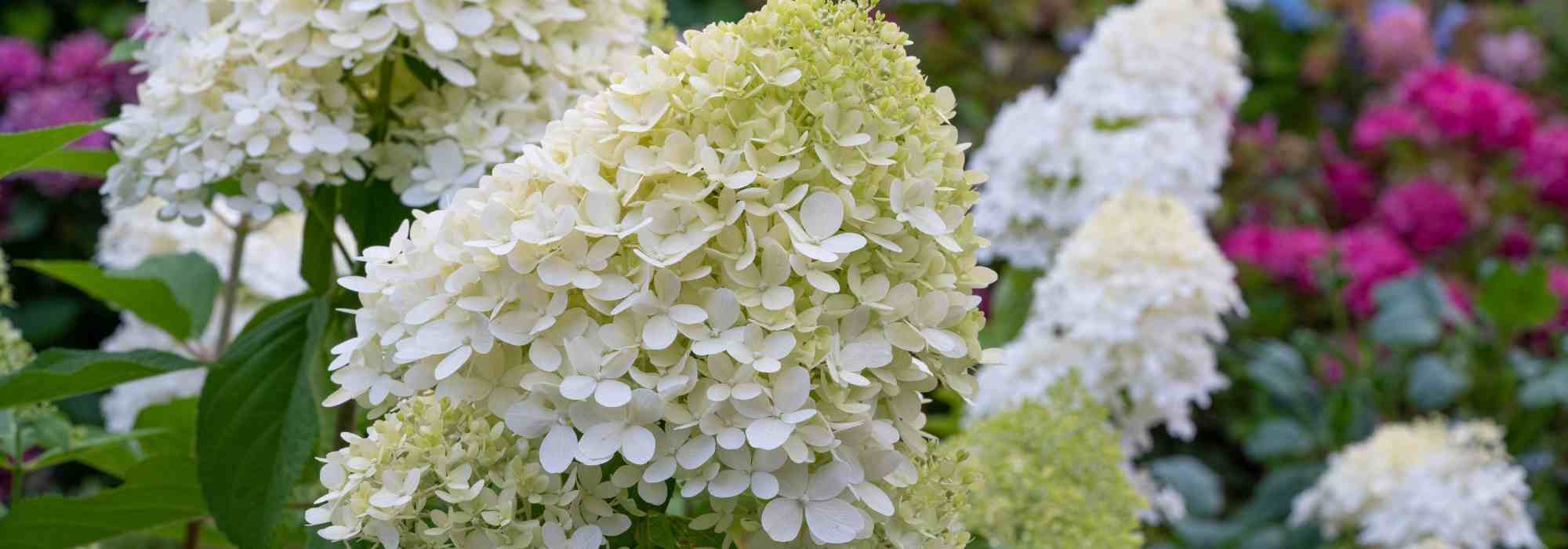
Petit par la taille, mais spectaculaire par l’abondance de sa floraison, l’Hydrangea paniculata Bobo® forme en été un buisson presque entièrement recouvert de fleurs. Ses grandes panicules passent du blanc légèrement verdâtre au blanc pur, puis se teintent de rose en fin de saison, lorsque les nuits deviennent plus fraîches. Sa végétation basse, ses tiges solides et sa floraison précoce en font l’un des meilleurs hortensias paniculés pour les petits espaces.
Son nom est Hydrangea paniculata ‘ILVOBO’, Bobo® étant sa dénomination commerciale. Ce cultivar appartient à la famille des Hydrangeacées. Il a été obtenu vers 2005 en Belgique par Johan Van Huylenbroeck, à l’Institut flamand de recherche pour l’agriculture et la pêche, à partir d’un semis issu de ‘Pink Diamond’. Bobo® a reçu un Florall Award d’or en 2010 avant d’être désigné « Pearl of the Awards » en 2024, parmi l’ensemble des cultivars récompensés depuis la création de ce concours. L'espèce botanique Hydrangea paniculata est un arbuste qui pousse naturellement en Chine centrale et méridionale, à Taïwan, au Japon, dans les îles Kouriles et à Sakhaline.
Bobo® forme un arbuste caduc, dense, buissonnant et légèrement plus large que haut. Il atteint 70 à 90 cm de hauteur pour 90 cm à 1,20 m d’envergure. Ses rameaux bruns, courts et assez rigides, portent des feuilles elliptiques d'un vert moyen, finement dentées. Sa croissance est plutôt lente, mais la plante fleurit dès son jeune âge. La floraison commence en juillet et se poursuit jusqu’en septembre. Les inflorescences coniques, très fournies, peuvent atteindre 25 à 30 cm de long. Elles sont composées d’une majorité de grandes fleurs stériles décoratives, auxquelles se mêlent quelques petites fleurs fertiles. D’abord vert tendre, elles deviennent rapidement blanches, puis prennent des nuances rose pâle en fin d’été. Leur coloration est plus marquée lorsque les nuits sont fraîches. Les panicules fanées restent décoratives en automne et peuvent être utilisées dans les bouquets frais ou secs. Comme tous les hortensias paniculés, Bobo® fleurit sur les pousses de l'année : la floraison est garantie même après un hiver rigoureux. Très rustique, il supporte des températures proches de –29 °C.
Cet adorable hortensia Bobo® se place au premier plan d’un massif arbustif, dans une bordure fleurie, une petite haie basse ou dans un grand bac. Planté par groupes, il forme une masse blanche particulièrement lumineuse dans les jardins anglais ou les jardins de curé. Il peut être associé au Deutzia Yuki Cherry Blossom®, au Physocarpus ‘Little Devil’ et au Nandina domestica ‘Fire Power’. Ses panicules entrent aussi dans la composition de bouquets frais ou secs, mêlées à des roses, des dahlias ou des fleurs champêtres.
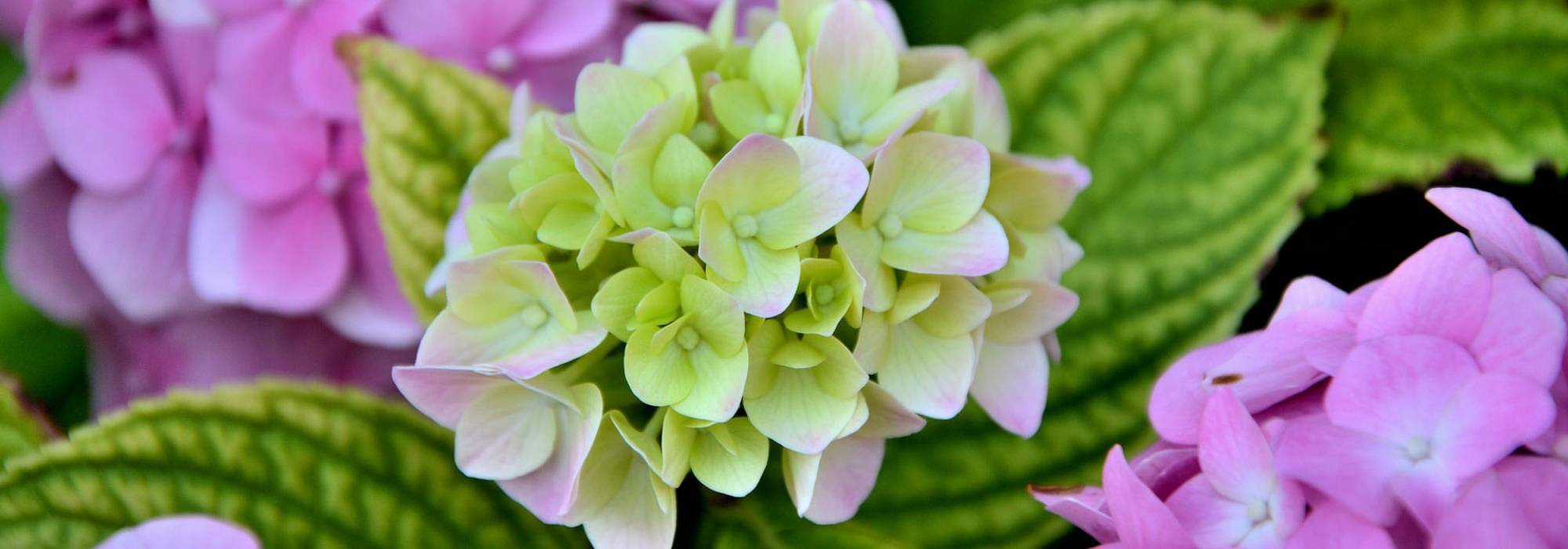
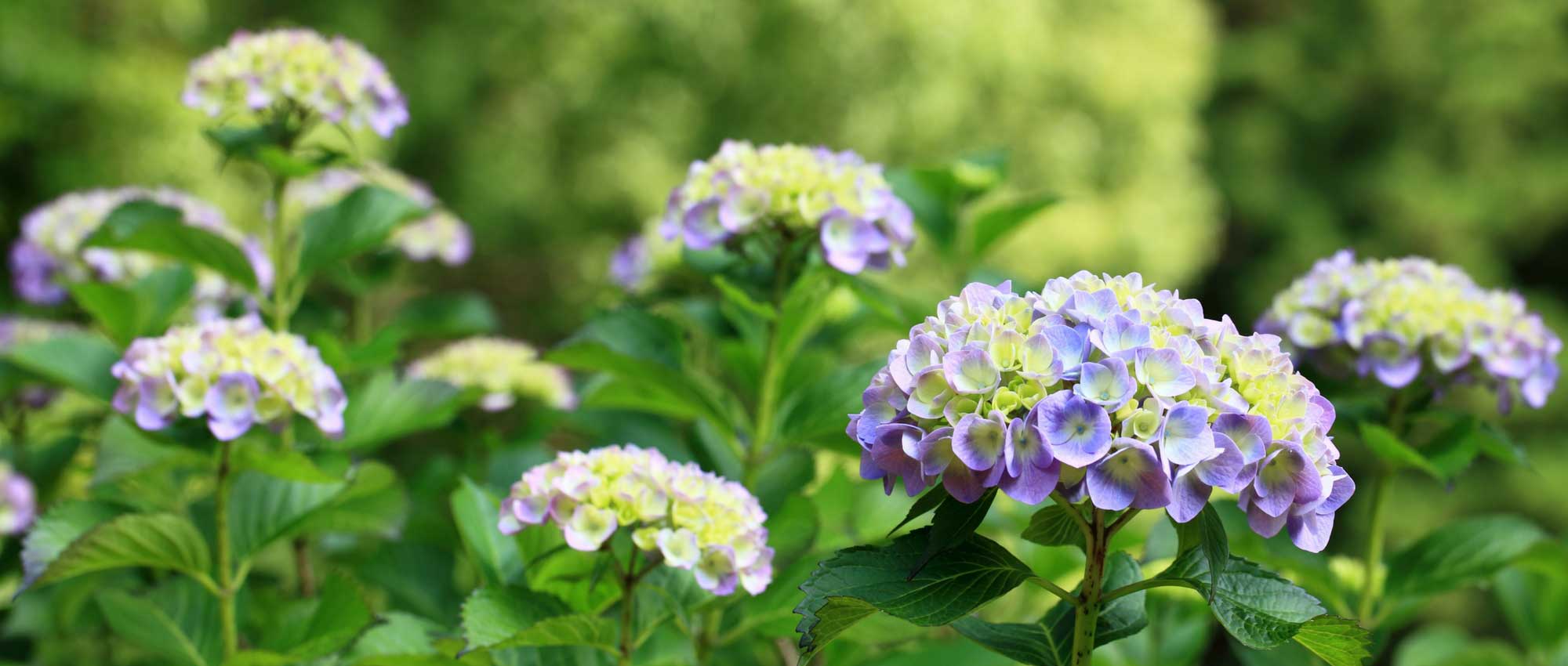
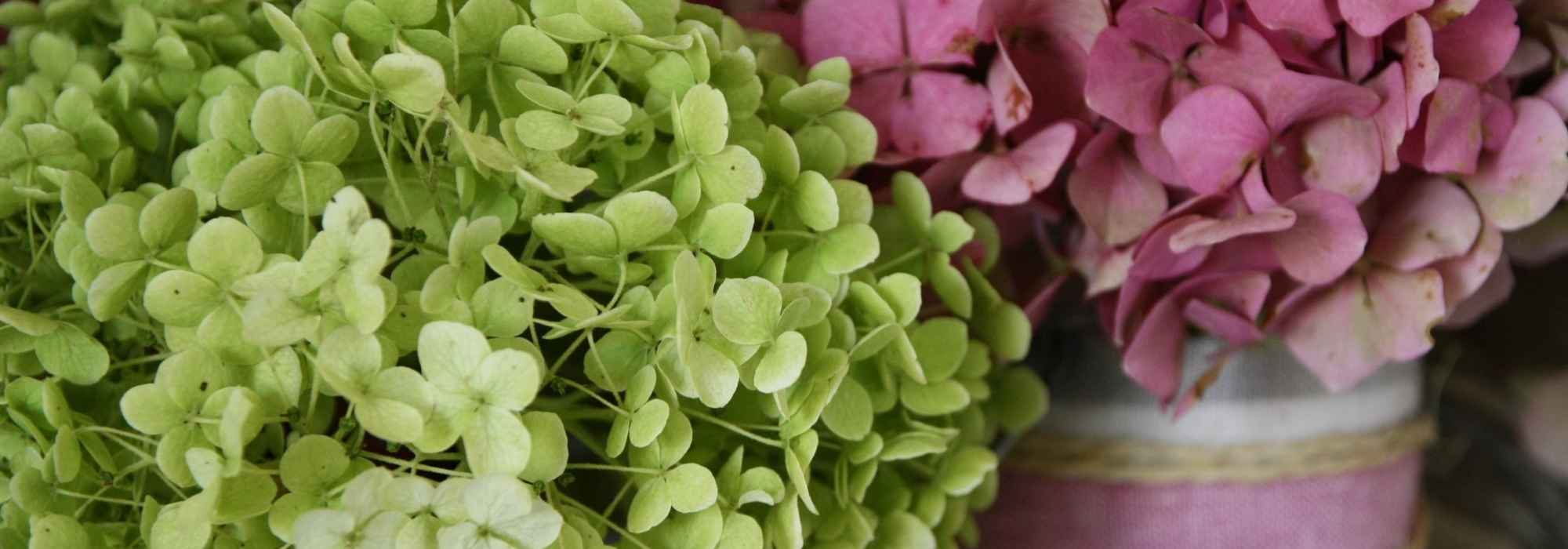
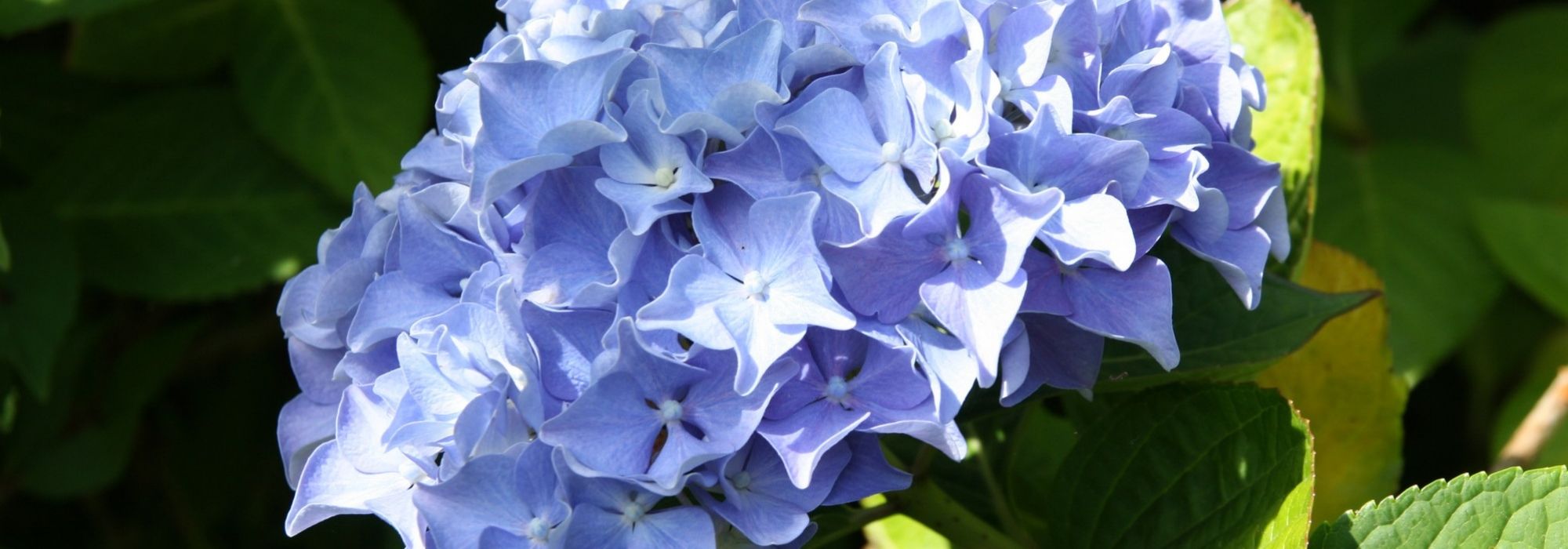
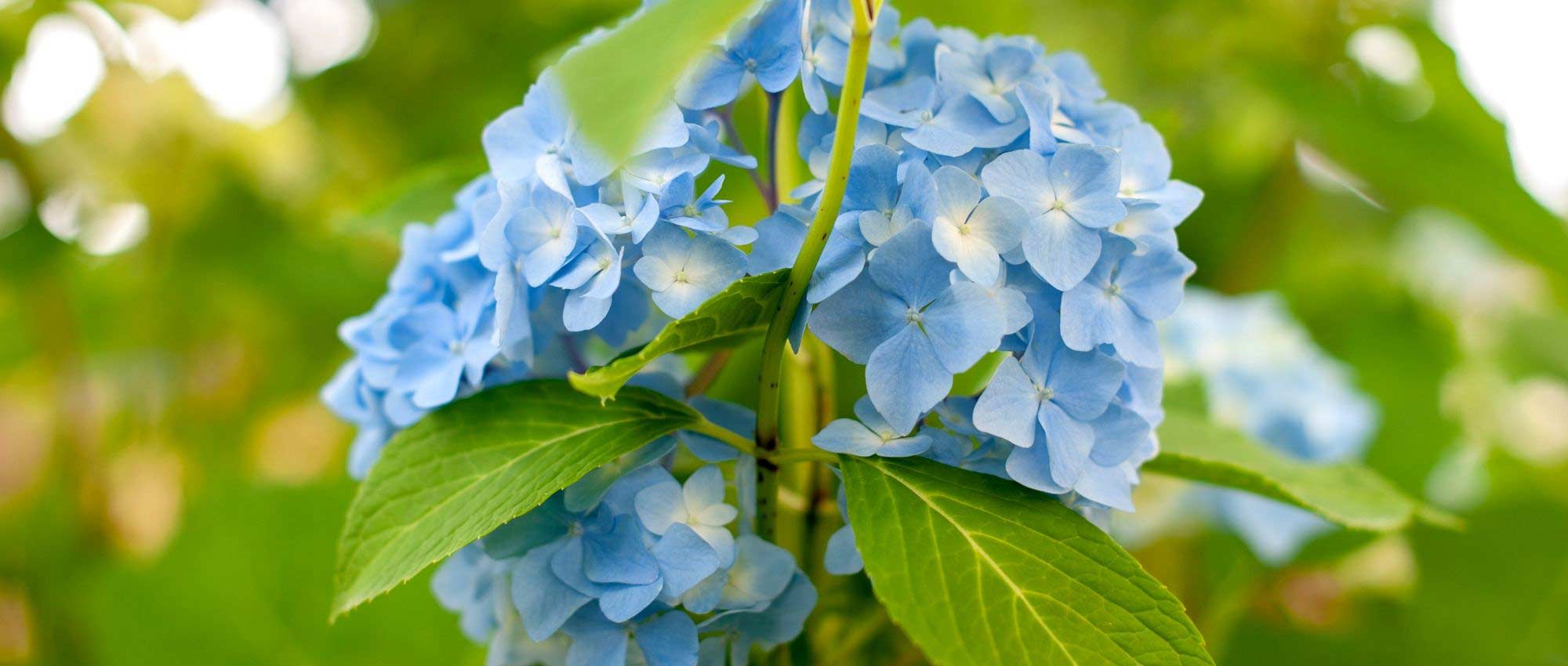
Hydrangea paniculata Bobo in pictures


Plant habit
Flowering
Foliage
Botanical data
Hydrangea
paniculata
Hydrangea paniculata ‘ILVOBO’, Hydrangea paniculata Bobo®
Hydrangeaceae
Paniculate Hydrangea, Panicled Hydrangea, Panicle Hydrangea
‘ILVOBO’ Bobo®
Cultivar or hybrid
Planting and care
Hydrangea paniculata Bobo® is preferably planted from September to November or from March to May, outside periods of frost or drought. It flowers in full sun in regions with temperate summers, but light partial shade is preferable in regions where summers are hot. This shrub requires a deep, fertile, humus-bearing, moist and well-drained soil. It tolerates acid, neutral or slightly calcareous soils, and the pH does not change the colour of its flowers. Regular watering during the first two years and an organic mulch help it to establish; in a pot, the growing medium must never dry out completely. An application of well-rotted compost in spring is generally enough to support its flowering.
Planting period
Intended location
Care
Planting & care advice
-
, onOrder confirmed
Reply from on Promesse de fleurs
Recently viewed products
Haven't found what you were looking for?
Hardiness is the lowest winter temperature a plant can endure without suffering serious damage or even dying. However, hardiness is affected by location (a sheltered area, such as a patio), protection (winter cover) and soil type (hardiness is improved by well-drained soil).

The flowering period indicated on our website applies to countries and regions located in USDA zone 8 (France, the United Kingdom, Ireland, the Netherlands, etc.)
It will vary according to where you live:- In zones 9 to 10 (Italy, Spain, Greece, etc.), flowering will occur about 2 to 4 weeks earlier.
- In zones 6 to 7 (Germany, Poland, Slovenia, and lower mountainous regions), flowering will be delayed by 2 to 3 weeks.
- In zone 5 (Central Europe, Scandinavia), blooming will be delayed by 3 to 5 weeks.
In temperate climates, pruning of spring-flowering shrubs (forsythia, spireas, etc.) should be done just after flowering.
Pruning of summer-flowering shrubs (Indian Lilac, Perovskia, etc.) can be done in winter or spring.
In cold regions as well as with frost-sensitive plants, avoid pruning too early when severe frosts may still occur.
The planting period indicated on our website applies to countries and regions located in USDA zone 8 (France, United Kingdom, Ireland, Netherlands).
It will vary according to where you live:
- In Mediterranean zones (Marseille, Madrid, Milan, etc.), autumn and winter are the best planting periods.
- In continental zones (Strasbourg, Munich, Vienna, etc.), delay planting by 2 to 3 weeks in spring and bring it forward by 2 to 4 weeks in autumn.
- In mountainous regions (the Alps, Pyrenees, Carpathians, etc.), it is best to plant in late spring (May-June) or late summer (August-September).
The harvesting period indicated on our website applies to countries and regions in USDA zone 8 (France, England, Ireland, the Netherlands).
In colder areas (Scandinavia, Poland, Austria...) fruit and vegetable harvests are likely to be delayed by 3-4 weeks.
In warmer areas (Italy, Spain, Greece, etc.), harvesting will probably take place earlier, depending on weather conditions.
The sowing periods indicated on our website apply to countries and regions within USDA Zone 8 (France, UK, Ireland, Netherlands).
In colder areas (Scandinavia, Poland, Austria...), delay any outdoor sowing by 3-4 weeks, or sow under glass.
In warmer climes (Italy, Spain, Greece, etc.), bring outdoor sowing forward by a few weeks.
Shipping country and language
Your country of residence may be:
Your country of residence is:
For a better user experience on our website, you can select:
Your shipping country:
-
 Austria
-
 Belgium
-
 Bosnia & Herzegovina
-
 Bulgaria
-
 Croatia
-
 Cyprus
-
 Czechia
-
 Denmark
-
 Estonia
-
 Finland
-
 France
-
 Germany
-
 Greece
-
 Hungary
-
 Iceland
-
 Ireland
-
 Italy
-
 Latvia
-
 Liechtenstein
-
 Lithuania
-
 Luxembourg
-
 Malta
-
 Netherlands
-
 Poland
-
 Portugal
-
 Romania
-
 Serbia
-
 Slovakia
-
 Slovenia
-
 Spain
-
 Sweden
-
 Switzerland
Language:
-
French
-
 English
-
Spanish
-
Italian
-
German
-
Portuguese
-
Dutch
-
Finnish
My Account
Hello
My wish lists
My cart
Log in / Register
Existing customer?
This form is protected by reCAPTCHA - the Google Privacy Policy and Terms of Service apply.
New customer?
Create an account to track your orders, access our customer service and, if you wish, make the most of our upcoming offers.