





























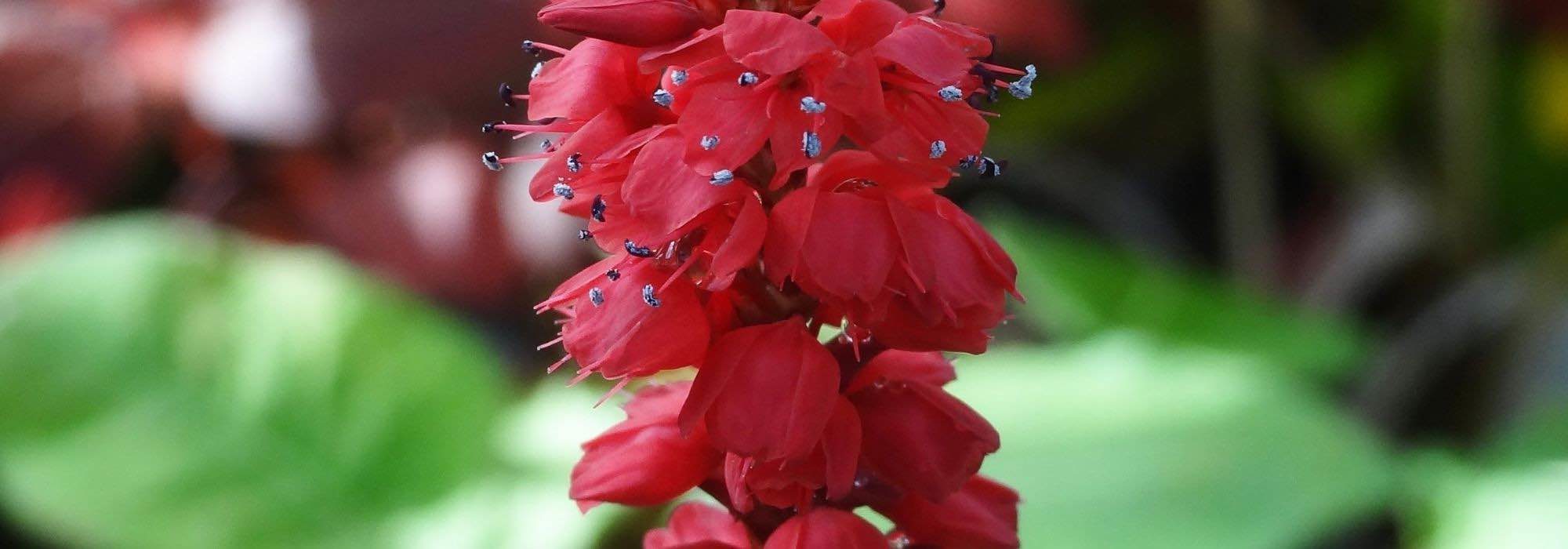
7 red-flowered Persicarias
Flamboyant little spikes in the garden
Contents
Persicarias, or Knotweeds bring a joyful presence to all gardens with fresh soil with their dancing spikes. They can have a modern look with their sleek style or a wild appearance with their natural simplicity. In white, pink, or red spikes, with simple or more sophisticated foliage, they are always easy to grow and very hardy. Persicaria is robust, quickly forms mature clumps, and establishes itself permanently in the garden. It thrives in partial shade, and for some, in full sun, in fresh soil. It often appreciates moist and even heavy soils.
Let’s explore the species and varieties of red-flowered Persicarias; beautiful and renowned cultivars have proven themselves in this colour. In the late summer sun and at dusk, their warm hues blend beautifully with golden grasses, and this duo creates a remarkable scene in the western light. Discover the beautiful red spikes of Persicarias without delay.

Persicaria amplexicaulis 'Blackfield'
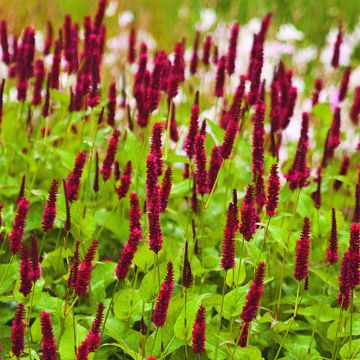
Very intense, the Persicaria amplexicaulis ‘Blackfield’ boasts spectacular burgundy red flower spikes due to their powerful colour. Almost black in bud, its spikes, measuring 7 to 10 cm long, bloom from July to October in a very dark deep red. Particularly floriferous, this cultivar reaches a height of 80 cm and a width of 50 cm, or even more over time. Its lanceolate leaves, 15 to 25 cm long, are of a medium green and turn reddish in autumn.
Plant it in partial shade in cool, even heavy soil, within a light red flowering scene: Penstemons such as Penstemon barbatus ‘Coccineus’ and Agastaches. Add golden grasses that complement it beautifully.
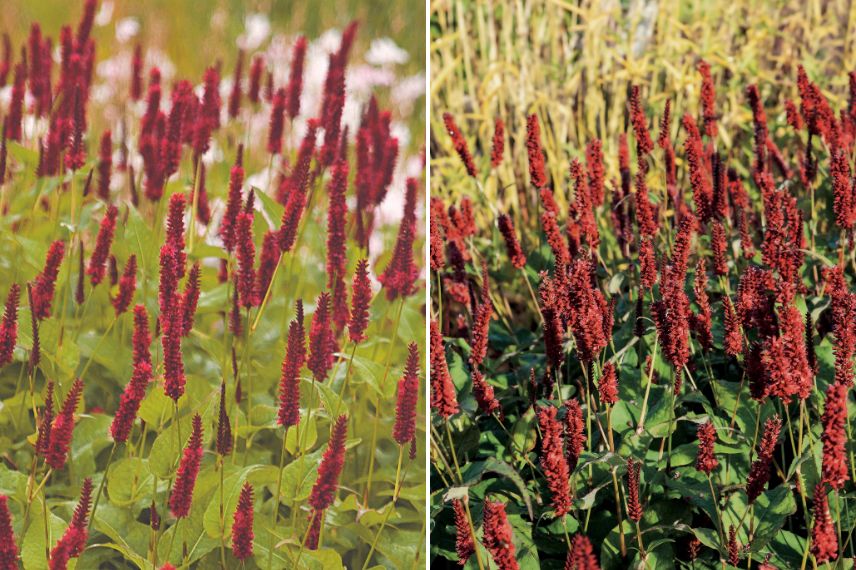
Persicaria amplexicaulis ‘Blackfield’
Persicaria amplexicaulis 'Fat Domino'
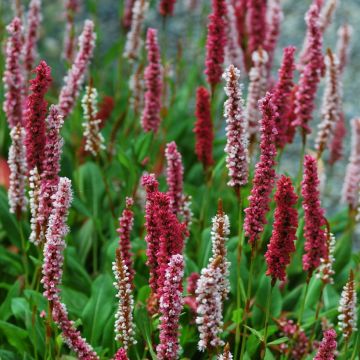
The spikes of Persicaria amplexicaulis ‘Fat Domino’, like those of other stem-clasping Persicarias, dance and undulate throughout the summer and into the frosts. These are a beautiful raspberry-red hue. A large plant, it reaches 1 m in all directions at ripeness, within a few years. Its vividly deep-coloured spikes evolve from carmine red in buds to raspberry red over the season. Its deciduous leaves are slightly heart-shaped. Its spikes consist of multiple small, dense bell-shaped flowers.
Plant it with Daylilies and Echinaceas, or Heleniums in a fresh soil bed. Also consider the red foliage of the Deciduous Spindle in autumn.
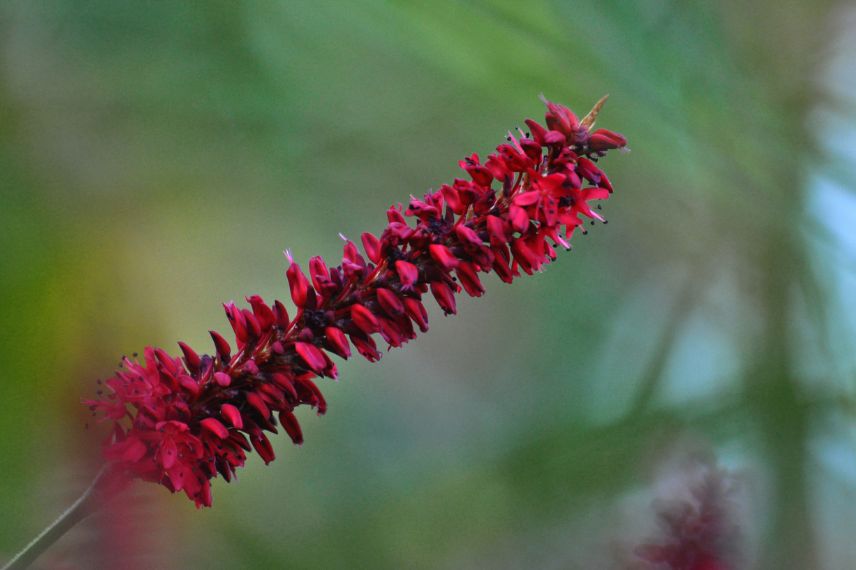
Persicaria amplexicaulis ‘Fat Domino’
Discover other Persicaria
View all →
Available in 2 sizes
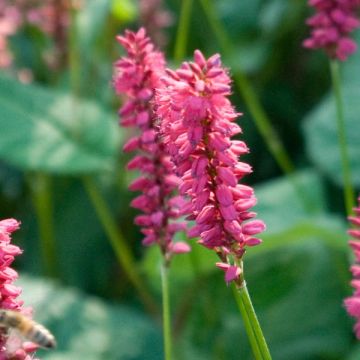
Available in 1 sizes
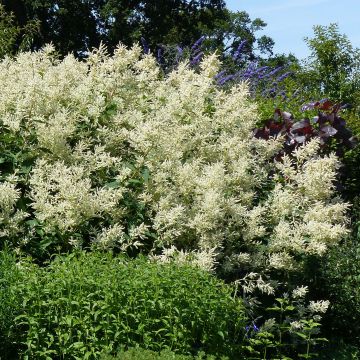
Available in 3 sizes
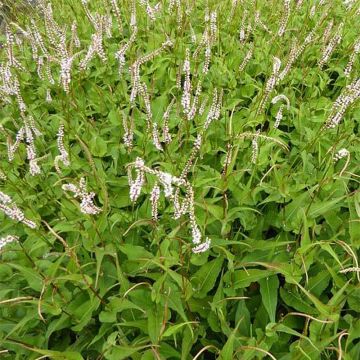
Available in 1 sizes
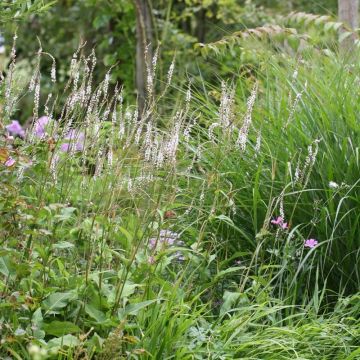
Available in 1 sizes
Available in 2 sizes
Available in 2 sizes
Available in 0 sizes
Available in 2 sizes
Available in 2 sizes
Persicaria filiformis
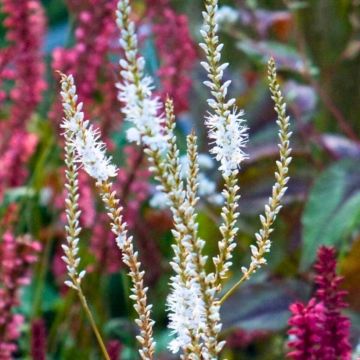
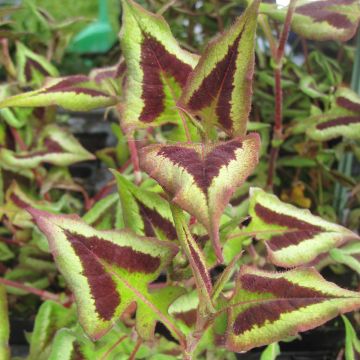
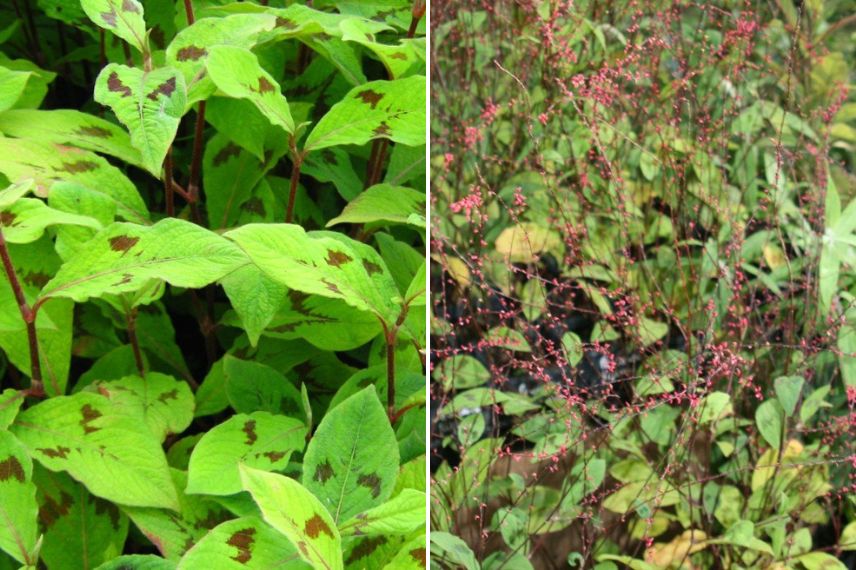
Thread-like, the Persicaria filiformis certainly is, with its flexible and very narrow stems bearing long, slender spikes made up of coral-red flowers. Its bright green foliage is also decorative: each leaf is marked with a chocolate-brown “V”. This knotweed forms a rounded clump, non-suckering, reaching 50 cm in height and 40 cm in width. From August to November, it displays its long spikes of coral-red flowers.
As a true knotweed, it thrives in cool to moist, rich soil, in partial shade. Plant it alongside Rodgersias with chocolate foliage, Lysimachias, Carex, and Hostas. Also consider Heucheras with brown foliage.
Persicaria filiformis
Persicaria 'Indian Summer'
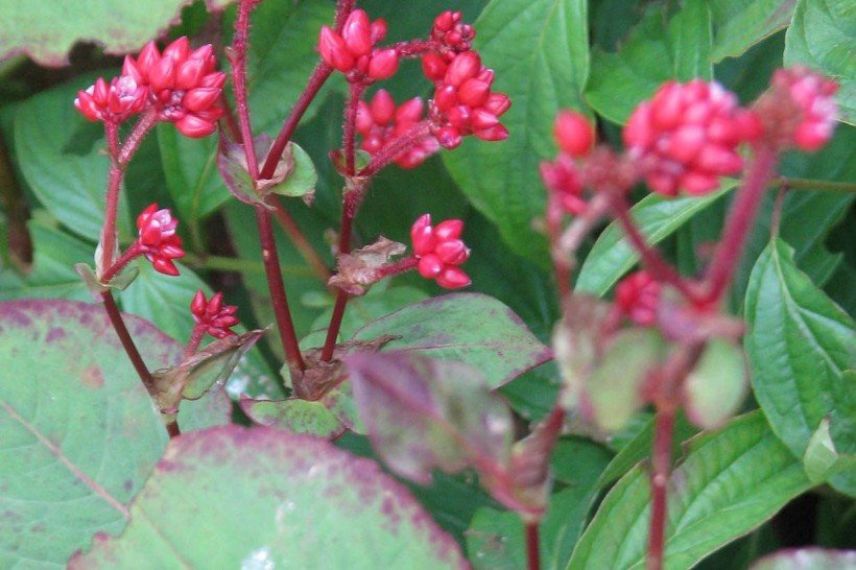
Collected in India, Persicaria ‘Indian Summer’ forms a beautiful clump of rounded leaves with numerous clusters of ruby-red flowers. It blooms from July until the first frosts. When planted in shade, its leaves are a medium green. In sunlight, they turn a deep red. Growing to a height of 60 to 80 cm when in bloom, it establishes itself in impressive clumps after a few years. Its flower buds are pink-red and glossy, opening to a soft pink.
In contemporary gardens as well as in wild settings, this knotweed can be planted in full sun or partial shade. Pair it with Japanese Anemones, Asters, and Thalictrums.
Persicaria ‘Indian Summer’
Persicaria amplexicaulis var. pendula
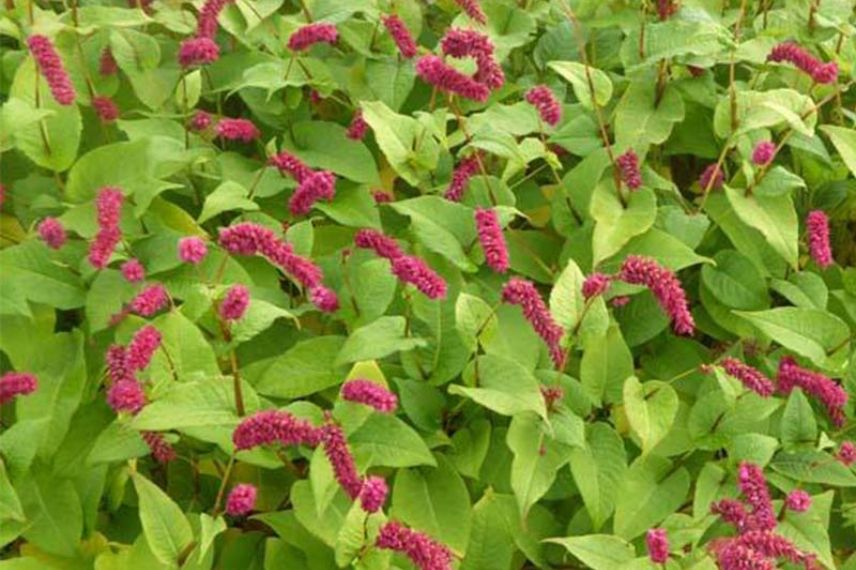
Called also Persicaria ‘Arun Gen’, Persicaria amplexicaulis var. pendula is a wild form of knotweed collected in Nepal, which is distinguished by its arching spikes. It forms a clump 50 to 60 cm tall, and spreads a little more, about 80 cm wide. Its brown stems bear numerous curiously curved spikes, 10 to 15 cm long, composed of multiple miniature flowers that are very dark pink in bud. These spikes turn magenta red upon blooming, with a matte finish. From July to October, the plant produces a profusion of flowers without tiring, in cool to moist soil, in full sun or partial shade.
Pair it, for example, with a beautiful Astilbe with upright spikes like the Astilbe chinensis var. taquetii ‘Purpurlanz’. Add the lightness of Verbena bonariensis, against a backdrop of Deschampsia cespitosa ‘Goldschleier’.
Persicaria amplexicaulis var. pendula
Persicaria filiformis 'Compton's Red'
Another remarkable foliage variety, Persicaria filiformis ‘Compton’s Red’ differs from the botanical species Persicaria filiformis by its foliage. The leaves are a darker green, an olive-green shade with a more pronounced, well-defined brown “V”. In some areas, it takes on a lovely red hue. Like the botanical species, this knotweed is adorned with red flowers in thread-like spikes in summer and early autumn. It forms a clump 80 cm high and 50 cm wide.
Plant it at the edge of woodlands with Hostas, ferns, and Tiarellas in the foreground.
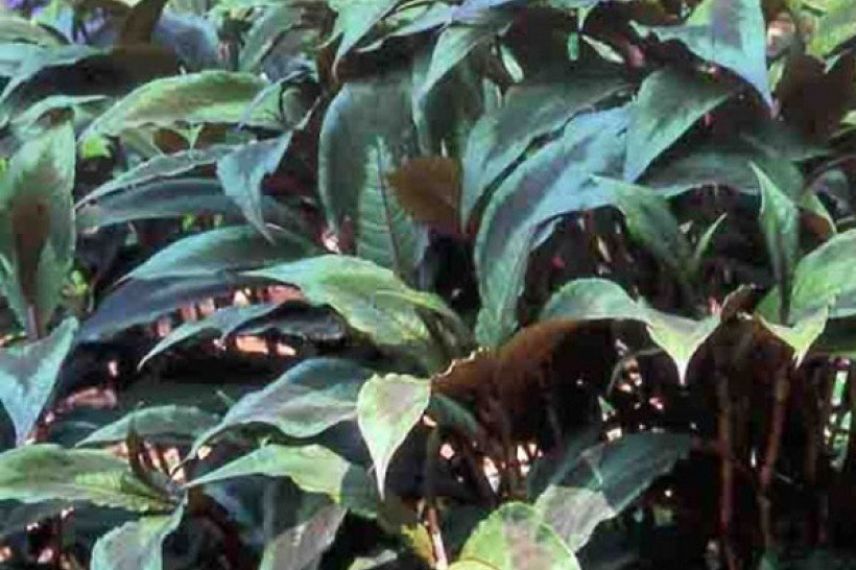
Persicaria virginiana ‘Compton’s Red’
Persicaria amplexicaulis 'Vesuvius'
Very attractive cultivar, the Persicaria amplexicaulis ‘Vesuvius’ boasts beautiful red colours. It blazes with rich, dark spikes and its purple foliage in autumn. After a few years, it forms a clump about 1 m in all directions. Its slender spikes, measuring 7 to 10 cm long, are composed of a multitude of small flowers in a lovely deep dark red. Like other stem-clasping knotweeds, it ignites with its beautiful colour from July to October.
Pair its lovely red with the spikes of Actaea pachypoda ‘Misty Blue’ and the foliage of Rodgersia pinnata ‘Bronze Peacock’ against a backdrop of Viburnum.
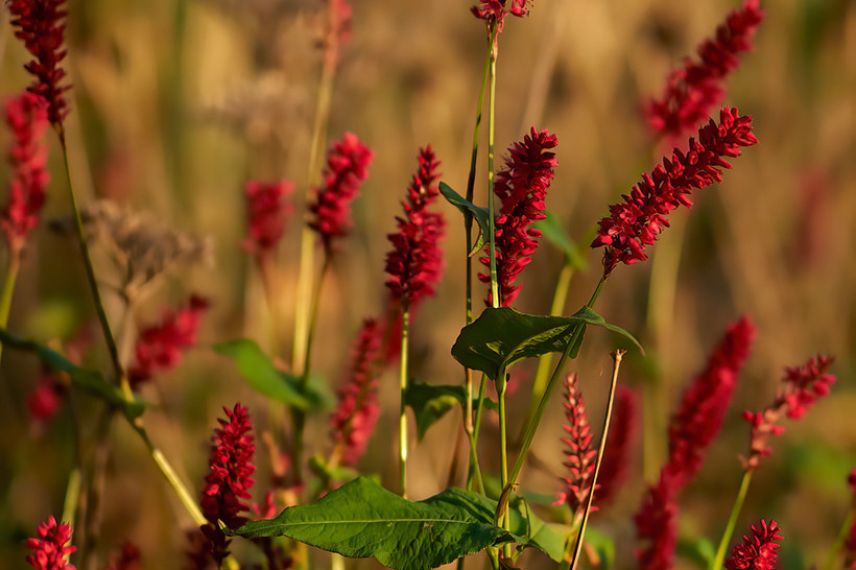
Persicaria amplexicaulis ‘Vesuvius’
- Subscribe!
- Contents
Comments