


Pairing ideas with Mangave
6 successful pairing ideas
Contents
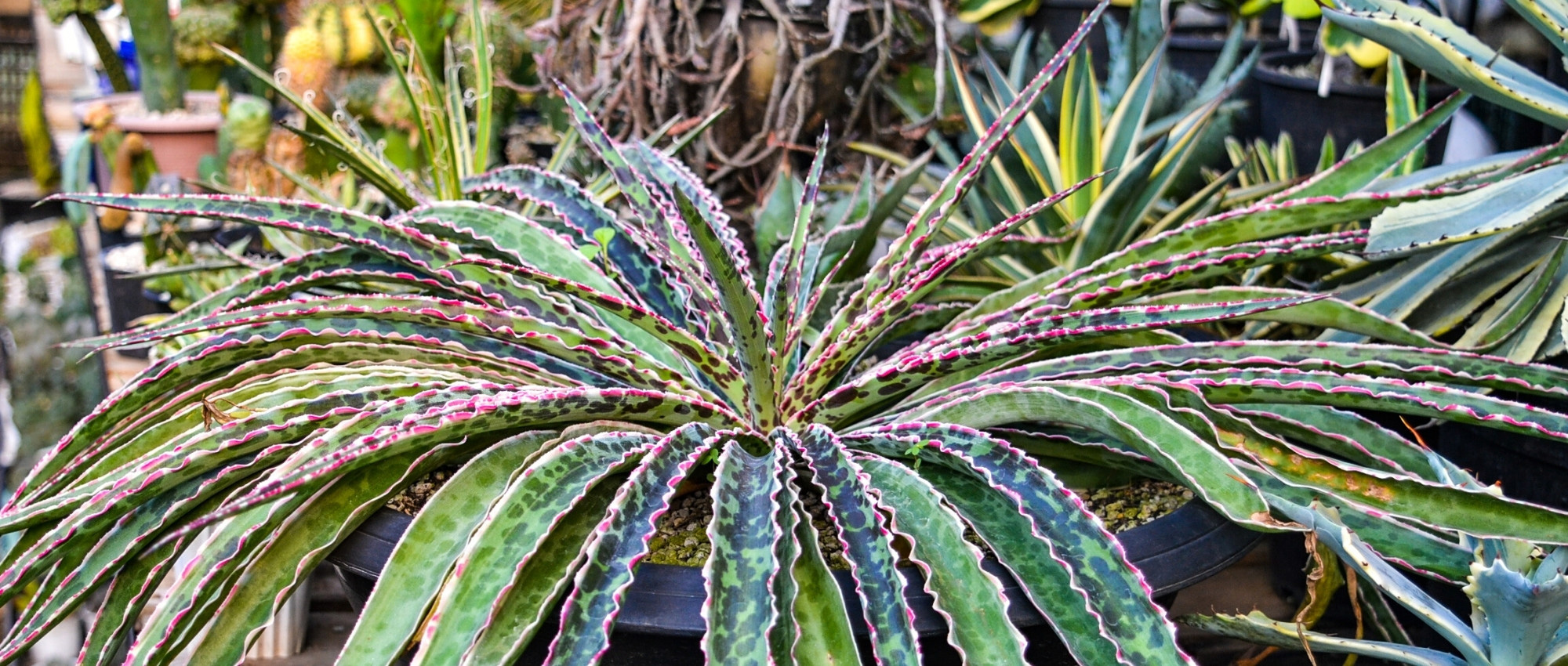
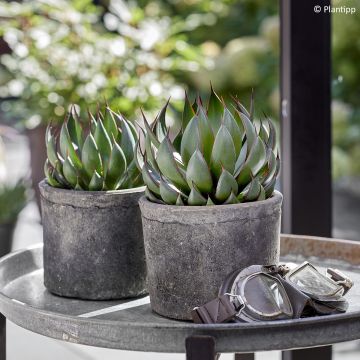
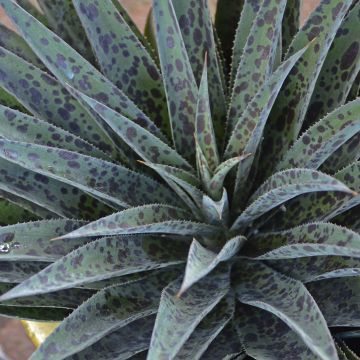
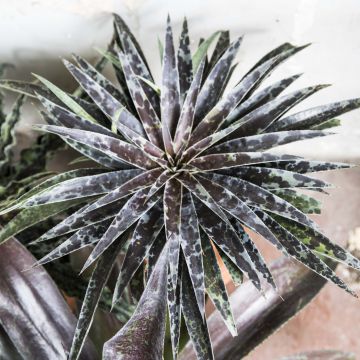
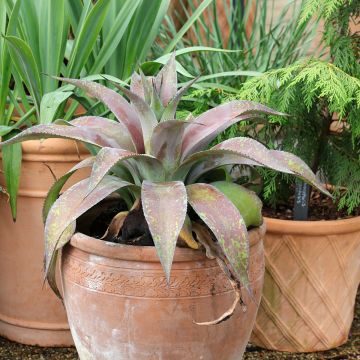
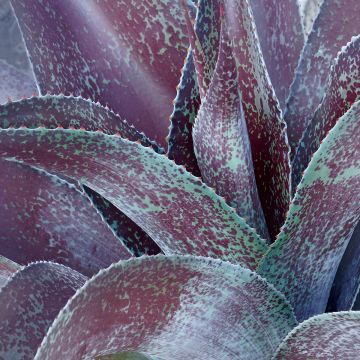
Mangave is a beautiful succulent plant that forms rosettes of thick leaves, available in a wide range of colours: green, blue, grey, reddish, orange, often spotted with purple. The leaves can be thin or wide, with the edge of the lamina either straight or undulate, sometimes thorny. These are plants with impeccable graphics! Mangaves are hybrids between Agaves and Manfredas. They have the advantage of growing a bit faster than Agaves, being less spiky than them (their leaves can be dentate, but with relatively soft teeth), and they offer a broader palette of colours!
Mangaves thrive in perfectly drained soil, rather dry, even sandy or stony. They are not very hardy and suffer when temperatures drop below –5 °C. Thus, they can be planted in the ground on the Côte d’Azur or the Atlantic or Breton coast, but in cooler regions, it is better to grow them in pots and bring them indoors for the winter. They adapt easily to pot cultivation and can create a beautiful summer display on a terrace. The variety Mangave ‘Macho Mocha’ is somewhat hardier: it tolerates temperatures between –10 and –12 °C in well-drained soil. Discover in this guide our best ideas and inspirations for combining Mangave and creating stunning exotic, Mediterranean, or graphic atmospheres, depending on your desires and your garden style!
And for everything you need to know about their cultivation, feel free to check out our complete guide on Mangaves!

In an exotic and graphic garden
With its agave-like appearance, colourful foliage, and preference for warmth and dry soils, the Mangave is destined for exotic-style gardens! It brings a very graphic and structured aspect. We recommend pairing it with other plants that have well-defined silhouettes, such as Phormiums, cordylines, dasylirions, and opuntias… not to mention agaves, the cousins of Mangaves: their similarly shaped foliage will complement each other to create a harmonious display. Alongside them, the very fine foliage of small grasses like Carex comans ‘Bronze’, blue fescue, or Stipa tenuifolia, will add movement and lightness. Also enjoy the highly decorative variegated foliage of the euphorbia ‘Glacier Blue’. You can plant alongside it the stunning Yucca filamentosa, which is very hardy and can withstand temperatures dropping between -20 and -25 °C. As for flowering, also choose structural plants, with inflorescences in upright spikes or spherical umbels, such as kniphofias, eucomis, Echinops ‘Star Frost’, Galtonia, and agapanthuses.
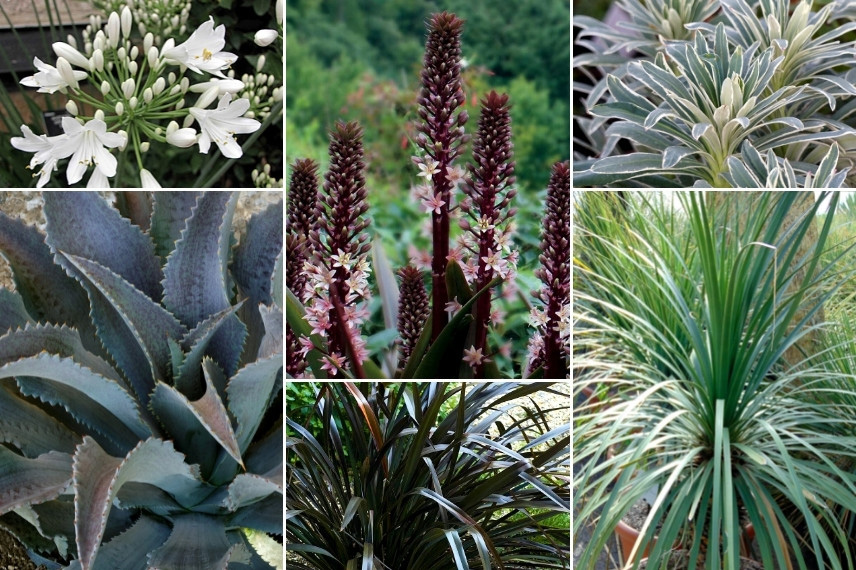
Agapanthus africanus ‘Albus’, Eucomis ‘Sparkling Rosy’, Euphorbia characias ‘Glacier Blue’, Mangave ‘Silver Fox’ (photo Adobe Stock), Phormium cookianum ‘Black Adder’, and Dasylirion longifolium
Read also
Mangave: Planting, Growing, and CareIn a sunny rockery
As it appreciates well-drained, rather stony or sandy substrates, the Mangave will be perfectly at home in a sunny rockery. You can create a rockery on a slope or bank, or build a raised mound, adding draining elements (coarse sand, gravel…) mixed with the soil, and place some large stones for aesthetic appeal and to retain the substrate. Additionally, planting the Mangave on a raised rockery will showcase it beautifully while facilitating water drainage by gravity. Pair it with small spreading or cushion-like plants, such as houseleeks, sedums, Iberis sempervirens, Delosperma, and Campanula muralis. You can also combine it with the lovely flowering of Erigeron karvinskianus, Armeria maritima, and helianthemums. Also consider rock geraniums, such as Geranium cinereum or Geranium renardii, which will brighten the rockery with their small five-petalled flowers in white, pink, mauve, or magenta.
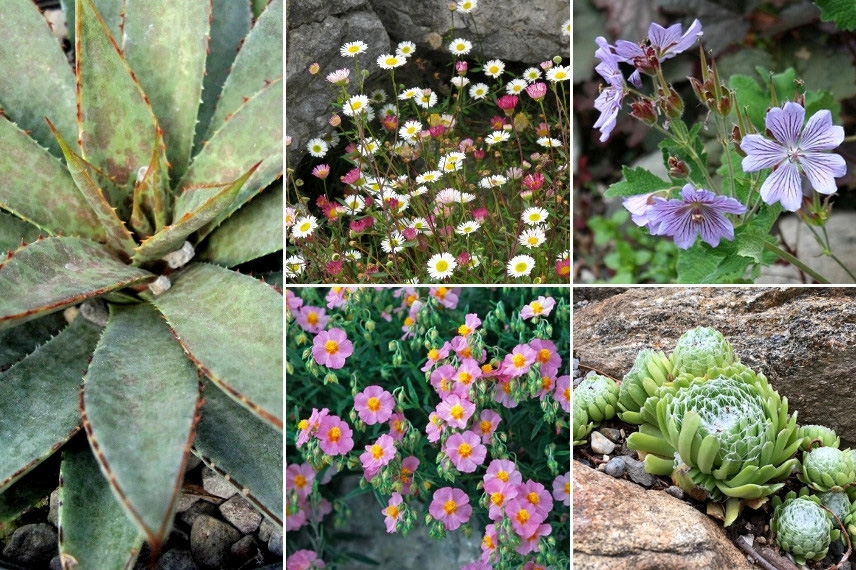
Mangave ‘Bloodspot’ (photo Megan Hansen), Erigeron karvinskianus (photo Robert Flogaus-Faust), Geranium renardii ‘Zetterlund’, Helianthemum ‘Lawrensons Pink’ (photo Friedrich Strauss – MAP) and Sempervivum arachnoideum (photo Kristine Paulus)
Discover other Mangave
View all →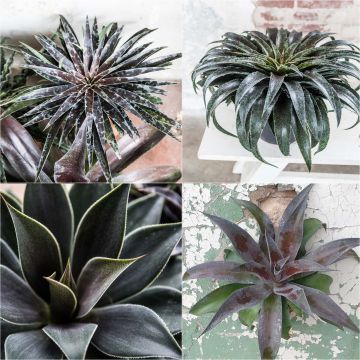
Available in 0 sizes
Available in 1 sizes
Available in 1 sizes
Available in 2 sizes
Available in 2 sizes
Available in 2 sizes
Available in 2 sizes
Available in 2 sizes
Available in 1 sizes
In a Mediterranean-style garden
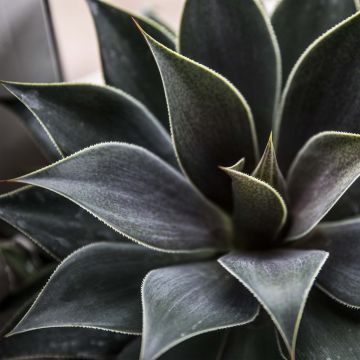
Particularly suited to mild climates, the Mangave will fit perfectly in a Mediterranean-style seaside garden. It will beautifully complement the majestic silhouette and silver foliage of an olive tree. To create a lovely harmony, you can choose a Mangave with leaves leaning towards grey or blue, such as the Mangave ‘Silver Fox’, or create contrast with the purplish-brown foliage of the Mangave ‘Mission to Mars’. Feel free to place aromatic plants alongside them: they have their place in Mediterranean gardens! For example, plant lavender, thyme, rosemary, savory, everlasting flower, and santolina. To bring colour, rely on the bright flowering of oleanders, lagerstroemias, and cistus. Don’t hesitate to incorporate climbing plants, such as bougainvilleas and bignonia, which you can train to climb on a trellis or pergola. Also enjoy the flowering of some perennials like Phlomis fruticosa, Eryngiums, Verbascums, and Euphorbia characias.
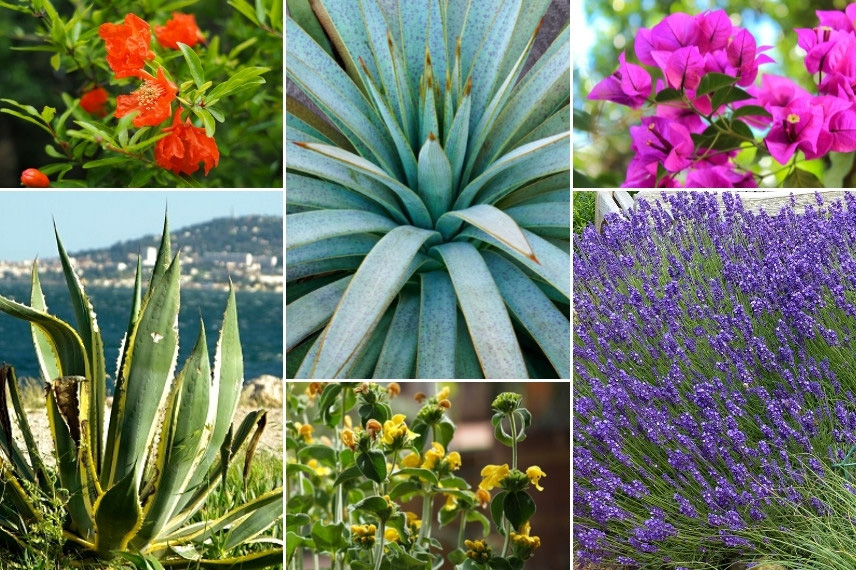
Punica granatum, Mangave ‘Man of Steel’, Bougainvillea, Agave americana ‘Variegata’, Phlomis fruticosa, and Lavandula angustifolia ‘Hidcote’
For a garden with warm tones!
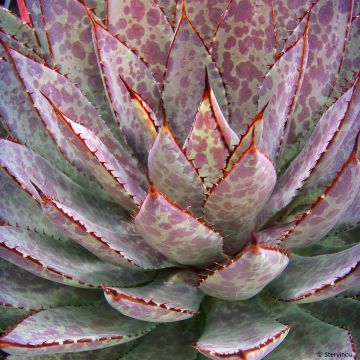
Enjoy the warm-toned Mangaves, such as the varieties ‘Bloodspot’, ‘Redwing’, or ‘Kaleidoscope’, and pair them with other plants in shades of red, orange, yellow, purple… for a bright and vibrant garden! Consider the flowering of kniphofia, crocosmia, daylilies, Cannas, and Hedychiums. Their exotic style will blend beautifully with the Mangave, creating a very exotic atmosphere! Also consider the Osteospermum ‘Cape Daisy Fire Burst’, which offers stunning daisy-shaped flowers in bronze-red. For foliage, also favour warm tones by choosing, for example, the Phormium ‘Pink Panther’, Carex comans ‘Bronze Form’, castor oil plant, Pennisetum setaceum ‘Rubrum’…
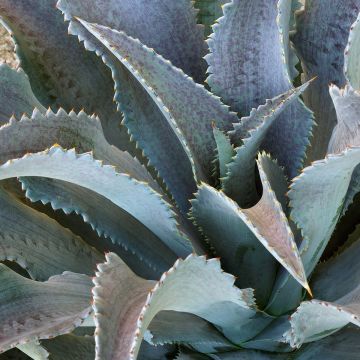
However, it should be noted that this style of planting, with its very bright colours, is more suited to large gardens. Red, in particular, can tend to overwhelm the space and make the planting a bit oppressive. In smaller gardens, it is better to favour cooler tones, which are more soothing and will bring more depth. You can create a beautiful planting by playing with shades of blue, green, grey, mauve… especially since many varieties of Mangaves offer foliage in bluish or silvery tones (‘Silver Fox’, ‘Man of Steel’…).
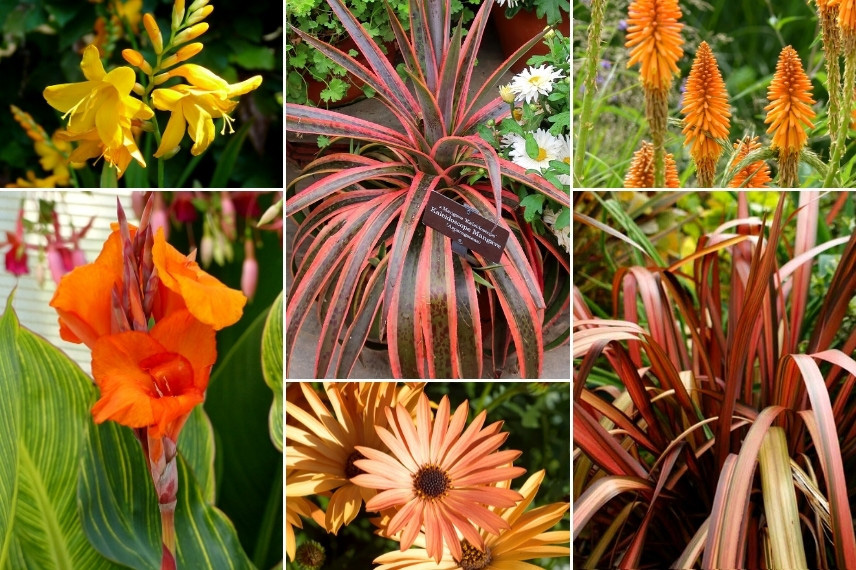
Crocosmia ‘Buttercup’, Mangave ‘Kaleidoscope’ (photo cultivar 413), Kniphofia ‘Fiery Fred’, Canna ‘Striata’, Osteospermum ‘Cape Daisy Terracotta’, and Phormium ‘Pink Panther’
To play with colour contrasts
For an impressive and very modern flowerbed, don’t hesitate to play with colours by creating contrasts! Highlight the Mangave by pairing it with opposite shades… There’s no better combination to showcase the exceptional colour of its foliage. For example, you can create a purple and anise bed, which will give a beautiful chiaroscuro effect. Choose, for instance, the Mangave ‘Lavender Lady’ or ‘Mission to Mars’. Enhance its dark hue by planting alongside it the houseleek ‘Dark Beauty’ and the cordyline ‘Superstar’, then create a surprising contrast by integrating among them the thyme ‘Bertram Anderson’, the Sedum ‘Lemon Ball’ or the Sedum reflexum ‘Angelina’. Also enjoy the very bright flowering of the spurge ‘Baby Charm’. You will achieve a modern flowerbed with refreshing hues that catches the eye and leaves no one indifferent!
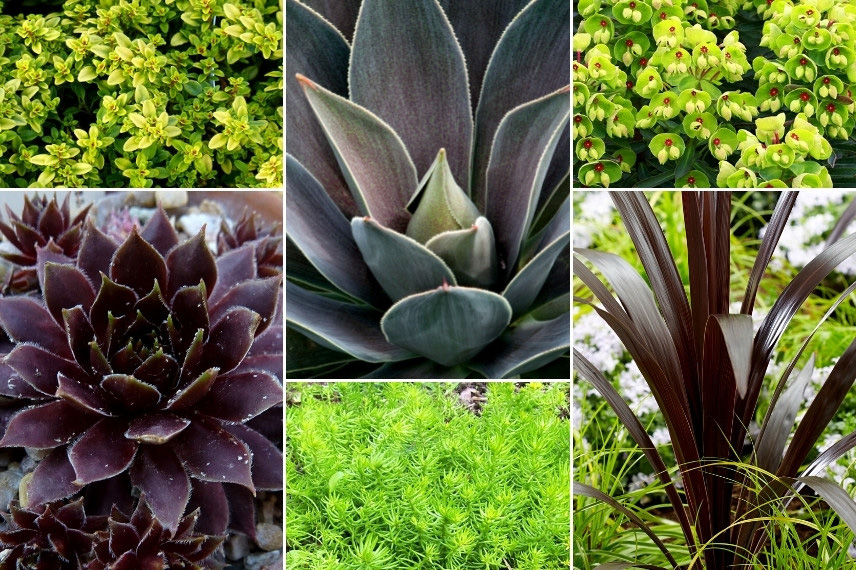
Thymus citriodorus ‘Bertram Anderson’, Mangave ‘Lavender Lady’ (photo Adobe Stock), Euphorbia characias ‘Baby Charm’, Sempervivum ‘Dark Beauty’ (photo Magnus Manske), Sedum ‘Lemon Ball’ and Cordyline obtecta ‘Superstar’
With ethereal flowerings, to create contrasts in shape!
The Mangave has thick, imposing leaves that are pointed and sharply defined, giving it an impeccable graphic silhouette! It can easily be highlighted by pairing it with much softer and lighter shapes. Choose perennials with airy, delicate flowering: gypsophila, gauras, Erigeron karvinskianus, Verbena bonariensis… Also favour plants with very fine and light leaves, such as grasses, which will additionally create movement with the slightest breeze, alongside the static and solid silhouette of the mangave. Surround it with numerous clumps of Stipa tenuifolia or Stipa pennata, as well as a few Pennisetums. The Mangave will give the impression of floating on a cloud! To emphasise the contrast, integrate a few other plants with a massive or spiky appearance, such as Agave montana, or Eryngiums.
Feel free to double this contrast of shapes with a contrast of colours by choosing a dark, purple, or black Mangave, and surrounding it with plants in light and bright colours: white, silver, cream, yellow, gold…
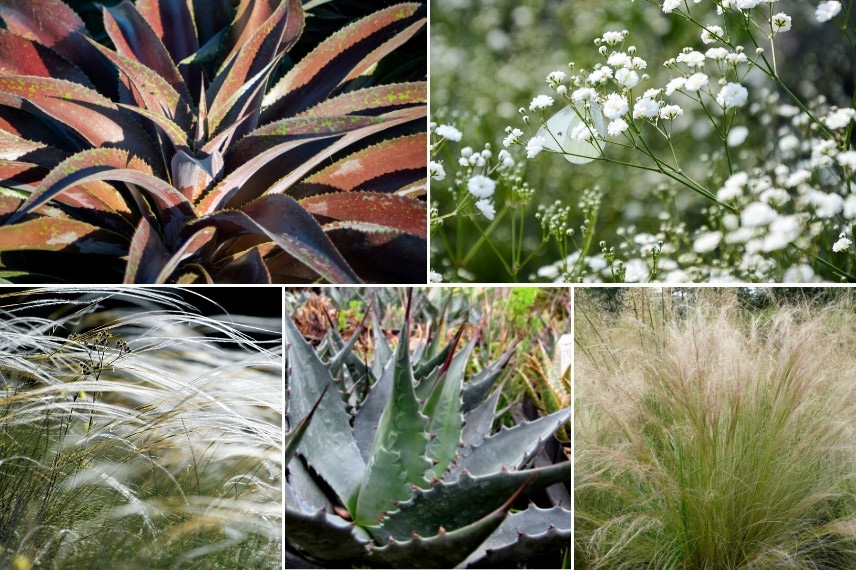
Mangave ‘Mission to Mars’ (photo Adobe Stock), Gypsophila paniculata (photo Adobe Stock), Stipa pennata, Agave montana (photo M. Hansen) and Stipa tenuifolia
- Subscribe!
- Contents
Comments