





























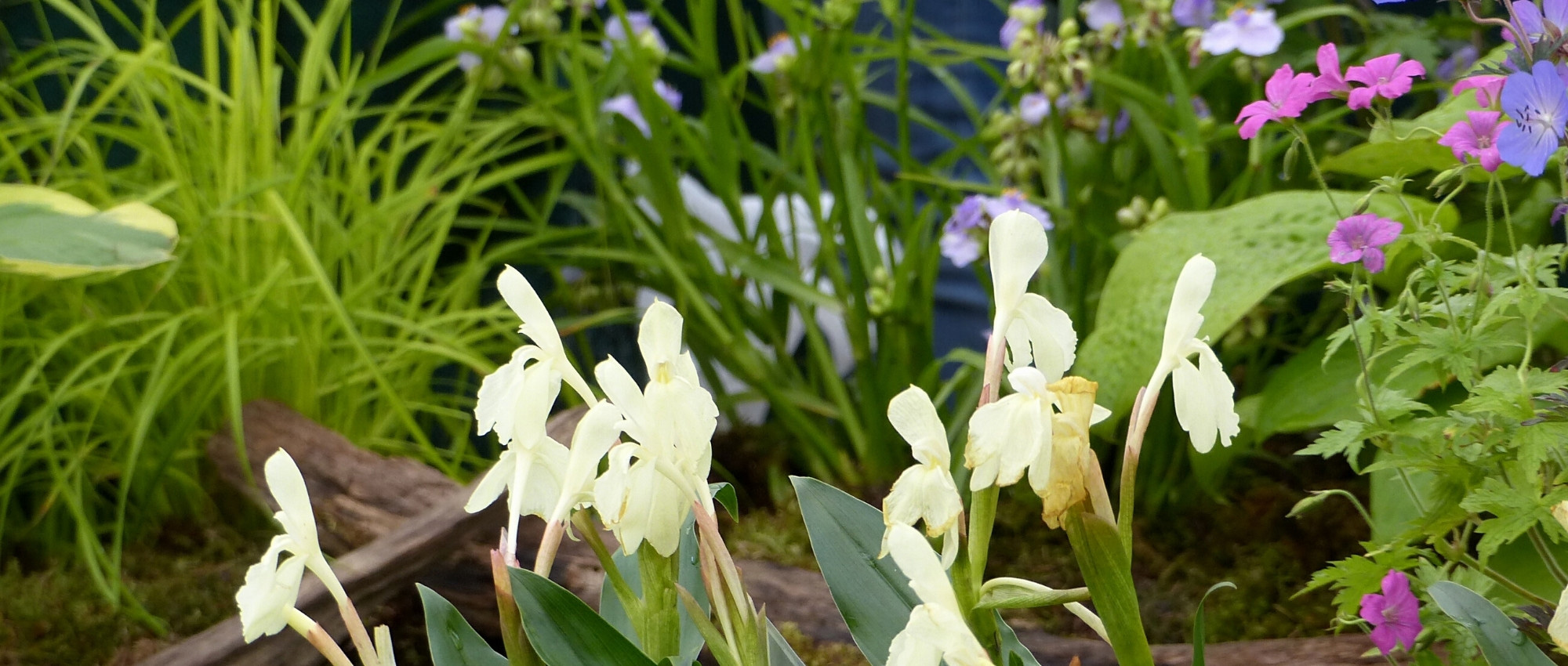
Pairing ideas with Roscoea
6 successful pairing ideas!
Contents
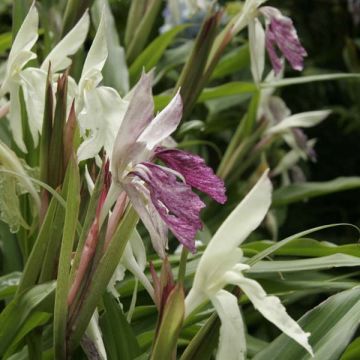
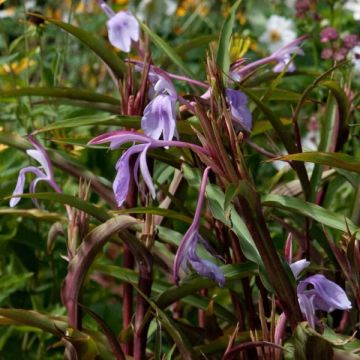
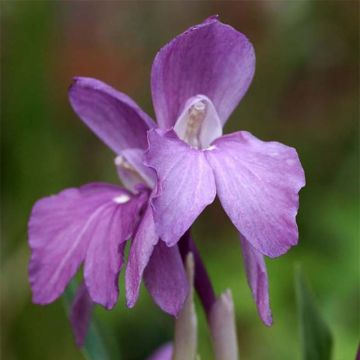
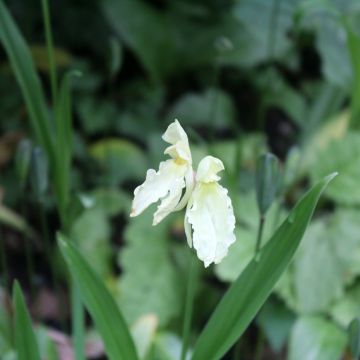
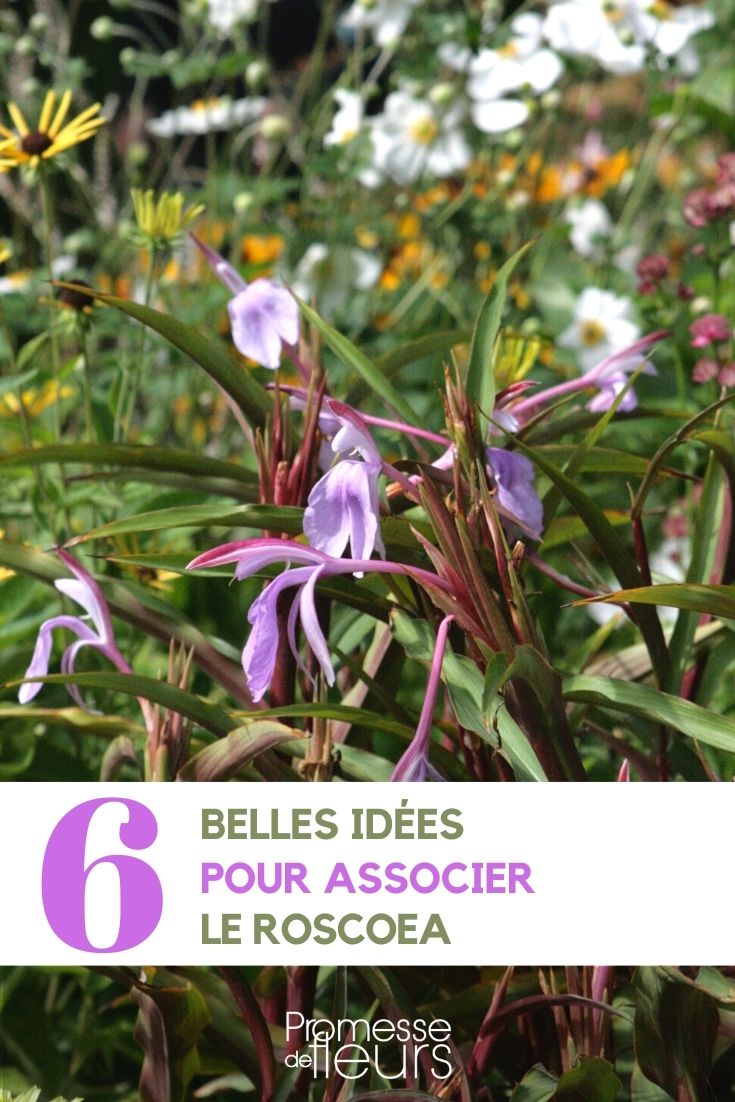
Roscoea is a beautiful tuberous perennial also known as “False Orchid” or “Orchid Ginger”, which produces stunning flowers resembling orchids in summer, such as Roscoea purpurea and Roscoea beesiana. Generally available in purple, mauve, or white, and more rarely in soft yellow or red (depending on the varieties), they are enhanced by beautiful, generous foliage with an exotic style, sometimes featuring dark red sheaths, creating a lovely contrast.
Roscoea thrives in partial shade, in cool, rich, and well-draining soil. It is quite hardy, able to withstand negative temperatures of around –15 to –20 °C. It is perfect for creating an exotic or naturalistic atmosphere, suitable for integrating into a rockery or an Asian garden, depending on your garden style. When planted in pots, it is also ideal for enhancing a semi-shaded terrace or balcony.
Discover our finest ideas and inspirations for pairing Roscoea!

In an exotic garden
With its generous foliage, sometimes colourful, and its original flowering, Roscoea easily fits into an exotic garden. For example, choose Roscoea purpurea ‘Spice Island’, with its cinnamon-brown foliar sheaths and reddish undersides of the leaves, or Roscoea ‘Red Gurkha’, with bright red flowers. To create a “jungle” atmosphere, place alongside it plants with giant leaves, such as Gunnera, Tetrapanax, Fatsia, Datisca cannabina, palms, and bananas. This will create a beautiful effect of lush vegetation. Also discover Sauromatum venosum and arisaemas, with their beautifully cut leaves and surprising flowering! Next to them, feel free to add some touches of colour with the warm foliage of Phormium tenax ‘Pink Panther’, Cordyline ‘Cherry Sensation’, Carex ‘Bronze Form’, castor beans, and colocasias. For flowering, favour original shapes and warm tones (yellow, orange, red…): think for example of crocosmias, kniphofias, hedychiums, and hemerocallis. You can also incorporate some climbing plants, such as akebias or passionflowers.
Discover our inspiration page “Exotic Ambience”, our advice sheet “Exotic Garden: All Our Tips for Designing It”, and our blog article “10 Exotic and Hardy Plants for Jungle Garden”
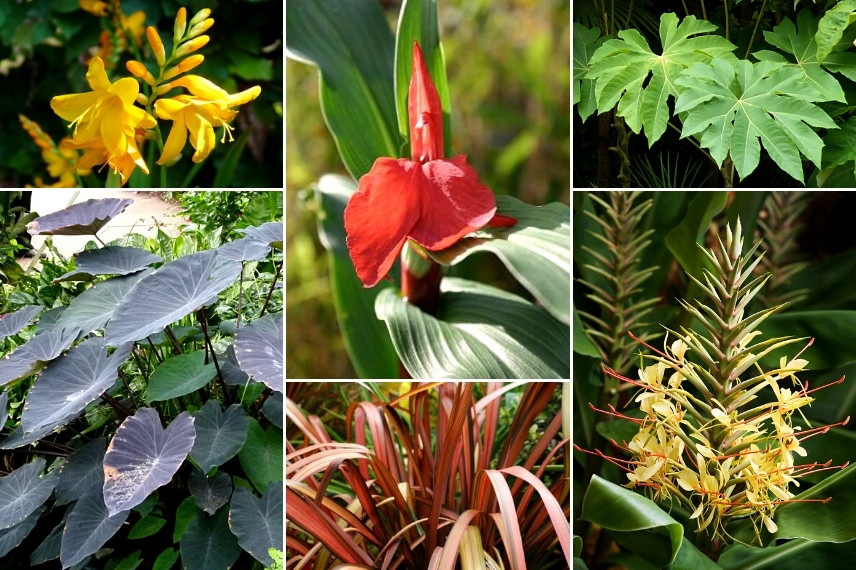
Crocosmia crocosmiflora ‘Buttercup’, Roscoea purpurea ‘Red Gurkha’ (photo John Jearrard), Tetrapanax papyrifera ‘Rex’, Colocasia ‘Black Magic’ (photo J. Rebel), Phormium ‘Pink Panther’ and Hedychium gardnerianum (photo J.J. Harrison)
Read also
Roscoea: Planting, Growing and CaringIn a naturalistic garden
With its orchid-like flowers, Roscoea easily finds its place in a naturalistic garden, in partial shade. Plant it alongside soft and airy flowerings, such as those of stem-clasping persicarias, sanguisorbes, and willowherbs, which can accompany the feathery spikes and fine foliage of grasses. Next to them, the small star-shaped flowers of masterworts will bring a very refined effect. You can also plant hardy geraniums. Consider garden orchids, such as Cypripedium, Dactylorhiza, and Calanthes, whose complex and original flowers will echo those of Roscoea. At the back of the border, the flowering of Veronicastrum and Aruncus dioicus will add height and volume to the ensemble. Also consider the Apiaceae, such as Angelicas or Selinum wallichianum; their very graphic and poetic umbels are delightful!
Discover our inspiration page “Naturalistic Garden” and our advice sheet “10 Emblematic Perennial Plants for Naturalistic Gardens”
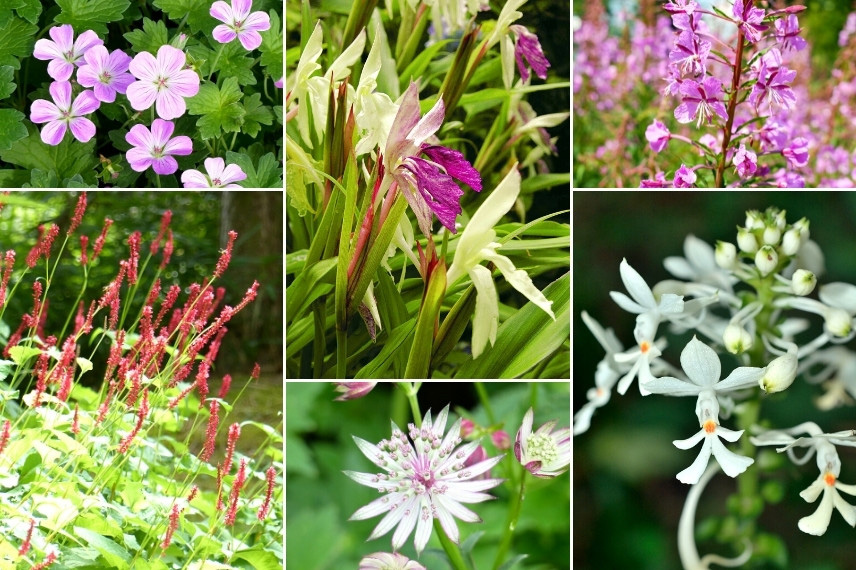
Geranium riversleaianum ‘Mavis Simpson’, Roscoea beesiana, Epilobium angustifolium, Persicaria amplexicaulis ‘Firetail’, Astrantia major ‘Ruby Star’, and Calanthe triplicata (photo Kuo-Chu Yueh)
Discover other Roscoea
View all →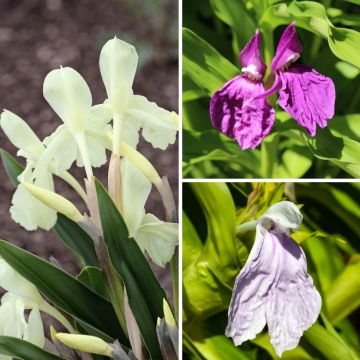
Available in 0 sizes
Available in 2 sizes
Available in 1 sizes
Available in 1 sizes
Available in 1 sizes
Available in 1 sizes
Available in 1 sizes
Available in 1 sizes
Available in 1 sizes
In a shaded rockery
Roscoea thrives in well-drained soils and grows in scree in the mountainous regions of East Asia, so it will be at home in a rockery, in a cool and shaded position. This allows it to be showcased by creating a raised bed with a draining substrate and stones to retain the soil and promote good drainage. In this mineral setting, plant it alongside saxifrages, lamiums, corydales, and tiarellas. For a very natural style, it will also accompany ferns such as hart’s-tongue, Cyrtomiums, and Coniogramme emeiensis, a lesser-known but highly graphic fern native to China. You can also incorporate hostas for their generous, often variegated foliage, as well as small ground-cover plants like Sagina subulata and Lysimachia nummularia, which will conform to the shape of the soil and rocks! We recommend choosing a variety of golden-leaved lysimachia, perfect for brightening the rockery and highlighting darker foliage through contrast. It will accompany Hakonechloa macra and Carex oshimensis, which also come in many bright variegated varieties.
For more tips and information, feel free to check our sheets “Creating a Rockery: Our Tips for Success” and “10 Plants for Creating a Shady Rockery”
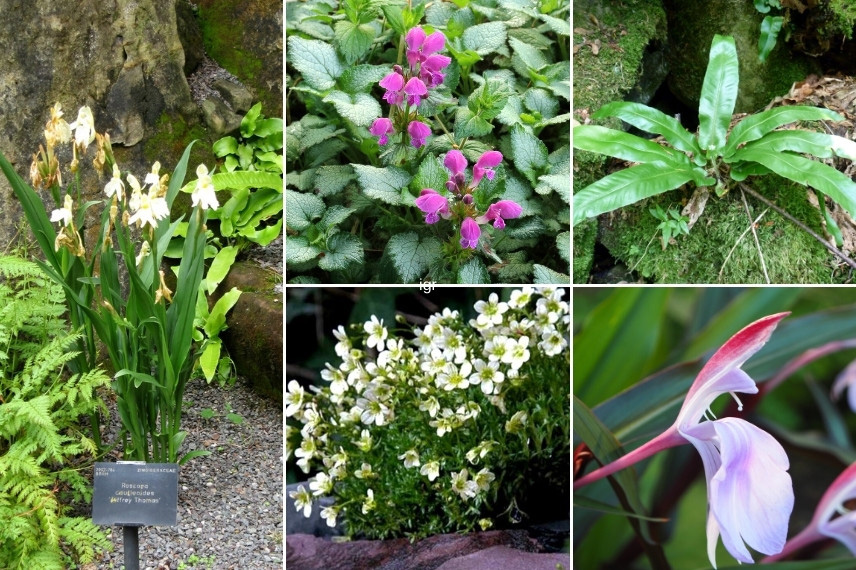
Roscoea cautleoides ‘Jeffrey Thomas’ (photo Leonora Enking), Lamium maculatum ‘Beacon Silver’, Asplenium scolopendrium (photo Florian Grossir), Saxifraga ‘Pixie White’ and Roscoea purpurea ‘Spice Island’ (photo Teresa Grau Ros)
Read also
10 plants to create a shady rockeryIn pots on the terrace or balcony
Roscoea adapts easily to pot cultivation, making it a lovely addition to a terrace, balcony, courtyard, or patio in a semi-shaded position. This allows you to keep it close to the house and enjoy it easily! Furthermore, in the colder regions, it will be very simple to bring the pot under cover for winter to protect Roscoea from the cold. Plant it in a pot or container (at least 30-40 cm in diameter and depth), with a rich, well-draining substrate, and place alongside it hostas, heucheras, and ivies with very decorative variegated foliage. Also, discover Begonia ‘Angel Blush’, which is hardy and features multicoloured palmate leaves with changing tones, as well as beautiful pink flowers in August-September. If you place these plants on a terrace with a pergola, you can let Akebia quinata climb, appreciated for its soft green, finely cut foliage. Also consider fuchsias and hardy geraniums, which will enliven your terrace with their flowering!
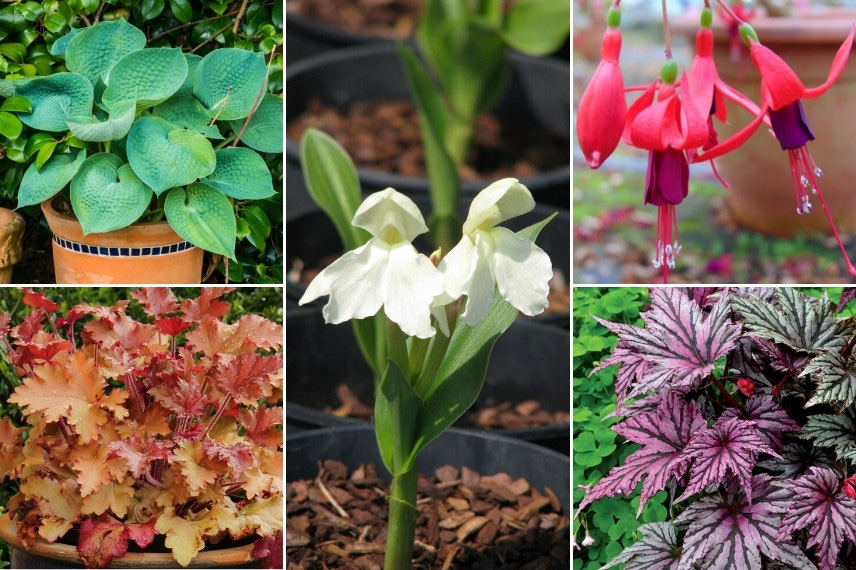
Hosta, Roscoea humeana (photo peganum), Fuchsia regia ‘Reitzii’, Heuchera ‘Marmelade’ and Begonia ‘Garden Angel Blush’
In a woodland garden
Shade-loving perennial with light and delicate flowering, Roscoea will easily integrate into a woodland garden, creating a very natural style. Compose a beautiful forest atmosphere by planting it alongside the lush foliage of ferns, hostas, and rodgersias. Next to them, bring small touches of brightness with the airy flowering of Japanese anemones and Thalictrums. Also consider the lovely Apiaceae Aegopodium podagraria ‘Variegata’, which offers very graphic white umbels and beautiful variegated foliage, perfect for brightening up a woodland! Also install the Geranium nodosum, a shade-loving hardy geranium adorned from May to September with lovely lavender-blue flowers and beautiful palmate, light green foliage. You can let periwinkles run at the foot of the trees, with effective groundcover foliage to smother weeds. This shaded part of the garden, in a wild and natural style, will require little maintenance and will give you the feeling of a true forest walk!
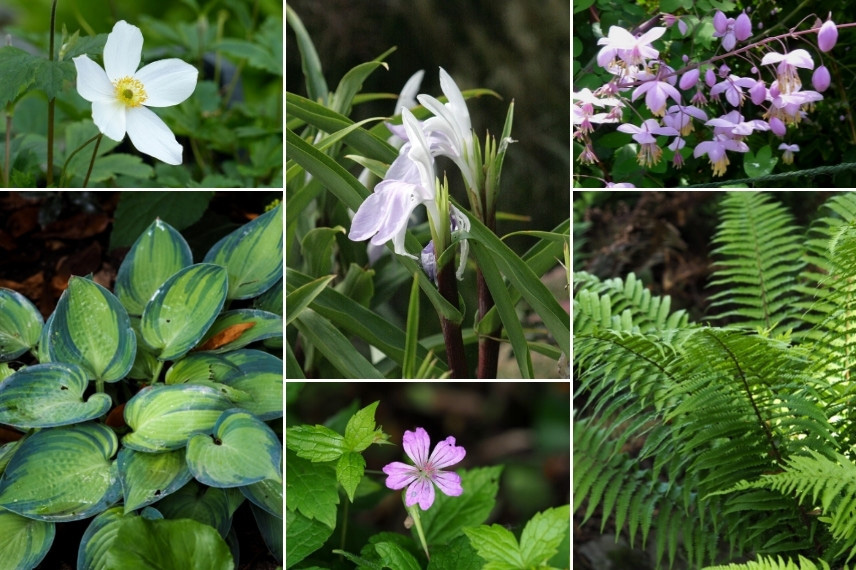
Japanese Anemone ‘Wild Swan’, Roscoea ‘Cinnamon Stick’, Thalictrum delavayi ‘Splendide’, Hosta ‘June’, Geranium nodosum, and Dryopteris wallichiana
In a zen garden, in Asian style
Roscoea, being native to East Asia (China, Nepal, etc.), allows you to create an Asian-style garden! You can create a zen atmosphere conducive to meditation by planting Roscoea alongside graphic bushes like the Japanese maple, whose foliage comes in a beautiful diversity of colours depending on the varieties. Place bamboos on the outer edge of the garden to naturally enclose the space, and integrate small graphic perennial plants like hostas, Hakonechloa macra, Ophiopogon planiscapus and Carex oshimensis. You can add height with the pagoda dogwood, Cornus controversa ‘Variegata’, a small tree with a layered habit and stunning variegated foliage, as well as with some cloud-pruned pines (niwaki). Also, integrate ferns like Cyrtomium falcatum, Coniogramme emeiensis, or Athyrium niponicum. Finally, discover Kirengeshoma palmata, a Japanese perennial with soft yellow flowers and large palmate leaves.
Feel free to check our sheets “Creating a Japanese or Zen Garden” and “Japanese Garden: 10 Emblematic Perennial Plants”
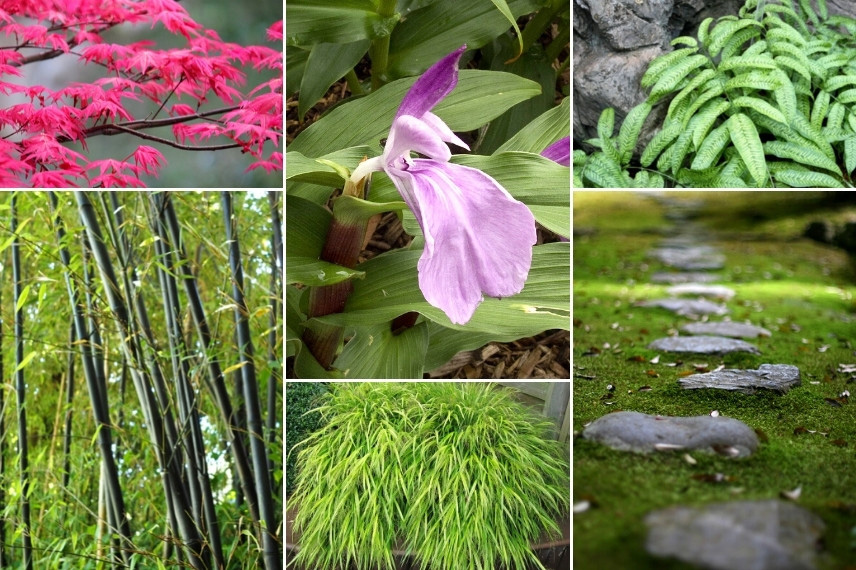
Acer palmatum ‘Shindeshôjô’, Roscoea purpurea ‘Dalai Lama’ (photo Peter Coxhead), Coniogramme emeiensis, Phyllostachys nigra and Hakonechloa macra ‘Aureola’ (photo Leonora Enking)
For further reading
- To find out everything, browse our sheet on roscoea: planting, growing and caring
- Subscribe!
- Contents
Comments