





























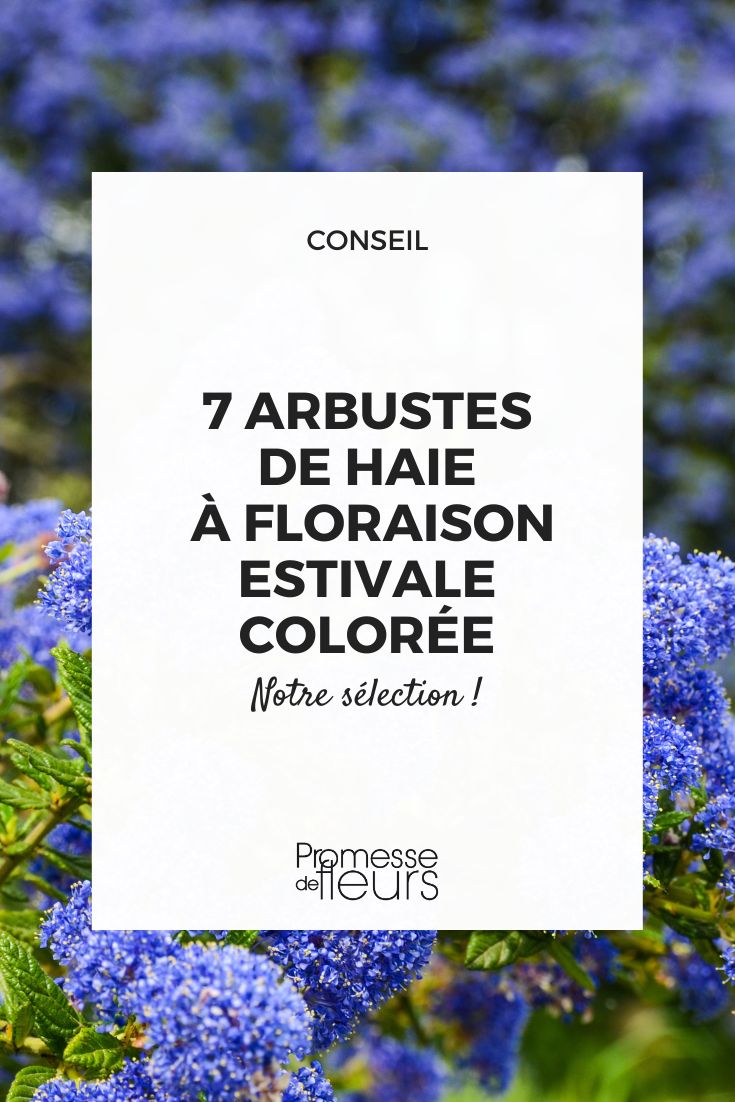
Discover 7 hedge shrubs with colourful summer flowering
Our selection
Contents
In summer, the garden is dressed in its finest colours and comes alive with a thriving abundance of life. summer-flowering hedge shrubs structure the space, provide natural privacy, attract pollinators and birds, and actively contribute to your garden’s biodiversity. In this article, we present a selection of seven hedge bushes that, through their spectacular flowering and easy maintenance, enhance your garden’s decor.

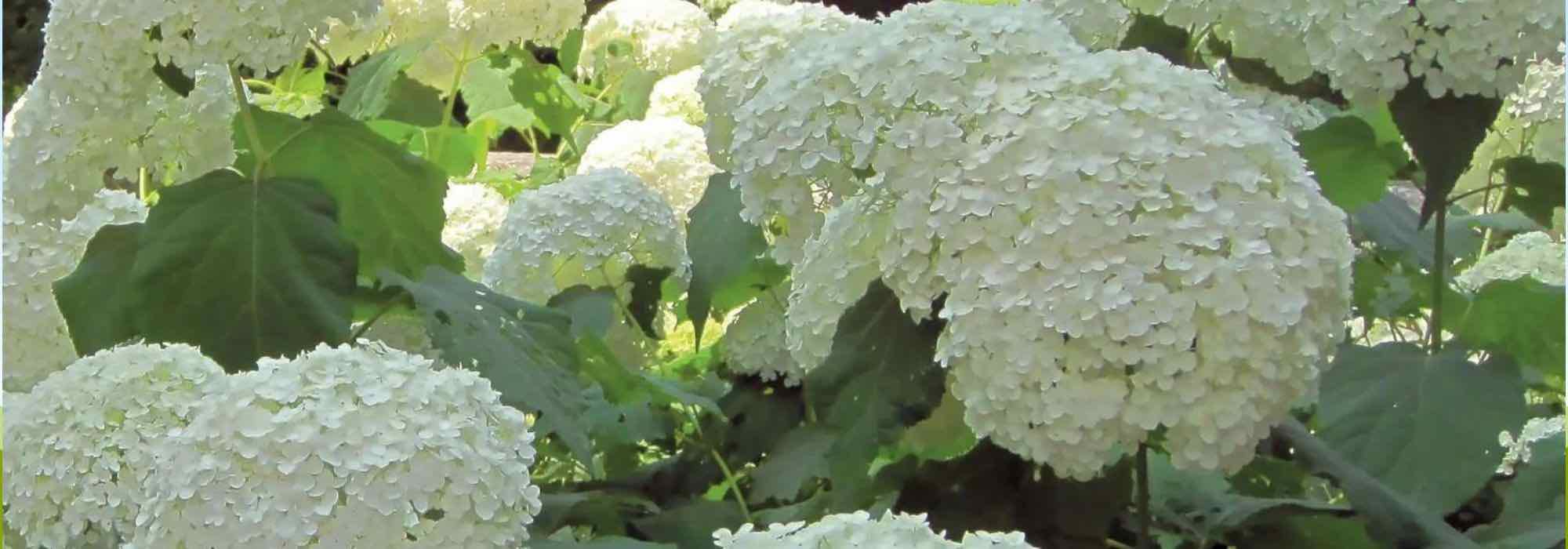
The hydrangea Hydrangea arborescens 'Strong Annabelle'
The Hydrangea arborescens ‘Strong Annabelle’, also known as ‘Incrediball’, is a Virginia hydrangea remarkable for its large spherical flowers reaching 30 cm in diameter, in a creamy white colour. This elegant shrub with a rounded, ramified habit can reach up to 1.5 m in height at maturity. Renowned for its abundant flowering, it graces the garden from June right through to the first frosts. Thanks to its sturdy stems, it easily bears the weight of the flowers, even after rain. It blends harmoniously into flowering hedges. It is an improvement on ‘Annabelle’, a variety with tremendous popularity for the beauty of its large flowers, though the stems can bend under their weight.
Hydrangea arborescens is native to the southeastern United States and is less particular about shade and soil type than its Asian cousins. Varieties derived from this species offer floriferous shrubs with well-ramified branching that catch the eye from June to October. ‘Strong Annabelle’ se distingue par sa robustesse, flowering abundantly even after a harsh winter, thanks to flower buds that renew throughout the summer and resist late frosts. Ses branches se dressent fièrement, bearing large bouquets of flowers that transition from green to white, then return to green at the end of the cycle, offering a continuous visual display. Its dense foliage, with large, textured, ovate leaves, complements this ensemble beautifully.
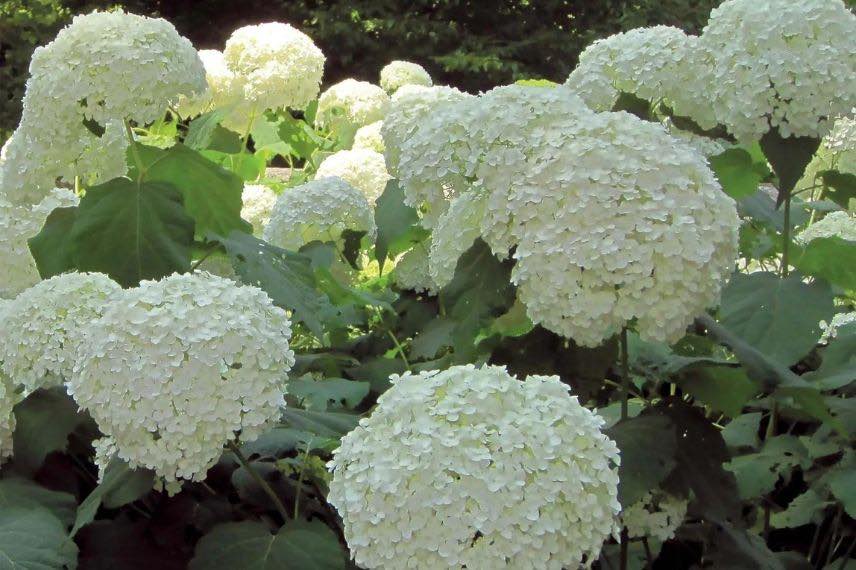
Butterfly tree Buddleia davidii 'Empire Blue'
The Buddleia davidii ‘Empire Blue’ attracts with its natural elegance, with a graceful, flexible habit, adorned with green foliage with grey-green undersides. From midsummer to early autumn, July to September, it bears long blue-violet panicles with an orange centre, fragrant. Around 20 cm long, they provide nectar for butterflies. Easy to grow, it thrives in ordinary to dry soils, adding majesty to flowering or mixed borders.
‘Empire Blue’ is a semi-evergreen shrub, awarded the Royal Horticultural Society’s Award of Garden Merit in 1993. Its open architecture, with arching branches, reaches about 3 metres tall by 2 metres wide in a few years. Hardy, it withstands tough urban conditions, poor soils, occasional drought and tolerates salt spray. Its interaction with butterflies creates a dynamic display, while it harmoniously complements the repeat-flowering roses repeat-flowering roses or the crepe myrtle crepe myrtle with its blue-violet hues.
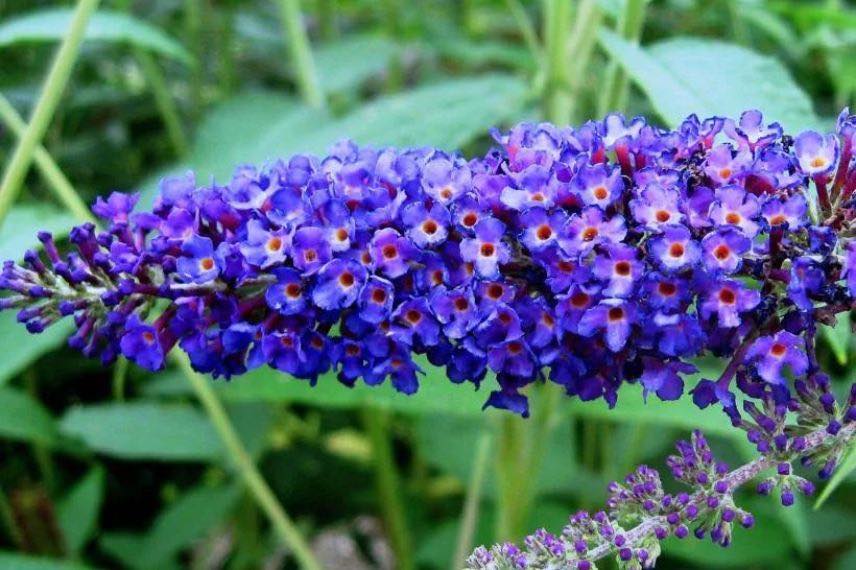
Potentilla fruticosa 'Pink Paradise'
The Potentilla fruticosa ‘Pink Paradise’ is a compact shrub that stands out for its ease of cultivation and its generous soft pink flowering. Forming a dense shrub, it reaches 1.2 m tall by 0.8 m wide. Its flowers, reminiscent of strawberry blossoms, measure between 3 and 4 cm in diameter, standing out for their rounded shape and their heart of golden stamens, however offering a striking contrast with the dark green foliage. Flowering occurs from June to September, it is particularly abundant in late spring and may slow during periods of high summer heat.
This hardy, adaptable shrub thrives in full sun as well as in partial shade, in well-drained soils, tolerating both poor or rich soils, as well as heavy soils, provided they are not waterlogged. It has a place in small hedges without requiring much maintenance, apart from occasional pruning of faded flowers in late winter.
Read also
6 Perfect Deutzias for a Flowering HedgeOleander
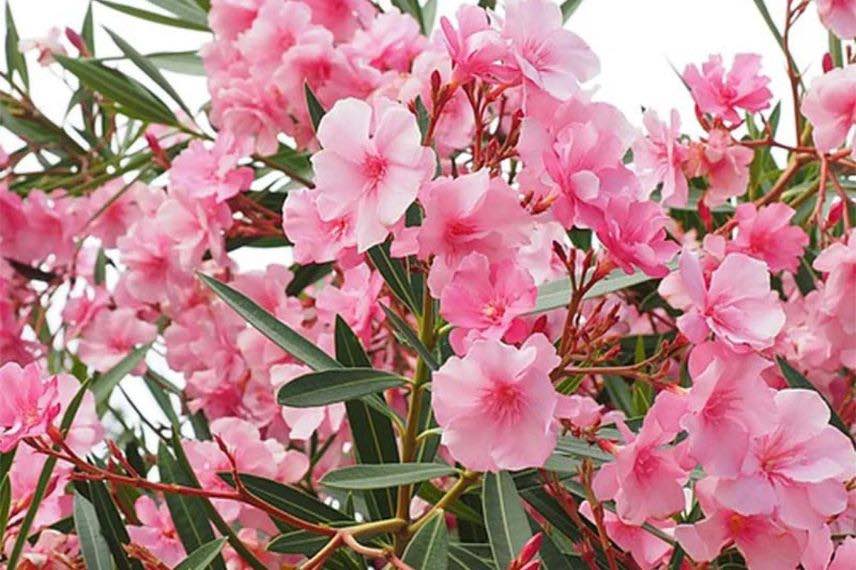
Oleander, or Nerium oleander, is commonly found along the Mediterranean coast, where it forms dense hedges with spectacular flowering. Relatively undemanding as to soil type, the oleander is notable for its remarkable adaptability, even in the toughest conditions. However, it is sensitive to cold, especially during its early years. In-ground cultivation is advised mainly in regions with mild winters.
Nerium oleander is characterised by a bushy habit and flexible shoots, bearing long evergreen leaves that are grey-green. It can reach a height of 3 to 4 metres with a similar spread, providing rapid growth. Its flowers, mainly pink and nectariferous, appear in spring or summer, between June and September, and are followed by reddish pods dispersing seeds by the wind.
A symbol of tenacity, oleander finds its place in coastal hedges. Once well established, it can tolerate temperatures down to -8 to -10°C. It pairs beautifully with other evergreen shrubs to create varied hedges.
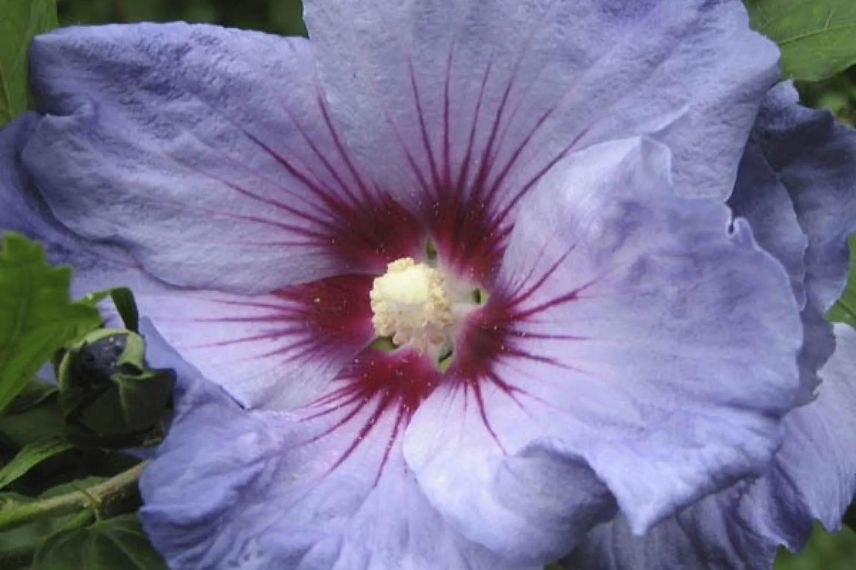
Hibiscus syriacus 'Oiseau Bleu'
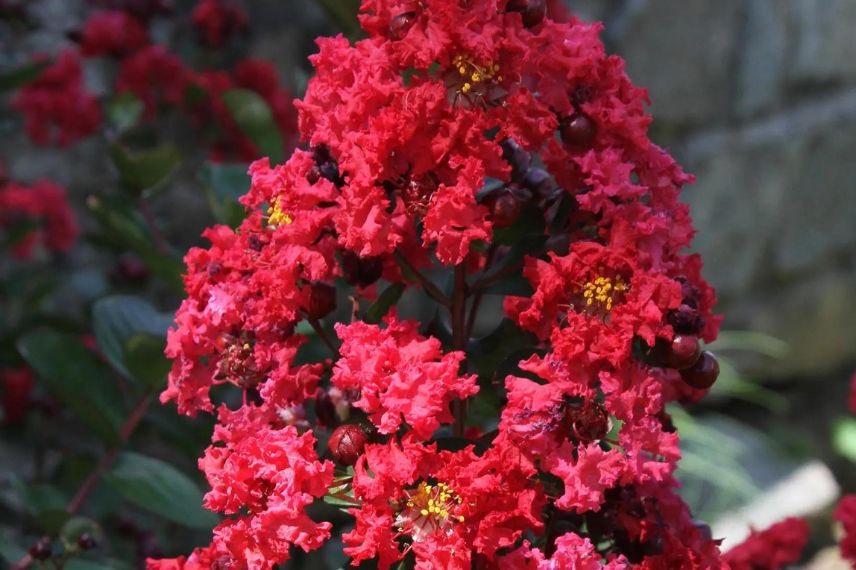
Crape myrtle Lagerstroemia 'Dynamite'
The Lagerstroemia indica ‘Dynamite’ is a deciduous shrub that captivates attention with its summer flowering in vibrant cherry red. Its spreading, rounded habit and foliage that takes on autumn colours make it ideal for a prime spot in mixed hedges. Its red new shoots and decorative bark add to its charm year-round.
Lagerstroemia indica ‘Dynamite’ has rapid growth and can reach a height of 4 metres with a spread of 3 metres. Its flowering begins in July and continues until October, with crepe-textured flowers grouped into dense panicles that catch the eye. The crimson buds open to cherry-red flowers, while the foliage shifts from red to glossy dark green, before taking on yellow or red hues in autumn, depending on the climate.
The crape myrtle ‘Dynamite’ is particularly popular in south-western gardens for its preference for a humid, warm climate. However, its hardiness also allows it to adapt to colder regions, provided its location is chosen carefully.
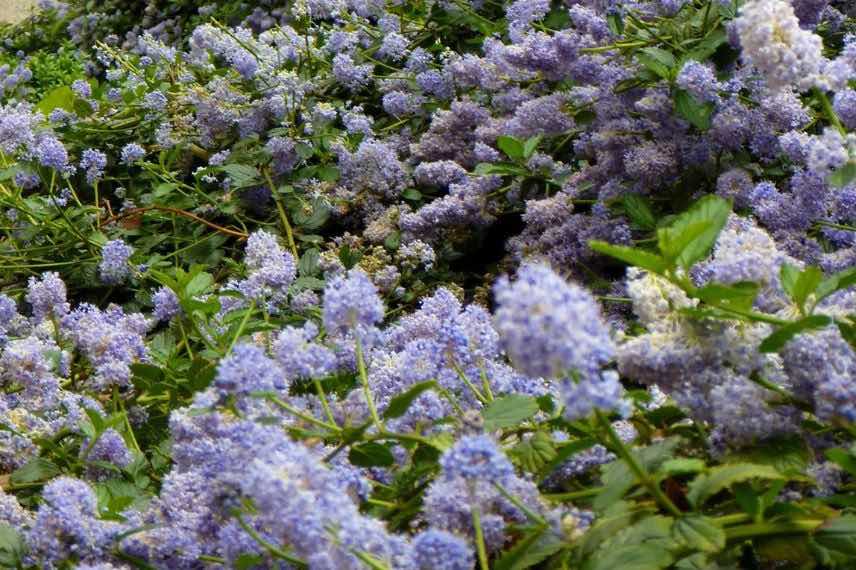
California Lilac Ceanothus pallidus 'Marie Blue'
The Ceanothus pallidus ‘Marie Bleue’ is a shrub with a dense, bushy habit and generous sky-blue flowering during summer. The shoots of this shrub, bearing a purplish-red tinge, carry soft green leaves that can remain on the plant through a mild winter. Unlike evergreen Ceanothus, this species flowers in summer and displays good hardiness, proving superb in a mixed hedge in well-drained soil, including calcareous soils and occasionally dry conditions.
This rounded and densely ramified shrub can reach about 1.5 metres in height with a 1 metre spread. The flowering period, extending from July to early September, features ramified inflorescences adorned with panicles of small, slightly fragrant flowers, ranging from mauve-blue to sky-blue.
Usually used in shrub borders or hedges, for example with pink-flowering varieties such as ‘Marie Simon’, or viburnums, lilacs, Deutzias, and Philadelphus (mock orange), Ceanothus ‘Marie Bleue’ adapts easily to ordinary garden soil, even if slightly calcareous, and withstands frosts down to -15°C. In addition to its aesthetic appeal, it attracts bees and many other pollinating insects, contributing to biodiversity in the garden.
- Subscribe!
- Contents
Comments