


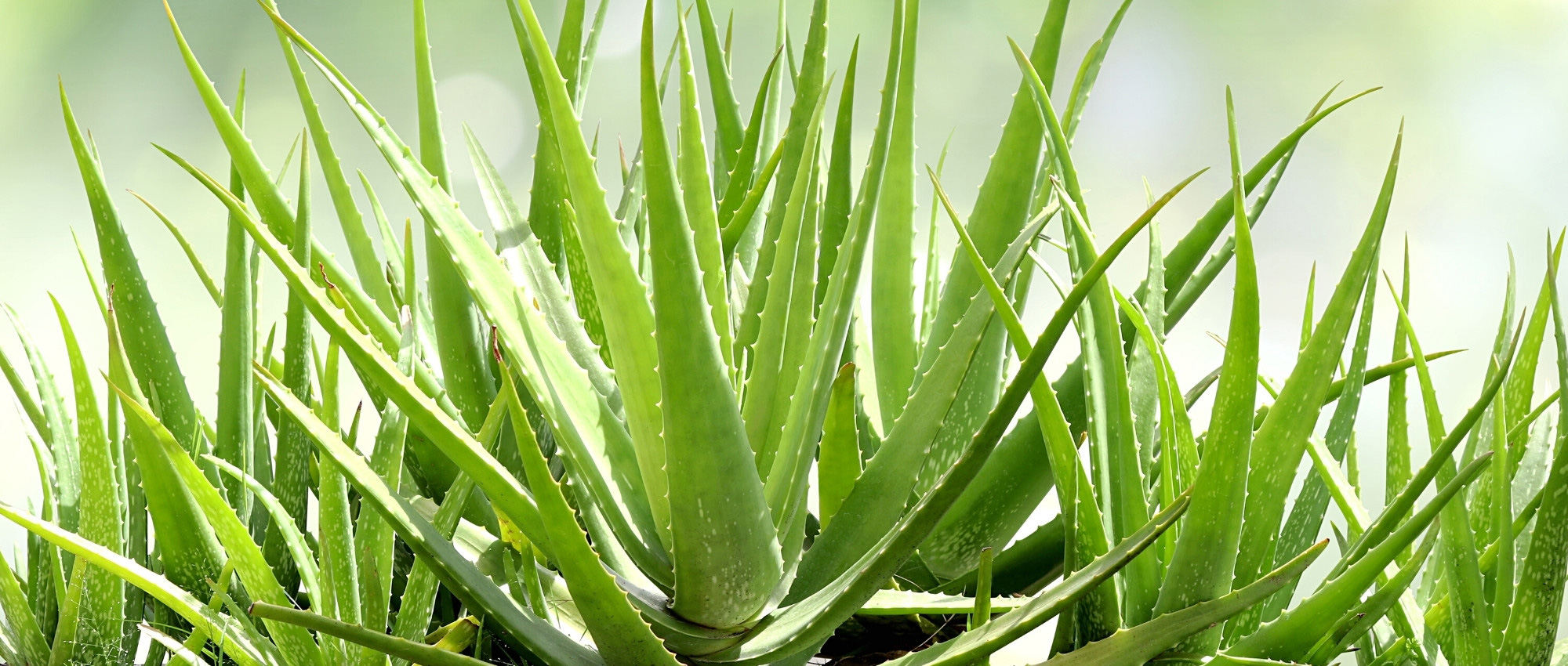
Diseases and pests of Aloe
Our tips for identifying and treating them naturally
Contents
Aloe is a beautiful succulent plant forming rosettes of long, thick leaves. The most well-known is Aloe vera, valued for its medicinal properties, but there are many other ornamental species, some of which are relatively hardy and can be planted directly in the garden. Aloes can be attacked by various parasites and diseases: mealybugs, spider mites, root aphids, sooty mould… Remember that a plant grown under optimal conditions (light, temperature, substrate…) is much stronger and more resistant to diseases and pests. Discover in this guide the main diseases and pests that may affect Aloe, along with our tips to avoid or eliminate them.
For more information on growing Aloe, feel free to check our complete guide: “Aloes: Planting, Growing and Care”

Mealybugs
Mealybugs are small insects belonging to the family Coccoidea, and they appear as white cottony clusters. They thrive on plants grown in greenhouses and indoors, as they prefer confined, warm, and humid environments. Mealybugs pierce the leaves to feed on the sap, which weakens the plant and can lead to the development of sooty mould, a fungal disease. There is little risk of mealybugs killing the plant, but they do weaken it.
Symptoms
- Presence of small white cottony clusters.
- Leaves turn yellow and may eventually fall off.
- Eventually, sooty mould develops (a black layer on the leaves resembling soot).
Prevention
- Upon purchase, inspect the plant to ensure there are no mealybugs.
- Regularly monitor the Aloe to detect the presence of mealybugs as early as possible.
- Remember to ventilate occasionally, as mealybugs thrive in confined spaces and will develop less easily in a well-ventilated and cooler environment.
Treatment
Mealybugs are easier to eliminate than scale insects.
- Remove them using a cloth soaked in 90° alcohol or soapy water.
- You can also make a solution by diluting a teaspoon of black soap, a teaspoon of vegetable oil, and a teaspoon of methylated spirits in a litre of water.
- If you plan to consume the leaves of Aloe vera, avoid insecticides!
For more information and advice, feel free to consult our sheet “Mealybug: Identification and Treatment”
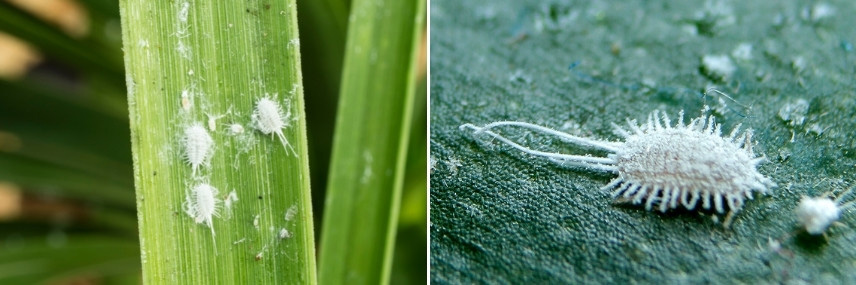
Mealybugs resemble white cottony clusters (photo on the right: Guy Buhry)
Read also
Aloes: planting, growing and careAphids
As with scale insects, aphids are small insects that pierce leaves to extract sap and feed on it. They weaken the plant, slowing its growth and can cause the appearance of sooty mould, which develops on the honeydew secreted by aphids.
Symptoms
- Presence of aphids on the plant.
- The leaves turn yellow and the Aloe becomes weaker.
- The leaves are sticky and gooey due to the honeydew secreted by the aphids.
- Sooty mould may develop on the leaves (a black layer resembling soot), which limits photosynthesis.
- By piercing the leaves, aphids can be vectors for viruses and diseases.
Prevention
- Regularly inspect the Aloe to spot aphids.
- If other plants are growing nearby, also monitor for the presence of aphids and isolate affected plants to prevent their spread.
Treatment
- Use black soap: dilute 15 to 30 g of black soap in one litre of water, to be sprayed on the Aloe.
- Essential oils of peppermint or garlic also seem effective against aphids. Dilute 20 to 25 drops of essential oil in a tablespoon of black soap, to be diluted in one litre of water. Also mix in a bit of fine clay into the water to help disperse the product and allow it to adhere to the leaves. Just mix well and spray this solution.
- Avoid chemical products if you wish to consume the leaves of Aloe vera!
- As a last resort, it is possible to use an insecticidal product based on pyrethrum.
Discover our guide on aphids, with our tips for identifying and treating them.
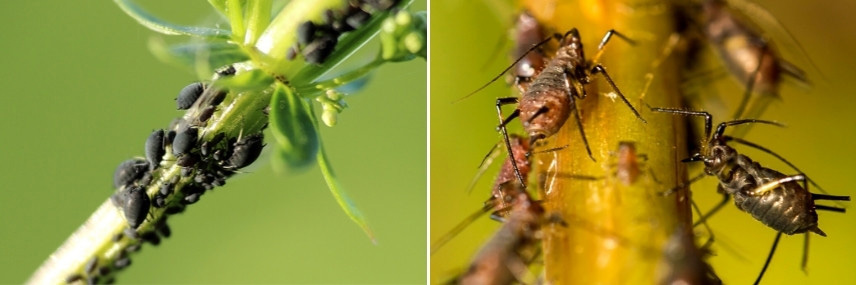
Aphids sometimes attack Aloes
Discover other Aloe
View all →
Available in 1 sizes
Available in 1 sizes
Available in 1 sizes
Available in 1 sizes
Available in 1 sizes
Available in 2 sizes
Available in 1 sizes
Available in 3 sizes
Available in 1 sizes
Available in 2 sizes
Root aphids
Root mealybugs (Rhizoecus falcifer) are tiny parasitic pests measuring between 0.5 and 1 mm. They settle on the roots of cacti and succulents, extracting sap. They form small powdery clusters but are very difficult to spot, as they live underground.
Symptoms
- Growth is slowed.
- The Aloe eventually declines, and in cases of severe infestation, it may die.
Prevention
- Consider repotting your Aloe from time to time to check the condition of the roots, especially if you notice it is not thriving.
- When repotting, remove as much soil as possible from around the roots, disinfect the new pot, and use fresh, healthy substrate.
Treatment
Remove the Aloe from its pot, eliminate as much substrate as possible from around the roots, then rinse them with lukewarm water. Cut away damaged roots using a sharp, disinfected knife. Next, spray a mixture of water and black soap onto the roots, then rinse. Wash the pot with bleach and scrub with a brush, then rinse and repot using new substrate.
Read also
Choosing an Aloe for your gardenRed spider mites
Red spider mites, also known as Tetranychus weaving mites, are not true spiders but tiny mites that extract sap from plants. Due to their small size, they are difficult to spot with the naked eye, measuring less than 1 mm as adults. Red spider mites thrive in warm, dry conditions, which is why they are often found on houseplants.
Symptoms
- Leaves are marked with small yellow, discoloured spots.
- Small webs woven by red spider mites can be seen on the plant.
Prevention
Air out or place your Aloe outside in summer, as red spider mites prefer warm, dry environments.
Treatments
- If possible, take your Aloe outside. Otherwise, remember to ventilate and occasionally spray water on the foliage, as red spider mites dislike humidity.
- Rosemary essential oil also seems effective against red spider mites. Mix 20 to 25 drops of essential oil in a tablespoon of black soap, to be diluted in a glass of water. Then dilute a bit of fine clay in a litre of water, add the glass of water containing the black soap and essential oil, mix, and spray on the Aloe.
- You can also treat with a garlic decoction (30 g per litre of water), diluted to 30%, to be sprayed on the plant.
Discover our sheet “Red spider mite: identification and treatment”
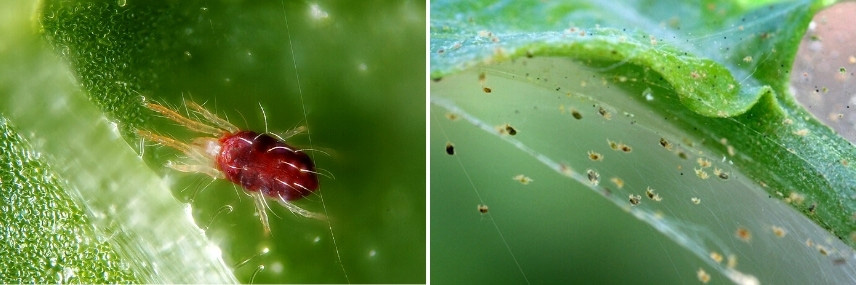
A close-up of a red spider mite (barely visible to the naked eye) and the webs they weave (photos: Gilles San Martin / David Cappaert)
Sooty mould
Sooty mould is a fungal disease that develops on the honeydew released by aphids or scale insects. It is characterised by the appearance of a black layer resembling soot. Sooty mould does not directly threaten the survival of the plant, but it weakens it by limiting its photosynthesis.
Symptoms
- Leaves are covered with black spots resembling soot.
- The plant is weakened and its growth slows down.
Prevention
- Regularly inspect the Aloe for the presence of scale insects or aphids and treat if necessary.
- If you see honeydew (a translucent, sticky, and viscous substance secreted by aphids and scale insects), clean the leaves to remove it.
- Occasionally ventilate the area.
Treatment
- Eliminate the scale insects or aphids.
- Clean the leaves with a cloth or sponge soaked in soapy water to manually remove the sooty mould.
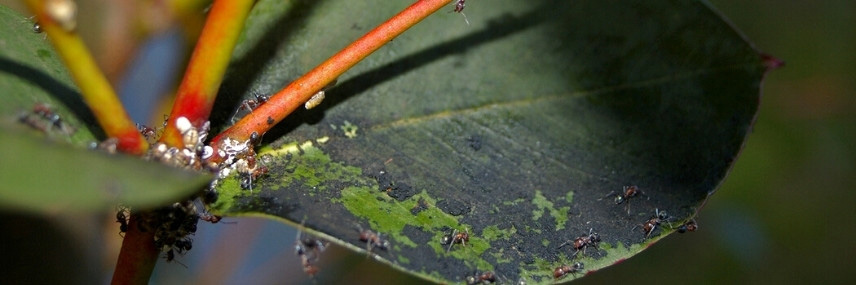
Sooty mould is identified by the presence of a type of black soot on the leaves (photo: Bidgee)
Other cultivation issues with Aloe
Excess Moisture
Like all succulents, Aloe is sensitive to excess moisture and should therefore be grown in well-draining soil (for example, special cactus compost or a mix of compost, garden soil, and sand). In cases of excess moisture, the leaves become soft, droop, and discolour. It may also happen that the base of the stem starts to rot.
To avoid this problem, grow Aloe in well-draining soil where water does not stagnate, and install a mineral mulch (gravel or clay balls) on the surface of the compost. Similarly, terracotta pots are preferable, as they allow for better drainage and aeration of the compost compared to plastic ones. Subsequently, when watering, avoid wetting the leaves and ensure that no water stagnates in the saucer: empty it after each watering.
Lack of Water
The symptoms of a lack of water are very similar to those of excess moisture: the leaves tend to discolour and become soft, wilted… As Aloe is a succulent, one may tend to underestimate its water needs or simply forget to water it. Check by scratching the surface of the compost to see if it is dry or still moist, then water accordingly.
Aloes need to be watered once a week or every 15 days in spring and summer (depending on temperature and ambient humidity); it is then important to reduce watering in autumn and winter (water approximately once a month).
Sunburn
While most species of Aloes thrive in sunlight, Aloe vera does not appreciate direct sun exposure. Its leaves may then discolour and turn yellow.
Similarly, the foliage of other species may also get burned if you suddenly place the plant in full sun. If you wish to move Aloe outdoors in summer, acclimatise it gradually so that it can adjust to the difference in light and temperature.
- Subscribe!
- Contents
![[plant id="1234" name="Aloe Vera" condition="sick"]](https://en.promessedefleurs.eu/blogwp/wp-content/uploads/2022/05/1-2.jpg "Aloes Diseases and Parasites")
Comments