





























Diseases and Pests of the Apricot Tree
Identification, prevention and natural treatments
Contents
The apricot tree is an easy-to-grow fruit tree in the orchard. Like many fruit trees, it can be affected by various fungal diseases and is susceptible to attacks from parasitic pests that may compromise the harvests.
Here’s how to identify, prevent, and treat naturally the most common diseases of the apricot tree.
→ Feel free to consult our complete guide: “Apricot Tree: planting, pruning, care”

Moniliosis
Brown rot is a very common fungal disease affecting stone and pome fruit trees in the Rosaceae family. It generally develops in spring during flowering, under warm and rainy climatic conditions. This is a serious disease that jeopardises the harvest. The spores of this fungus (Monilia laxa and Monilia fructigena) are carried by insects or the wind and primarily infect fruits that are damaged by hail, wasps, or bird beaks. Brown rot enters the fruit through a wound.
Identification
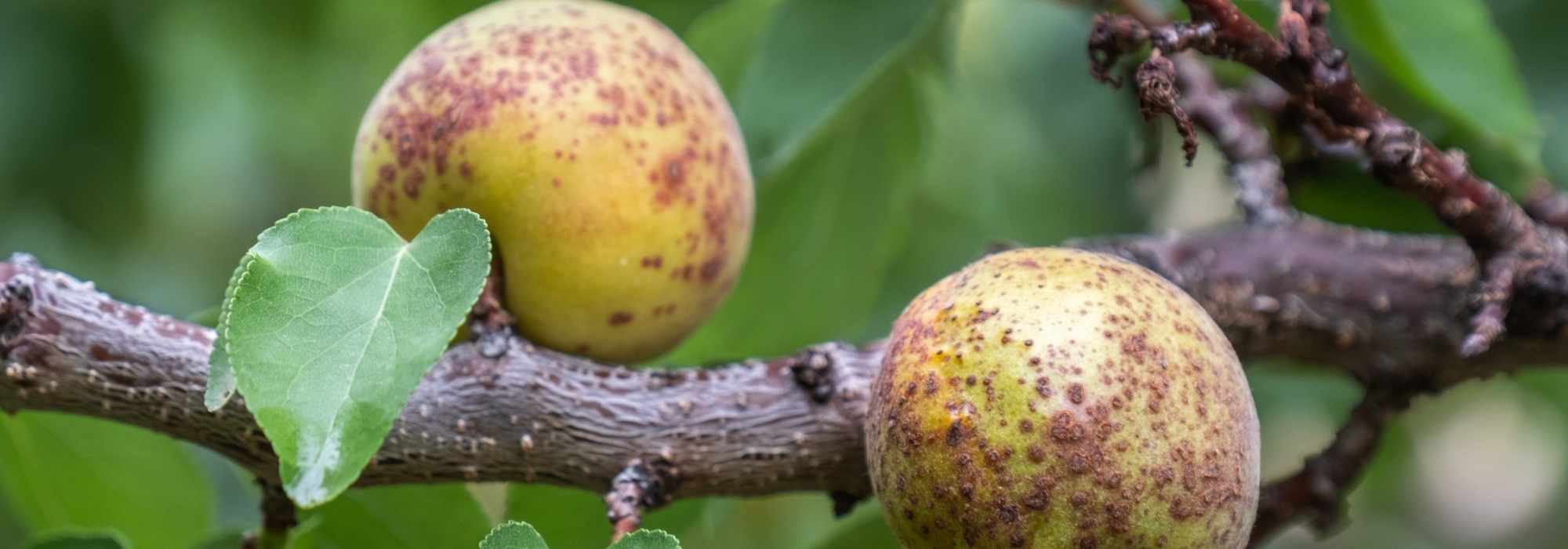
Flower buds are the first to be attacked. They show signs of rot, turn brown, and then completely dry out, followed by the contamination of the branches, which become covered in cankers. The disease then spreads to young apricots, signalling its presence with brown spots and white pustules appearing on the fruit. This soft, brown rot infects the entire fruit, which becomes greyish and eventually mummifies. The fruit literally rots on the tree and can remain attached to the branches throughout winter.
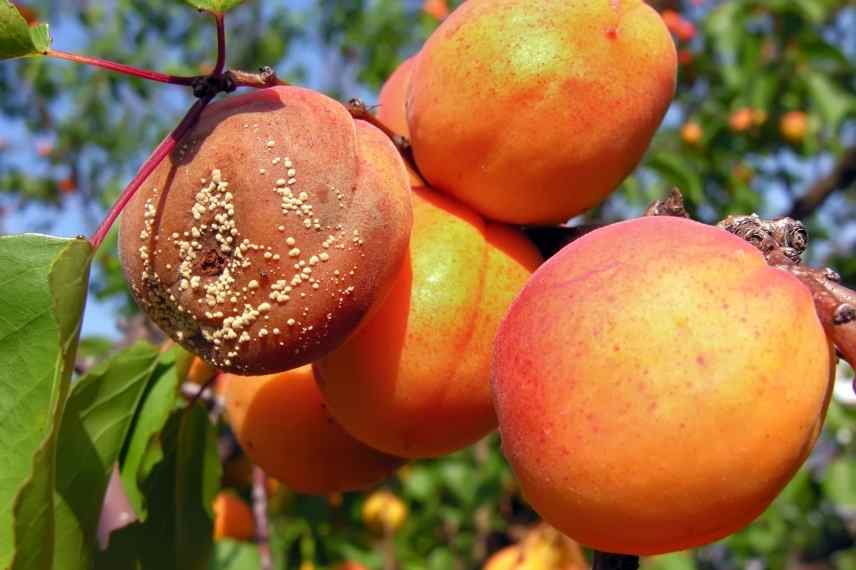
Early signs of brown rot on an apricot tree
Prevention
Controlling brown rot is primarily preventive, and action should be taken in autumn!
- In autumn, collect all fallen leaves and mummified fruit from the ground and burn them
- Prune your apricot tree well to thin out the branches and allow good air circulation
- Remove excess fruit
Natural Treatment
- In autumn and winter, when the last leaves have fallen, as a preventive measure, spray with Bordeaux mixture, repeating the operation 2 to 3 times at 15-day intervals
- In March, spray again with Bordeaux mixture at the bud burst period
- As soon as flowering begins, spray a diluted horsetail decoction at 10% to prevent any risk of brown rot development
- After the first fruits appear, consider treating again
- To halt the spread of the disease, immediately remove any mummified fruit left on the trees and wilted flowers and burn them
- Cut off all diseased branches bearing cankers
- Thoroughly disinfect any tools that have come into contact
→ Brown rot in fruit trees – PREVENTING AND TREATING THIS DISEASE
Read also
Aphid: identification and treatmentThe blister
Commonly found on peach trees, the peach leaf curl also affects the apricot tree. The spores of this fungus overwinter beneath the scales of the buds and typically appear after a mild, wet winter followed by a cool, rainy spring.
Identification
They primarily attack the leaves, which become blistered, twisting the young shoots, the young branches, and sometimes even the fruits. The leaves curl and take on a reddish-purple hue before falling. The tree is weakened, compromising the harvest.
Prevention
- In autumn, regularly apply compost or manure at the base to strengthen your apricot tree’s resistance.
- Remove and burn damaged branches bearing cankers.
Natural Treatment
- In autumn and then in spring, spray Bordeaux mixture over the entire canopy.
- Repeat the sprays before bud break, at least three times, at 10-day intervals.
- You can also alternate by spraying a horsetail decoction in spring and then every 15 days until summer if needed.
- You can also carry out two copper treatments (copper hydroxide) per year, in spring and autumn.
→ Discover our tips for preventing the establishment or consequences of peach leaf curl.
Discover other Apricot trees
View all →
Available in 1 sizes
Available in 5 sizes
Available in 2 sizes
Available in 1 sizes
Available in 4 sizes
Available in 2 sizes
Available in 4 sizes
Available in 5 sizes
Available in 1 sizes
Available in 2 sizes
Scab
Apple scab is a fungal disease that frequently affects fruit trees. The culprit: Fusicladium Dentriticum, a fungus that thrives under the combined effects of heat and humidity, particularly during a mild winter and spring. The fungus’s spores overwinter in contaminated fruits and exudates, awakening the following spring to infect the tree again.
Identification
The disease begins by invading the leaves. The leaves develop round brown and black spots, blister and deform. They eventually dry out and fall prematurely. The fruits also become covered with brown spots and a slight brown felt. They develop deep cracks and ultimately fall, compromising the harvests.
Prevention
- In autumn, collect and destroy contaminated leaves and fruits by burning them
- Carefully clean the base of the tree
- Prune and remove diseased branches. Use disinfected pruning shears, then burn the pruning waste.
Natural Treatments
- As a preventive measure, spray Bordeaux mixture in spring during bud break or spray horsetail manure, which is equally effective. Repeat the treatment when the fruits are the size of a hazelnut
- A preventive treatment of food-grade sodium bicarbonate can be used to combat this pathogenous fungus responsible for apple scab
Read also
Powdery mildew or white diseasePowdery mildew
White disease or powdery mildew is a common fungal disease affecting fruit trees. It is caused by a fungus that overwinters on the branches and thrives in warm, humid weather. Initially not very visible, powdery mildew becomes difficult to control once established.
Identification
It attacks young apricot trees, which show whitish patches, rendering the fruit unfit for consumption. Subsequently, this grey-white, farinose fluff invades the leaves, causing them to curl, dry out, and fall off.
Prevention
- Prune to ensure a well-aerated ramure
→Follow my advice to properly prune the apricot tree
Natural treatment
- Spray a decoction of horsetail or nettle manure every 10 days
- Spraying sodium bicarbonate is also effective in spring and autumn to combat powdery mildew
The Criblure
Another disease caused by a fungus: Coryneum beyerinckii. The Coryneum or “shot hole disease” affects stone fruit trees in spring and autumn. It survives from one year to the next in the tree’s tissues.
Identification
The disease attacks both leaves, shoots, and fruits. Initially, brown-red circular spots appear on the leaves, darken, and then turn into perforations. The spots then invade the shoots, causing cankers and gum exudation. Fruits show brown corky spots and drop prematurely.
Prevention
- At the beginning of autumn, remove mummified fruits
- Before and after winter, using disinfected pruning shears, remove dead wood and branches affected by canker
Natural Treatment
- At the start of vegetation and flowering, treat with horsetail decoction or Bordeaux mixture
- Repeat the treatment after flower drop and in autumn
→ Find our article on Coryneum or Shot Hole of Stone Fruit Trees
Apoplexy or foliation
Here is another fungal disease that can lead to the decline of the apricot tree. Various pathogenous fungi can be responsible for this infection. The fungus invades the tree’s tissues, preventing the sap from circulating. Apoplexy or wilting occurs after a period of intense heat combined with a sudden excess of moisture.
Identification
The entire tree suddenly dries out. Leaves dry up, shoots do not bud in spring, the trunk and branches take on a mahogany hue, crack, and exhibit gum exudation.
Prevention
The disease often leads to the death of the apricot tree. There is no way to combat this fungus once it has established itself. There is no curative treatment. To prevent severe attacks, here are some preventive measures:
- Ensure the good health of your apricot tree by providing sufficient water and fertiliser
- Avoid fertilisers that are too rich in nitrogen
- Avoid drastic pruning
- Avoid injuring the roots
- Remove all diseased or infected shoots
Bacterial canker
Here is a common disease affecting fruit trees. The canker is the result of contamination in the tree’s tissues by a bacterium (Pseudomonas syringae and Pseudomonas viridiflava) following an injury. Once inside the tissues, it spreads throughout the apricot tree. A rainy period combined with mild temperatures tends to promote spore germination. Between late summer and winter, it can cause significant damage to the apricot tree, leading to its gradual decline.
Identification
White moulds, small swellings, and cracks appear on the bark and branches of the tree, leading to the bark splitting. Reddish gum exudates are often observed on the trunk or branches. In spring, sap circulation is hindered by the cankers, causing some branches not to bud. The buds, leaves, flowers, branches, and even the trunk eventually dry out, leading to the tree’s death.
Prevention
Be vigilant during pruning, as the fungus primarily enters through wounds: coat the pruning wounds with a healing paste.
Natural Treatment
- Using a well-disinfected pruning shear disinfected with 70°C alcohol, remove all branches affected by canker and burn the pruning waste.
- In autumn, at leaf drop, and then at bud burst, spray your apricot tree with Bordeaux mixture.
- At leaf drop, you can also treat with copper or horsetail decoction every 15 days, renewing 2 to 3 times.
→ LEARN ALL ABOUT CANKER IN FRUIT TREES
The main pests of the apricot tree
Red Spider Mites
Red spider mites (Panonychus ulmi), often mistakenly referred to as red spiders, thrive in warm and dry air. They can cause significant damage, which is why they must be eradicated before a massive infestation occurs.
Identification
Barely visible to the naked eye, they resemble tiny spiders, have 8 legs, and are red in colour. In spring, the larvae hatch on the leaves and begin to suck the sap to absorb the foliar cells. The leaves become speckled with yellow dots, turn completely yellow, and then take on a characteristic silvery hue. Young shoots or buds undergo necrosis, and photosynthesis ceases. The foliage drops prematurely, and the fruits do not develop.
Prevention
- Spray the foliage with water during hot and dry weather, as red spider mites particularly enjoy dry conditions.
- Before the buds open, spray with white rapeseed oil.
- Practice biological control by introducing natural enemies of these mites, such as ladybirds and the Phytoseiulus mite, a specific and formidable predator of red spider mites.
- Chrysop larvae also feed on red spider mite eggs.
Natural Treatment
- As a preventive measure, you can spray a horsetail decoction or nettle manure to strengthen the plant.
→ Find our article on Red Spider Mite: Identification and Treatment
Scale Insects
The apricot tree can be subject to attacks from scale insects, particularly the dogwood scale (Parthenolecanium corni). The larvae appear in spring, with high female fertility. Once they become adults, they attack the leaves, branches, and fruits, these piercing-sucking insects cause a general weakening of the apricot tree.
Identification
The foliage becomes covered with sooty mould, a black substance resembling soot. Growth and flowering are diminished.
Prevention
Encourage the presence of beneficial insects in your garden and natural predators of scale insects, such as ladybirds, chrysop, and hoverflies.
Natural Treatment
- You can brush the trunk and use a water jet to dislodge the scale insects.
- In winter, cut and burn the infested branches.
- Spray black soap at the very beginning of spring on the larvae and repeat this treatment for several consecutive weeks to gradually reduce the scale insect population.
Codling Moths
Codling moths (carpocapses) are nocturnal butterflies with grey forewings and brown hindwings. Their larvae cause damage to many pome and stone fruits. While they typically attack apple and pear trees, they are sometimes found on apricot trees as well. They overwinter beneath the bark of trees. The presence of their larvae compromises the formation of young fruits and the harvest.
Identification
In summer, the small larvae penetrate the fruits and burrow galleries up to the seeds. They can be identified by spiral scars and small necrotic holes from which brown droppings escape, which they leave on the fruit’s epidermis. Infested apricots fall, rot, and become unfit for consumption.
Prevention
- In autumn, place glue bands on the trunks to trap the larvae.
- At the beginning of spring, place specific pheromone traps in the tree to catch adult moths and hinder reproduction.
- Brush the trunks with a dandelion brush to remove overwintering cocoons.
- Encourage biodiversity and the establishment of natural predators of codling moths (tits, bats, earwigs…): install an insect hotel and nesting boxes in your garden.
- Collect and dispose of affected fruits.
Natural Treatment
- Bag diseased fruits to prevent spreading.
- In case of severe infestation, spray a biological insecticide containing a virus that specifically targets codling moths or one based on Bacillus thuringiensis to neutralise the caterpillars.
- You can also apply wormwood macerations.
Aphids
Sometimes, green aphids invade the crevices of the apricot tree bark where they lay their eggs. The colonies grow very quickly, clustering under the leaves and at the tips of young shoots. This piercing-sucking insect feeds on sap. Infestations usually occur in early summer.
Identification
Their attacks are characterised by curling and yellowing of the leaves. The sap punctures weaken the young shoots, causing them to deform and dry out. The honeydew they secrete can lead to sooty mould, a black and sticky soot that hinders photosynthesis.
Prevention
- In winter, treat the bark with paraffin oil.
- As a preventive measure, spray decoctions of tansy, fern manure, or nettle manure, which are natural repellents against aphids.
Natural Treatment
- Introduce beneficial insects (ladybirds, chrysop, hoverflies) that are natural predators of aphids.
- In case of massive infestation, use plant-based pyrethrum, preferably in the evening, or a product against aphids based on paraffin oil that acts by contact, suffocating the unwanted pests.
- Subscribe!
- Contents
![[plant id="123" disease="powdery mildew" treatment="neem oil" pest="aphids" pest_control="insecticidal soap"]](https://en.promessedefleurs.eu/blogwp/wp-content/uploads/2022/06/Maladies-et-parasites-de-labricotier.jpg "Apricot Tree Diseases and Parasites")
Comments