





























Drought-resistant irises
Discover 7 irises that nothing can stop!
Contents
The Irises are beautiful rhizomatous perennials, highly valued for their spectacular and unique flowerings. There are numerous varieties, with flowers available in a wide range of pastel or vibrant colours, from pure white to deep black, including bicolours. Among all these Irises, some cultivars are very drought-resistant. This is particularly true for the timeless Iris germanica, as well as the charming dwarf Irises.
Discover our selection of 7 drought-resistant Irises to plant in a garden, a border, or a dry rockery.

Algerian Iris
The Iris unguicularis, commonly known as Algerian Iris, is a beautiful Mediterranean iris, notable for its excellent resistance to very dry summers. It is also appreciated for its delicate blue-mauve flowers, with a hint of yellow at the centre of these lightly scented petals. They bloom in the heart of winter, from February to March, sometimes as early as December depending on the region. Standing just over 30 cm tall, its foliage forms a lovely clump of evergreen, fine leaves that are both upright and tough.
This iris prefers to be planted in full sun or partial shade, in light, well-drained soil. This beautiful perennial can withstand frosts down to -15 °C. The Algerian Iris is ideal for enhancing borders, rockeries, or flower beds, alongside small lavenders, a sedum, or a Silver Bindweed (Convolvulus cneorum).
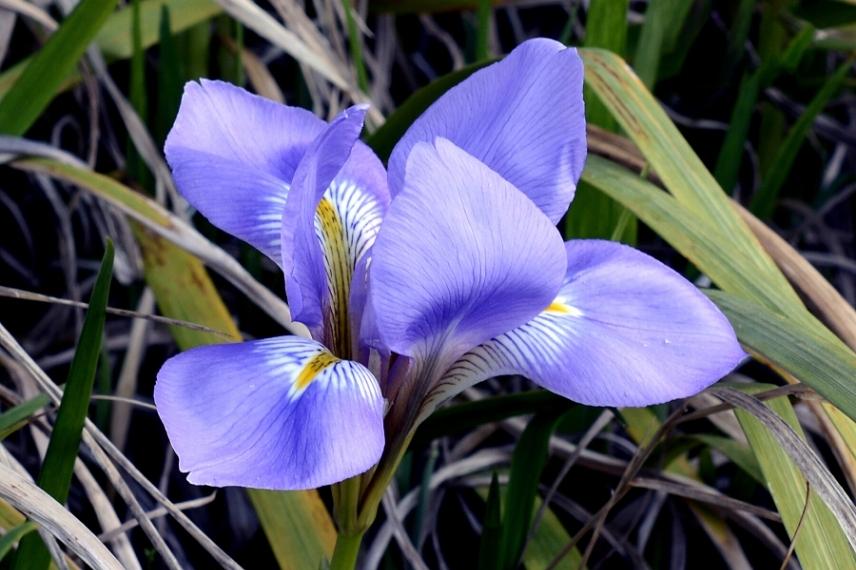
The Algerian Iris (Iris unguicularis)
Iris germanica 'Arctic Age'
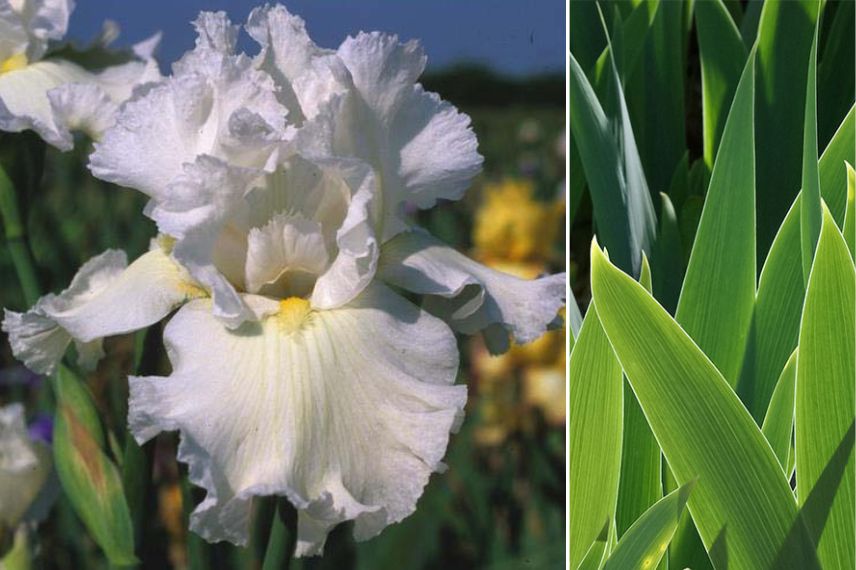
The Iris germanica ‘Arctic Age’ is a beautiful variety of Iris, thriving well in full sun and summer drought. Depending on the region, this perennial blooms for several weeks, from May to June, and sometimes into July. It produces long flower stems that can reach 95 cm in height, bearing lovely white flowers with a lemon-yellow beard. The edges of the petals are delicately crinkled, contrasting beautifully with its upright, sword-shaped foliage.
This lovely Iris enjoys sun and warmth, but fears excess moisture, especially in heavy or overly wet soils. Therefore, it will need well-drained and light soil. Once well-established, it will also withstand winter cold down to -15° C. The Iris germanica ‘Arctic Age’ will naturally find its place in a sunny border or rockery, alongside Achilleas, Stipas, or a rose.
Discover other Iris
View all →
Available in 2 sizes
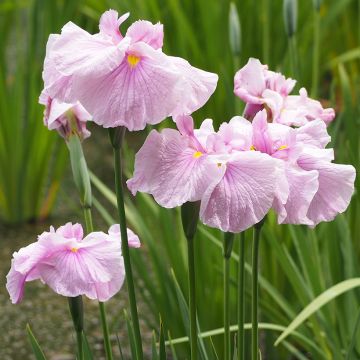
Available in 1 sizes
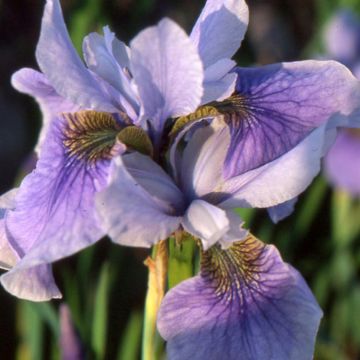
Available in 1 sizes
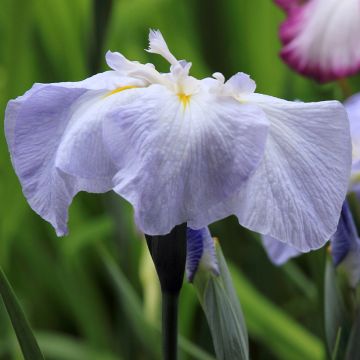
Available in 2 sizes
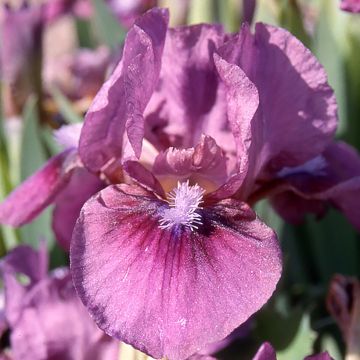
Available in 2 sizes
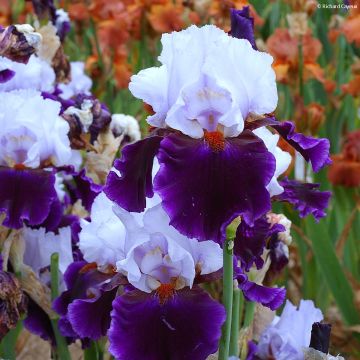
Available in 2 sizes
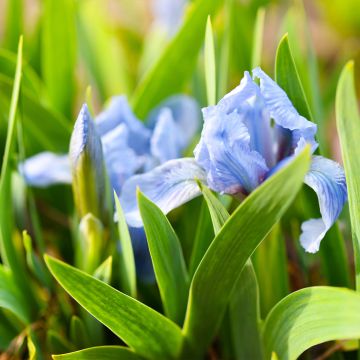
Available in 2 sizes
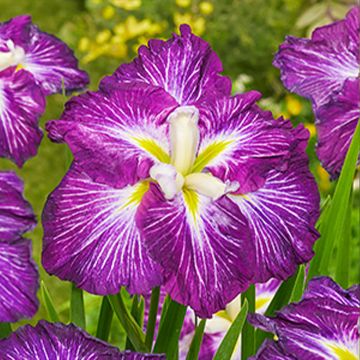
Available in 1 sizes
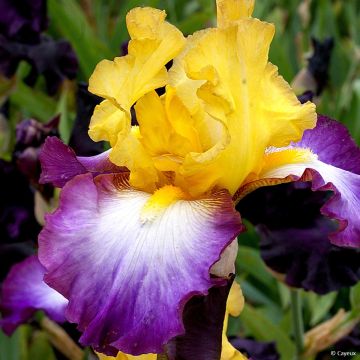
Available in 2 sizes
Available in 1 sizes
Iris japonica
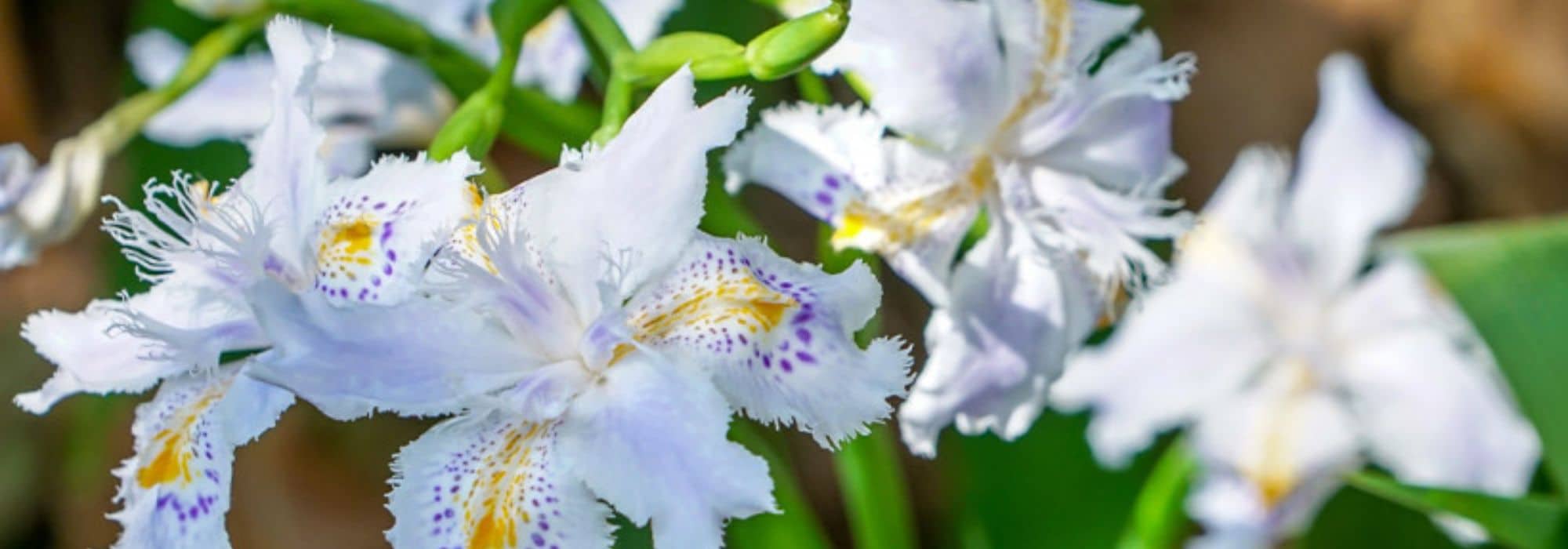
Here is a beautiful Iris for dry shade: the Iris japonica! This lovely Asian species features glossy, light green foliage that remains decorative even in winter. From April to June, charming small flowers in a bluish white bloom, with fringed petals splashed with blue and gold.
Fairly easy to grow and vigorous, the Iris japonica thrives in partial shade or shade, for example, along a north-west or north-east facing wall, at the foot of a hedge, or beneath trees. It prefers rich, humus-bearing soil (that is, woodland soil), whether calcareous or acidic. It also adapts well to moist soil but tolerates summer drought very well once established. It particularly enjoys regions with an oceanic climate and can withstand frost down to -12°C.
The Japanese Iris is perfect as groundcover, in shaded rockeries, or in dry woodland, alongside a large periwinkle and a Geranium macrorrhizum. In a slightly more humid garden, it can be paired with bergenias, ferns, or Geranium nodosum.
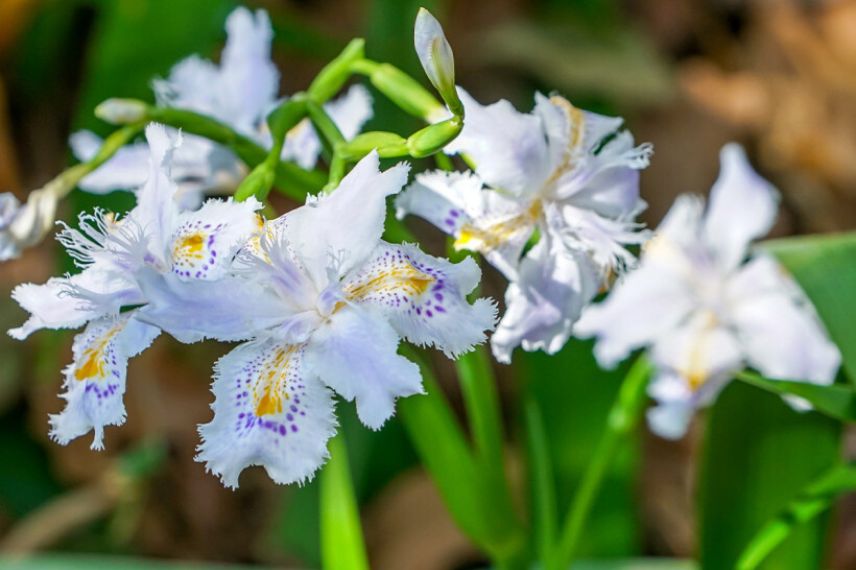
The Iris japonica
Read also
Iris germanica: how to plant them?Iris germanica 'Fringe of Gold'
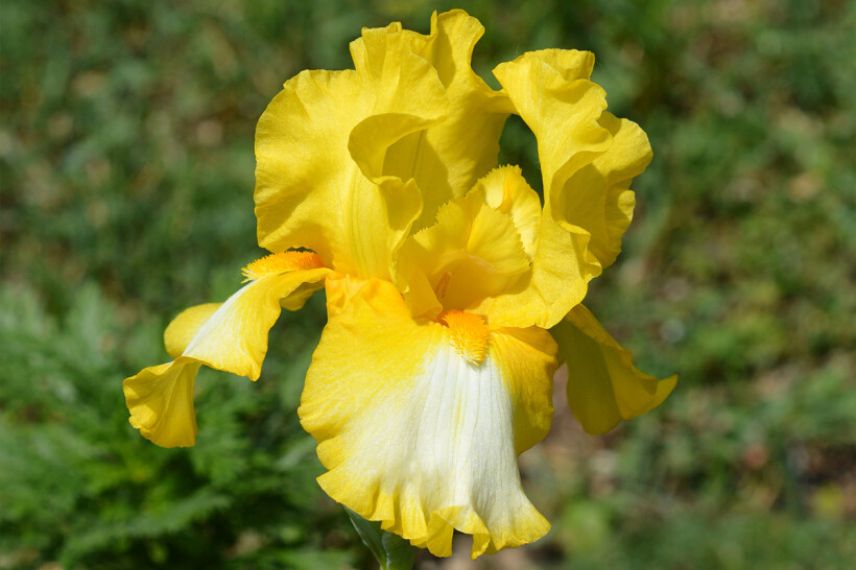
The Iris germanica ‘Fringe of Gold’ stands out with its stunning bicoloured flowers, featuring slightly undulating edges, blending white and canary yellow, which will brighten up the garden from May to June. This flowering contrasts perfectly with its sword-shaped leaves, which are glaucous green and heavily veined. Like most Iris germanica, the variety ‘Fringe of Gold’ will easily withstand summer drought once well established.
The Iris germanica ‘Fringe of Gold’ prefers to be planted in full sun, in well-drained, dry, stony, and even calcareous soil. However, it is sensitive to overly wet soils that can rot its rhizome. Quite hardy, it can tolerate frosts down to -15 °C. This beautiful Iris will bring sunshine to a rockery or a border. The yellow of its flowers will pair wonderfully with the blue of nigellas, ornamental garlic bulbs, or lavenders.
Iris germanica 'Flamant Rose'
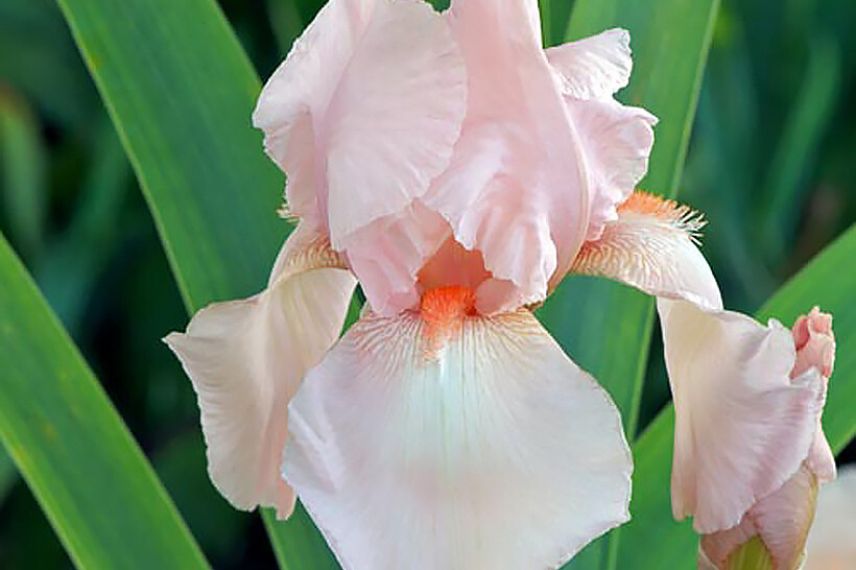
The Iris germanica ‘Flamant Rose’ is an old variety of large garden Iris, typically measuring 80 to 85 cm in height. It is highly valued for its hardiness and good resistance to summer drought. Around May-June, it produces large pastel pink flowers, slightly salmon-hued and delicately scented. The heart of the flower and its beards are warmed by a lovely mandarin orange hue. The slightly undulating petal edges add softness and provide a beautiful contrast with its long, sword-shaped leaves.
The Iris germanica ‘Flamant Rose’ will make a statement in a romantic border, where it will complement light blooms such as those of Gauras or Gypsophiles. It prefers a sunny position in well-drained, dry soil in summer, even stony. Hardy, this beautiful Iris can withstand frosts down to -15°C once well established.
Iris pumila 'Brannigan'
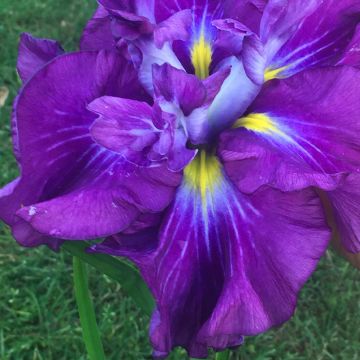
Iris pumila ‘Brannigan’ is a superb variety of dwarf iris, perfectly suited to poor, well-drained soil that is dry in summer. In early spring, around April, it produces beautiful flowers in a tonal violet, with a small touch of golden yellow at its heart. Its deciduous, blue-green, sword-shaped foliage forms a small upright clump. This dwarf form barely exceeds 30 cm in height, giving it good resistance to winds.
Iris pumila ‘Brannigan’ thrives in full sun, in ordinary to poor, stony, well-drained soil. It will naturally find its place in a rockery, at the edge of borders, in containers, on slopes, and even in green roofs. To accompany it, you can plant nearby California poppies, sages, and Libertia.
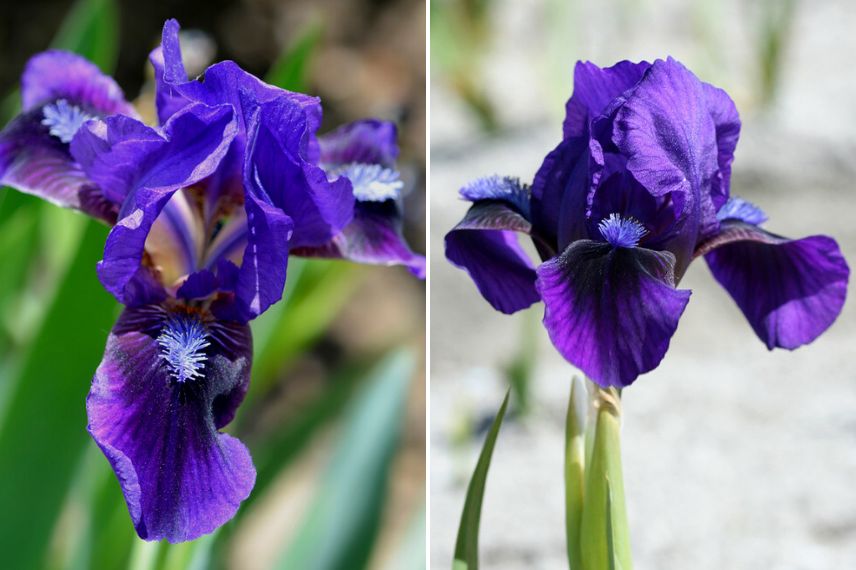
Iris germanica 'Cat's Eye'
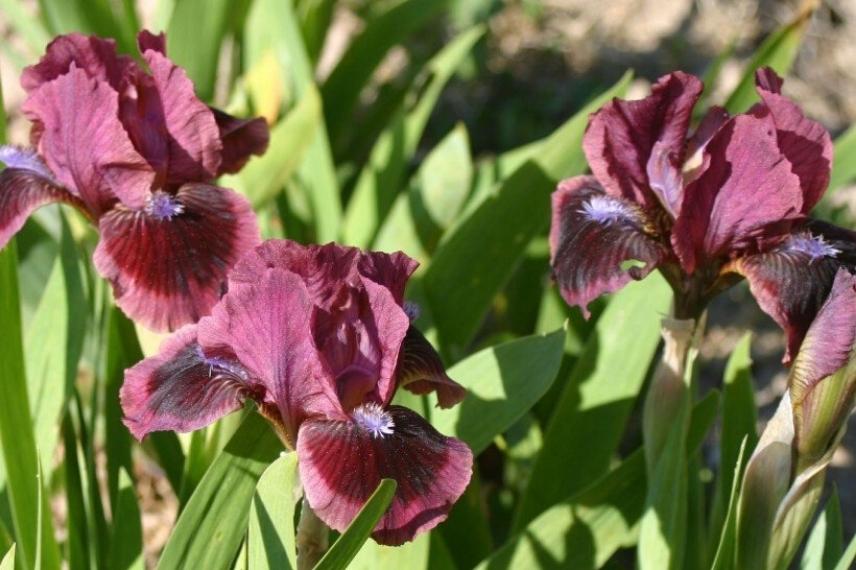
Iris germanica ‘Cat’s Eye’, also known as Lilliput Iris, is a stunning variety, appreciated for its drought tolerance as well as its surprisingly spicy and sweet fragrance. Its beauty has earned it several awards. Around April to May, it produces flowers with dark pink petals, broadly shaded with burgundy, sometimes leaning towards black or mauve pink. These dark colours highlight its lavender blue beards. Its green, deciduous leaves form a dense, upright clump from early spring.
Iris germanica ‘Cat’s Eye’ does not exceed 35 cm in height, but it will spread through its rootstocks to quickly create a lovely spring display in borders, beds, containers, and slopes. It should be given a nice sunny spot in well-drained, dry soil during summer, even calcareous. Plant alongside a sage, a Gaura, or a Geranium macrorrhizum for company.
To find out more
- Discover all our varieties of Iris
- To find out more, browse our article on “Garden Irises and Bearded Irises: Planting and Care”
- Subscribe!
- Contents
![[drought_resistant="Iris"]](https://en.promessedefleurs.eu/blogwp/wp-content/uploads/2022/09/iris-resistant-a-la-secheresse.jpg "[drought_resistant=\"iris\"]")
Comments