Iris ensata Dinner Plate Jell-O - Japanese Water Iris
Iris ensata Dinner Plate Jell-O - Japanese Water Iris
Iris ensata Dinner Plate Jell-O
Japanese Water Iris, Sword-leaved Iris, Butterfly Iris
Back-to-school special offer!
Get €10 off for every €50 you spend! And get up to €40 off on a single order.
How does it work?
1. Shop your favourites
Add your favourite plants to your basket. For every €50 you spend (excluding delivery charges, store credit and the plastic-free option), you’ll receive a €10 voucher.
€50 spent = €10 voucher
€100 spent = €20 voucher
€150 spent = €30 voucher
€200 spent = €40 voucher
2. Place your order
Once your basket reaches one of the spending thresholds, place your order. You can even choose your delivery date!
3. Receive your voucher
As soon as your order has been shipped, you’ll receive an email containing your personal voucher code and its value.
4. Use it on your next order
Your voucher is valid for 90 days from the date you receive it. It can be used once only, on a new order worth at least the value of the voucher, excluding delivery charges.
Please note: Vouchers can be combined with other offers, but cannot be split or refunded.
Home or relay delivery (depending on size and destination)
Important: You may be charged customs duties by your country’s customs authorities upon delivery.
Schedule delivery date,
and select date in basket
This plant carries a 6 months recovery warranty
More information
We guarantee the quality of our plants for a full growing cycle, and will replace at our expense any plant that fails to recover under normal climatic and planting conditions.
Description
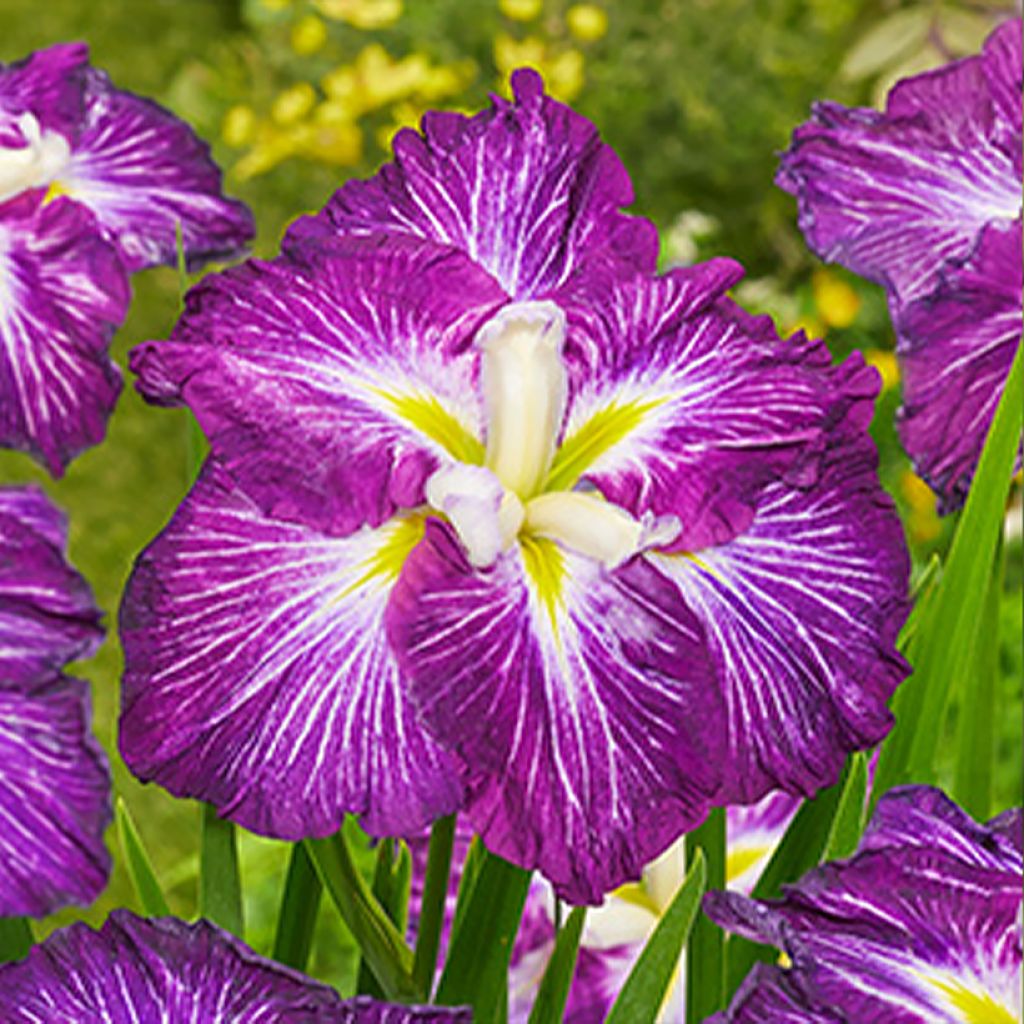
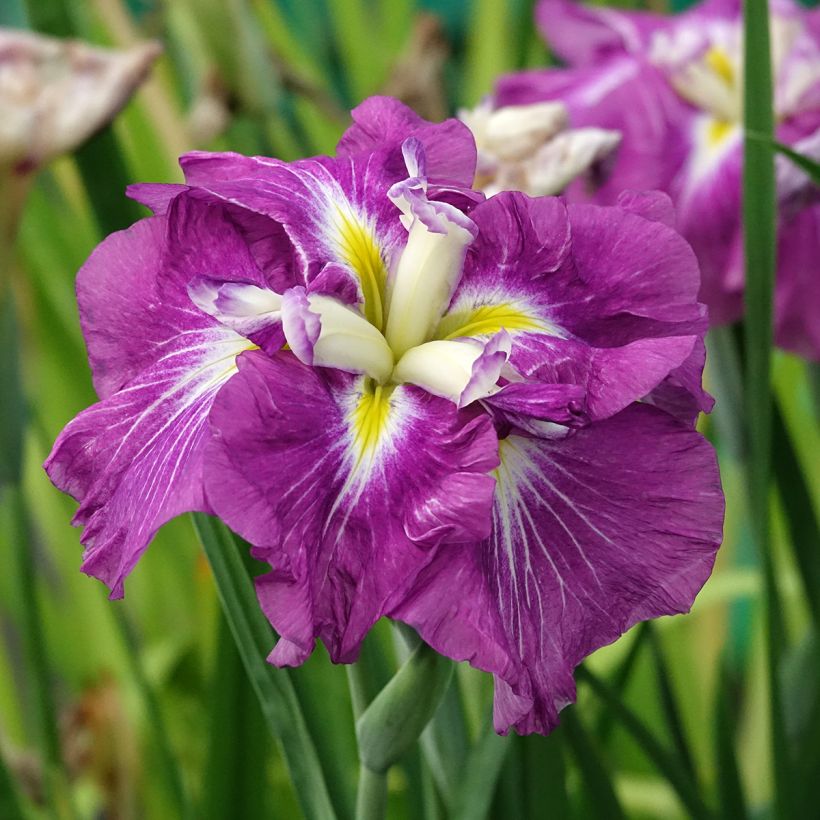
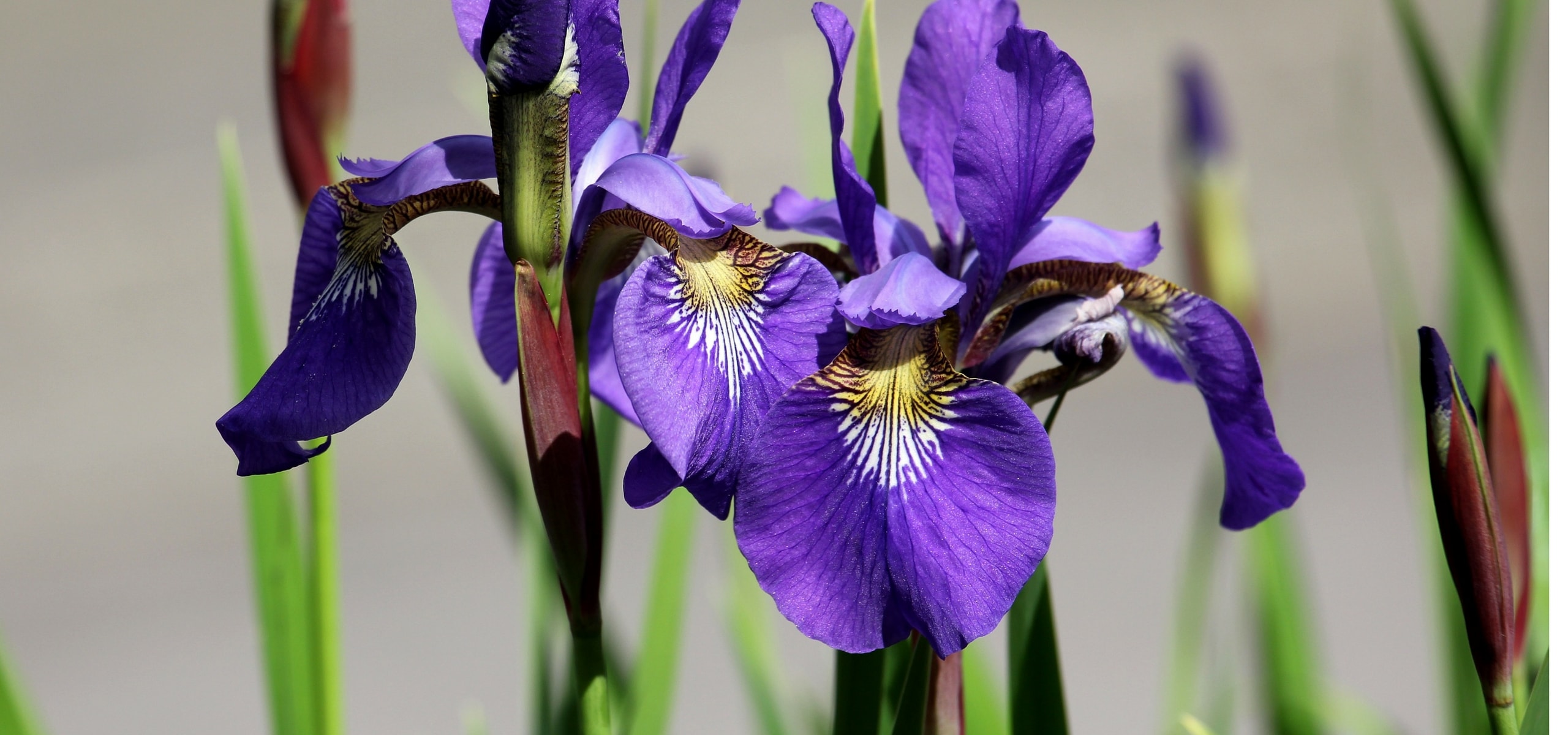
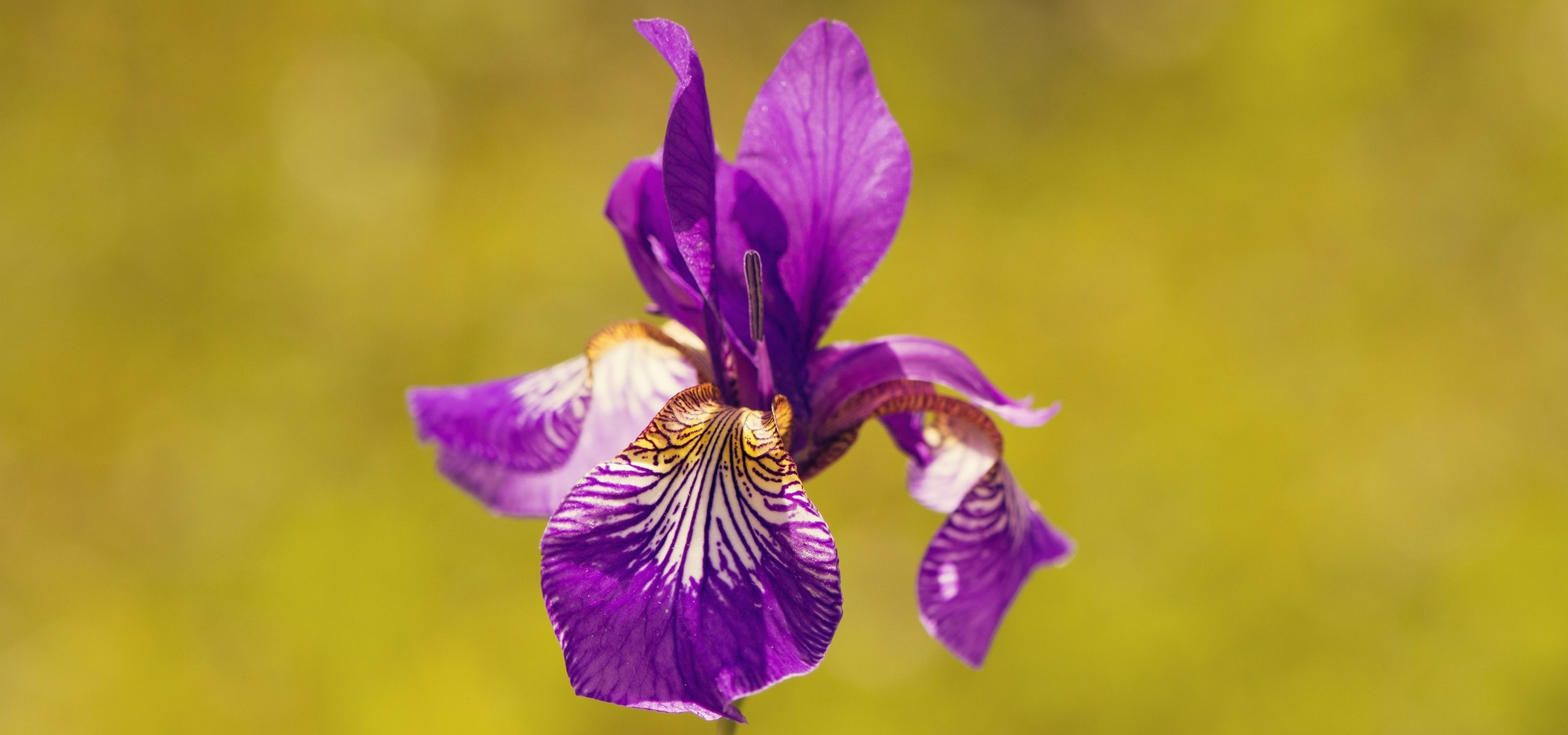
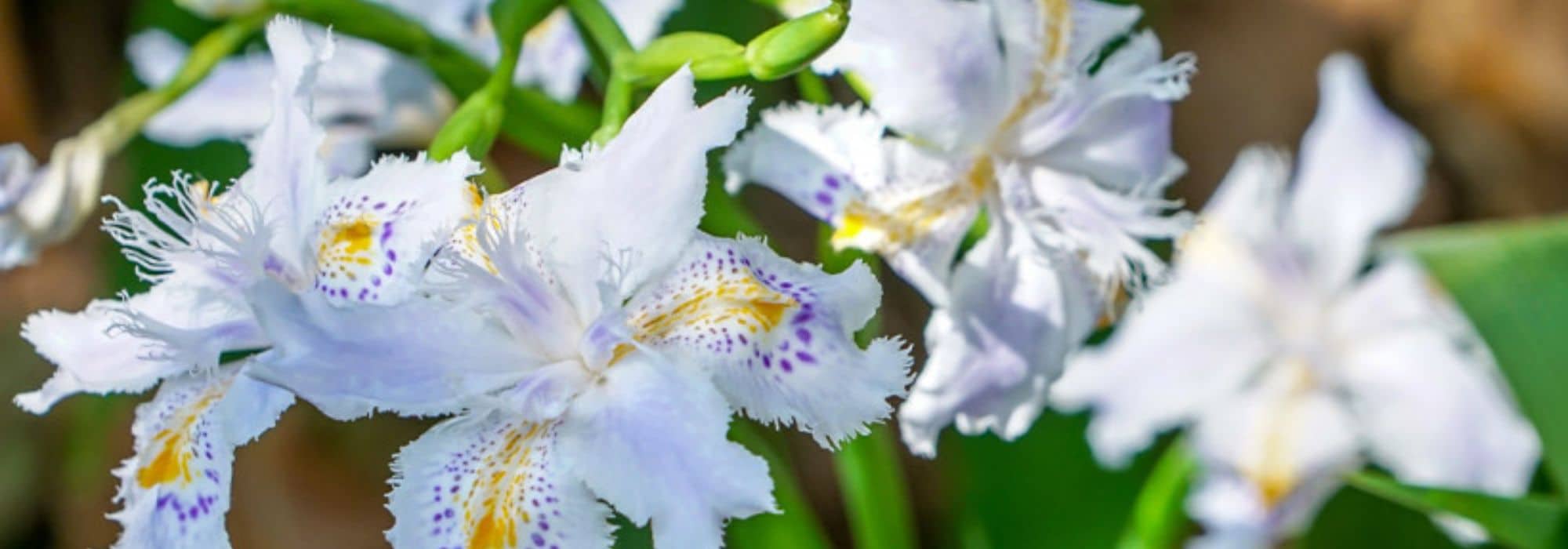
Iris ensata 'Dinner Plate Tiramisu' is another variety of Japanese water iris from the "Dinner Plate" series that features enormous plate-sized flat flowers. Its flowers are single to double, finely edged, and lightly speckled with purple on a white background, enhanced by small lemon yellow spots. This variety blooms in June-July. Unlike our garden irises, this rhizomatous perennial is comfortable in non-calcareous and waterlogged soils in summer. They look stunning when planted en masse in wet areas and along the edges of water bodies. Iris ensata were once extensively cultivated in Japan, especially around Edo (the ancestor of Tokyo), for cut flowers.
Iris ensata (synonym kaempferi), known as hanashōbu in Japanese, are better known as Japanese water irises and are quite different from our classic garden irises, except for their belonging to the iridaceae family. The original Iris ensata is a fibrous rhizomatous plant native to Asia, specifically the wetlands of Japan, the Himalayas, and Siberia. These irises, known for being difficult to grow, prefer acidic and peaty soils (they do not tolerate excess limestone), they crave water during their growing and flowering period, but appreciate slightly drier soils in winter: in nature, they are found above the water level which often drops in winter and rises in spring with the melting of snow.
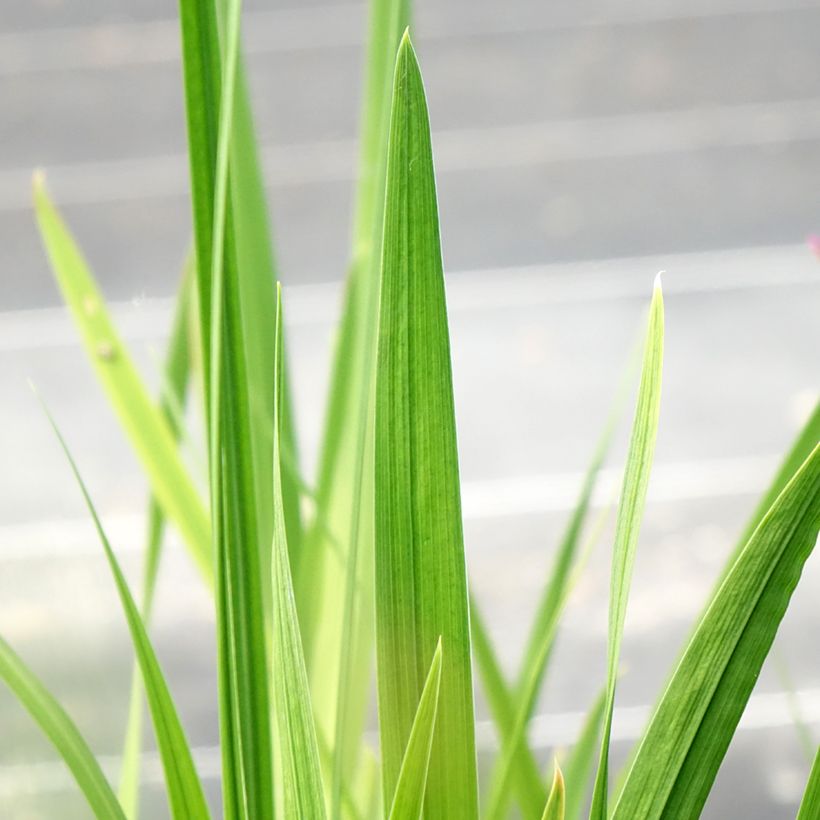
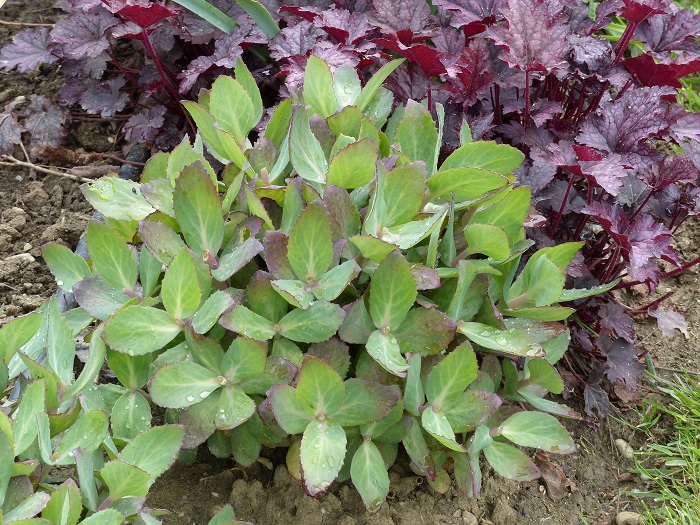
The 'Dinner Plate Tiramisu' cultivar is a recent horticultural creation from the 'Dinner Plate' series, which brings together varieties with oversized and remarkably coloured flowers. This 'Tiramisu' variety forms an erect clump of vegetation, composed of slender leaves. The plant will reach approximately 60cm (24in) in height when in bloom, with a spread of 50cm (20in). This iris slowly spreads on the ground through its rhizomes, beautifying year after year. The deciduous foliage, of medium green colour, consists of long and slender ribbon-like leaves, sheathing at the base, marked by a prominent central vein. The non-remontant flowering takes place in summer, more or less early depending on the climate. Flower stalks emerge from the clumps of leaves. Each stalk bears 2 to 3 very large flat flowers, measuring 15cm (6in) in diameter. Each flower is composed of large flat and horizontal sepals, very undulate, topped by slightly smaller petals and 3 upright styles. In the centre of the flower, bright yellow signals illuminate the whole.
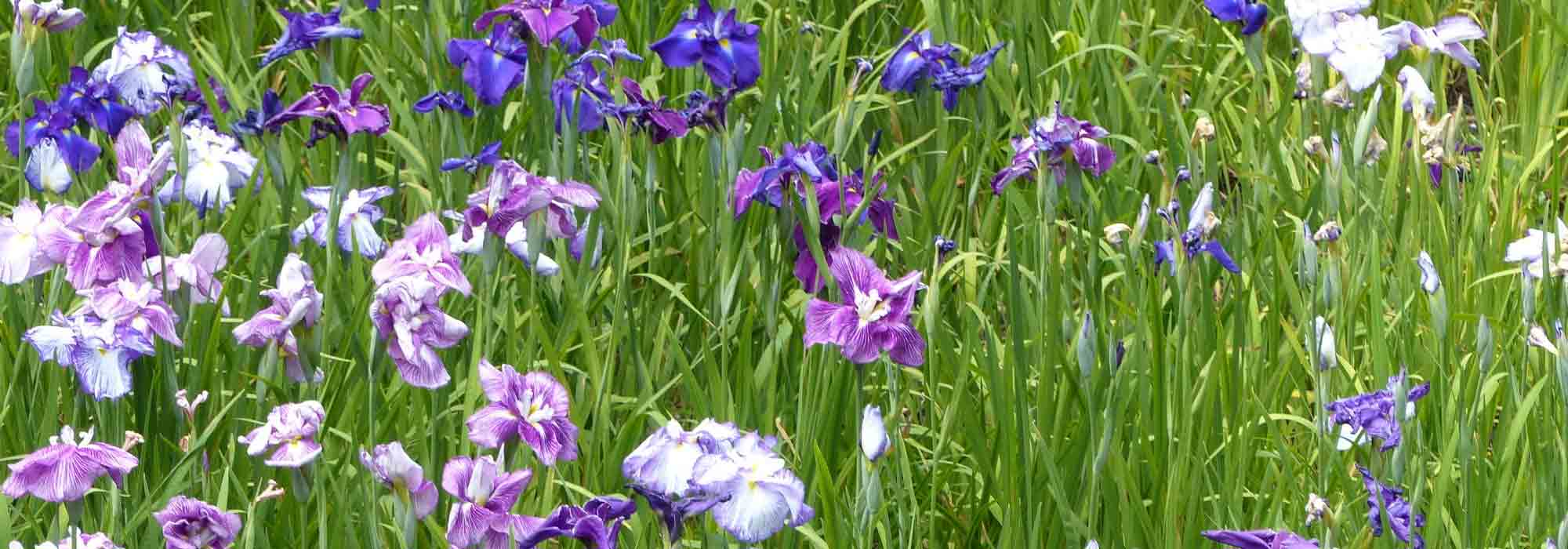
Often cultivated on the banks of ponds and basins, Iris ensata, like many marsh plants, can tolerate having their "feet" in the water during summer, but their rhizomes do not tolerate being submerged during winter, especially if it is freezing. In our gardens, these Japanese irises will thrive in loamy soil, enriched with compost, but not drying out in summer. For example, plant them in heavy soil forming a slight depression, at the bottom of a slope, or on a bank where the soil becomes moist through capillary action. Combine Iris ensata 'Tiramisu' with other "Dinner Plate" varieties, Anemone rivularis, Darmera peltata, Lobelia 'Queen Victoria', Astilbes, Lysimachias and Ligularias , for example.
Iris ensata Dinner Plate Jell-O - Japanese Water Iris in pictures
Flowering
Foliage
Plant habit
Botanical data
Iris
ensata
Dinner Plate Jell-O
Iridaceae
Japanese Water Iris, Sword-leaved Iris, Butterfly Iris
Cultivar or hybrid
Planting and care
Iris ensata plants enjoy a moist and marshy, peaty, limestone-free soil. They also tolerate a simply fresh soil, even if it is not waterlogged, as long as it does not dry out in summer. On the other hand, they prefer a rather dry soil in winter. We have planted them near an artificial stream, the water level of which is kept high during the growing season. In winter, we let the level drop by about 15cm (6in), so that the stumps are above the water, as in nature where the level of rivers decreases in winter and rises again in spring with the melting of snow. Their resistance to cold is excellent up to about -18°. It is further increased if the soil is dry.
Planting period
Intended location
Care
Planting & care advice
-
-
-
-
-
-
-
-
This item has not been reviewed yet - be the first to leave a review about it.
Recently viewed products
Haven't found what you were looking for?
Hardiness is the lowest winter temperature a plant can endure without suffering serious damage or even dying. However, hardiness is affected by location (a sheltered area, such as a patio), protection (winter cover) and soil type (hardiness is improved by well-drained soil).

The flowering period indicated on our website applies to countries and regions located in USDA zone 8 (France, the United Kingdom, Ireland, the Netherlands, etc.)
It will vary according to where you live:- In zones 9 to 10 (Italy, Spain, Greece, etc.), flowering will occur about 2 to 4 weeks earlier.
- In zones 6 to 7 (Germany, Poland, Slovenia, and lower mountainous regions), flowering will be delayed by 2 to 3 weeks.
- In zone 5 (Central Europe, Scandinavia), blooming will be delayed by 3 to 5 weeks.
In temperate climates, pruning of spring-flowering shrubs (forsythia, spireas, etc.) should be done just after flowering.
Pruning of summer-flowering shrubs (Indian Lilac, Perovskia, etc.) can be done in winter or spring.
In cold regions as well as with frost-sensitive plants, avoid pruning too early when severe frosts may still occur.
The planting period indicated on our website applies to countries and regions located in USDA zone 8 (France, United Kingdom, Ireland, Netherlands).
It will vary according to where you live:
- In Mediterranean zones (Marseille, Madrid, Milan, etc.), autumn and winter are the best planting periods.
- In continental zones (Strasbourg, Munich, Vienna, etc.), delay planting by 2 to 3 weeks in spring and bring it forward by 2 to 4 weeks in autumn.
- In mountainous regions (the Alps, Pyrenees, Carpathians, etc.), it is best to plant in late spring (May-June) or late summer (August-September).
The harvesting period indicated on our website applies to countries and regions in USDA zone 8 (France, England, Ireland, the Netherlands).
In colder areas (Scandinavia, Poland, Austria...) fruit and vegetable harvests are likely to be delayed by 3-4 weeks.
In warmer areas (Italy, Spain, Greece, etc.), harvesting will probably take place earlier, depending on weather conditions.
The sowing periods indicated on our website apply to countries and regions within USDA Zone 8 (France, UK, Ireland, Netherlands).
In colder areas (Scandinavia, Poland, Austria...), delay any outdoor sowing by 3-4 weeks, or sow under glass.
In warmer climes (Italy, Spain, Greece, etc.), bring outdoor sowing forward by a few weeks.
Shipping country and language
Your country of residence may be:
Your country of residence is:
For a better user experience on our website, you can select:
Your shipping country:
-
 Austria
-
 Belgium
-
 Bosnia & Herzegovina
-
 Bulgaria
-
 Croatia
-
 Cyprus
-
 Czechia
-
 Denmark
-
 Estonia
-
 Finland
-
 France
-
 Germany
-
 Greece
-
 Hungary
-
 Iceland
-
 Ireland
-
 Italy
Italy
-
 Latvia
-
 Liechtenstein
-
 Lithuania
-
 Luxembourg
-
 Malta
Malta
-
 Netherlands
-
 Poland
-
 Portugal
-
 Romania
-
 Serbia
-
 Slovakia
-
 Slovenia
-
 Spain
Spain
-
 Sweden
-
 Switzerland
Language:
-
French
-
 English
-
Spanish
-
Italian
-
German
-
Portuguese
-
Dutch
-
Finnish
My Account
Hello
My wish lists
My cart
Log in / Register
Existing customer?
This form is protected by reCAPTCHA - the Google Privacy Policy and Terms of Service apply.
New customer?
Create an account to track your orders, access our customer service and, if you wish, make the most of our upcoming offers.