





























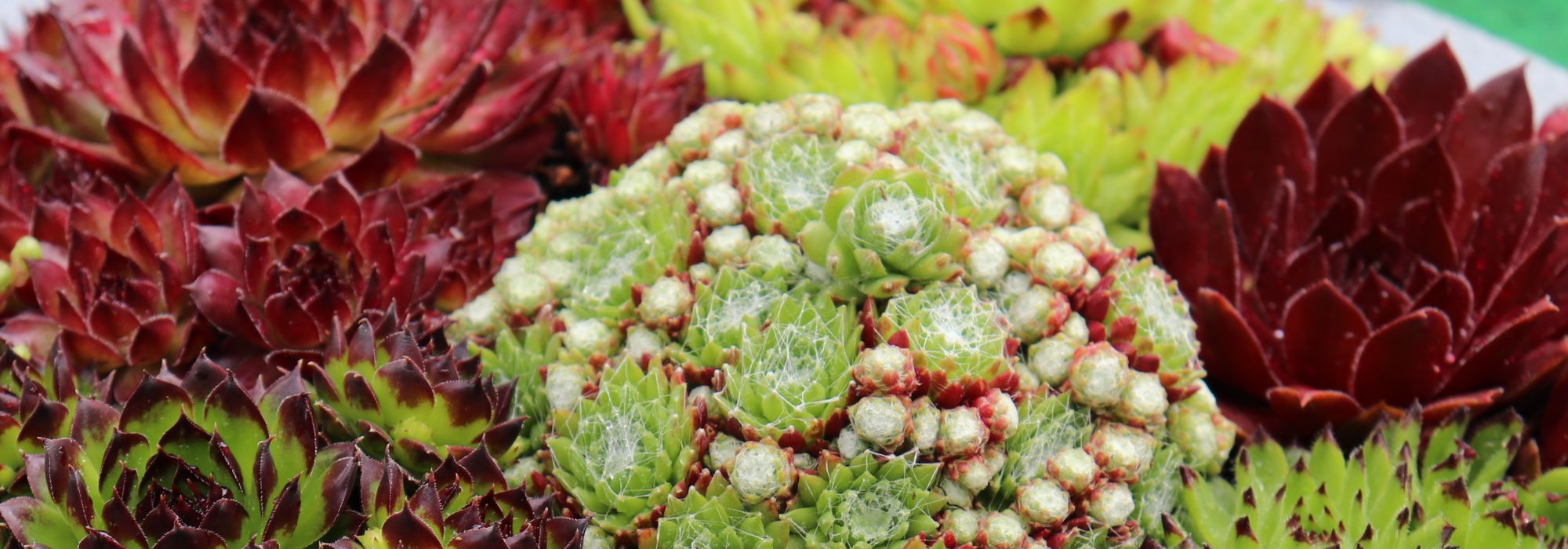
How to create a beautiful display of succulents?
Graphic, colourful or floral
Contents
Very easy to grow and offering a wide variety of shapes, colours, heights, and flowers, succulents allow for the creation of graphic, colourful, and even flowering pot displays. This results in often unusual or unique creations, especially as you can have fun finding containers that are out of the ordinary. Discover 3 ideas for succulent arrangements, along with tips for creating and maintaining your plantings.
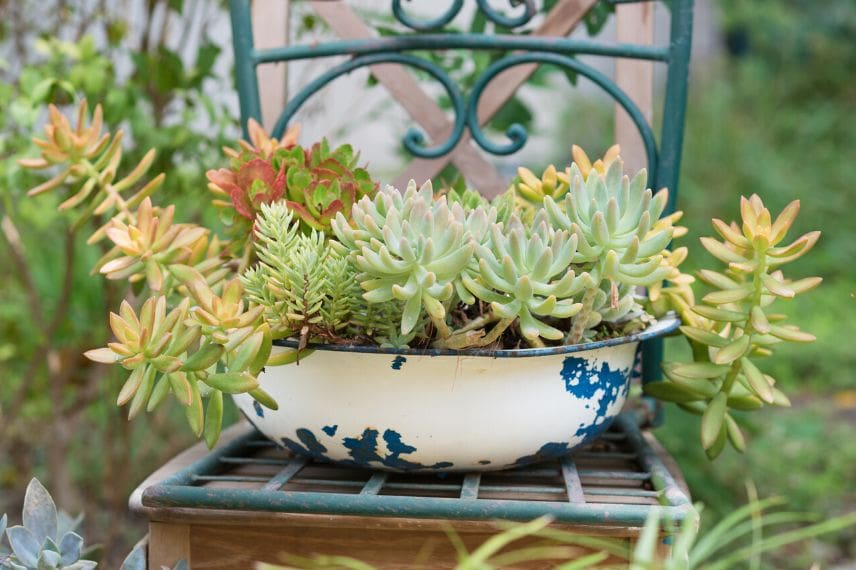

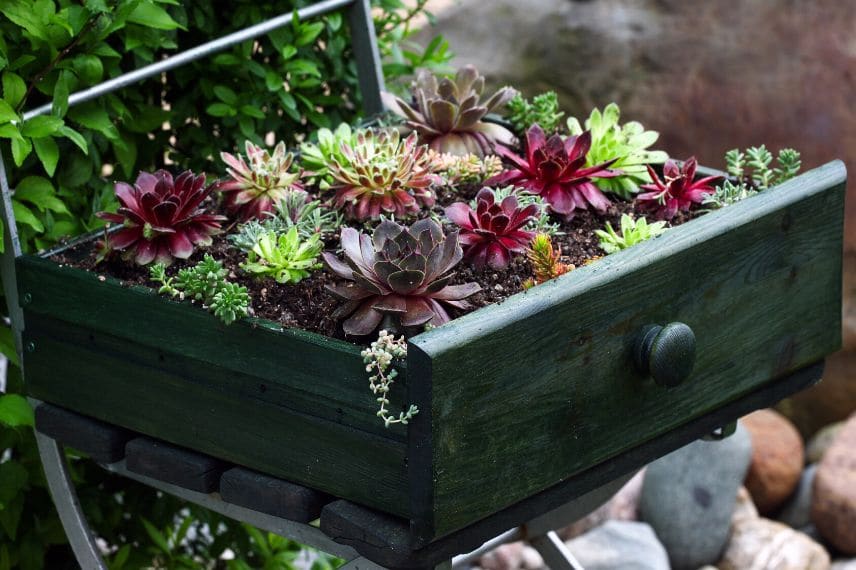
A graphic composition
Succulent plants, sometimes referred to as succulents, are characterised by their resistance to extreme heat and drought. These perennials are plants with fleshy leaves, capable of storing water in their tissues for extended periods. Their small size and the hairs or wax covering their leaves also help reduce water loss.
Cacti are also part of the succulent family. You have a vast array of plants, each more astonishing or amusing than the last, to create a display. They offer a wide variety of shapes: small cabbages, rosettes, little cushions, small ears, carpets… In your displays, you can take advantage of this characteristic and play with the variety of shapes of small succulents for a stunning graphic effect.
Consider Sedum reflexum, small creeping and trailing plants that bear a multitude of tiny oblong and fleshy leaves measuring 3 to 5 mm. Add Sempervivum tectorum or Houseleeks, adorable little artichokes with pointed leaves, as well as Aeonium occidentale. Complete the display with the fleshy and spiny rosettes of Aloe rauhii ‘Cleopatra’, which stands out with its small white spots scattered across the grey-green foliage. You can add a selection of small mangaves for even more variety. Also arrange a few small spiny cushions of Mammillaria perbella and Portulacaria afra ‘Variegata’, which resemble small bonsais with a trailing habit. For a touch of verticality, install a specimen of Tylecodon bucholzianus, a peculiar little bush whose shape resembles that of coral, as well as an agave stricta ‘Nana’ for a more exuberant exotic touch.
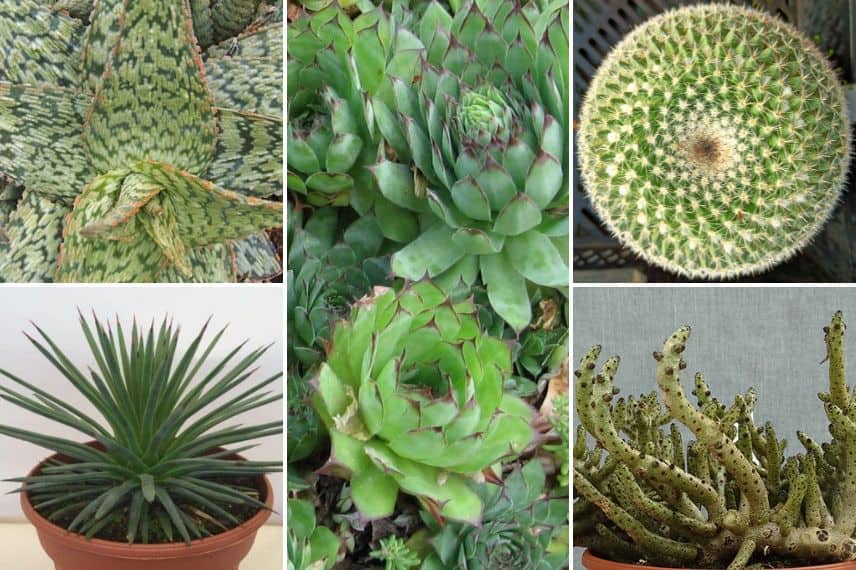
Aloe rauhii ‘Cleopatra’, agave stricta ‘Nana’, Sempervivum tectorum, Mammillaria perbella, Tylecodon bucholzianus
A colourful display
In addition to having different shapes, succulents feature foliage in a variety of colours: light to dark green, white, grey, red, purple… This inspires us to play with colour combinations.
In a glass pot, arrange several rosette-shaped succulents in different colours, such as Sempervivum ‘Chick Charms Cherry Berry’ in cherry red and green, ‘Chick Charms Cotton Candy’ with a fluffy white centre, ‘Chick Charms Appletini’ in green with burgundy tips, ‘Chick Charms Cranberry Cocktail’ in dark purple with green tips, as well as Aeonium arboreum ‘Tip Top’ with green and dark purple leaves to create a graphic carpet in various colours.
To enhance the unusual aspect of the display, add a Dwarf Aloe in a rosette shape with green dentate leaves featuring white spots, as well as an Aloe conifera ‘Twirl’ with bluish-grey-green leaves, salmon highlights, and reddish thorns. To continue this colour variation between green and red, complete with one or two Aloe perfoliata with green leaves tinged with red-pink, brick, and salmon, as well as Mangaves ‘Bloodspot’, striking with their blue-grey leaves speckled with red. The overall effect creates a graphic tableau in shades of red and green, two complementary colours that provide beautiful contrasts.
To highlight these colours, you can fill the spaces between the plants with small white pebbles. They will add a flattering touch of light and enhance the tones of the succulents.
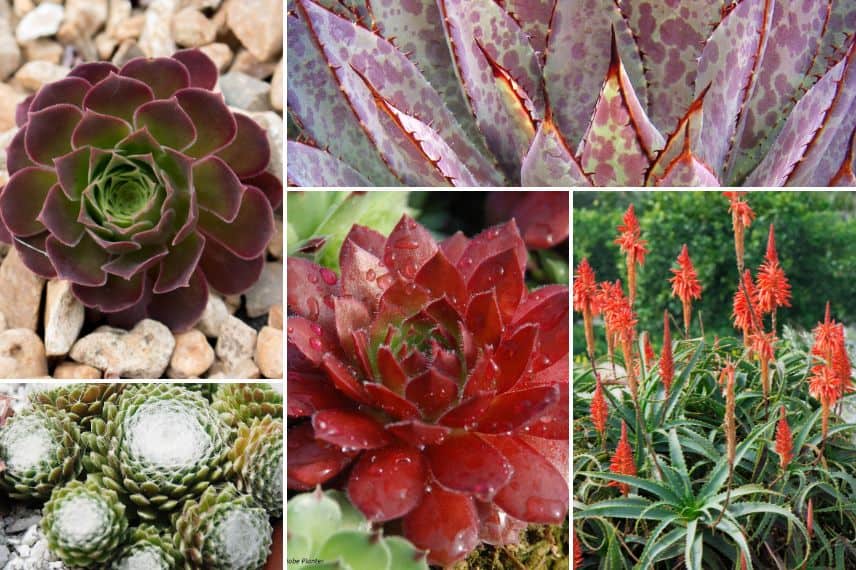
Sempervivum ‘Chick Charms Cherry Berry’, Sempervivum ‘Chick Charms Cotton Candy’, Mangaves ‘Bloodspot’, Aeonium arboreum ‘Tip Top’, Aloe Arborescens
A flower display
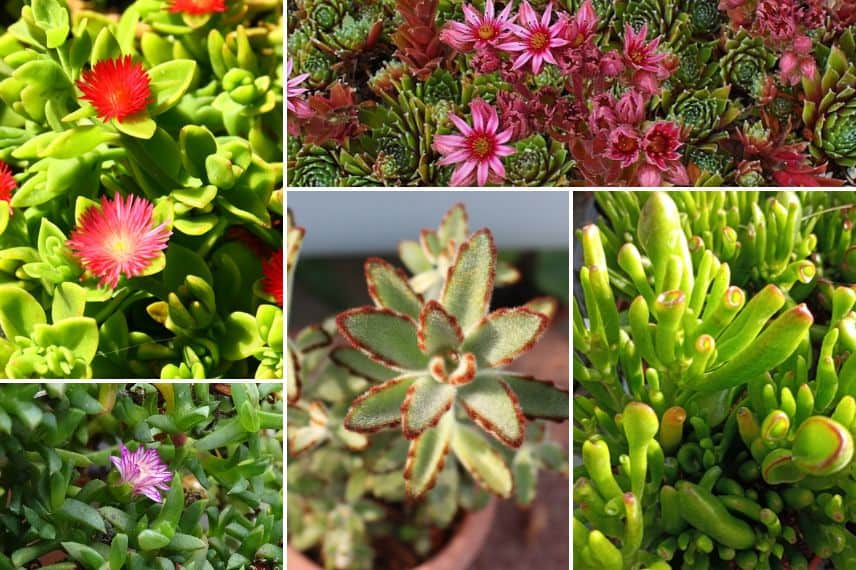
Another point to consider in a display is that the flowers of succulent plants offer beautiful vivid colours that are sure to impress. Have fun creating a display of flowering succulents. Take a few succulents or cacti without flowers to form a small green carpet, such as Sempervivum or sedums, and add flowering succulents like Delosperma sutherlandii with bright pink flowers and a yellow centre, the Ruschia prostrata with light pink flowers, as well as the Crassula ovata ‘Hobbit’ with pearly white flowers and pink highlights and the Sempervivum Alpha, a classic with carmine pink flowers.
To achieve tones blending red and yellow, you can plant Aptenia cordifolia with carmine pink flowers and small heart-shaped leaves, alongside a Kalanchoe tomentosa with deep red flowers and a yellow throat, a Crassula radicans ‘Small Carpet’ with pale yellow to white flowers and red foliage, as well as a Sedum acre ‘Yellow Queen’ ground cover with bright yellow flowers.
Planting and Care Tips
- To create your display of potted succulents, choose a shallow pot, wider than it is deep. This way, the substrate will be more draining, as succulents do not like moisture. The pot should also have a drainage hole at the bottom.
- Place a thick layer of drainage materials at the bottom of the pot, such as clay balls or gravel.
- Add a layer of potting soil for succulents, or make your own by mixing 2/3 soil with 1/3 sand.
- Remove the plants from their pots and position them, starting with the tallest. Cover with soil and press down firmly. You can also add pebbles, stones, or gravel on the surface for decoration.
- Wait 15 days before watering, allowing the roots to heal. Water with a small watering can with a fine spout and no rose, to avoid wetting the leaves. You can water occasionally, unless the substrate is moist or the plants are in winter dormancy or resting. Plan for watering every 15 days from spring to autumn, and once a week in summer.
- Place in sunlight and light, ensuring that the temperature is suitable for the different plants.
- Occasionally check the condition of the plants to correct any maintenance errors.
In addition, discover all our care tips for indoor succulents and cacti.
- Subscribe!
- Contents
Comments