





























How to grow Hebe in pots?
Everything you need to succeed in planting and caring for bush veronicas in pots
Contents
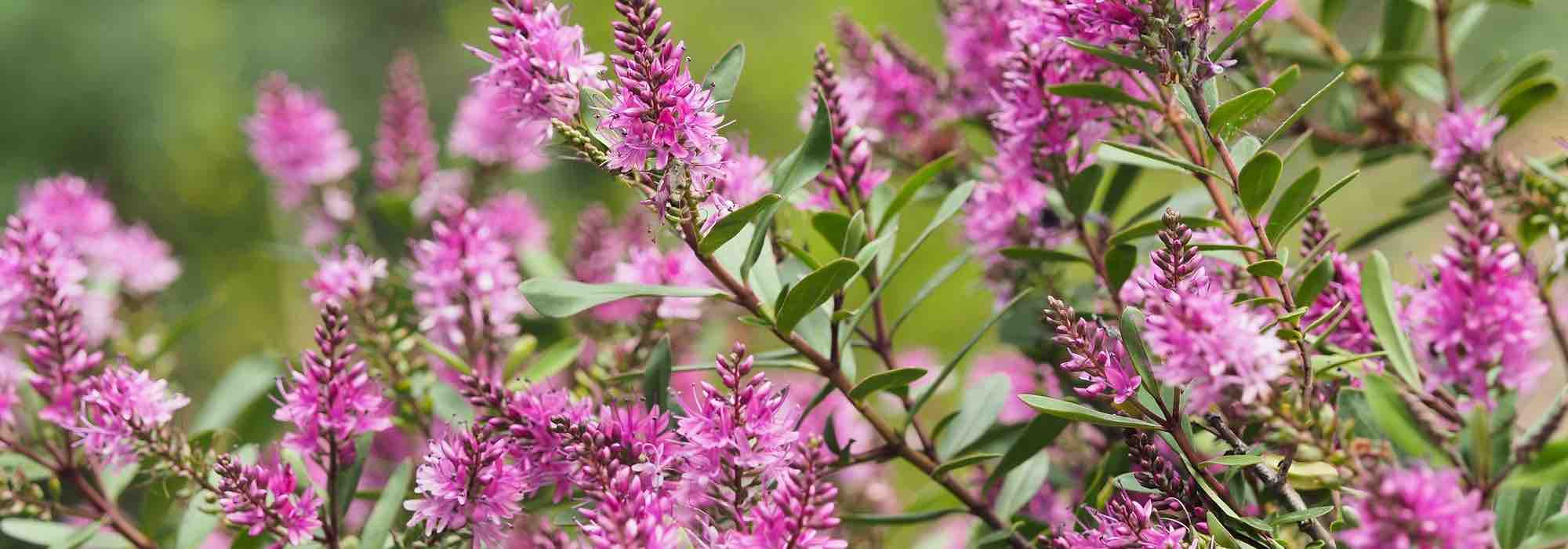
Hebes or shrubby veronicas are quite diverse bushes, sharing the common trait of evergreen foliage that remains decorative in all seasons. Originally from New Zealand or South America, these plants now come in many hybrid varieties. Preferring mild climates, they are typically grown in open ground along the Atlantic coast or in Mediterranean regions. However, these bushes are easy to cultivate and can thrive in pots with a few precautions.
Here are our tips for successfully planting Hebes in pots and properly maintaining them throughout the year.

Which Hebe varieties to choose?
Large-leaved varieties offer a generous summer flowering, while small-leaved ones are appreciated for their foliage and compact shape. For pot cultivation, the latter are ideal, especially in restricted spaces (balconies, window sills, etc.). They have a rather slow growth and will form small bushes with a graphic and tidy appearance.
- The Hebe ‘Raspberry Ripple’ (50 cm in all directions) is a hybrid variety with dark green foliage and lovely raspberry pink and white cluster flowers. It offers good hardiness down to about -12°C.
- The Hebe ‘Green Globe’ (30 cm in all directions) rewards us with very bright light green foliage, forming an adorable little plant ball.
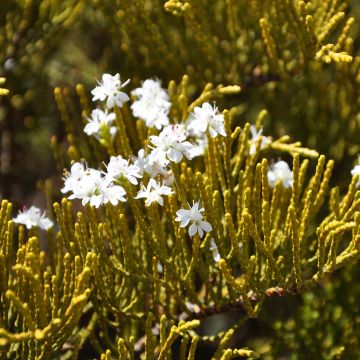
- The Hebe pinguifolia ‘Sutherlandii’ (55 cm in all directions) has grey-green foliage and flowers with small white spikes.
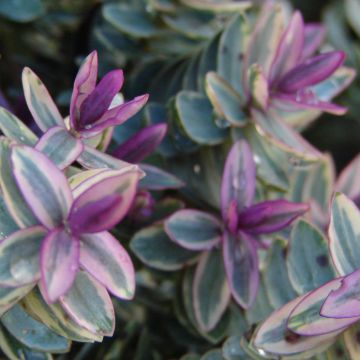
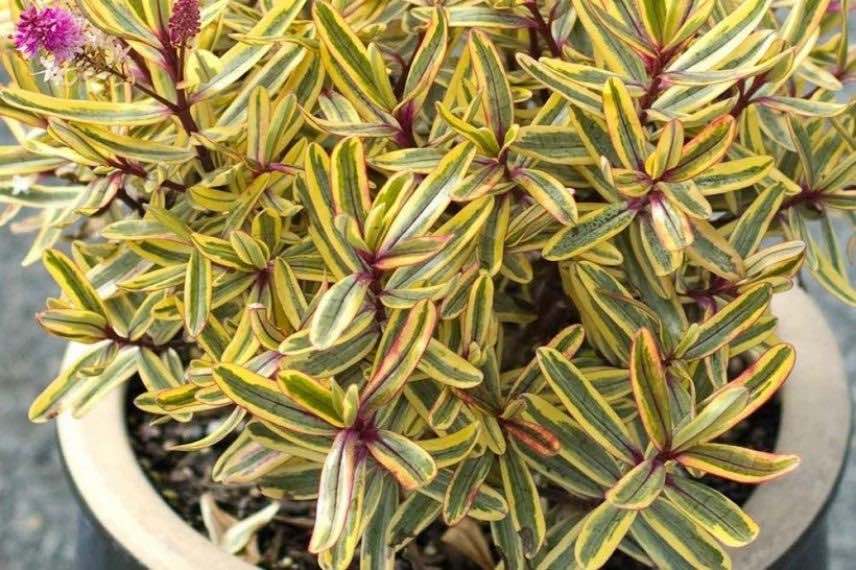
- The Hebe ‘Jewel of the Nile’ (60 cm in all directions) features changing foliage, particularly ornamental. It is initially variegated with yellow and green in summer, then tinted with pink and red as the first cold sets in.
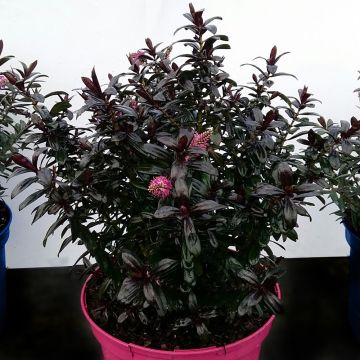
- The Hebe ‘Joan Mac’ (60 cm in all directions) produces very dark, shiny leaves, an elegant dark green tinged with purple. This foliage forms a perfect backdrop for the summer pink flowering.
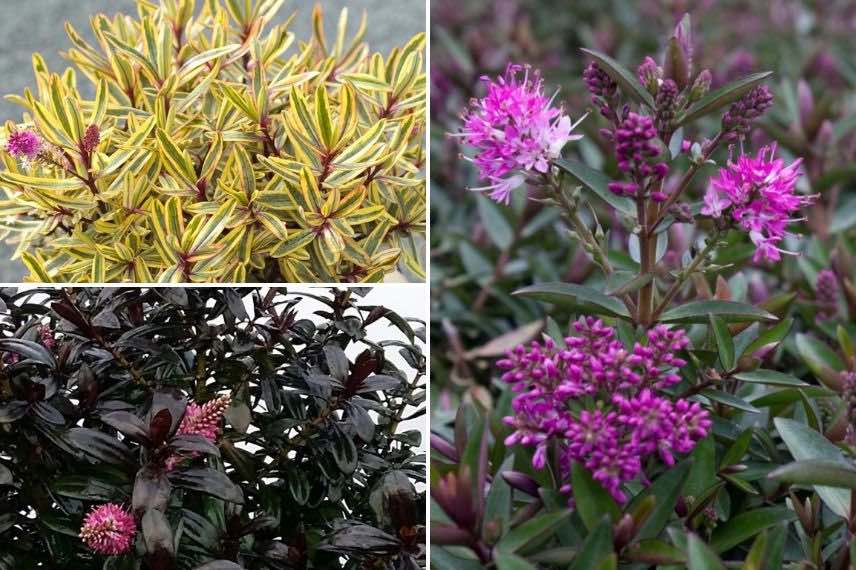
Hebe ‘Jewel of the Nile’, ‘Joan Mac’ and ‘Raspberry Ripple’ on the right. Hebes compact enough for window boxes
In large containers, for example on a terrace, you can also opt for slightly larger varieties with a more flexible shape, such as:
- The Anderson Hebe (Hebe andersonii), which measures about 1.80 metres in all directions and flowers with pink-violet spikes;
- The Hebe ‘Celebration’, with a spreading shape reaching about 1 metre in all directions, which has beautiful variegated foliage and offers pink-violet flowering;
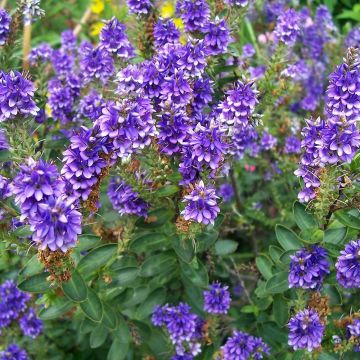
- The Hebe franciscana ‘Blue Gem’, which reaches 1.20 metres in all directions and rewards us with a long blue-purple flowering.
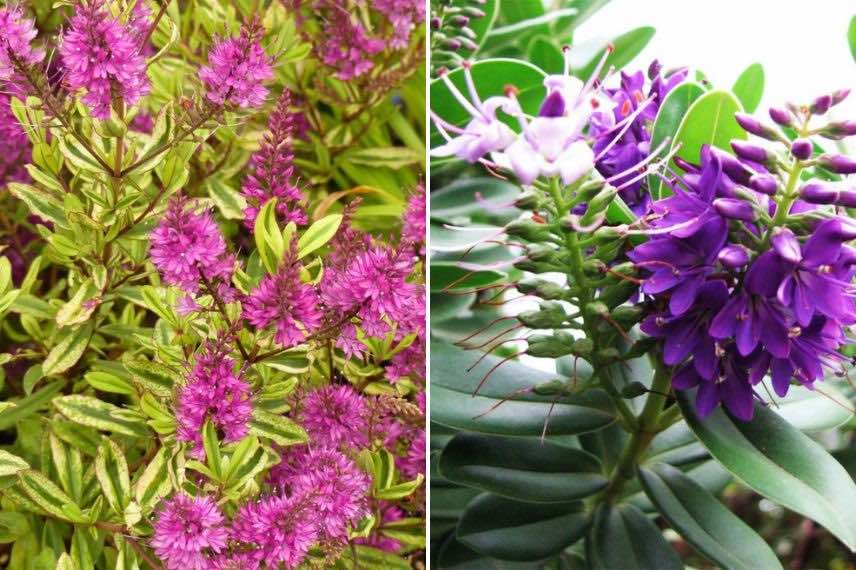
Hebe ‘Celebration’ and ‘Hebe franciscana ‘Blue Gem’
When to plant Hebes in pots?
Wood spurge should ideally be planted in spring, between March and May, or in autumn, between September and November.
Avoid planting during periods of drought or frost.
Repotting should be done every 2 to 3 years, depending on the growth of the plant.
Discover other Hebe - Shrubby Veronica
View all →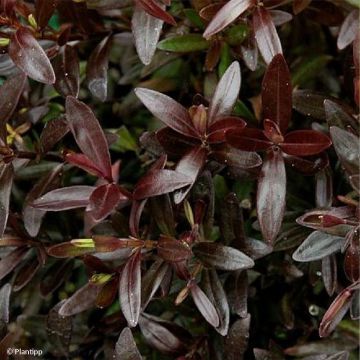
Available in 1 sizes
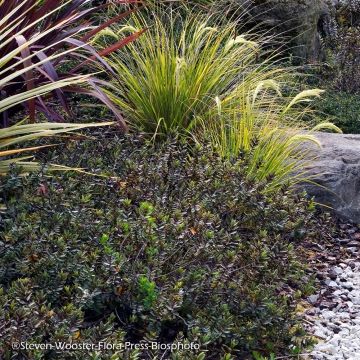
Available in 1 sizes
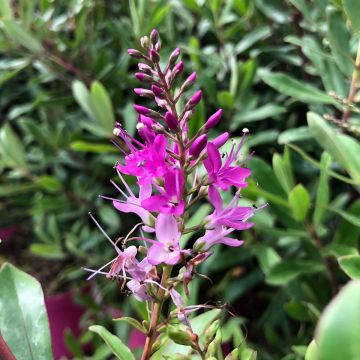
Available in 1 sizes
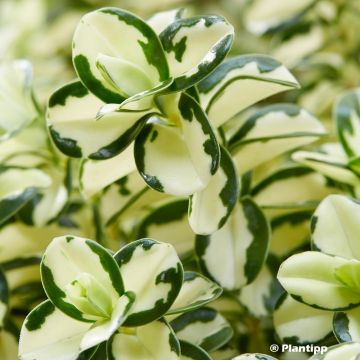
Available in 1 sizes
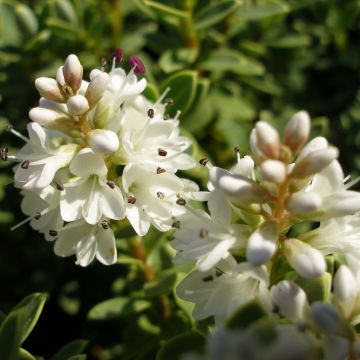
Available in 1 sizes
Available in 1 sizes
Available in 1 sizes
Available in 1 sizes
Available in 1 sizes
Available in 1 sizes
Planting Hebes in pots
Container
Choose a pot or container that is definitely perforated to allow watering or rainwater to drain away, preventing excess moisture.
Opt for a container that is at least 30 cm deep.
Unglazed clay containers provide better aeration for the substrate but will require more vigilance regarding watering (water evaporates more quickly in them).
Substrate
Hebe prefer soils that are relatively rich in organic matter, yet light and definitely well-drained. Stagnant water and excess moisture can indeed be fatal, especially in winter. Quite tolerant of pH, they can withstand a bit of lime or acidity.
For planting, mix:
- 2/3 of good quality horticultural compost or compost for Mediterranean plants;
- 1/3 of coarse sand or gravel to lighten and promote drainage;
- 1 handful of household compost or well-decomposed manure.
Planting
- Soak the root ball of your Hebe in a bucket or basin of water to thoroughly rehydrate it and facilitate the removal from its original container.
- Install a drainage layer of about 3 to 5 cm at the bottom of the container (clay balls, gravel, terracotta shards, pouzzolane, etc.).
- Fill with the substrate mix up to 2/3 of the container
- Remove the Hebe from its container and gently untangle the root system with your fingers if necessary.
- Place the root ball in the centre of the container, then fill with substrate.
- Firm down with your fingers.
- Water generously.
- Apply a mulch around the base of the plant (straw, RCW, dead leaves, vegetable husks…).
Exposure
Due to their origins, bush veronicas have retained a preference for mild, non-extreme climates. Place them in sunny positions in northern regions, but rather in semi-shaded positions in southern regions, where they will be sheltered from the harsh rays of the sun.
Also protect them from cold, drying winds.
The Hebe will thrive both by the sea, as it tolerates sea spray, and in urban environments, as it withstands pollution.
Read also
How to pair Hebe?Caring for Hebes in pots
Watering
In pots, the substrate dries out much more quickly than in open ground. Therefore, watering your Hebe in a pot will need to be more regular.
During the growth period (spring and summer), water as soon as the substrate is dry on the top few centimetres (generally 1 to 2 times a week). Reduce watering in autumn. Stop it in winter, unless the plant is brought indoors or the weather conditions are particularly mild and dry.
Installing a mulch at the time of planting will help reduce evaporation, spacing out watering further.
Fertilisation
In pots, the substrate depletes its nutrient reserves more quickly than when grown in open ground. To support flowering, you can therefore apply a fertiliser in spring and summer.
Choose a fertiliser that stimulates flowering or a fertiliser for containers and pots. Liquid fertilisers generally have a quick “boost” effect but need to be reapplied more often; solid fertilisers offer a slower release but last longer. For dosages, usage instructions vary by product: consult the user guide.
Pruning
Pruning is not essential. It mainly helps your bushy Veronica maintain a nice, compact, homogeneous shape. Intervene at the end of winter, before growth resumes. Remove damaged or obstructive branches and prune a maximum of 2/3 of the longest shoots, which can unbalance the bush.
To stimulate the development of new flower buds, remove faded flowers as they appear.
If the aerial parts have frozen, cut the stems back very short, close to the ground. This will encourage the creation of new shoots.
Always use clean cutting tools to avoid spreading diseases between your plants.
Pests and diseases
Hebes are not particularly sensitive plants. To prevent the appearance of powdery mildew (a fungus that causes white powdery spots on leaves), do not grow your Hebes in a confined space and avoid any stagnant moisture.
In case of severe aphid attacks, spray a natural insecticide made from black soap (1 tablespoon diluted in 1 litre of warm water) on the affected parts. Act in the late afternoon.
Wintering
The hardiness of bushy veronicas varies: the less hardy cannot withstand temperatures below -5°C, while the hardiest can tolerate down to -12°C in a sheltered position with well-drained soil.
When grown in pots, Hebe is however much more sensitive to cold. In regions with mild winters that do not drop below these temperatures, you can simply insulate your container from the ground. Place it on a brick or wrap it in bubble wrap. Optionally, install a winter fleece around the aerial parts in case of forecasted frosts.
In regions with severe and frequent frosts, bring your potted Hebe indoors to a dry, cool, and bright location.
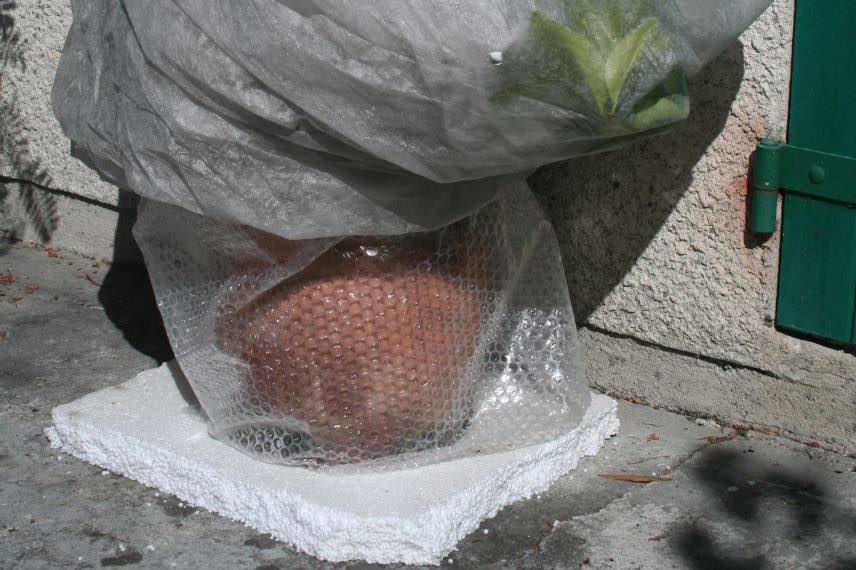
A pot well insulated from the cold
- Subscribe!
- Contents
Comments