





























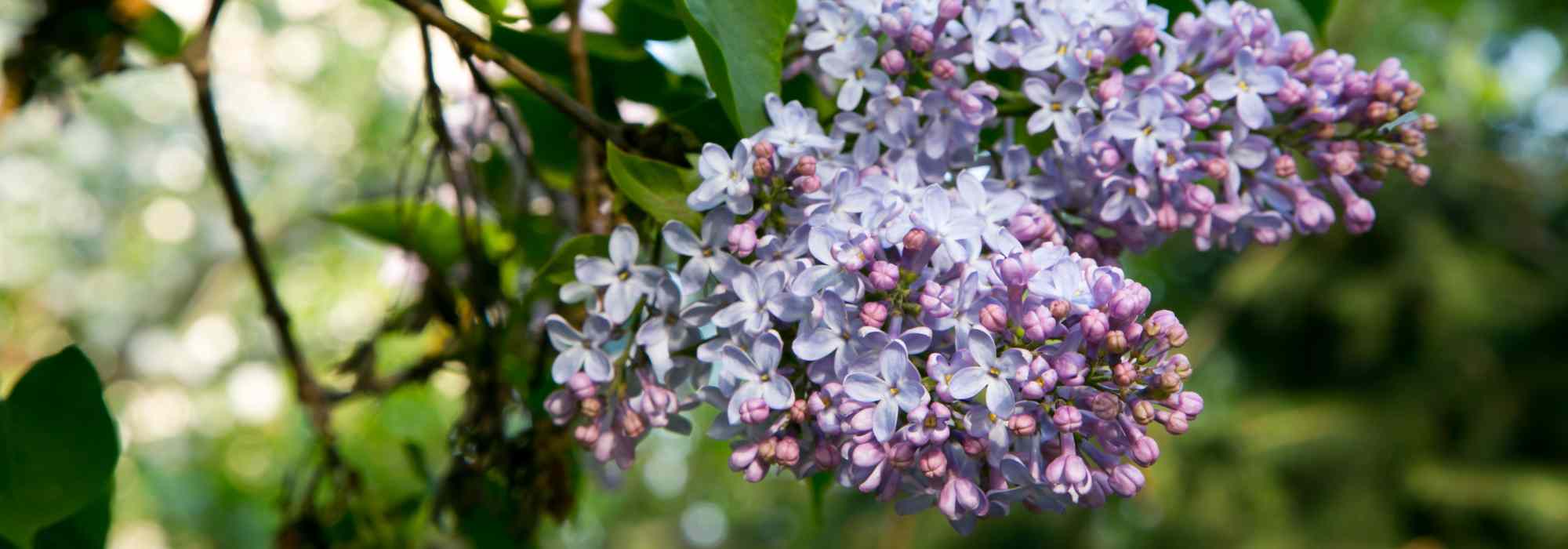
Lilac - Syringa: the most fragrant varieties
Discover a selection of lilacs (syringa) to fill your garden with a deep fragrance
Contents
Lilacs, with their fleeting beauty and captivating fragrance, embody the renewal of spring and bring a touch of elegance and freshness to any garden. Their diversity, ranging from the classic varieties of the common lilac – Syringa vulgaris, such as ‘Katherine Havemeyer’, ‘Capitaine Baltet’, and ‘Charles Joly’, to more exotic species such as the Chinese lilac – Syringa microphylla, offers a wide range of choices for gardening enthusiasts. Each variety is distinguished by unique colours and intoxicating fragrances, promising to transform your outdoor space into an olfactory haven.
Lilacs are not limited to their visual appeal; they play a crucial role in biodiversity, attracting butterflies and pollinating insects with their nectariferous and melliferous flowers. Their ability to adapt to a range of climates, as well as their ease of maintenance, makes them an ideal choice for both experienced and novice gardeners. Whether you have a large garden or a small terrace, there is always a fragrant lilac variety to suit your needs and environment.

Common Lilac - Syringa vulgaris
Lilacs are well-known shrubs for their ephemeral beauty in spring, offering a display of colour and fragrance that delights the senses. Among them, the varieties ‘Katherine Havemeyer’, ‘Capitaine Baltet’ and ‘Charles Joly’ stand out for their unique characteristics, providing a diversity welcome in the garden.
The variety ‘Katherine Havemeyer’ is characterised by its double flowers in an elegant mauve, emitting a powerful fragrance that can perfume an entire garden. This variety is particularly prized for its spectacular appearance and its intoxicating scent, which make it a preferred choice for gardens seeking a touch of elegance and refinement. The habit will grow to 4 m tall and 3 m wide.
The lilac ‘Capitaine Baltet’ stands out for its pale blue-mauve flowers. These flowers, arranged in broad clusters, emit a rich and heady fragrance, contributing to create a welcoming and warm atmosphere around it. The blue hue of ‘Capitaine Baltet’ is particularly sought-after for its natural elegance and its ability to stand out in the landscape, offering a striking contrast with the green of the leaves and the other flowering displays in the garden. The habit is relatively compact for a lilac from Europe: 3 m tall and about 2 m wide.
Finally, the variety ‘Charles Joly’ stands out for its double flowers in an astonishing wine-red shade, accompanied by a particularly intense lilac fragrance. This unique shade of red, coupled with its fragrance, makes ‘Charles Joly’ an exceptional choice for those seeking to introduce a note of freshness and originality into their garden. The shrub is tall and will reach nearly 6 m in height and 4 m in width.
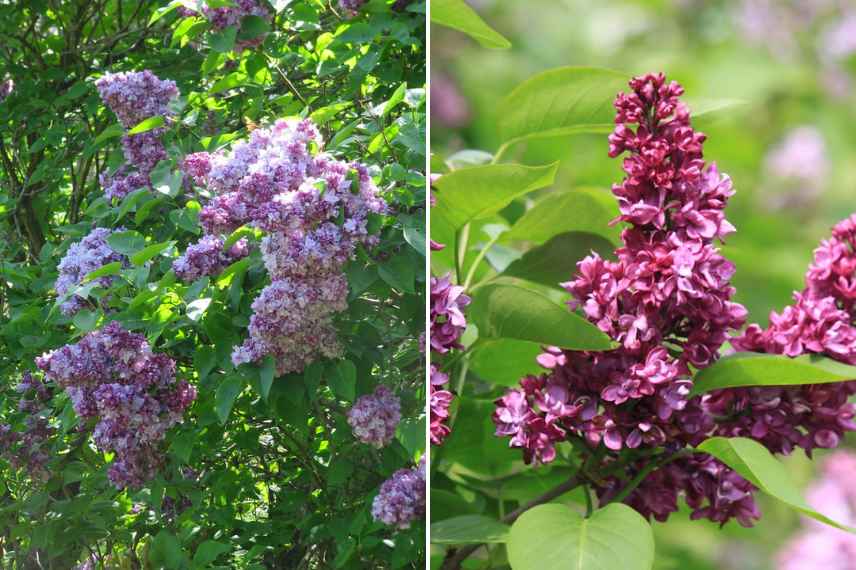
Syringa vulgaris ‘Katherine Havemeyer’ (© Leonora Enking) and Syringa vulgaris ‘Charles Joly’ (© James M)
Chinese lilac - Syringa microphylla
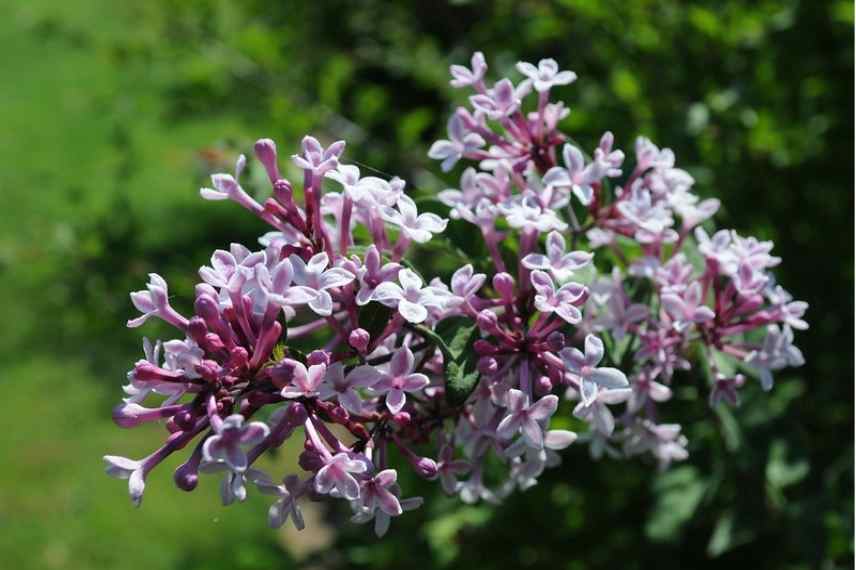
Korean dwarf lilacs - Syringa meyeri
Little-known Meyer lilacs also produce a beautiful, highly fragrant flowering.
The Syringa meyeri ‘Palibin’ is a small lilac variety (2 m by 2 m), famed for its hardiness and abundant, remarkably fragrant flowering. Awarded by the Royal Horticultural Society, ‘Palibin’ is well suited to small spaces, including container plantings on terraces and balconies, thanks to its compact growth and natural habit. Its single-flowered clusters, in pale mauve-pink, emerge in spring and continue sporadically until autumn, attracting butterflies and pollinating insects. This hardy, low-maintenance variety is resistant to disease and pollution, making it ideal for creating a scented garden or a flowering hedge.
Difficult to classify, as this variety is a hybrid derived from three species (including Syringa meyeri), but the Syringa ‘Josée’ is a Chinese lilac that stands out for its very fragrant, abundant flowering in early spring and repeat flowering in late summer. This compact, bushy shrub (no more than 2 m in all directions), ideal for small gardens, produces clusters of flowers in a bright pink, which fade as they open, releasing a genuine lilac fragrance. This variety attracts a multitude of butterflies and pollinating insects thanks to its highly fragrant, pyramid-shaped thyrses. Hardy and low-maintenance, it adapts well to different soils and climates, making it a perfect choice for creating a flowering hedge, a standalone group, or to enhance terraces and balconies with its fragrant clusters, ideal for spring bouquets.
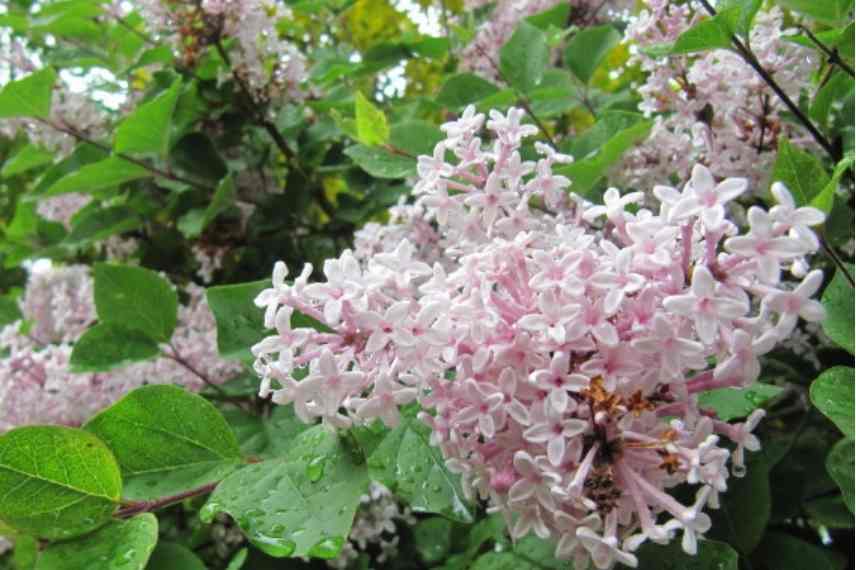
Syringa meyeri ‘Palibin’ (© Leonora Enking)
Tips for choosing and planting a fragrant lilac shrub
Choosing and planting a fragrant lilac is a considered process that requires thought and preparation to ensure abundant, fragrant flowering. Here are essential tips for successfully planting your lilac.
Sun exposure and well-drained soil
Lilac (Syringa) thrives in an environment well exposed to sun. A south- or west-facing exposure is ideal to maximise flowering. Lilac needs at least 6 hours of direct sun per day for developing its clusters of fragrant flowers. A soil that drains well is also crucial, as lilac does not tolerate waterlogging. Before planting, ensure the soil is loosened and enriched if necessary. Adding compost can improve soil structure and encourage healthy growth. If your soil is particularly clayey or compact, consider creating a mound or raised bed to improve drainage.
Choose a variety suited to your climate
There are many lilac varieties, each suited to specific climatic conditions. Before choosing your lilac, check its resistance to the winter and summer conditions of your region. Some varieties are more cold-hardy, while others tolerate heat and drought better. Also consider the shrub’s mature size to ensure it has enough space to develop without constraint. Nurseries and local garden centres are good sources of information to choose a variety that will thrive in your garden.
Pruning after flowering
Pruning is an important aspect of lilac maintenance to encourage abundant flowering and maintain a balanced habit. It is recommended to prune your lilac immediately after flowering. This helps stimulate the growth of new shoots that will bear the flowers the following year. Remove faded flowers to prevent the plant from wasting energy producing seeds. Also remove dead, diseased or tangled branches to aerate the centre of the shrub and promote good air circulation, thereby reducing the risk of diseases. A light pruning can also be done to give your lilac a harmonious shape.
Oli’s tip : a little lost when choosing scented lilacs? Not to worry, we have the solution: Collection of 3 Fragrant Lilacs.
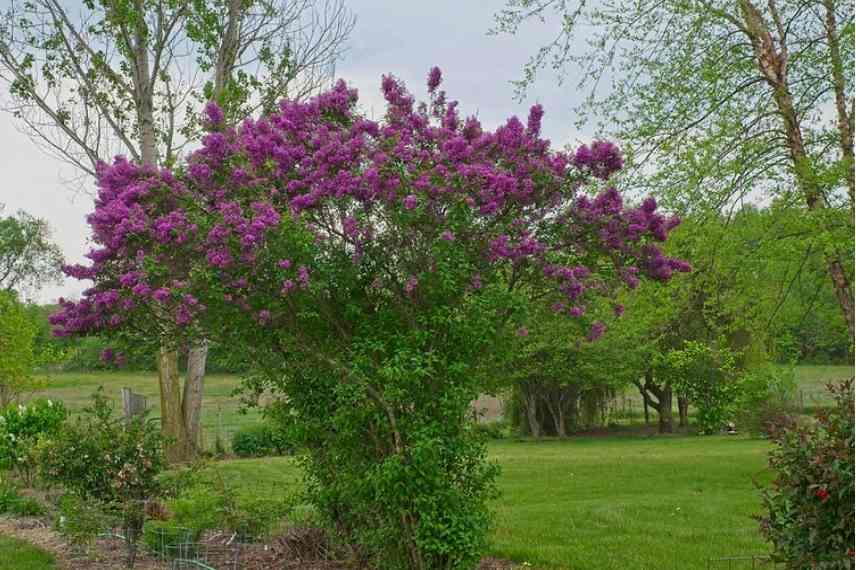
Syringa vulgaris (© FD Richards)
- Subscribe!
- Contents
Comments