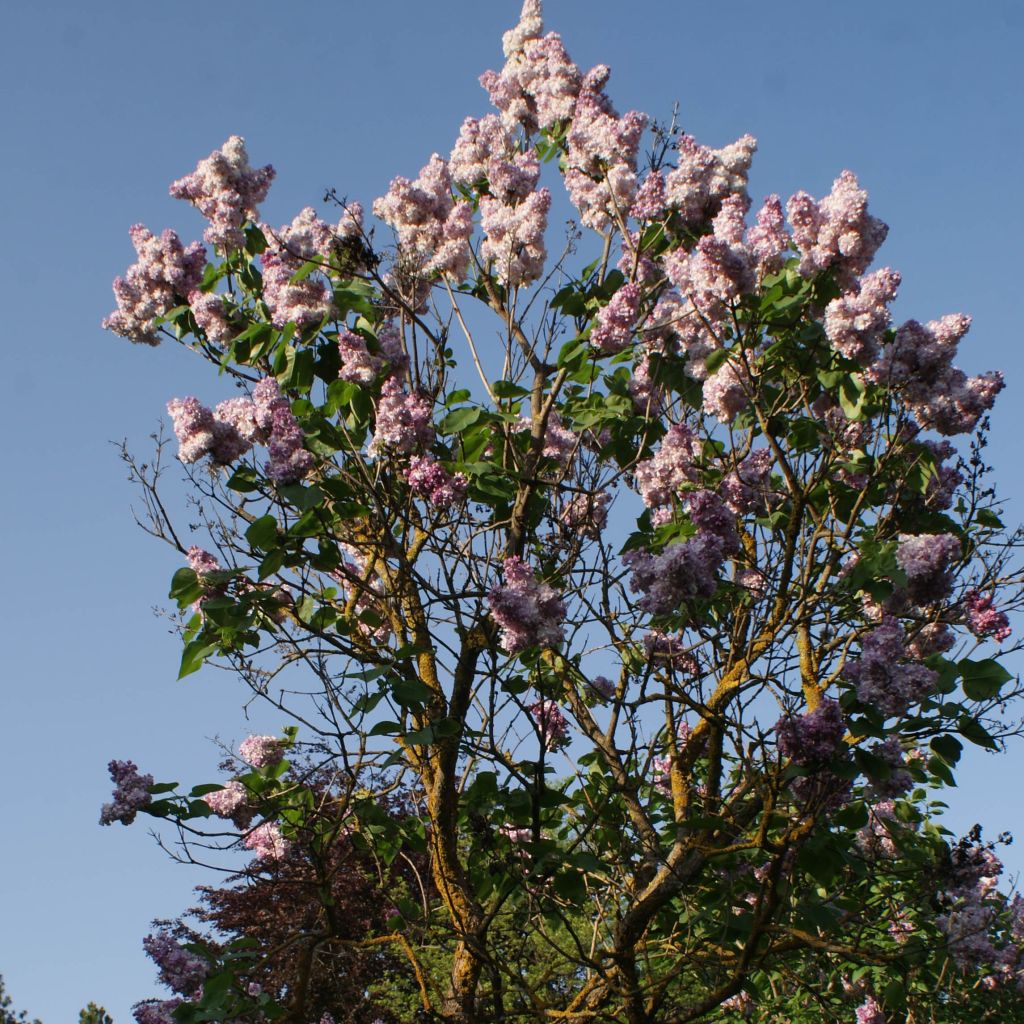
Syringa vulgaris Katherine Havemeyer - Common Lilac
Syringa vulgaris Katherine Havemeyer - Common Lilac
Syringa vulgaris Katherine Havemeyer
Common Lilac, Lilac
I went to collect my order in person, very friendly welcome ☺️ I’m satisfied with my lilac ????
Fanfan , 17/05/2025
Back-to-school special offer!
Get €10 off for every €50 you spend! And get up to €40 off on a single order.
How does it work?
1. Shop your favourites
Add your favourite plants to your basket. For every €50 you spend (excluding delivery charges, store credit and the plastic-free option), you’ll receive a €10 voucher.
€50 spent = €10 voucher
€100 spent = €20 voucher
€150 spent = €30 voucher
€200 spent = €40 voucher
2. Place your order
Once your basket reaches one of the spending thresholds, place your order. You can even choose your delivery date!
3. Receive your voucher
As soon as your order has been shipped, you’ll receive an email containing your personal voucher code and its value.
4. Use it on your next order
Your voucher is valid for 90 days from the date you receive it. It can be used once only, on a new order worth at least the value of the voucher, excluding delivery charges.
Please note: Vouchers can be combined with other offers, but cannot be split or refunded.
Home or relay delivery (depending on size and destination)
Important: You may be charged customs duties by your country’s customs authorities upon delivery.
Schedule delivery date
and select date in basket
This plant carries a 24 months recovery warranty
More information
We guarantee the quality of our plants for a full growing cycle, and will replace at our expense any plant that fails to recover under normal climatic and planting conditions.
Would this plant suit my garden?
Set up your Plantfit profile →
Description
Syringa vulgaris 'Katherine Havemeyer' is an old variety of common lilac, prized for the abundance, changing shades and powerful fragrance of its double flowers. Selected in Nancy by Émile Lemoine in 1922, this large shrub produces wonderful lavender-mauve flowers that gradually fade to lilac pink. It is well suited to an informal hedge or a cottage garden.
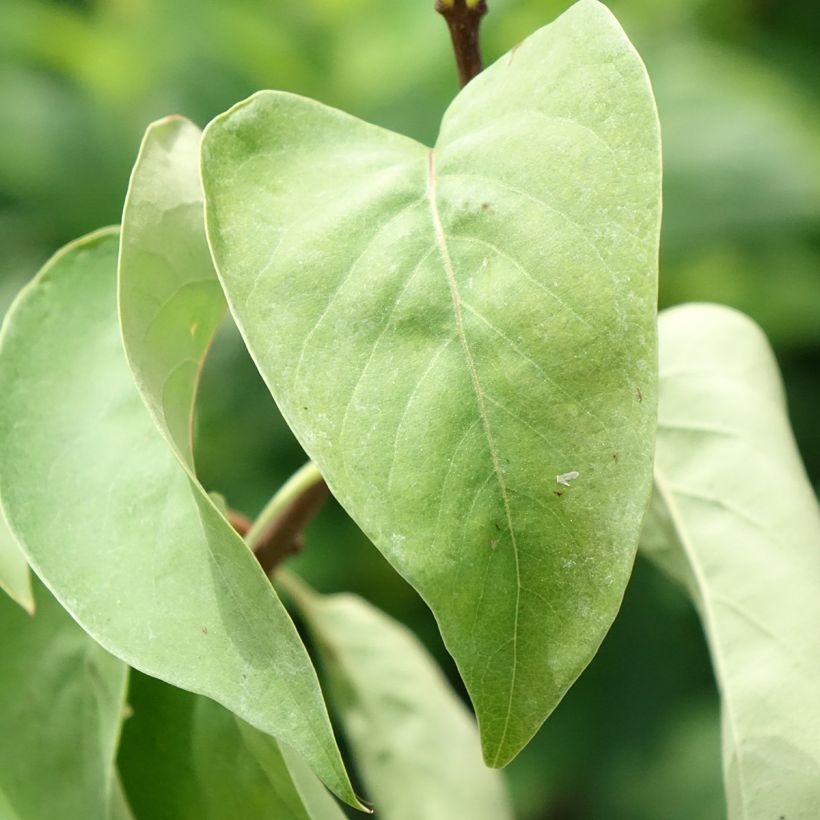
Syringa vulgaris belongs to the Oleaceae family, which also includes privets and jasmines. The botanical species is native to the Balkans, where it grows in thickets, open woodland and on rocky slopes, in a contrasting climate alternating cold winters and hot summers. It mainly occupies stony, well-drained, often chalky soils. 'Katherine Havemeyer' is a French horticultural selection of this wild lilac. The plant forms a large shrub that is initially upright, gradually broadening with age to develop a bushy habit. It reaches 3.50 to 4 m in height and 3 m in spread after around ten years, sometimes more in deep, fertile soil. Its deciduous leaves are broadly oval to heart-shaped and a clear medium green. They appear in spring and fall in autumn. Flowering begins in April in regions where spring arrives early. It occurs generally in May in most gardens and may continue until early June in cooler climates. The purple-mauve flower buds open into double flowers, held in compact, broadly conical panicles. Their colour changes from lavender mauve to lilac pink as they open. Their strong fragrance spreads around the shrub and remains noticeable in bouquets. For better vase life, cut the stems when one third to one half of the flowers in the panicle are open.
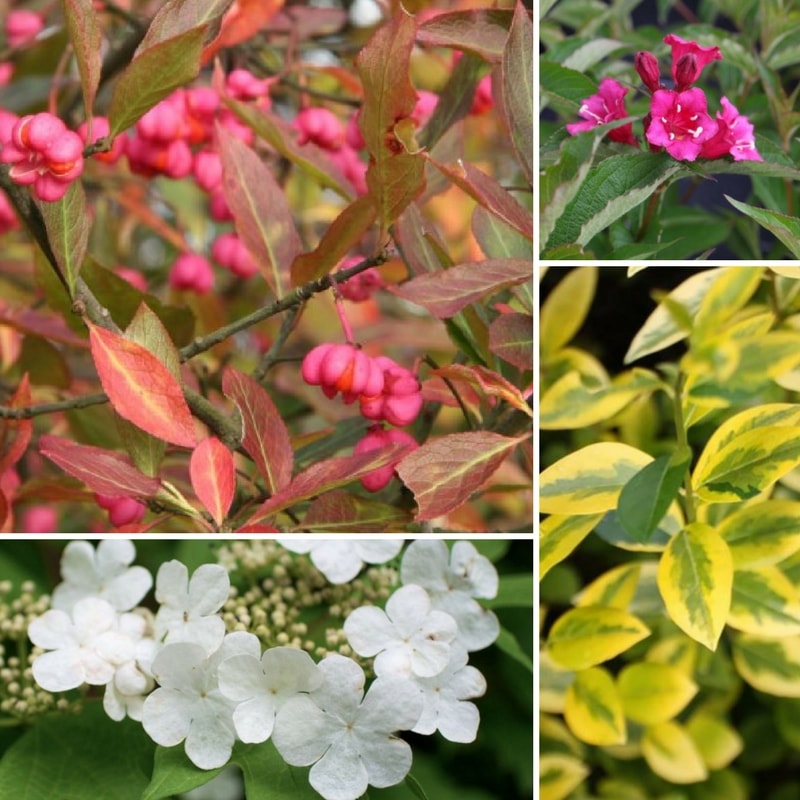
Like many common lilacs, 'Katherine Havemeyer' may produce suckers around its crown and gradually form a broad clump. This large shrub therefore needs space. It works well as a specimen plant on a lawn, in an informal hedge or in a large shrub border. In an old-fashioned garden, it can be paired with Viburnum opulus 'Roseum', peony 'Duchesse de Nemours', rose 'Charles de Mills' and Geranium 'Brookside'. Their flowering periods follow one another from spring to early summer. Like this lilac, these plants appreciate sun and fertile, well-drained, neutral to chalky soils that remain slightly moist in spring. Once well established in well-drained soil, this lilac tolerates temperatures close to –29 °C.

Syringa vulgaris Katherine Havemeyer - Common Lilac in pictures
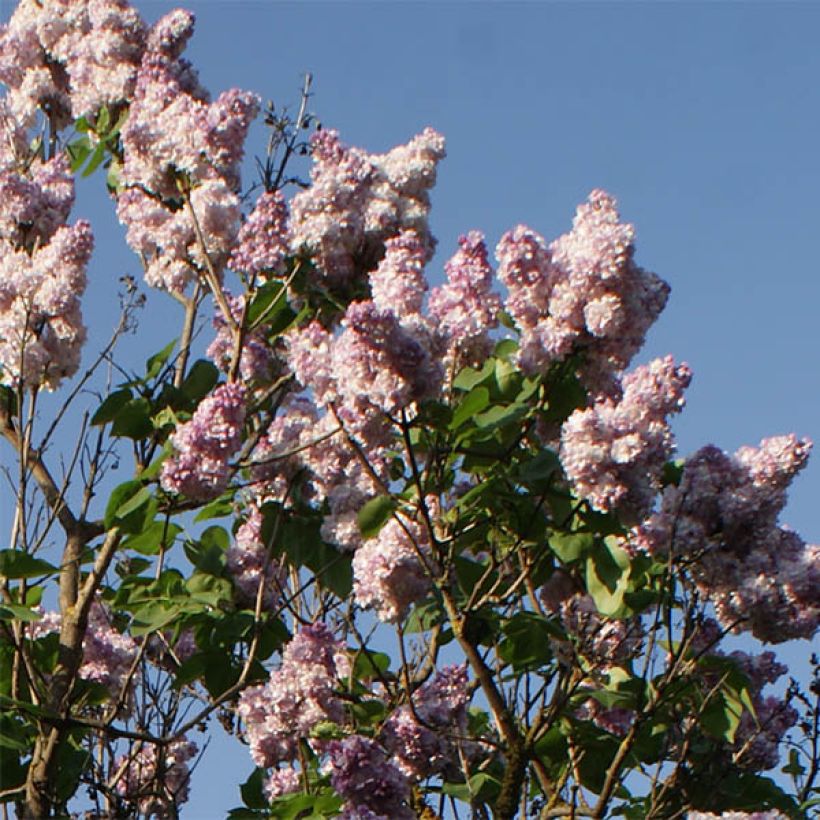
Plant habit
Flowering
Foliage
Botanical data
Syringa
vulgaris
Katherine Havemeyer
Oleaceae
Common Lilac, Lilac
Cultivar or hybrid
Planting and care
Lilac 'Katherine Havemeyer' flowers more generously in full sun. It prefers deep, fertile, well-drained, neutral to alkaline soil. It tolerates clay soils provided water does not remain stagnant in winter, but grows less well in very acidic, constantly waterlogged or excessively dry soil in spring.
Plant preferably in autumn or early spring, outside periods of frost. Water regularly during the first two summers to encourage deep rooting. Once established, the shrub tolerates fairly dry summers. Temperate, continental and montane climates are particularly favourable. Mediterranean summers are a little too hot and dry for this shrub. Any suckers should be cut off at their point of origin when they become too numerous.
Planting period
Intended location
Care
Planting & care advice
-
-

-

-

-

-

-

-
-
, onOrder confirmed
Reply from on Promesse de fleurs
Recently viewed products
Haven't found what you were looking for?
Hardiness is the lowest winter temperature a plant can endure without suffering serious damage or even dying. However, hardiness is affected by location (a sheltered area, such as a patio), protection (winter cover) and soil type (hardiness is improved by well-drained soil).

The flowering period indicated on our website applies to countries and regions located in USDA zone 8 (France, the United Kingdom, Ireland, the Netherlands, etc.)
It will vary according to where you live:- In zones 9 to 10 (Italy, Spain, Greece, etc.), flowering will occur about 2 to 4 weeks earlier.
- In zones 6 to 7 (Germany, Poland, Slovenia, and lower mountainous regions), flowering will be delayed by 2 to 3 weeks.
- In zone 5 (Central Europe, Scandinavia), blooming will be delayed by 3 to 5 weeks.
In temperate climates, pruning of spring-flowering shrubs (forsythia, spireas, etc.) should be done just after flowering.
Pruning of summer-flowering shrubs (Indian Lilac, Perovskia, etc.) can be done in winter or spring.
In cold regions as well as with frost-sensitive plants, avoid pruning too early when severe frosts may still occur.
The planting period indicated on our website applies to countries and regions located in USDA zone 8 (France, United Kingdom, Ireland, Netherlands).
It will vary according to where you live:
- In Mediterranean zones (Marseille, Madrid, Milan, etc.), autumn and winter are the best planting periods.
- In continental zones (Strasbourg, Munich, Vienna, etc.), delay planting by 2 to 3 weeks in spring and bring it forward by 2 to 4 weeks in autumn.
- In mountainous regions (the Alps, Pyrenees, Carpathians, etc.), it is best to plant in late spring (May-June) or late summer (August-September).
The harvesting period indicated on our website applies to countries and regions in USDA zone 8 (France, England, Ireland, the Netherlands).
In colder areas (Scandinavia, Poland, Austria...) fruit and vegetable harvests are likely to be delayed by 3-4 weeks.
In warmer areas (Italy, Spain, Greece, etc.), harvesting will probably take place earlier, depending on weather conditions.
The sowing periods indicated on our website apply to countries and regions within USDA Zone 8 (France, UK, Ireland, Netherlands).
In colder areas (Scandinavia, Poland, Austria...), delay any outdoor sowing by 3-4 weeks, or sow under glass.
In warmer climes (Italy, Spain, Greece, etc.), bring outdoor sowing forward by a few weeks.
Shipping country and language
Your country of residence may be:
Your country of residence is:
For a better user experience on our website, you can select:
Your shipping country:
-
 Austria
-
 Belgium
-
 Bosnia & Herzegovina
-
 Bulgaria
-
 Croatia
-
 Cyprus
-
 Czechia
-
 Denmark
-
 Estonia
-
 Finland
-
 France
-
 Germany
-
 Greece
-
 Hungary
-
 Iceland
-
 Ireland
-
 Italy
-
 Latvia
-
 Liechtenstein
-
 Lithuania
-
 Luxembourg
-
 Malta
-
 Netherlands
-
 Poland
-
 Portugal
-
 Romania
-
 Serbia
-
 Slovakia
-
 Slovenia
-
 Spain
-
 Sweden
-
 Switzerland
Language:
-
French
-
 English
-
Spanish
-
Italian
-
German
-
Portuguese
-
Dutch
-
Finnish
My Account
Hello
My wish lists
My cart
Log in / Register
Existing customer?
This form is protected by reCAPTCHA - the Google Privacy Policy and Terms of Service apply.
New customer?
Create an account to track your orders, access our customer service and, if you wish, make the most of our upcoming offers.