


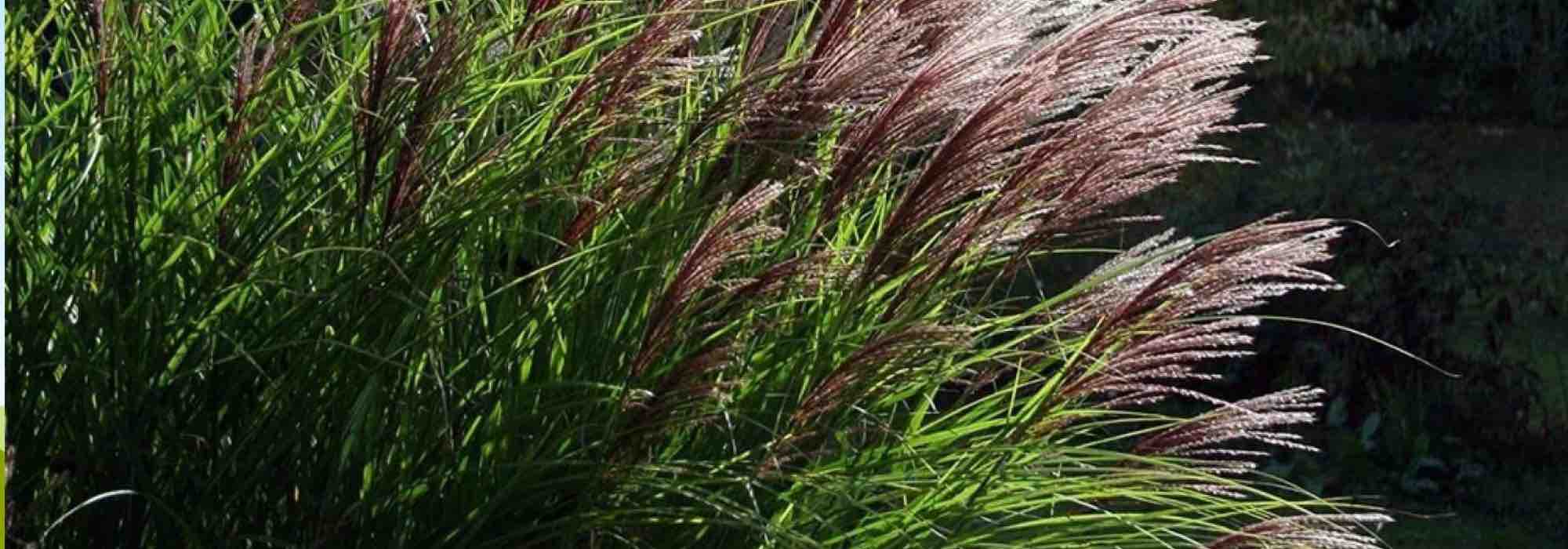
Ornamental grasses and roses: a winning combination
7 ornamental grasses to set off your roses, in the garden or in pots
Contents
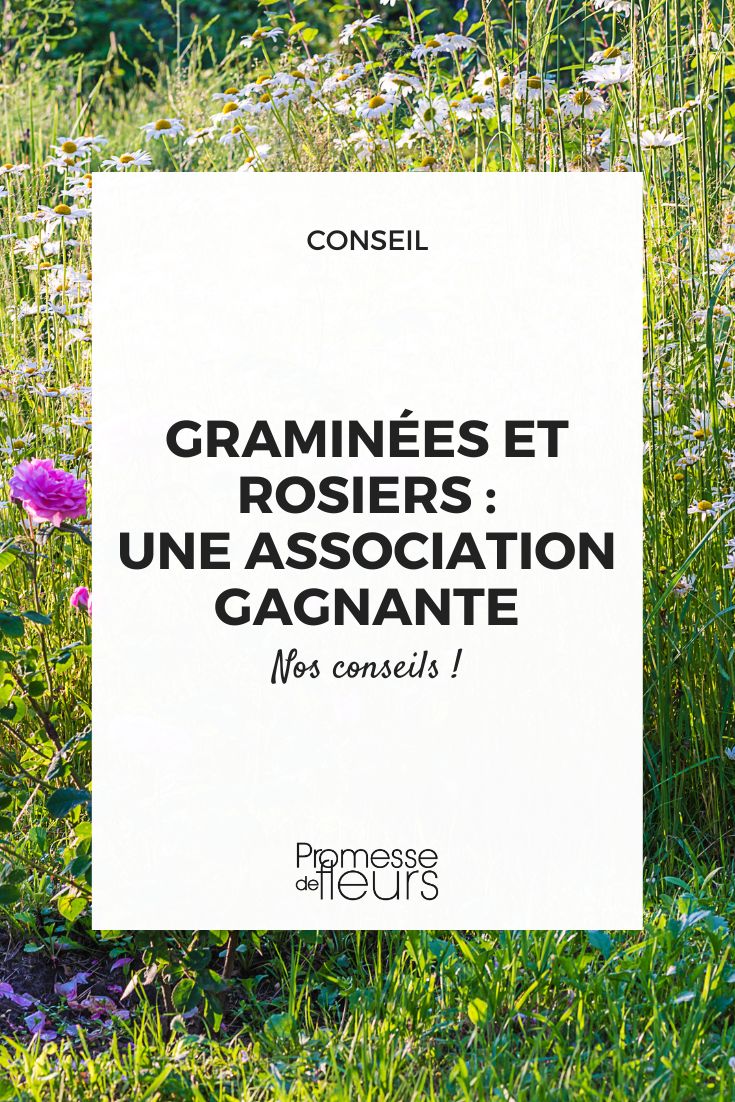
Grasses are among versatile plants, which fit into every type and style of garden. Their ornamental foliage always adds lightness, graphic quality and movement. These plants are ideal for showcasing flowers such as roses, from the simplest varieties to the most sophisticated.
Depending on the type of rose bush and its use, there are grasses that will help create beautiful displays, both in the garden and in pots. They will soften the scene and enhance colours as well as the shapes of flowers.
Here is our selection of 7 grasses for a successful pairing with roses.

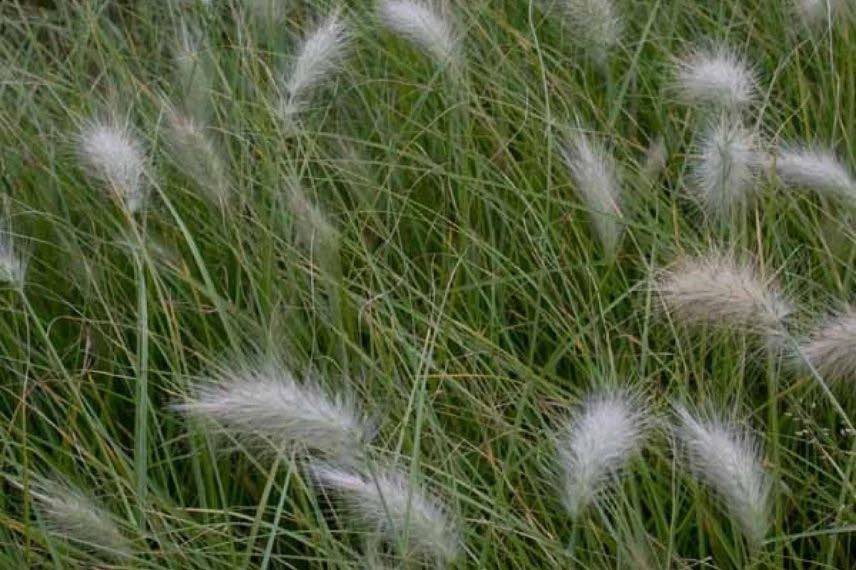
Pennisetum villosum
ThePennisetum villosum is a pretty, graceful grass, with arching stems that droop under the weight of the flowering. From late summer to autumn, it indeed produces a large number of feathery spikes with a fluffy appearance, resembling tiny rabbit tails. They display a slightly ivory-white colour, lending delicacy as well as lightness to the garden as they sway at the slightest breeze.
At maturity, this plume grass will reach 70 cm in height with a 50 cm spread.
In cultivation, this perennial grass favours sunny positions in well-drained, rather dry soil. It should be planted in gardens in regions that do not experience winters too harsh (warmer than -9°C) or damp.
In a white garden, it will be an ideal companion to an old-fashioned rose shrub ‘Mme Hardy’, which produces small, double, fragrant flowers in a pure colour. This early-summer flowering is somewhat unruly, adding a wild note to a rustic, natural-looking border. A dog-rose-flowered shrub will also be perfect alongside our Pennisetum, such as the sturdy shrub rose ‘Escimo’, which flowers all summer and into the first frosts. Finish with white aubrietas, which will bloom in spring, but also wall bells or peach-leaved bellflowers ‘Alba’. Complete with a white hydrangea (Hydrangea quercifolia ‘Tara’).
The Pennisetum villosum will also allow bouquet-making with roses.
For more information: Pennisetum – Fountain grass: planting, pruning, maintenance
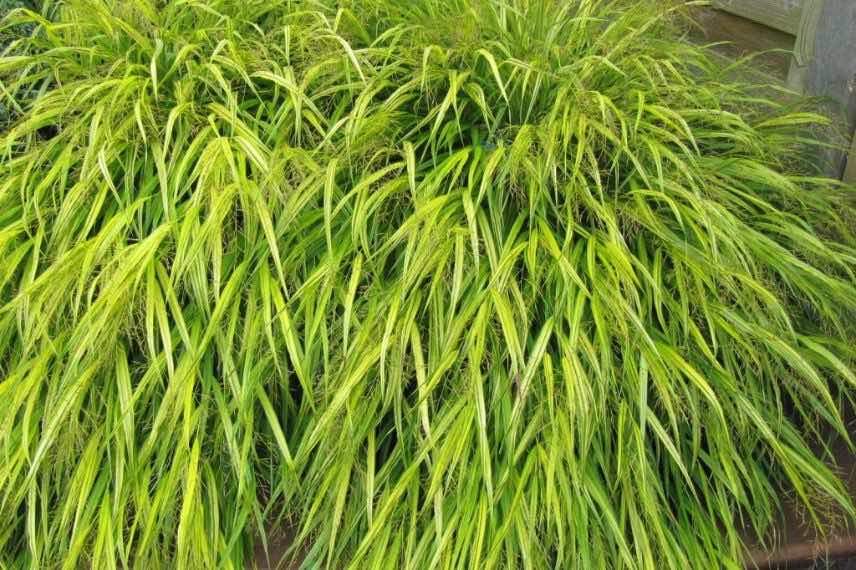
Hakonechloa macra 'All Gold'
The Hakonechloa macra ‘All Gold’ is a herb from Japan with particularly luminous foliage. Its compact, dense silhouette will reach 40 cm in all directions. It consists of leaves (culms) reminiscent of bamboo. They are lanceolate in shape and take on a very elegant trailing habit as time passes. But it is mainly their golden colour that is interesting, as it persists from spring to autumn.
This perennial will form pretty cushions, perfect for dressing the bases of roses. Very hardy, it will enjoy partial shade or sunny exposures, but sheltered from the hot midday sun. The foliage will retain a bright yellow, glossy colour.
Golden foliage is ideal for highlighting the flowering of purple roses, bringing contrast and dynamism. In a low hedge, plant for example ‘All Gold’ at the base of a shrub rose ‘Etoile Pourpre’ or of a floribunda rose ‘Strandperle Norderney’. Add a Cotinus coggygria ‘Lilla’, a compact form still in purple hues, as well as the decorative foliage of heucheras
For more information: Hakonechloa, Japanese Grass: planting, growing, care.
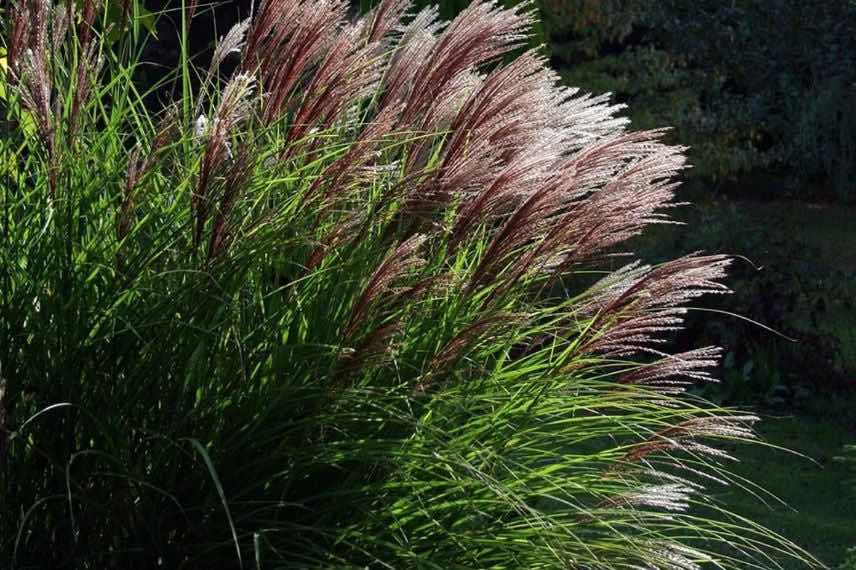
Miscanthus sinensis 'Red Chief'
Chinese reed ‘Red Chief’ is a tall grass that will dress the base of the tallest roses. We particularly value it for the ornamental qualities of its flowering. In late summer and throughout autumn, it produces beautiful reddish plumes about 20 cm long, which sway tirelessly in the breeze. Over time, they take on a silvery colour.
The foliage is also interesting. The very fine, flexible leaves initially display a silvery-green colour, before taking on magnificent autumn hues in yellows and oranges.
This grass forms a compact, dense clump, which reaches 1.2 metres in height (at flowering) with a 1 metre spread.
The Miscanthus sinensis ‘Red Chief’ is a hardy grass. It will thrive in a sunny position, in deep soil rich in organic matter and that remains moist.
Install it near a late-flowering or repeat-flowering rose, such as the climbing rose ‘Papi Delbard’ or the shrub rose rosearbustive ‘Plaisanterie’, whose young leaves are tinged red. It will add lightness and enhance the roses, both in an English-style garden with perennials (echinacea, lupins, delphiniums…) and annuals (Cosmos, poppies…), as well as in a border of grasses.
For more information: Miscanthus : planting, growing and care.
Read also
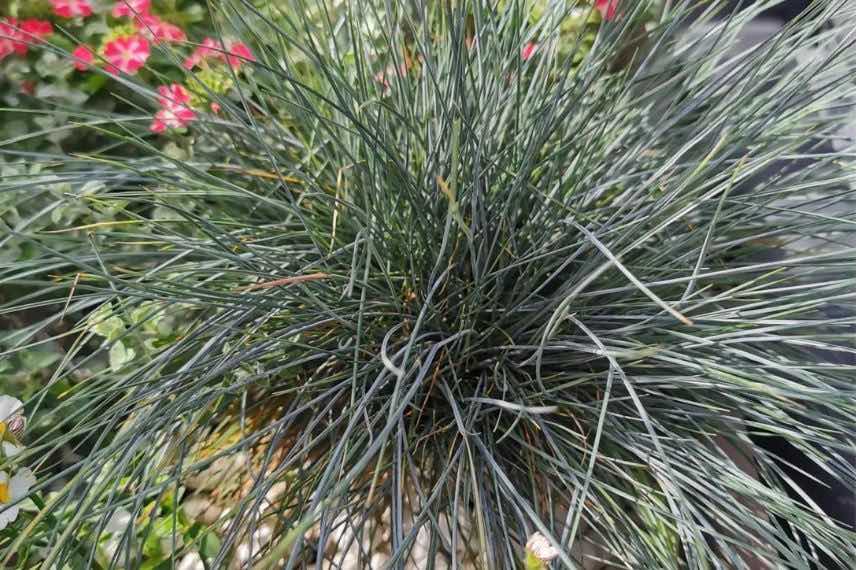
Grasses: which variety to choose?Festuca glauca 'Elijah Blue'
The blue fescue ‘Elijah Blue’ is a low-growing grass, perfect when paired with dwarf roses, for example to dress a border. Its compact silhouette, reaching 30 cm in all directions, allows it to fit into small spaces. It also looks wonderful in a container, where it will bring a touch of lightness.
This blue fescue has evergreen foliage, which stays year-round. It forms a small dense tuft, composed of fine leaves with an astonishing steel-blue colour. It makes a perfect little groundcover cushion. In early summer, it produces silver spikelets, which take on golden hues as they fade.
Hardy, easy to grow and low-maintenance, this small grass will thrive in full sun.
The blue foliage pairs very well with yellow or orange flowering plants. Consider pairing this fescue with the dwarf rose ‘Lemon Fizz’, the rose ‘Bees Paradise Gelb’, the shrub rose ‘Friesia’ or the adorable dwarf rose ‘Bordure d’Or’.
But ‘Elijah Blue’ can also accompany pale-pink to mauve flowering roses, for a more romantic ambience, for example beside a rose ‘Sans Contraintes Sweet Knirps’.
In a mixed border, our grass will create a pretty scene alongside a rose ‘Nectar Garden Lilliput Lupo’, a rose ‘Rigo Innocencia’, but also Erigerons and gypsophila in the same colour tones.
For more information: Fescue: planting and maintenance
Stipa tenuifolia
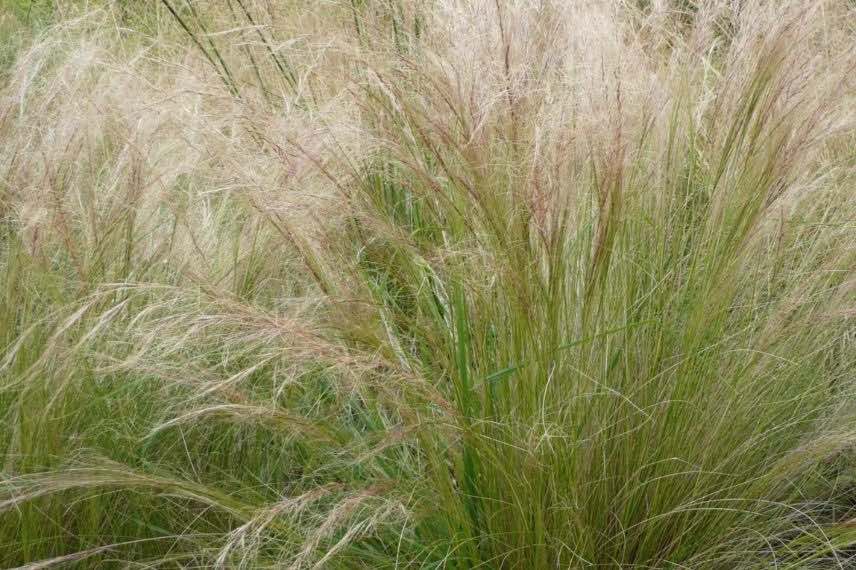
Stipas are grasses that pair well with shrub roses. The Stipa tenuifolia is also known by the names of “angel hair” or “pony tails”, in reference to its hair-like foliage. It rapidly forms a true fountain of foliage, composed of long, fine and curved leaves that gracefully ripple in the wind. Initially green, the evergreen foliage then takes on straw-coloured hues and a silkier appearance. In summer, it produces soft spikes. They are straw-coloured, before turning bronze in autumn.
This wild-looking grass thrives in sun, in well-drained soil, even if poor and dry. Its hardiness allows it to be grown in many of our gardens (down to -15°C). In regions with harsh winters or overly damp conditions, pot cultivation is a perfectly viable option for this Stipa, which reaches 40–50 cm in spread.
This perennial grass is perfect for creating a countryside ambience, but it will also fit very well in a romantic or contemporary garden. In a large pot on the terrace or balcony, it will dress the base of a standard rose ‘The Fairy’, alongside ornamental Hosta foliage tolerating sunny exposures, such as ‘Electrocution’.
The Stipa tenuifolia will also pair with red-flowering roses to bring a touch of vitality and greater contrast, for example with the Decorosier ‘Kadora’ or ‘New Vesuvia’.
For more information: Stipa, Angel Hair: planting, pruning, maintenance
Carex × oshimensis 'Feather Falls'
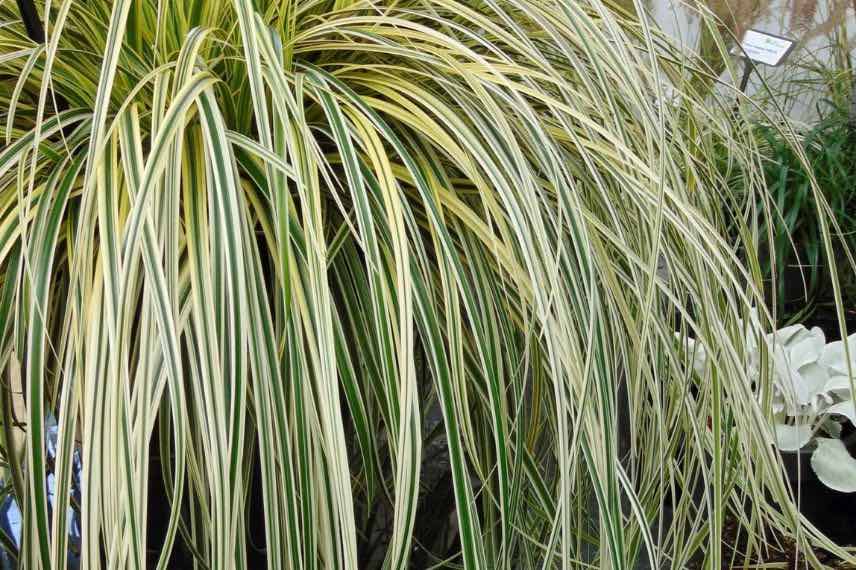
This Carex hybrid ‘Feather Falls’ forms an adorable little tuft about 35 cm across in all directions. It features a particularly bright variegated foliage. Its trailing, slightly curled leaves are green, white-margined. This foliage is evergreen, making it ornamental all year round.
Spring flowering reveals small beige aments that quietly precede the roses’ summer flowering.
Plant this Carex in full sun or partial shade, in soil that stays cool and moist. Low-maintenance, sturdy and hardy (down to -18°C), it will require little care to thrive.
Its graphic, uncluttered foliage will highlight the most sophisticated and fanciful roses, such as the striking floribunda rose ‘Pacific Dream’, which blooms in a blue-mauve shade. In a different colour palette, also consider pairing with the sun-coloured blooms of a Decorosier ‘Soleya’.
In a rose border, plant several Carex ‘Feather Falls’ at the front. Back of border add taller grasses, such as Chinese fountain grass (Pennisetum).
For more information: Carex : planting, dividing and care.
Panicum amarum
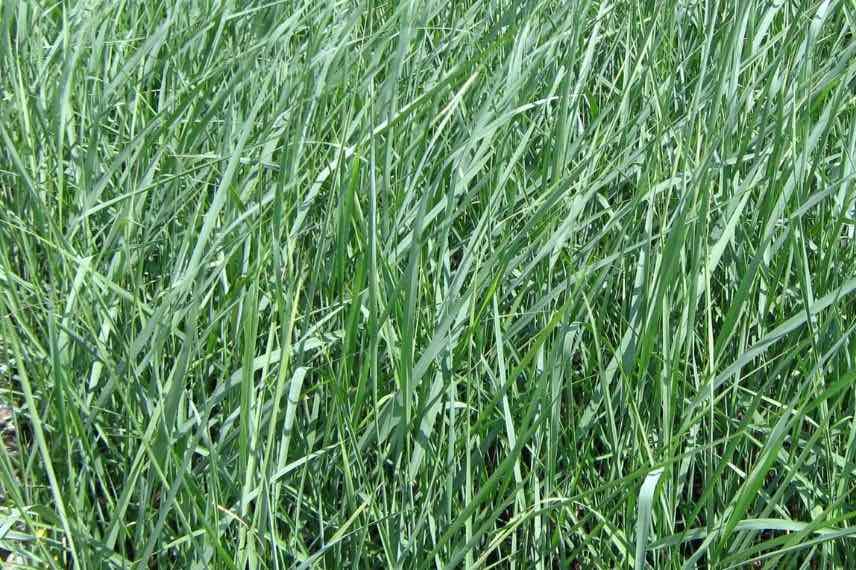
Panicum amarum is a tall perennial grass with thick blue-green foliage. The basal leaves have a delicately pendulous habit, while the rest of the foliage stands erect, giving a striking vertical presence.
Flowering, which lasts throughout the summer, unveils large airy spikes with evolving colour. Initially pink, they take on purple hues in autumn.
At maturity, expect at least 1.5 m in height with a 60 cm spread for this structural plant.
This easy-to-grow panic grass proves hardy, tolerant of even dry, poor and calcareous soils, as well as salt spray.
It will be perfect for dressing the base of a wild-looking climbing rose in an informal hedge. Pair it with ‘Libertas’, ‘Sourire d’Isabelle’, ‘Climbing Max Bajazzo®’ or the ‘Décorosier Opalia’ climber.
For more information: Panicum: planting, growing, division and care.
- Subscribe!
- Contents
Comments