





























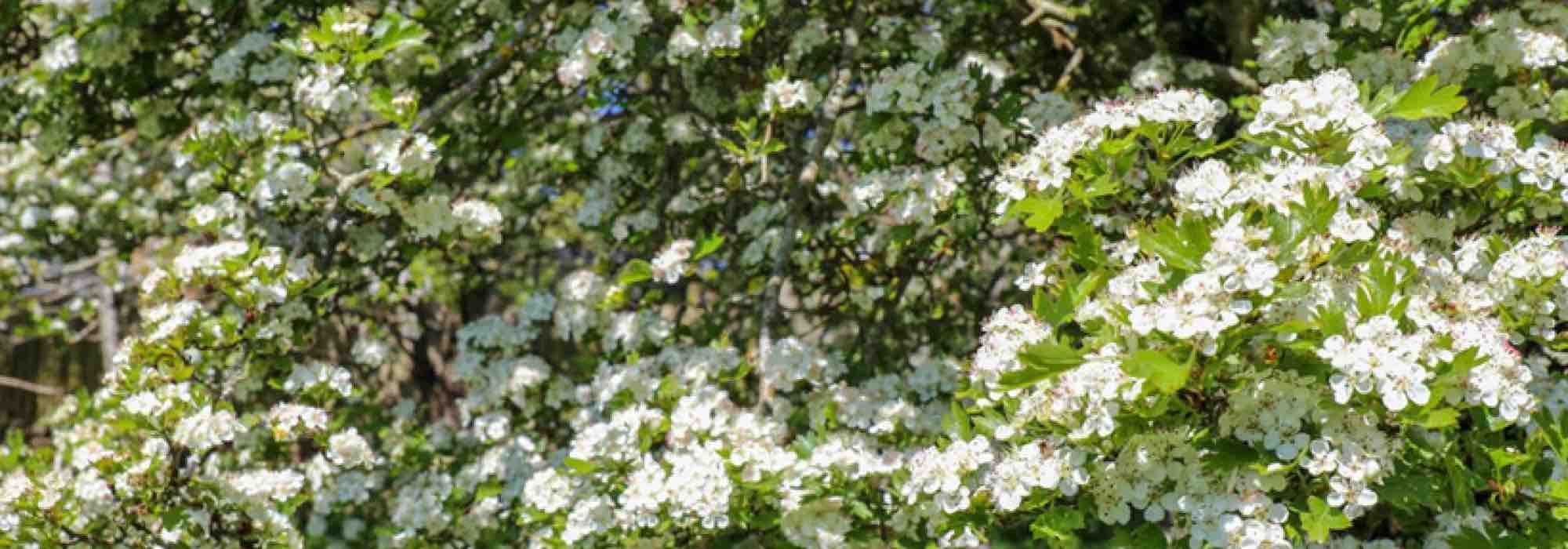
Our must-have white-flowering hawthorns for the garden
Shrubs with spectacular flowering
Contents
Hawthorn is known for its showy flowering in spring, its colourful fruits in autumn and its robustness, which makes it an easy plant to grow. White-flowered varieties exude timeless charm and plenty of light. Hawthorn also plays a key ecological role, providing food and shelter for many insects and birds. White hawthorn also has a long history of use in phytotherapy, where it is valued for its beneficial properties for the heart and the nervous system.
Versatile and suited to a wide range of gardens, the white-flowered hawthorn is a true garden treasure, blending beauty and usefulness, and fully deserves its place in our gardens. Discover our best varieties, their uses and how to pair them.

Why choosing a white-flowered hawthorn?
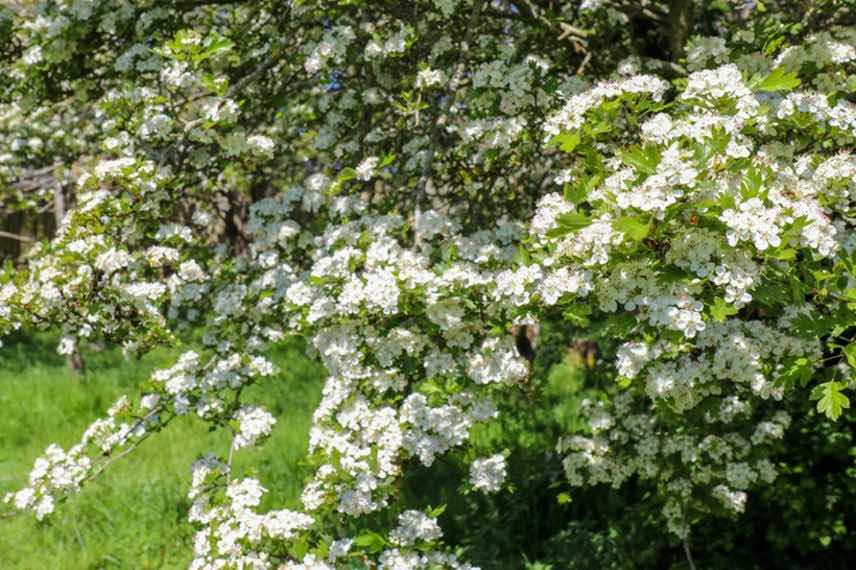
White-flowering hawthorns offer a spectacular spring flowering, composed of thousands of tiny flowers with a subtle fragrance, that attract pollinators and add an elegant touch to the garden. They are arranged in corymbs, forming a luminous cloud. This flowering is particularly striking when it contrasts with the fresh green of the young leaves.
Their appeal is not limited to this season: in summer, their dense foliage provides coolness and greenery, while in autumn the red haws contrast with the golden leaves. Even in winter, their sculpted silhouette and graceful branches catch the frost and enhance the landscape.
Versatile, they fit into gardens of all sizes, and they adapt to small spaces thanks to cultivars of moderate size. Hardy and low-maintenance, they tolerate varied conditions, such as cold, drought or calcareous soils. In addition to being ornamental, they promote biodiversity by feeding birds and attracting insects.
Species and varieties of hawthorn with white flowers
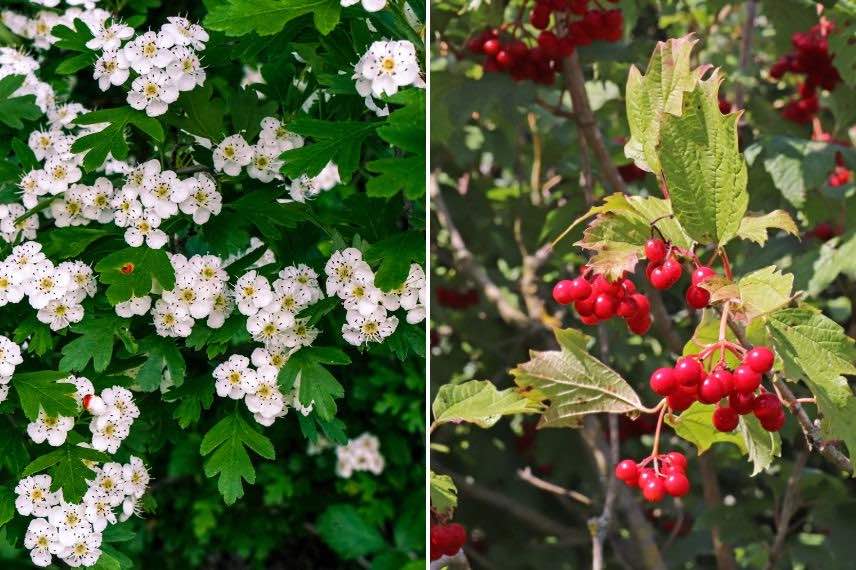
White-flowered hawthorns come in many species and varieties, offering a diversity of shapes, sizes and characteristics that suit all garden styles. Among the common and well-loved species, you’ll find Crataegus monogyna, very widespread in France, known for its hardiness and use in rural hedgerows, and Crataegus laevigata, also widespread but a little less used. Both species burst into spring with an exceptional flowering.
Certain varieties and species stand out for unique characteristics.
For thornless gardens
Crataegus grignonensis is an excellent choice thanks to its harmonious habit and ease of maintenance. For small spaces, Crataegus monogyna ‘Compacta’ offers a more contained growth, ideal for urban gardens, maturing to between 2 and 3 m in height with a spread of 1 to 2 m.
Different foliage
Fans of variegated foliage will appreciate Crataegus monogyna ‘Variegata’ with cream-white variegated leaves or Crataegus chlorosarca ‘Variegata’, with yellow-spotted leaves that add an original touch with their elegantly marbled foliage. The variety Crataegus × media ‘Gireoudii’ with young leaves and shoots splashed with pink and white.
Botanical curiosities
Some hawthorns are rarer in cultivation or are plant curiosities and are mainly found in botanical collections. These varieties, with their unique characteristics, will delight lovers of rare or unusual plants.
Crataegomespilus dardarii ‘Jules d’Asnières’ is a graft chimera between a hawthorn and a medlar. Its medlar foliage produces in May–June a profusion of flowers gathered in bouquets, as with hawthorn. Crataegomespilus grandiflora is a natural hybrid derived from the smooth hawthorn, Crataegus laevigata, and the medlar Mespilus germanica, producing a small tree with unique charm and unusual fruit. Crataegomespilus grandiflora is a natural hybrid derived from the smooth hawthorn and the medlar, producing a small tree with a unique charm and unusual fruit. Crataegomespilus flexuosa …
For their fruits
Finally, some hawthorns stand out for edible fruits different from common hawthorns. Crataegus pinnatifida ‘Big Ball’ is prized for its large red fruits with a tart flavour, rich in vitamin C enjoyed in cooking, especially for jams. Likewise, Crataegus mexicana is cultivated for its sweet and fragrant fruits, known as “manzanilla” or “téjocote” in Mexico, often used in traditional culinary preparations.
All these hawthorns do not rely on a single attraction showcased in this selection, but combine them, with usually a remarkable flowering. With such a range of species and varieties, of which only a sample is shown here, white-flowered hawthorns suit all desires, whether for their beauty, their uniqueness or their usefulness.
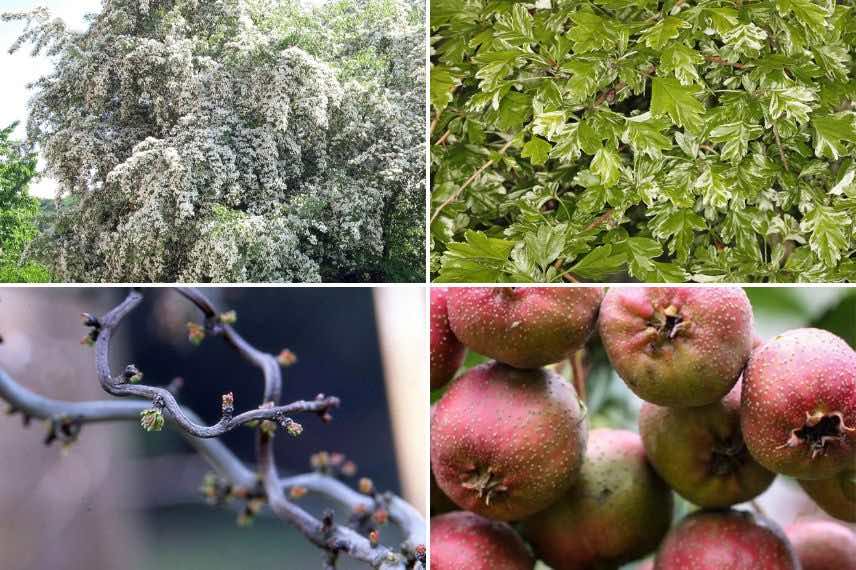
The flowering of Crataegus monogyna, the foliage of Crataegus monogyna ‘Variegata’, the twisted branches of ‘Flexuosa’ and the fruits of ‘Big Ball’
Planting and care of white-flowered hawthorns
Hawthorns prefer sunny or partially shaded locations. Their preferred soil is well-drained, but they tolerate many soil types, including calcareous or poor soils. Very hardy, hawthorns withstand cold, drought and varied weather conditions, making them ideal for low-maintenance gardens.
Planting is ideally carried out in autumn or early spring. It is advisable to dig a hole wide enough to allow the roots to spread and to enrich the soil with compost if necessary. For hedges, spacing plants one to two metres apart ensures good growth while creating a dense and attractive effect.
Once well established, the hawthorn requires little maintenance. Young plants should be watered regularly during the first year, but once established, it can rely on natural rainfall, unless prolonged drought occurs. A light feeding in spring, with compost or an organic fertiliser, stimulates its flowering. Pruning after flowering helps maintain its shape and encourage new shoots, while removing dead or damaged wood.
In terms of diseases, it is robust, but can sometimes be prone to aphid attacks or fungal diseases such as rust. These problems are easily controlled with organic treatments such as insecticidal soap or manual removal of affected parts.
Ideas for pairing with white-flowering hawthorns
White-flowered hawthorns lend themselves to a wide range of planting combinations and can be integrated into various garden styles to create harmonious and dynamic scenes. Here are a few ideas to elevate your garden by pairing them with other plants.
In a cottage-style or defensive hedge
In a hedge, they are perfect for creating dense, flowering screens. Crataegus monogyna and Crataegus laevigata are classic choices for cottage-style or defensive hedges. Their hardiness, abundant flowering and decorative fruits make them essential for delimiting spaces while supporting local biodiversity.
In an open, flowering hedge, mix hawthorn with des dog roses, des blackthorns et des hazel. This type of hedge attracts birds, pollinating insects and provides a natural windbreak.
In an open, flowering hedge, due to its thorns, the hawthorn can be paired with other thorny shrubs such as the Pyracantha or the Berberis, to create an impenetrable barrier.
For more colour, add forsythias or buddleias to vary the flowering and attract butterflies.
In a border with shrubs and perennials
For borders, compact varieties such as Crataegus monogyna ‘Compacta’ or Crataegus monogyna ‘Xanthocarpa’, with their distinctive yellow fruits, are particularly well suited. Their small size and elegant habit make them easy to integrate into mass plantings for a natural and structured effect.
Hawthorns pair perfectly with other trees and complementary shrubs to enrich the different layers of a garden.
To prolong spring flowering, pair them with flowering cherry trees or lilacs, which offer different colours and fragrances.
Perennial plants can extend their presence by adding colour and movement.
Pour un effet champêtre, plantez des géraniums vivaces comme le Geranium pratense, des perennial marguerites ou des poppies pour une ambiance naturelle et joyeuse.
For subtle contrasts, silver-leaved plants, such as the Artemisia or the Santolina, enhance the dazzling whiteness of the hawthorn flowers.
As a specimen plant
As a specimen plant, some hawthorns reveal their full decorative potential. Crataegomespilus dardarii ‘Jules d’Asnières’, with its unique appearance and hybrid fruits, or Crataegus prunifolia ‘Splendens’, a small tree with a broad, rounded and dense habit, notable for its large glossy leaves and autumn colour, create interesting focal points.
For a wild garden
In a biodiversity-focused space, hawthorn can be paired with native and melliferous plants to create a refugium for wildlife. Plant Achilleas, des meadow sages or des scabious pour attirer les pollinisateurs. Laissez une prairie fleurie s’étendre à ses pieds pour un effet naturel et économe en entretien.
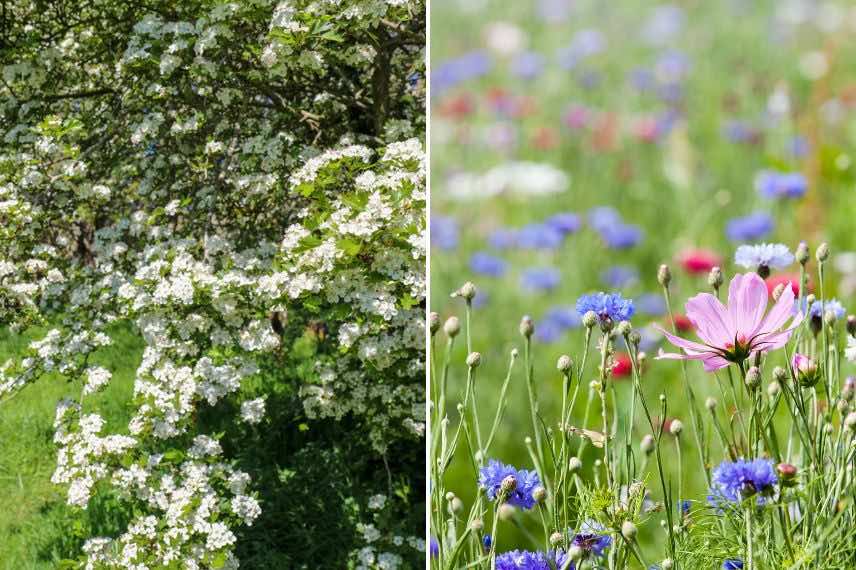
In a wild garden dedicated to biodiversity, plant a wildflower meadow with hawthorn
The benefits of white-flowered Hawthorn
The two hawthorn species renowned for their medicinal virtues are Crataegus laevigata and Crataegus monogyna. They are used in phytotherapy due to their apparent richness in flavonoids and procyanidins, active compounds that would confer cardioprotective and soothing properties.
Their flowers, leaves and fruits are traditionally used to regulate heart rhythm (except in cases of serious medical conditions), reduce mild hypertension, improve blood circulation and calm anxiety or sleep disturbances.
Traditionally consumed as an infusion, hawthorn is now available in the form of herbal teas, capsules and extracts, facilitating its use in a modern context. It offers a natural, gentle way to soothe the body and mind, provided you first consult your GP.
Crataegus laevigata
- Subscribe!
- Contents

Comments