


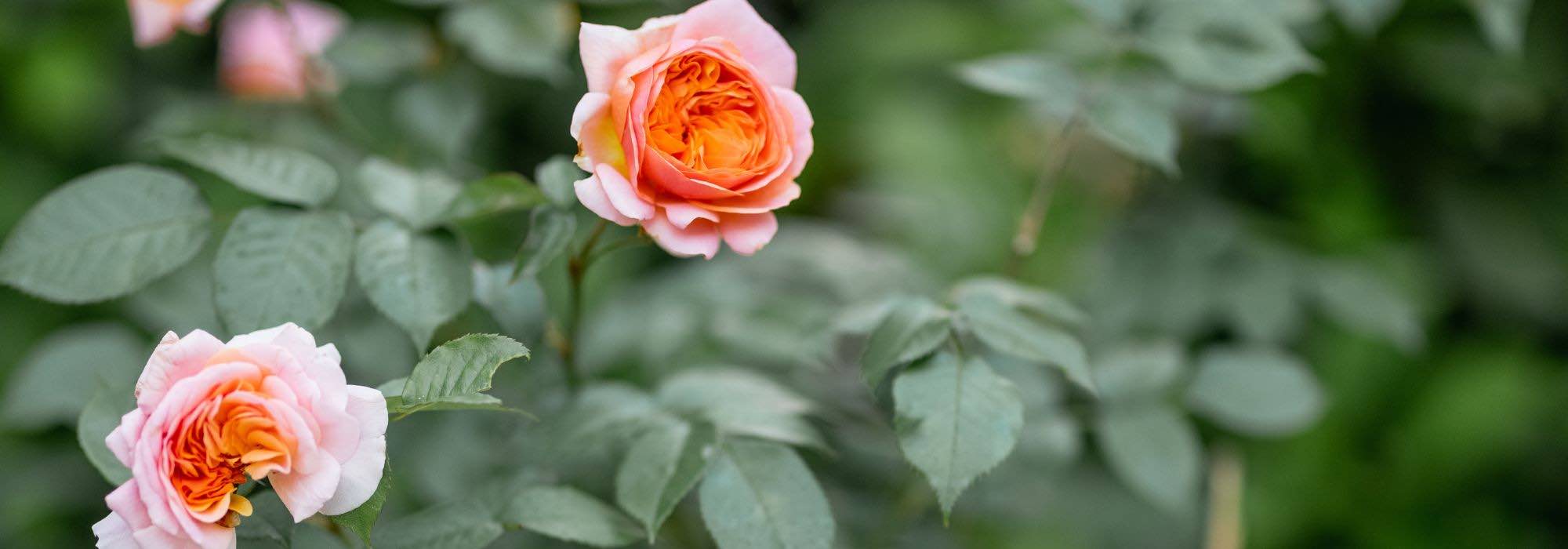
Our secrets for thriving potted roses!
Essential care for beautiful roses, even if you don't have a garden
Contents
Roses are certainly among the most essential and popular plants. But you don’t necessarily need to own a garden to enjoy their beauty.
On a terrace, a balcony, or in a small courtyard with no soil, welcome these fascinating plants and enjoy their flowering, colours and fragrances.
However, to keep a potted rose alive for several years, some care is required. Container cultivation is indeed more demanding for plants, since space is limited for the root system, which reduces growth. The substrate also depletes its nutrient reserves more quickly and dries out prematurely.
Here are our best tips for caring for your potted roses.

Choosing the right rose varieties for pots
To succeed in growing your potted rose, the first essential is to choose an appropriate variety at planting. The chosen rose bush should not be too vigorous or expansive (a maximum height of 2 metres), with relatively slow growth and a fairly compact habit.
If you grow your rose bush near high-traffic areas, you should prefer inermous roses, little or no thorns.
Turn to compact varieties such as dwarf roses or miniature roses : ‘Charmant’, ‘Fête des Mères Orange’ or also ‘Cutie Pie’.
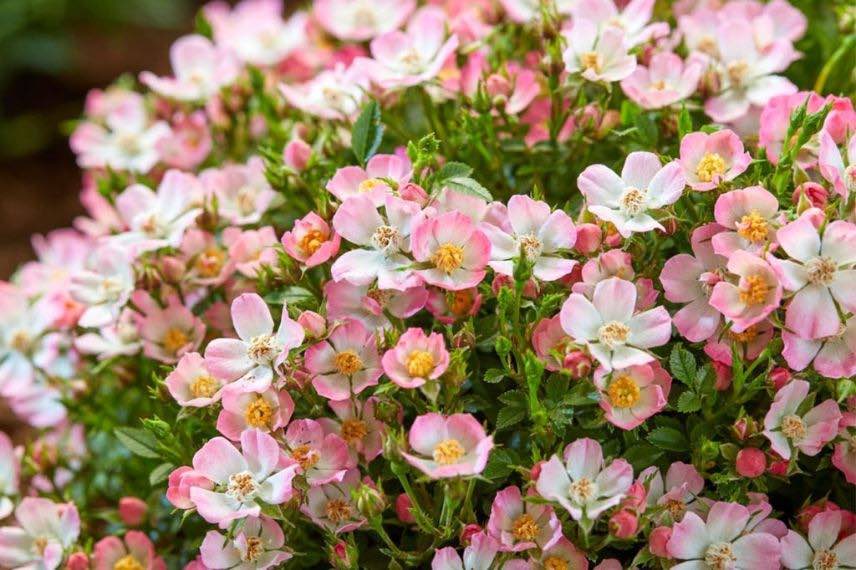
‘Cutie Pie’ is a dwarf rose, 15 cm tall, with eglantine flowers
Small bush roses, such as those from the Décorosiers® collection, can also be suitable. They are very floriferous and disease-resistant, but not very fragrant. They are ideal in pots or planters.
For shrub roses, ‘Orangerie’ or ‘Oriental Peace’ will be perfect.
The small climbers will also lend themselves to pot culture, such as ‘Julie Andrieu’, ‘Allegro’ or ‘Blush Noisette’, which has the advantage of having few thorns.
On the old-fashioned roses side, ‘Maman Turbat’, ‘Little White Pet’, ‘Ballerina’ or ‘Mme Boll’ will make good candidates.
For more varieties, discover our article 8 perfect roses for pots.
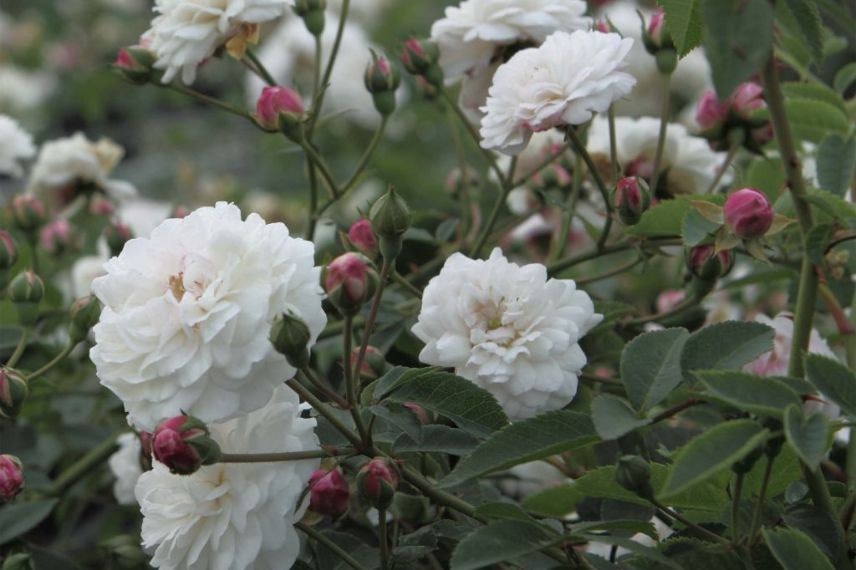
‘Little White Pet’ is an old-fashioned rose, about 60 cm across in adulthood
Caring for the planting of your rose bushes
The care given at planting is essential for a healthy rose.
Planting period
To ensure good establishment, roses should ideally be planted in spring. In regions that do not experience severe or long-lasting frosts, autumn planting is also feasible.
The container
The chosen container (pot, tub, basin…) must be large enough to allow the rose to develop properly. Choose one at least 40 to 50 cm in all directions. For climbing roses, plan for a larger container, 70 to 80 cm minimum.
Be sure to choose a container with a bottom that has drainage holes, so that excess water can drain away.
We recommend opting for containers made of terracotta or clay. Their natural porosity helps the substrate breathe and reduces the risk of disease.
The potting medium
Roses prefer substrates rich in organic matter, which help ensure a generous flowering. You can choose a special potting compost for roses or a potting compost for pots. It is also possible to make your own mix of horticultural potting compost (3/4) with well-decomposed household compost (1/4).
The drainage
Do not neglect drainage, essential for healthy roses. For this, install a layer of gravel, clay pebbles or terracotta shards at a depth of 5 cm at the bottom of the container.
To learn more about the proper planting practices, read our articles “How to grow a rose in a pot?” and “How to grow a climbing rose in a pot?”.
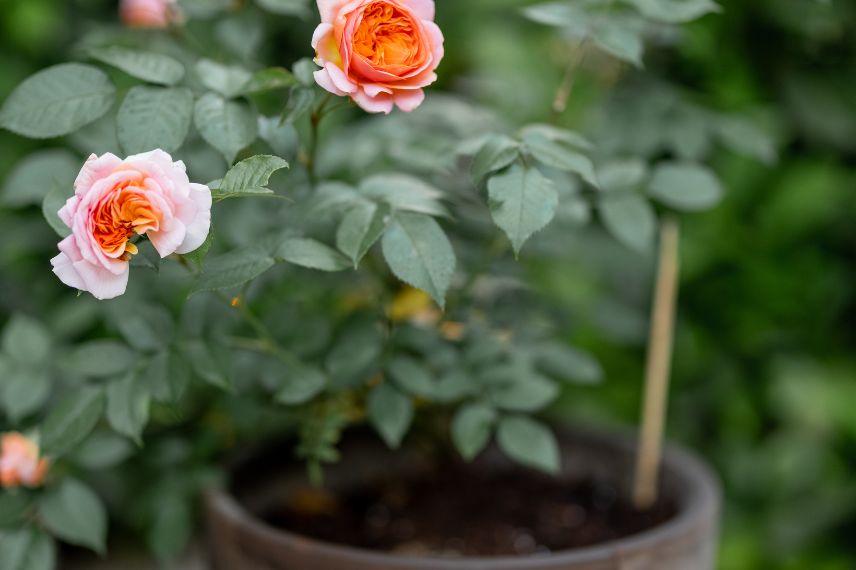
To help your rose thrive in a pot, proper planting care is essential
Don't neglect pot fertilisation
Roses are heavy feeders. As we’ve seen, pot-grown substrate depletes its nutrient reserves more quickly. A regular fertilisation will therefore be necessary to support growth and flowering of your rose during its entire growing period.
From March to September, use a fertiliser specially designed for roses, rich in potassium. Liquid fertilisers act quickly and should be applied more regularly, roughly every two weeks. Conversely, solid fertilisers (granules, sticks) are slow-release and gradual. They should be applied every 2 to 3 months. In all cases, always follow the manufacturer’s instructions for use according to the products.
You may also opt for organic fertilisers such as compost, ground horn or dried blood.
To learn more, discover our article on the use of fertilisers for roses.
As a supplement, each spring, we recommend carrying out a top-dressing, that is, replacing the top few centimetres of the substrate with fresh potting compost. A full repot should be carried out every 2 to 3 years, depending on the growth of the rose.
Read also
How to grow a rose bush in a pot?How to water a potted rose properly
Watering management is one of the key points, together with fertilisation, for success with potted roses. Avoid the potting compost drying out, but don’t drown your plant either.
Roses need moist soil, that is to say damp, but not excessive. They will therefore require regular watering, their substrate dries out more quickly in pots. The frequency of watering depends on exposure, weather and container size. Water as soon as the surface of the substrate is dry. If possible, prefer rainwater to mains water.
It is perfectly possible to place a saucer under the pot. It will give the substrate time to soak up water well at watering. To avoid excess and root oxygen starvation, be sure to empty it after 20 to 30 minutes.
To limit natural evaporation and keep moisture in the soil longer, install organic mulch at the base of your potted plant. It should be renewed every year or every two years, depending on its rate of decomposition. Don’t hesitate to consult our article explaining how to mulch roses.
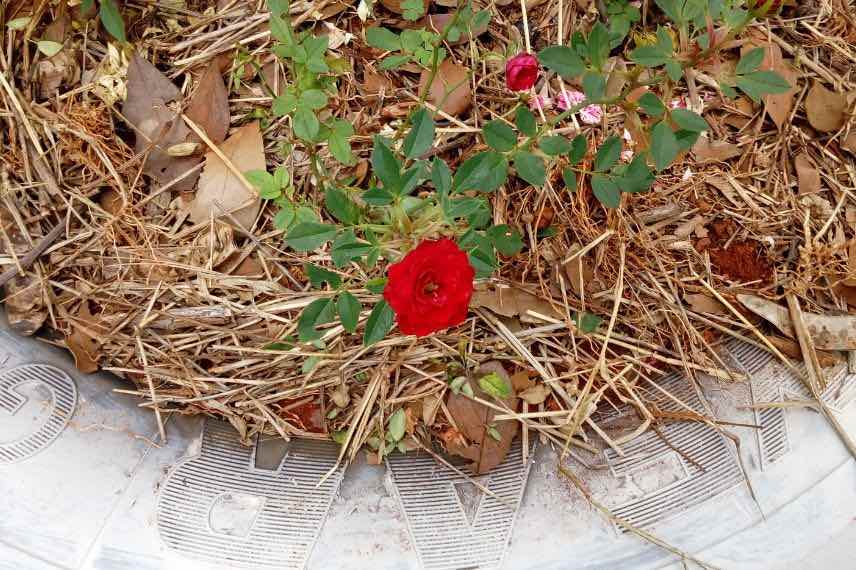
Remember to mulch your potted roses well
Mastering pruning
Our potted rose will have to adapt to a restricted space. A maintenance pruning will help keep its shape, while promoting its health.
Do this in February–March before growth resumes for repeat-flowering roses (which flower several times a year). For non-repeat-flowering roses, pruning is carried out once flowering has finished, in late summer.
For pruning your roses, remove:
- dead wood or broken branches;
- shoots growing toward the inside and limit light reaching the centre of the plant.
Also prune the other stems above the 3rd or 4th eye (bud forming), making a slant cut.
Removing faded flowers as they appear will, in turn, stimulate the formation of new buds.
To learn more, discover our article explaining when and how to prune roses in pots.
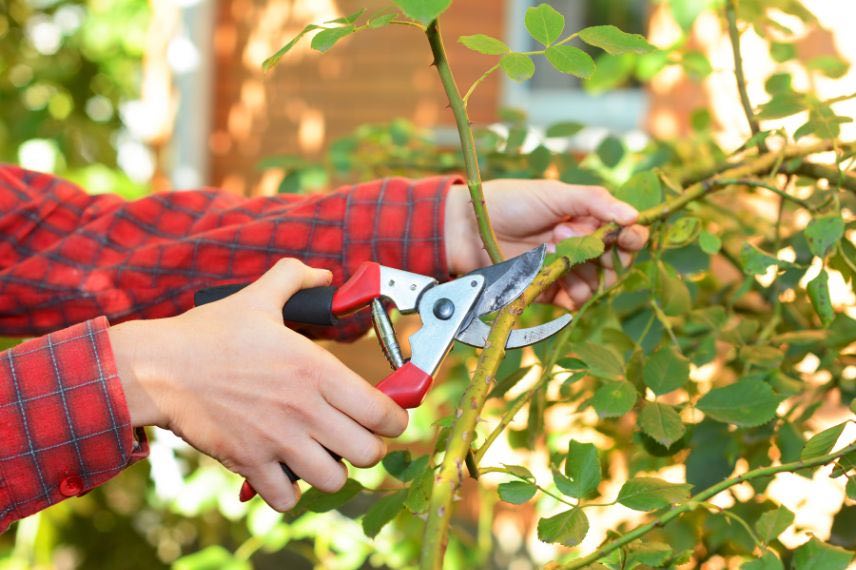
Pruning roses is essential
Protecting your potted roses from the cold
Most roses are hardy and can withstand frosts down to -15 to -20°C, depending on varieties. But potted culture makes plants more susceptible to the cold. Standard roses will also be less tolerant of cold and wind, due to their habit and the height of the graft.
If you can, bring your potted rose indoors to a frost-free, bright and unheated room (veranda, greenhouse, garage…). Note that the rose is an outdoor plant: it does not enjoy overly warm and dry conditions in our homes.
Otherwise, protect your rose with a few steps before temperatures fall below around -5°C:
- Move the pot to a sheltered place, protected from winter rain and cold winds ;
- Add a thick layer of mulch to protect the roots;
- Isolate the pot from the ground by placing it on a wheeled stand, a brick or a piece of cardboard ;
- Wrap the pot in bubble wrap, newspaper or a thick fabric ;
- Cover the above-ground parts with a fleece (to be opened when there is sun to ventilate) ;
- Remove the saucer if present.
Fertiliser applications should be stopped in winter, and watering reduced to a minimum, only if the substrate dries out at the surface.
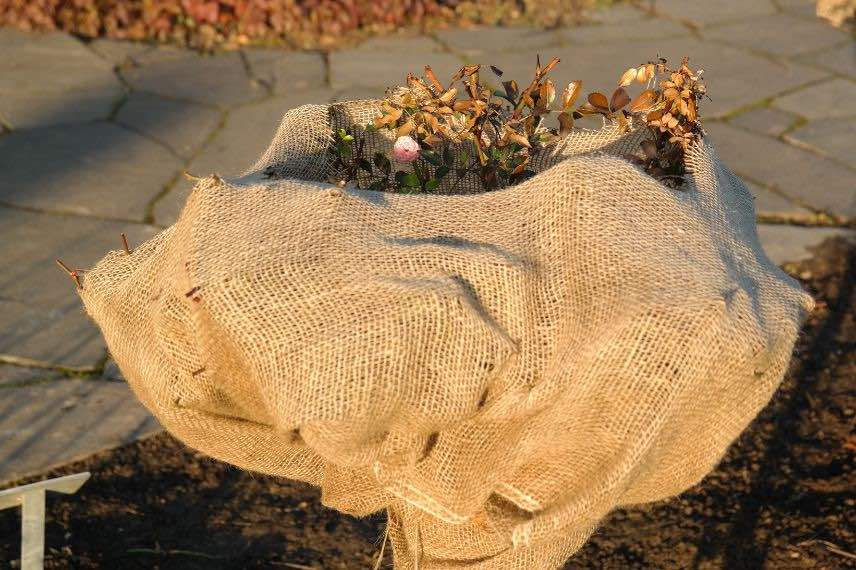
Here, a rose is protected by hessian
Rose disease prevention
Roses are plants prone to fungal diseases caused by fungi (powdery mildew, rust, downy mildew, botrytis…). When choosing potted-rose varieties, we advised you to choose varieties that are less susceptible to disease, to limit the risks.
A few additional steps will help prevent health problems.
- When pruning, always use clean cutting tools, previously disinfected with alcohol.
- Make a slanted cut rather than horizontal, to prevent water from pooling on wounds and inviting disease.
- When watering, avoid wetting the foliage. In summer, prefer watering early in the morning or late in the day.
- Remove fallen leaves as they fall.
Pour plus d’informations, retrouvez notre article sur les maladies des rosiers.
Note: The above last sentence is kept in English with the hyperlink preserved:
For more information, see our article on diseases of roses.
- Subscribe!
- Contents

Comments