





























Pairing the Dierama
6 ideas for beautiful combinations
Contents
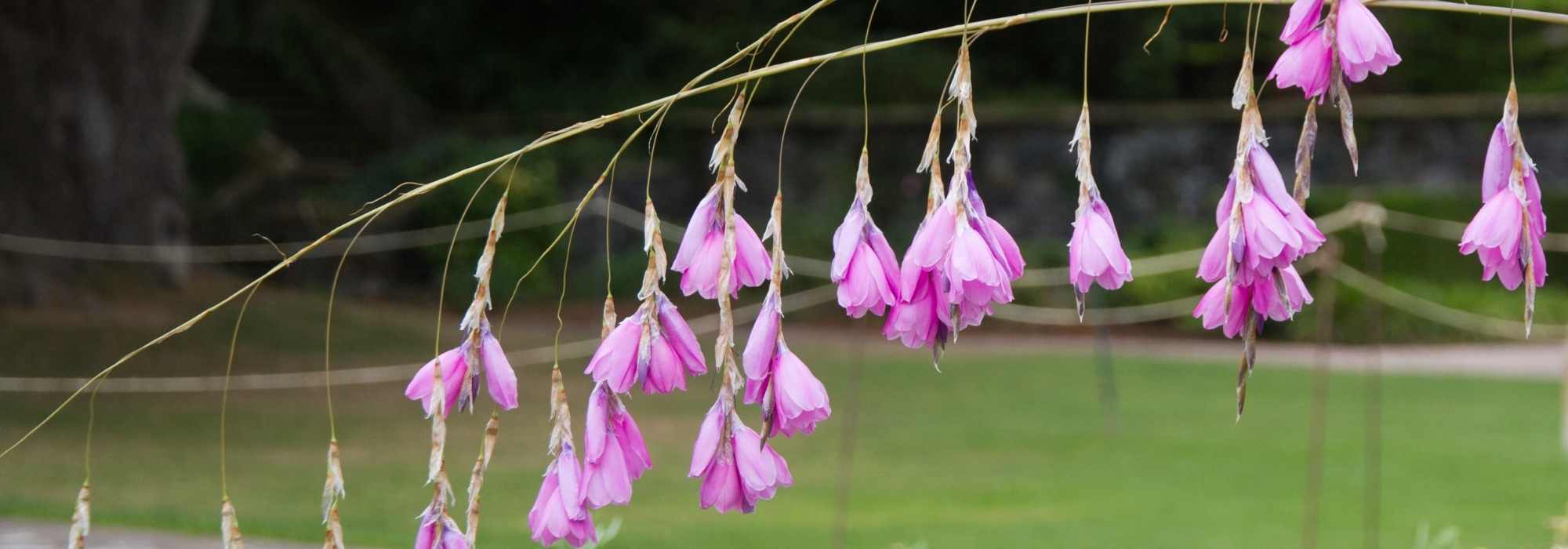
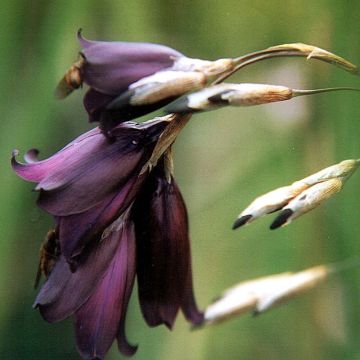
The Dierama, or Angel’s Fishing Rod, is a graceful perennial appreciated for its bell-shaped flowers in pink, purple, or white during summer, suspended from long, arching stems. It is the essential touch to add softness and delicacy to summer displays. From June to August, it forms beautiful clumps resembling evergreen grasses, reaching heights of 1 m to 1.50 m. A bit tender (hardy down to -8°C), it is well-suited to our mild regions and coastal areas. This marvel thrives in full sun in light, cool, and well-drained soil.
With its soft and fresh hues, it pairs beautifully with pastel-coloured flowers and adds lightness and volume to a natural or cottage garden. Here are 6 pairing ideas to inspire you!
→ Planting, cultivation, and maintenance, follow the guide to successfully grow Angel’s Fishing Rod!

In a romantic border
With their soft pink or white flowering, Dierama such as Dierama ‘Guinevere’, with its white flowers washed with mauve, or ‘Pink Rocket’, with its light pink flowers, easily integrate into a very romantic garden. To create this type of border, favour soft shades and delicate, luminous flowerings. Dieramas are good companions for roses (such as the English rose David Austin ‘Mary Rose’), with which they create opulent and romantic scenes. To bloom alongside them, opt for astrances Astrantia major ‘Rosea’, hollyhocks such as the variety Alcea rosea ‘Chater’s Double Blanc’ with its chantilly white pom-poms, and mix in some clumps of pink lupins Lupinus ‘The Châtelaine’. You will extend this romantic tableau with late summer or autumn-flowering perennials such as asters and Japanese anemones.
To maintain a light feel, you can accompany them with Gypsophila paniculata in matching colours, as well as airy grasses, like Pennisetum villosum for a touch of simplicity. And, to temper all these pinks, add contrasting silver clumps of wormwoods (Artemisia alba ‘Canescens’).
→ Discover our plants for a romantic garden.
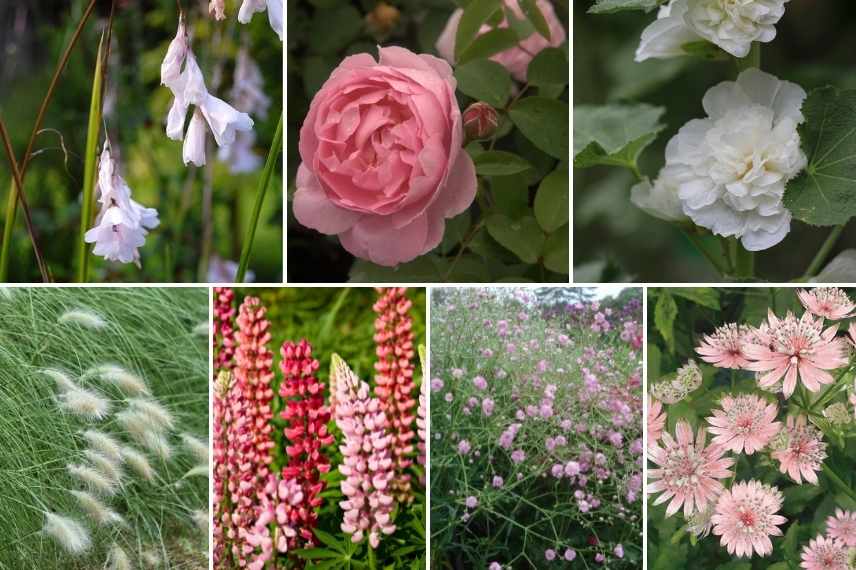
Dierama ‘Guinevere’, English rose David Austin ‘Mary Rose’, double white hollyhock, Pennisetum villosum, pink lupins, Gypsophila ‘Pink Flamingo’ and Astrantia major ‘Rosea’
In a naturalistic garden
The Dierama is a charming perennial with grass-like appearances that fits beautifully into a naturalistic garden, in a bed of wildflowers, or simply to create a flowering and spontaneous meadow effect. This type of garden celebrates very free and airy forms, as well as melliferous plants. In this abundant, natural, and wild spirit, pair it with other country-style plants that love the sun as much as it does, (as long as the soil remains sufficiently cool!) such as Gaura lindheimeri, cosmos ‘Sonata light pink’, Veronica spicata ‘First Love’ with its summer flowering, melliferous and nectariferous qualities, Knautia, Love-in-a-mist ‘Miss Jekyll Alba’, and agastaches.
You will balance all this lightness with the flat flowers of Achilleas, the spiky Echinops, or the spherical ornamental alliums such as Allium ‘Summer Drummer’, one of the few alliums that bloom in mid-summer.
Like it, grasses are also essential for dressing these natural areas; they seem to float and play with the wind. In a decidedly wild style, this perennial forms a very successful association with many grasses, favouring those with a flexible habit: Pennisetum orientale ‘Karley Rose’, Miscanthus giganteus, Panicum, Stipas.
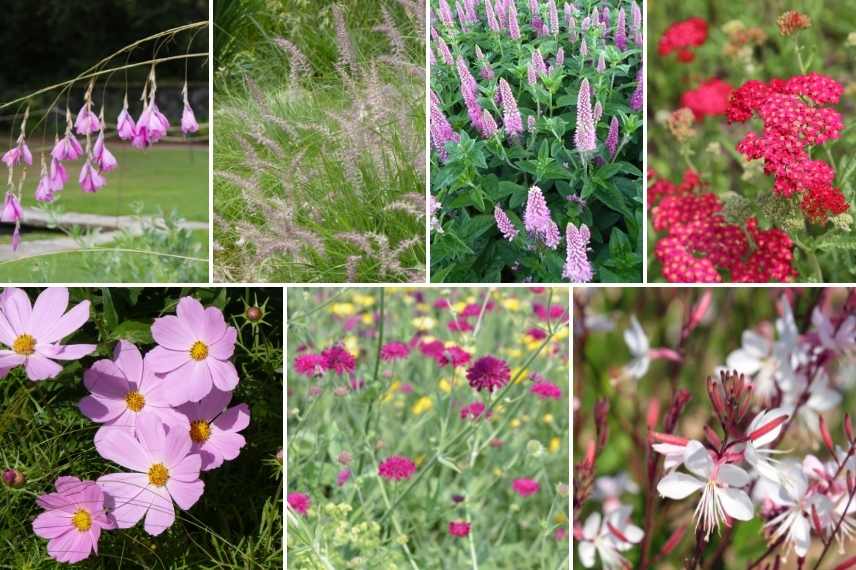
Dierama trichorhizum, Pennisetum orientale ‘Karley Rose’, Veronica spicata ‘First Love’, red Achillea, Cosmos, Knautia macedonica, and Gaura lindheimeri
Discover other Dierama
View all →
Available in 0 sizes
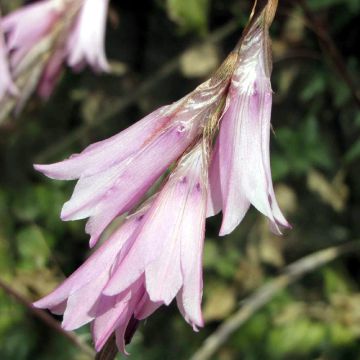
Available in 1 sizes
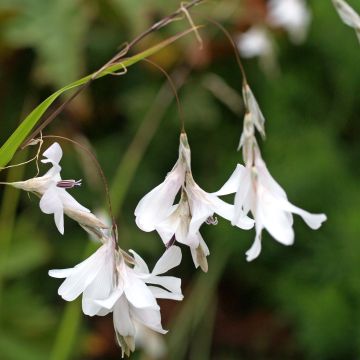
Available in 1 sizes
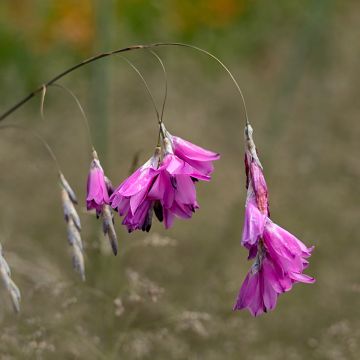
Available in 2 sizes
Available in 1 sizes
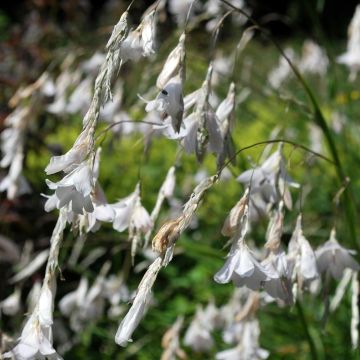
Available in 1 sizes
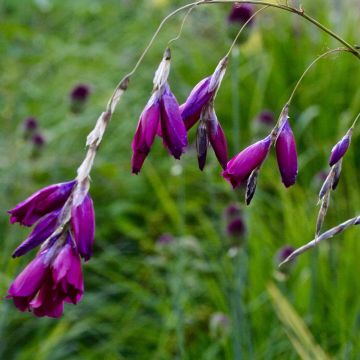
Available in 1 sizes
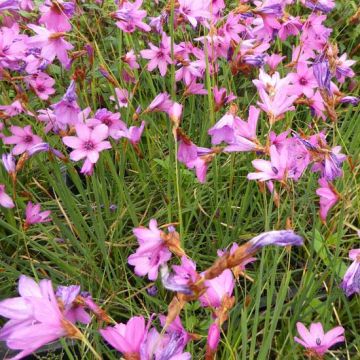
Available in 1 sizes
Available in 1 sizes
In a cottage garden
With a delicate flowering character and a graceful silhouette that appears very natural, Dierama effortlessly establish themselves in an English cottage garden alongside other summer-flowering perennials. Create a joyful plant jumble, with plants in soft, harmonious tones and ample foliage. Choose Digitalis with pink flowers, such as Digitalis mertonensis ‘Summer King’, and soft-hued lupins like ‘Le Chandelier’, which will form superb, floriferous clumps all summer long.
Surround them with Phlox paniculata, penstemons, Dianthus plumarius ‘Haytor White’, agapanthus, Salvia nemorosa, garden catchflies (Lychnis coronaria), and Papaver somniferum var. nigrum, a lovely botanical poppy with silver-green ornamental foliage. A few grasses, such as the remarkable Panicum virgatum ‘Hanse Herms’ with fabulous colours, will punctuate this lush, low-maintenance country decor.
→ Also, find our inspiration for cottage gardens.
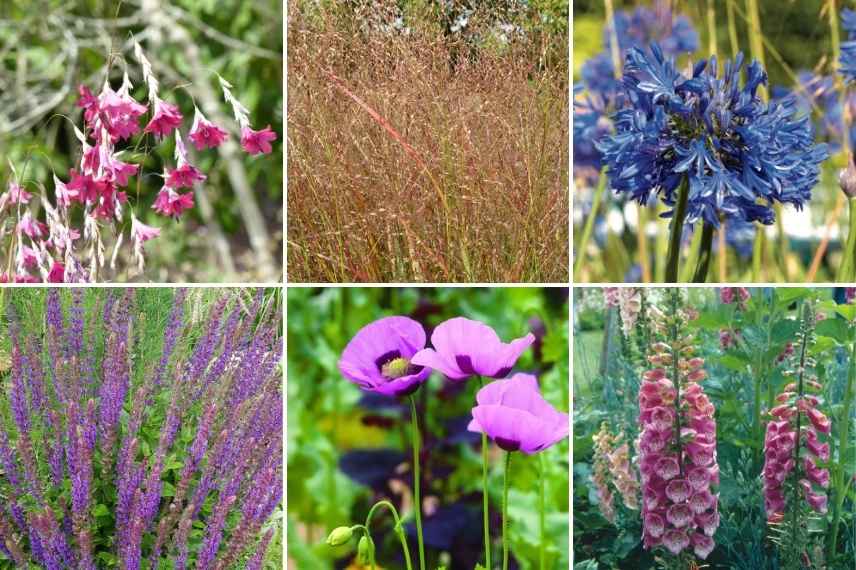
Dierama pictum, Panicum virgatum ‘Hanse Herms’, Agapanthus ‘Navy Blue’, Salvia nemorosa, Papaver somniferum var. nigrum, and Digitalis mertonensis ‘Summer King’
On the banks of a pond or water feature
As they thrive in cool to moist soils, Dierama enjoy being near a pond or large body of water. You can create a fresh and highly graphic scene by alternating clumps of Dierama pulcherrimum ‘Alba’ and Molinia caerulea ssp arundinacea ‘Transparent’, a magnificent, highly structured grass that plays with texture and movement through its transparency. The Ribbon Grass, a grass with ribbon-like leaves resembling reeds that produces large feathery inflorescences, will also make a good companion.
At the edge of a waterfall, stream, pond, or basin, Angel’s Fishing Rods also create stunning summer compositions alongside moist bank plants; Lythrum salicaria, Filipendula rubra ‘Venusta’, meadow rue (Thalictrum delavayi), and Veronicastrum virginicum var.album, with its long, airy summer flowering. To complement this refreshing atmosphere, consider Sanguisorba ‘Pink Brushes’, with its graceful flowering and long feathery spikes; when paired together, they will add a natural and romantic touch to the edges of water features.
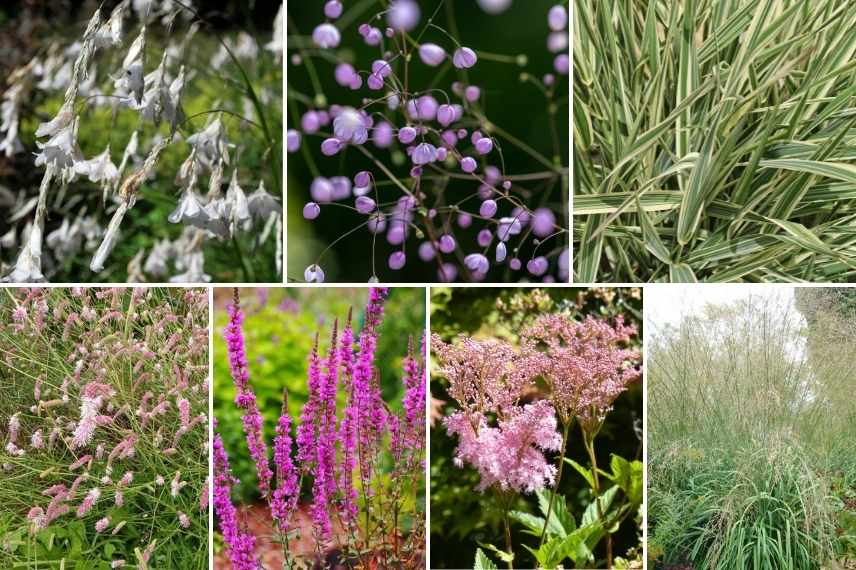
Dierama pulcherrimum ‘Alba’, Thalictrum delavayi, Phalaris arundinacea, Sanguisorba ‘Pink Brushes’, Lythrum salicaria, Filipendula rubra ‘Venusta’, and Molinia caerulea ssp arundinacea ‘Transparent’
In a summer mixed border
Angel’s fishing rod is stunning when placed in a mixed border, behind shorter plants. It softens formal lines with its airy and free silhouette. Pair it with other plants that have a free habit and light flowering. To achieve this, choose a compact, highly floriferous variety like the Dierama ‘Pink Rocket’. Its flower stems reach only 60-70cm in length. It adds volume and lightness to a somewhat flat border while providing a beautiful natural and refined effect. Complete the ensemble with compact plants, such as hardy geranium ‘Bob’s Blunder’ with its purplish foliage and soft pink flowers, lactiflora campanulas, heucheras with decorative foliage, hebes, and Sedum ‘Herbstfreude’, which together create lovely low-maintenance combinations at the front of the flowerbed.
In the background, to add a vertical note, install Calamagrostis ‘Karl Foerster’, large asters like Aster laevis; they will create a wild backdrop with subtle charm for much of the year.
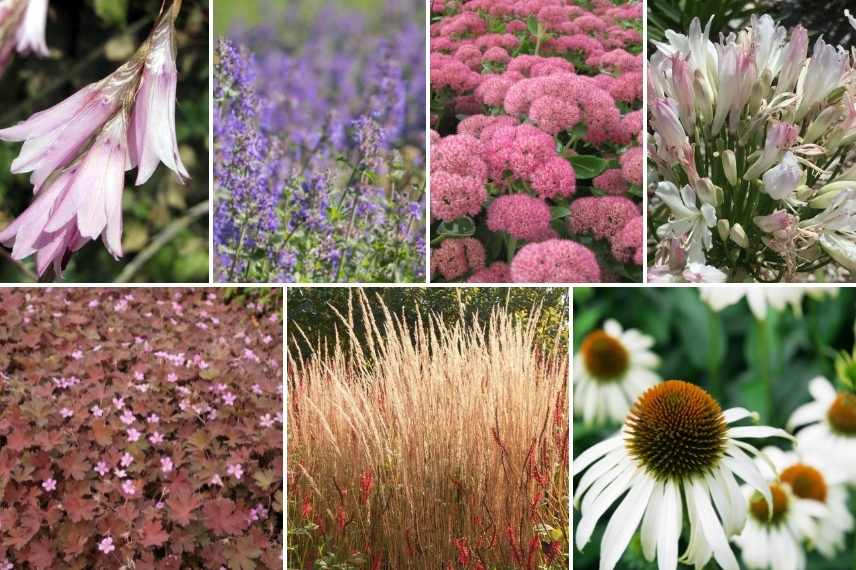
Dierama ‘Pink Rocket’, Nepeta cataria, Sedum ‘Herbstfreude’, Agapanthus ‘Strawberry Ice’, Geranium ‘Bob’s Blunder’, Calamagrostis ‘Karl Foerster’ and Echinacea ‘White Swan’
In a cool rock garden
Certain species such as Dierama trichorhizum enliven fresh but sunny rockeries. To create a lovely rockery, pair it with Deltoid pinks, the Carpathian campanulas, Campanula carpatica ‘Alba’ for example, which thrive in all well-drained soils while remaining cool in summer. The Coreopsis rosea ‘American Dream’, flowering until autumn, Asters, Diascia vigilis, and hardy geraniums will be lovely companions to enhance this display.
All these generous blooms blend beautifully with the grey foliage of the woolly betony (in well-drained soil) and Heuchera ‘Silver Gumdrop’.
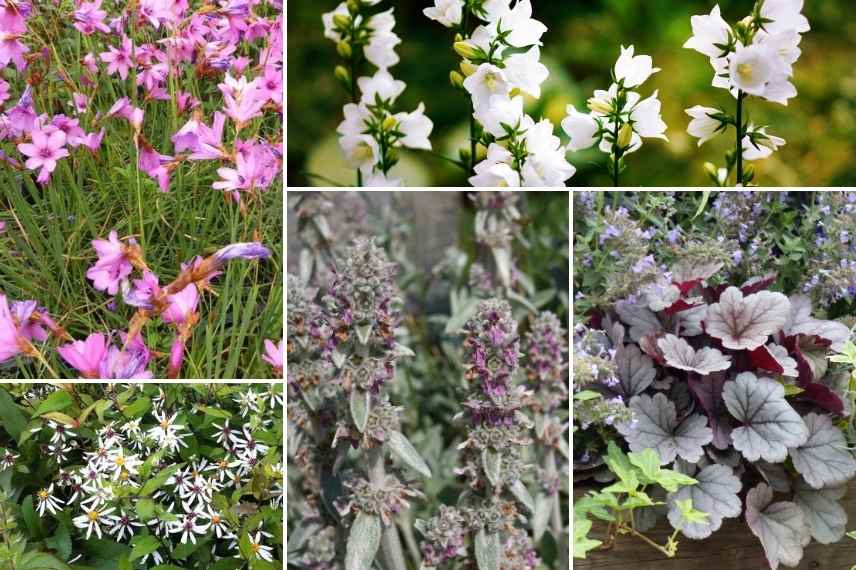
Dierama trichorhizum, Campanula carpatica ‘Alba’, Aster divaricatus, Stachys byzantina, and Heuchera ‘Silver Gumdrop’
- Subscribe!
- Contents
![[plant id="123" common_name="Angel's fishing rod"]](https://en.promessedefleurs.eu/blogwp/wp-content/uploads/2022/06/Associer-le-dierama-1.jpg "[plant id=\"123\" name=\"Dierama\"]")
Comments