


Self-cleaning flowers: a solution for a low-maintenance garden
They make our lives easier!
Contents
Some plants make garden maintenance easier by their ability to renew their flowers without special care… These are essentially annuals and summer-flowering plants, though some perennials or bushes are also involved.
Deadheading spent flowers is indeed a recurring task which, although pleasant at first, takes time once the garden is sizeable.
So, incorporate some of the pretty self-cleaning flowering displays in the garden, they’ll repay you a hundredfold!

Why choosing self-cleaning flowering plants?
Wanting a flowering garden with no maintenance at all is a bit of an oxymoron, as many plants require regular pruning of their faded inflorescences to ensure a new flowering. Many plants indeed require that faded flowers be removed, otherwise their flowering slows down considerably. By pinching or lightly pruning the stems bearing the flowers, you not only encourage the plant to ramify, but you stimulate and support flowering over the long weeks of summer. By encouraging a repeat flowering, you prolong the bloom in the borders.
But some stand out and do not require removal of their damaged flowers: these are often summer plants, very floriferous and long-flowering. With them, the withered flowers, particularly ephemeral, detach quickly on their own and reflower abundantly throughout the summer. Farewell to almost daily vigilance to remove the blooms; you can simply watch them bloom without a break! In these flowering displays you can easily find very small flowers, even pointillist, which, falling naturally, do not give a neglected look: the garden’s appearance remains neat, and the small flowers do not rot on the ground.
Most of the time these are sterile flowers or those arising from hybridisation, which do not set seed, unlike most flowers which produce seeds to ensure the plant’s longevity. Having a few of them really makes summer gardening easier.
Read also
Care of perennial plantsSelf-cleaning annuals
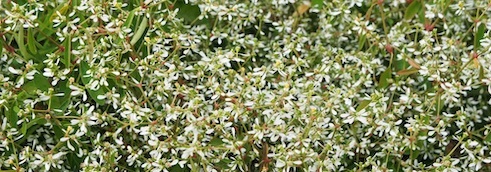
Euphorbia ‘Diamond Frost’
A summer classic, often seen in pots, but also magical among perennials that it enhances with a cloud of tiny white flowers that cascade and renew from spring through to the first frosts. It forms an airy, rounded clump about 60 cm across. Its comparatively modest hardiness places it among annuals in our climate. Plant in full sun for a generous display.
Border begonias
From their Latin name, it is clear that they flower non-stop! Border begonias, widely used in planters and hanging baskets, but also in borders, in shade and partial shade, are plants that drop their flowers neatly, without needing to go back and tidy. Loved or loathed, these begonias guarantee spectacular flowering from June to November in many colours. A must: soil that stays consistently moist.
Nasturtium (Tropaeolum majus)
Garden nasturtium with single flowers, a star of the vegetable garden but also perfect for balcony boxes, grows to a modest height and displays a warm orange hue on charming trumpet-shaped blooms. In cottage gardens, countryside settings or in towns, it helps attract pollinating insects (and aphids). Plant or sow in sun or light shade, to see it bloom continuously… and without having to touch it!
Impatiens
Many plants in the balsaminaceae family, thriving in partial shade or shade, also have this self-cleaning ability, dropping their flowers neatly onto the ground and renewing them without any fuss. Impatiens are real workhorses, flowering with little to no maintenance from June to the first frosts. Choose New Guinea impatiens, with large flowers, for a superb display. All require soil that stays sufficiently cool and moist in summer.
Pansies (Viola tricolor et autres espèces)
Charming in pots and planters, these tireless annuals flower from spring to early summer, or in autumn. Deadhead faded blooms if desired, but with no special care they remain attractive and, above all, rebloom.
Annual statice (Limonium sinuatum)
Statice is well known in floristry for bouquet making. Introducing it to the garden, by sowing it in early spring under cover, allows you to enjoy its papery-textured flowers in pastel colours—white, mauve or pink—throughout the summer. It forms a clump about 70 cm tall. Grow it in full sun in well-drained, yet moist soil.
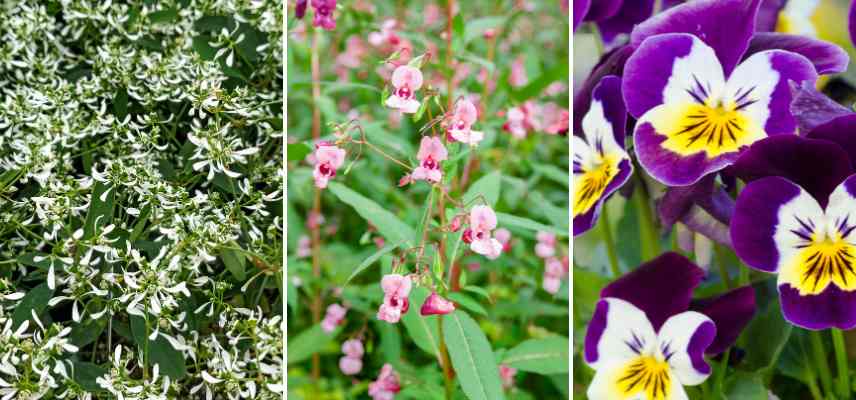
Euphorbia ‘Diamond Frost’, Impatiens glandulifera, Viola tricolor.
Flowers that close by day or night
They are also a gardener’s ally, and by closing up like this, they protect their long flowering life! Look to the Asteraceae family or the Convolvulaceae, such as Osteospermum, the night-blooming beauty (Mirabilis), the ficoids…
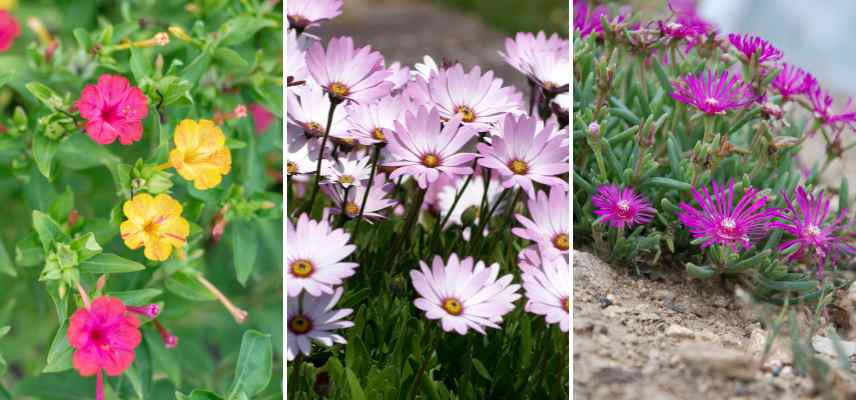
Mirabilis, Osteospermum and ficoids.
→ Read also: These incredible flowers that only open at night
Self-cleaning perennial plants
Gauras
It’s one of the garden’s summer star flowers: white or pink, it continually renews its delicate little blossoms. Plant it in a sunny spot in well-drained soil, and it’s a fail-safe choice for the garden!
Hardy geraniums
The popular ‘Rozanne’, and the range of long-flowering hardy geraniums with long flowering, really make life easier in summer: perfectly autonomous, they look after themselves! A wide variety of species and cultivars makes relaxing in the garden a bit easier.
Creeping gypsophile (Gypsophila repens)
Plant it ideally in a scree garden or in very well-drained soil, as its root system does not like winter damp. The small white flowers are also self-cleaning.
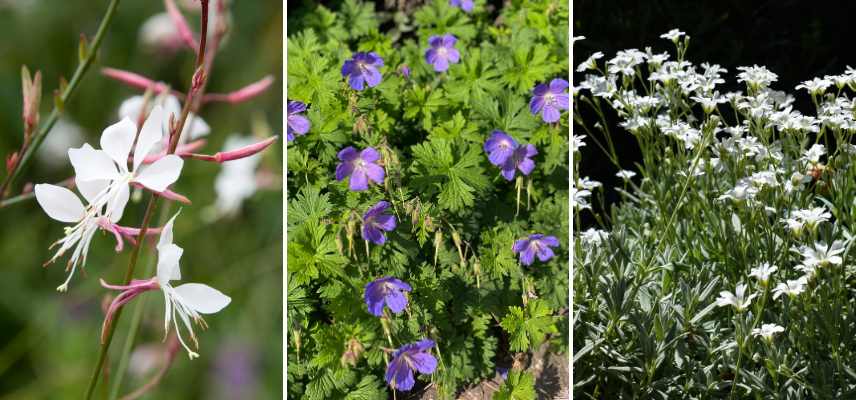
Gaura, hardy geranium ‘Rozanne’ and creeping gypsophila.
Anisodontea ‘El Rayo’
A Cape mallow shrub well known to gardeners who don’t have much time to spare for maintenance: it is also self-cleaning, requiring only a prune at the very end of flowering. It grows quickly to about 1.20–1.30 m. However, beware of its low hardiness.
Perennial flax (Linum perene)
For poor, stony soils, perennial flax performs wonderfully, being so light and floriferous, with a profusion of flowers for many months that renew themselves continually. Each flower, a very pale blue, lasts only one day and opens best in the sunniest and warmest part of the day. It is rather biennial; it grows quickly and attracts butterflies. An essential of the blue garden, also pair it with roses and in cottage-style and natural gardens.
Erigeron karvinskianus
With its daisylike appearance, Erigeron offers a maintenance-free flowering. Its white and pale pink blooms, with a yellow centre, look lovely in stone basins. It sprawls in dry, rocky and unforgiving spots, spreading more in width than in height, and for this reason makes a beautiful border perennial. Sun-loving, it also grows in partial shade, flowering until October.
Statice (Limonium latifolium)
The perennial form of statice requires no maintenance; its cloud of flowers lasts for a very long time. The lavender colour accompanies many sunny borders. It has the advantage of growing in sandy or stony soil, tolerating sea spray and drought.
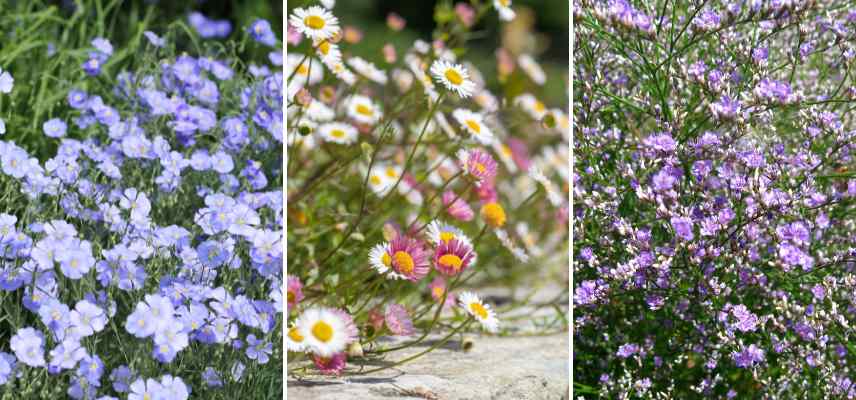
Perennial flax, Erigeron and perennial statice.
Of course other long-flowering perennials do exist and will demand no specific care due to the fact they bloom continuously.
→ Also read: 9 easy perennials for beginners and 7 long-flowering sun-loving perennials.
Low-maintenance shrubs
Shrubs that flower in spring or summer often require pruning. There are three that, however, make the task easier by flowering generously and for a long period, such as Abelia and the shrubby salvias (often regarded as shrubs). The rockroses, on the other hand, shed their larger flowers, but require no particular care, renewing them for at least a month in late spring.
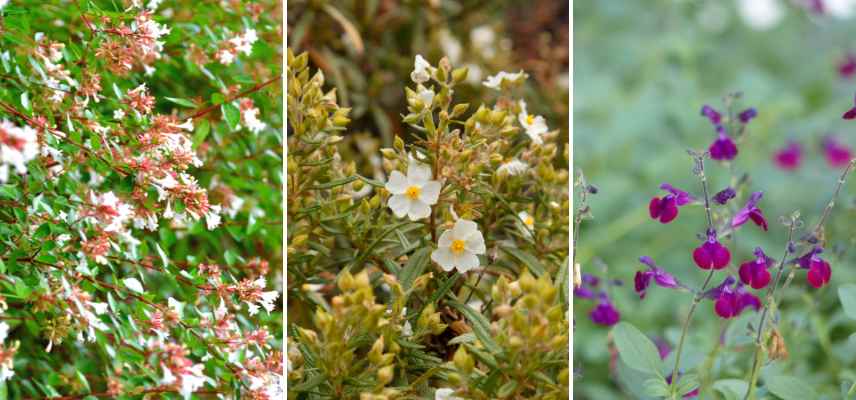
Abelia grandiflora, Montpellier rockrose and Salvia jamensis ‘Violette de Loire’.
Not to mention...
Flowers that transform into equally charming fruits: Nigella, poppies, capge gooseberry, prolonging the decorative effect in the garden and saving us from having to prune them regularly! Read: Decorative dried flowers in winter.
- Subscribe!
- Contents
Comments