





























The best winter flowering groundcover bushes
to bring colour and texture to the garden
Contents
Groundcover shrubs provide the advantage of covering the soil, thereby limiting the proliferation of weeds and reducing garden maintenance. In winter, when most plants enter their dormant phase, some of these shrubs adorn themselves with delicate flowers, adding colour and texture to borders, even under the first snowflakes. In this article, we present a selection of groundcover shrubs with winter beauty, which begin their flowering to wait for the arrival of spring.

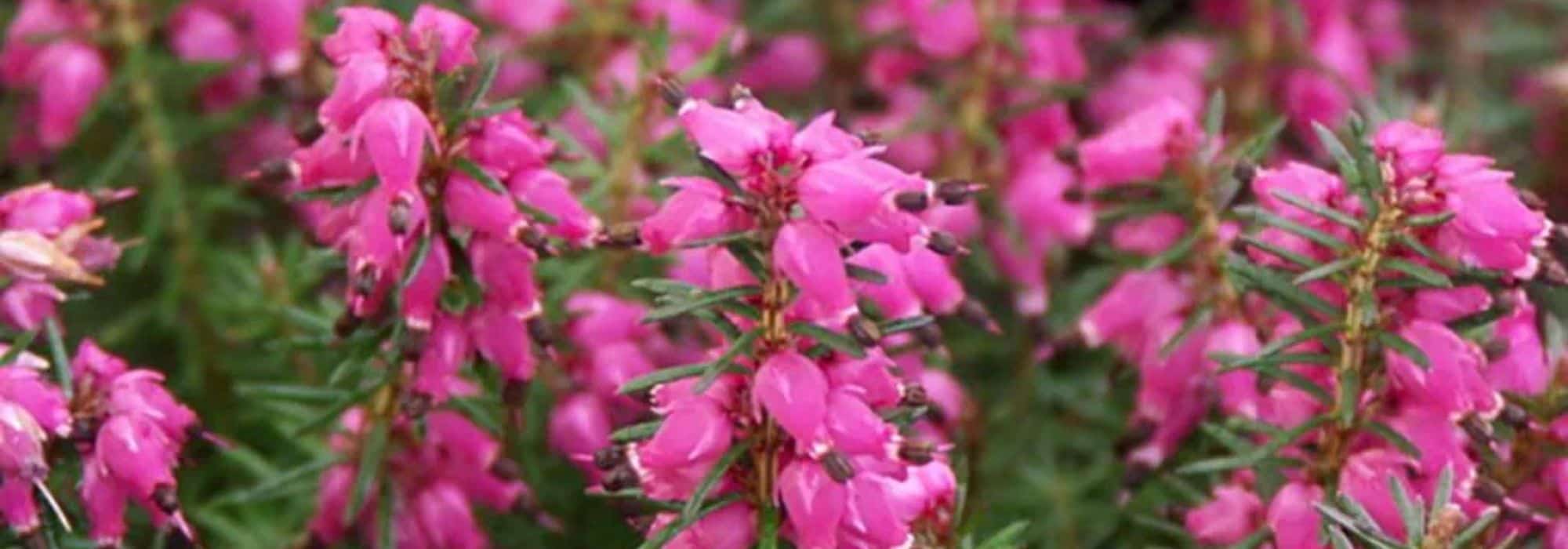
Winter heathers (Erica x darleyensis) and snow heathers (Erica carnea)
Les winter heathers (Erica x darleyensis) and snow heathers (Erica carnea) are simply the champions of winter flowering. Depending on the variety, the flowers come in white tones, for example with ‘White Perfection’, to purple as seen in the variety ‘Eva’. With their evergreen foliage, they carpet the ground all year round.
Their ability to withstand the coldest temperatures (some down to -30 °C) makes them ideal candidates for enhancing your flower beds during the cold season, even in montane climates. However, it is essential to choose the variety based on the nature of your soil: for acidic soil, winter heathers (Erica x darleyensis) are preferred, while in neutral to alkaline soil, snow heathers (Erica carnea) should be planted.
Heathers thrive in well-drained soil, in full sun or partial shade. Pair them with dwarf conifers for a harmonious winter scene or with moss phlox (Phlox subulata) that will take over the flowering in spring.
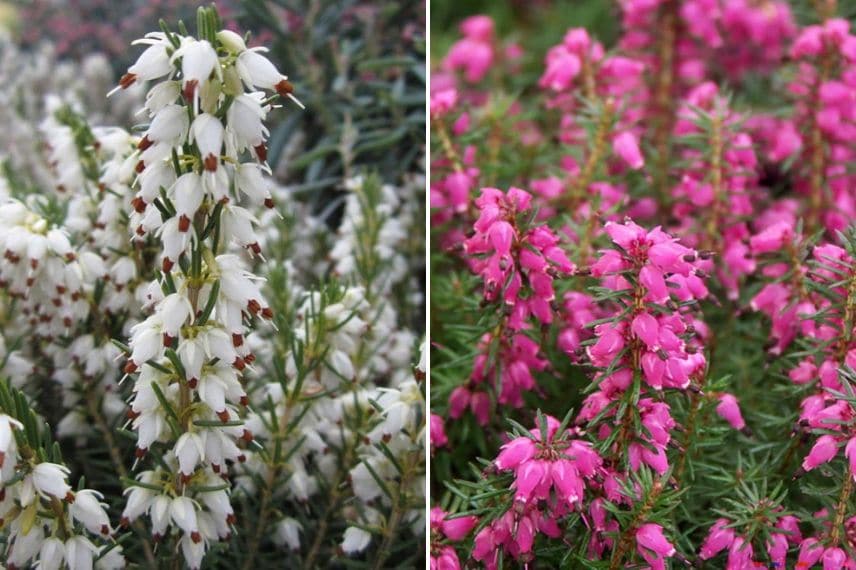
Erica x darleyensis ‘White Perfection’ and Erica carnea ‘Eva’
Sarcococca
The Sarcococca, or “fragrant box”, is another bush that stands out for its winter flowering. Its small, discreet white flowers, but deliciously fragrant, appear in the heart of winter, filling the air with sweet notes. The flowers are followed by decorative berries. This evergreen bush also offers glossy foliage, which remains attractive all year round, reminiscent of that of the Olive tree.
Its rounded or upright and dense form is perfect for enhancing a rockery, a bank, a woodland, or even a border. Among the different varieties, we love ‘Fragrant Mountain’ for its compact habit, wider (90 cm) than tall (60 cm) and its flowering from January to March. On the other hand, ‘Fragrant Valley’ is even smaller, reaching 50 cm in height at ripeness and can also be grown in a pot.
The Sarcococca prefers shaded (even dry shade) or semi-shaded exposures and adapts to most soil types, provided they are well-drained and non-calcareous. It does grow slowly, but it has the advantage of requiring no maintenance, and it withstands diseases and pollution well. Pair it with hellebore or Heuchera to create a colourful and persistent display throughout winter.
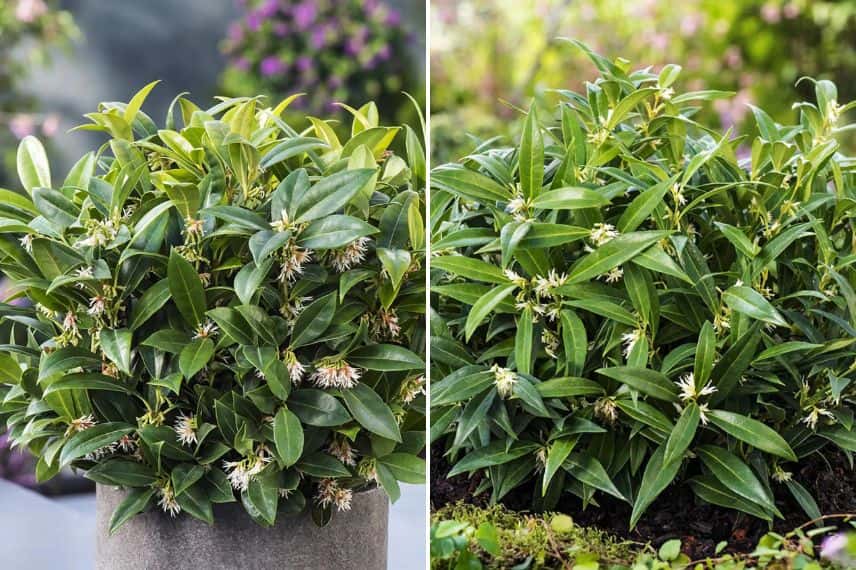
Sarcococca ‘Fragrant Mountain’ and ‘Fragrant Valley’
Conradina 'Little Rosie'
Conradina ‘Little Rosie’, also known as “false rosemary”, is a small bush with fine leaves reminiscent of those of rosemary and releases a pleasant fragrance when crushed. Unlike our rosemary, which is of Mediterranean origin, Conradina ‘Little Rosie’ hails from the southeastern United States. From February to April, its small pink, slightly mauve flowers add a bright touch to rockeries and borders. Its compact habit does not exceed 60 cm in height and 80 cm in spread.
The Conradina ‘Little Rosie’, like rosemary, can withstand temperatures as low as -10 °C. This shrub thrives in full sun and prefers dry, well-drained soils, even slightly calcareous and sandy. This plant is ideal for Mediterranean gardens or sunny borders, requiring little water and maintenance. It can also be grown in pots, allowing it to be sheltered during winter in colder regions. You can pair it with lavenders or Santolines to enhance harmony in a dry garden.
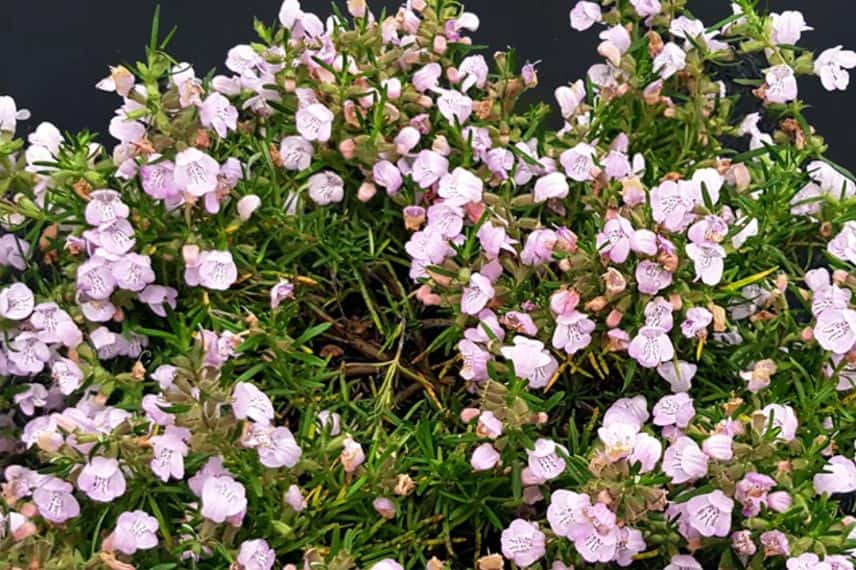
The Conradina ‘Little Rosie’
Rosemary 'Majorca Pink'
After discussing the false rosemary above, be aware that there is indeed a rosemary, the variety ‘Majorca Pink’ (Rosmarinus officinalis ‘Majorca Pink’) which also brings winter flowering in pale pink hues. The advantage is that this aromatic variety, native to the Mediterranean basin, is usable in cooking! This creeping rosemary forms a dense carpet of evergreen, fragrant leaves, perfect for covering soils in a Mediterranean or seaside garden. Its flowers appear as soon as the first frosts and remain until spring (with sometimes a brief pause in December-January), adding a touch of softness to the winter scene.
This variety of rosemary is hardy down to about -12 °C once well established and thrives in full sun, preferring poor, dry, and well-drained soils, as found around the Mediterranean or the Atlantic coast. It is ideal for planting in rockeries or in pots on a sunny terrace and is not afraid of drought or heat. Pair it with Cistus or Euphorbia to play with contrasts between foliage and extend the flowering.
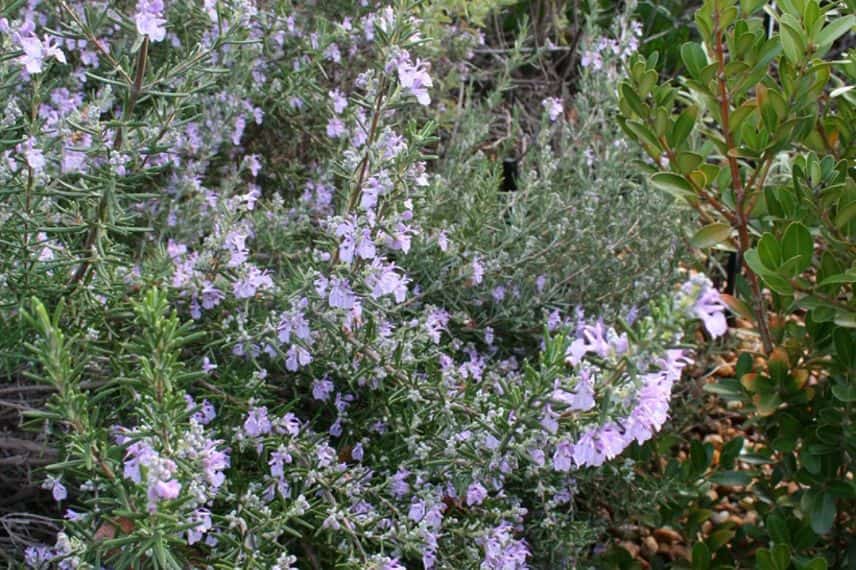
Rosmarinus officinalis ‘Majorca Pink’
Dryas drummondii 'Grandiflora'
The Dryas drummondii ‘Grandiflora’ is a robust and resilient young plant. Native to mountainous regions, it easily withstands temperatures as low as -34 °C once well established. Its evergreen and slightly fuzzy foliage forms a dense carpet close to the ground, perfect for covering rocky soils, slopes, or between stones. In January, its small white flowers with yellow centres brighten up the flowerbeds, adding a delicate and elegant touch to your garden.
This young plant enjoys a sunny or partially shaded position and thrives in well-drained, rocky, or sandy soils. It is ideal for rockeries or alpine gardens, where it pairs perfectly with Edelweiss or Sedums, creating a harmonious scene that withstands the rigours of winter.
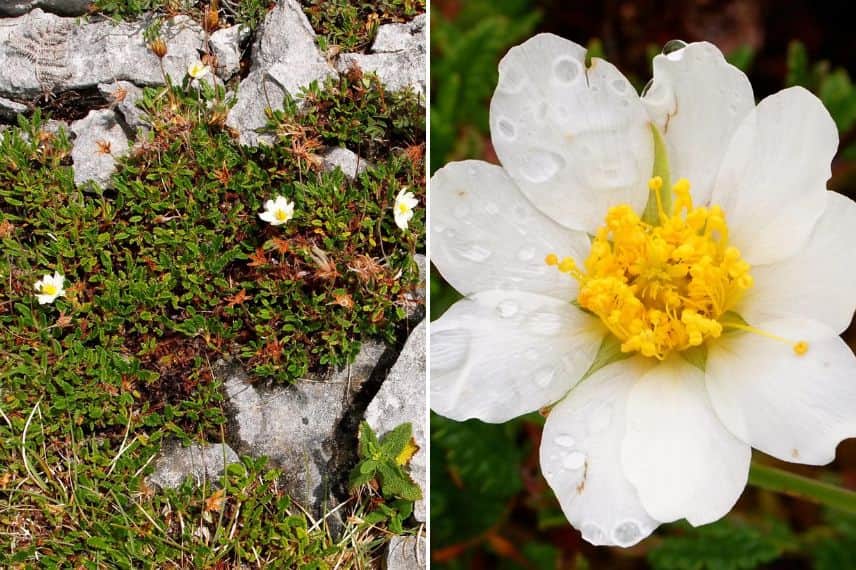
Dryas drummondii ‘Grandiflora’
Grevillea lanigera 'Mount Tamboritha'
Originating from Australia, Grevillea lanigera ‘Mount Tamboritha’ stands out for its winter flowering, featuring clusters of pink and cream flowers that appear continuously from February to May. Its fine, evergreen foliage, a green tinged with grey-green and slightly fuzzy, adds texture and volume to borders throughout the year. Very compact and creeping, this bush will only reach 15 to 25 cm in height with a spread of 1.50 m.
This plant is suited to mild climates, tolerating temperatures down to -9 °C, and prefers full sun exposure. The Grevillea lanigera ‘Mount Tamboritha’ thrives in well-drained, poor to moderately fertile soils, and is quite drought-resistant. For a harmonious winter scene, pair it with Yuccas or dwarf Conifers, creating an interesting contrast between heights, foliage, and colourful flowers.
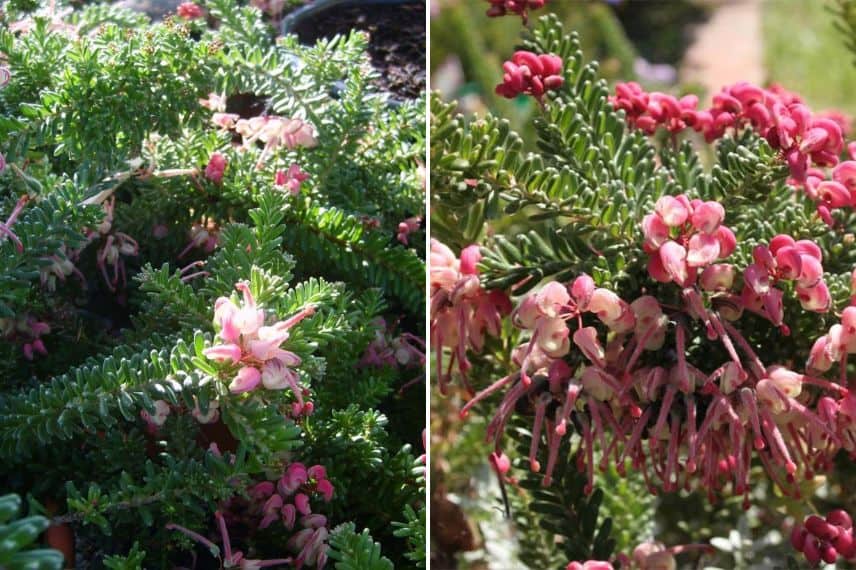
Grevillea lanigera ‘Mount Tamboritha’
- Subscribe!
- Contents

Comments